Two Types of Import Opportunity
Consumer-goods imports from China to Europe generally fall into two opportunity types.
The first is an emerging category shaped by regulatory change, retail trends, consumer behaviour, or a local supply gap. Early entry can help, but demand may be uncertain and product standards or supplier documentation may still be developing.
The second is an established category with proven demand, such as home storage, kitchen tools, pet accessories, and basic fitness goods. Marketplaces and retailers provide visible pricing, reviews, customer complaints, and competitive benchmarks. The challenge is that generic products rarely compete on price alone.
In mature categories, differentiation often comes from:
- Better materials or durability
- More useful sizes, colours, or pack formats
- Clearer packaging and instructions
- Lower transit damage
- Local stock availability
- Better fit for a specific channel, such as discount retail, Amazon, specialist stores, or B2B distribution
The right category also depends on order size, destination country, sales channel, target retail price, working capital, and the ability to manage compliance and customer support.
This guide focuses on the EU market. Requirements in the UK, Switzerland, and Norway can differ, so confirm rules for each destination before placing an order.
The 10 Product Categories, Ranked From Easiest to Hardest
These categories are broadly ranked from lower to higher operational difficulty for a new importer. Every product still requires appropriate quality control, customs classification, safe materials, and viable logistics.
| Rank | Category | Why it can work | Main sourcing challenge |
|---|---|---|---|
| 1 | Pet accessories | Broad demand and repeat-purchase potential | Material quality and product safety |
| 2 | Home-organization products | Wide retail appeal and relatively light technical regulation | Bulky freight and price competition |
| 3 | Travel and outdoor accessories | Portable, giftable, and suitable for product bundles | Seasonal demand and weak differentiation |
| 4 | Stationery and desk accessories | Good for online and retail assortment building | Design rights, packaging, and low unit values |
| 5 | Senior daily-living aids | Demand supported by ageing populations | Avoiding medical or therapeutic claims |
| 6 | Kitchenware and food-storage items | High household demand and repeat assortment opportunities | Food-contact compliance and shipping volume |
| 7 | Non-electrical fitness accessories | Broad customer base and strong visual merchandising potential | Product-liability and durability issues |
| 8 | Basic lighting and electrical accessories | Functional demand and relatively clear product use cases | Electrical safety and CE-related obligations |
| 9 | Repair and replacement parts | Can support specialist channels and repeat demand | Exact fitment, returns, and technical support |
| 10 | Connected home and charging products | Higher perceived value and feature-led sales | Complex compliance, software support, and lifecycle management |
1. Pet accessories
Pet accessories can be a practical entry point. Leads, collars, bowls, grooming tools, bedding covers, toys, travel accessories, and storage products can sell through pet shops, marketplaces, supermarkets, garden centres, and specialist stores.
Keep this category separate from pet food, medicines, supplements, and veterinary products, which bring different approval, ingredient, labelling, and import requirements.
For accessories, check break resistance, detachable parts, sharp edges, colour transfer, stitching, odour, and suitability for the animal size. Bulk production may use weaker plastic, thinner webbing, or inconsistent hardware than the sample. Use written specifications and pre-shipment inspection points.
2. Home-organization products
Storage baskets, drawer dividers, wardrobe organisers, hooks, laundry products, shoe racks, cable-management items, and bathroom organisers are familiar, non-electrical products that suit multiple price points.
The main issue is logistics. Low-cost storage products can be bulky, making freight, warehousing, fulfilment, and damage costs disproportionately high. Nesting, flat-pack construction, compressed textiles, and efficient carton design often matter as much as factory price.
Calculate margins by cubic volume as well as unit cost. A large plastic box can look profitable until freight and storage are included.
3. Travel and outdoor accessories
Packing cubes, reusable travel bottles, luggage straps, picnic accessories, waterproof pouches, compact blankets, and camping organisers suit online and seasonal retail. They are often light, easy to bundle, and visually effective in listings.
The risks are seasonality and imitation. Look for useful refinements such as stronger zips, clearer sizing, better materials, or a coordinated travel kit instead of a generic single item.
4. Stationery and desk accessories
Desk organisers, document trays, pen holders, notebook accessories, cable clips, non-electrical laptop stands, and classroom storage products can suit office, education, home-working, and gift channels.
Presentation matters. Packaging, colour consistency, print quality, and retail-ready assortments can distinguish simple products. Check intellectual-property risks where designs resemble branded goods or protected characters.
Low unit values are a concern, so products should be compact and priced to absorb packaging, import costs, marketplace fees, and returns.
5. Senior daily-living products
Non-medical daily-living products include jar openers, reachers, pill organisers, grip aids, large-handle household tools, dressing aids, and non-electrical bathroom accessories. They can serve consumers seeking greater convenience at home.
The key issue is avoiding medical claims. Descriptions such as “reduces arthritis pain” or “rehabilitation device” may create medical-device implications. Review packaging, instructions, listings, and advertising carefully.
A safer starting point is a well-made household product with a clear practical use and no therapeutic claims.
6. Kitchenware and food-storage products
Kitchen utensils, food containers, baking tools, reusable bottles, lunch boxes, chopping boards, and pantry-storage products have broad demand and private-label potential.
They require disciplined compliance work. Materials intended for food contact must be suitable for their use. Consider plastics, silicone, stainless steel, bamboo, coatings, inks, adhesives, and claims relating to heat, microwaves, or dishwashers. A product for cold dry food may present different considerations from one intended for hot liquids or repeated dishwasher use.
Documentation should relate to the actual finished product and material composition. Packaging must also prevent scratches, deformation, odour transfer, and breakage in transit.
7. Non-electrical fitness accessories
Resistance bands, yoga blocks, skipping ropes, foam rollers, mats, and mobility accessories appeal to sports retailers, online sellers, and promotional channels. They are simpler than powered equipment but can still create injury complaints when poorly made.
Test samples under realistic conditions. Check tensile strength, handle attachment, grip, odour, compression recovery, wear resistance, and instructions for intended use. Avoid unsupported performance or medical claims.
8. Basic lighting and electrical accessories
Electrical products can offer higher perceived value but need a clear compliance process. Examples include plug-in lighting, adapters, extension products, and certain low-voltage accessories.
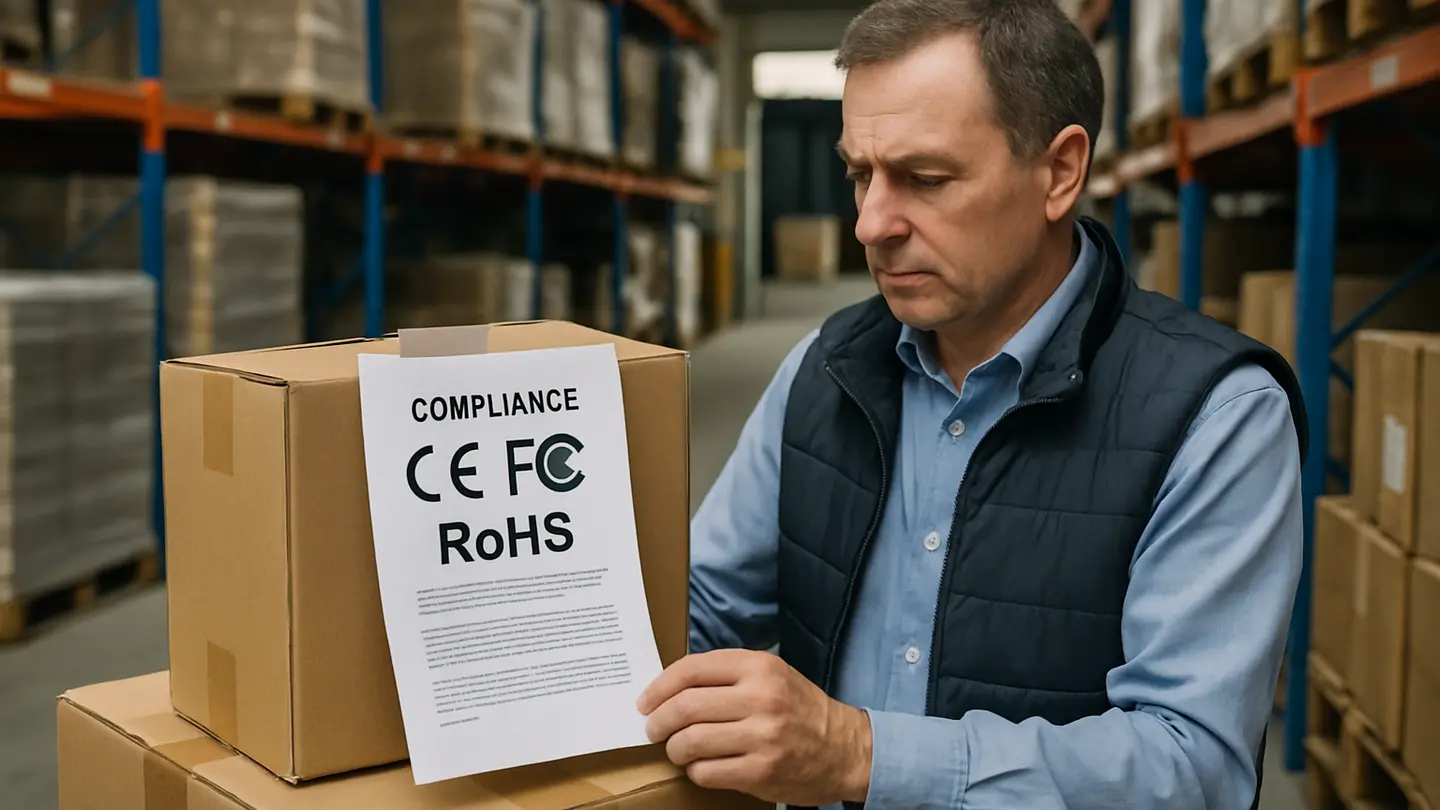
CE marking applies only where relevant EU legislation requires it; it is not a general quality badge. Where applicable, importers must ensure products meet relevant requirements, carry required markings and traceability information, and have appropriate technical documentation and a declaration of conformity.
Electrical goods also require processes for faults, safety complaints, replacement stock, possible recalls, and factory changes after approval.
9. Repair and replacement parts
Replacement filters, appliance accessories, furniture fittings, bicycle components, phone accessories, and vehicle-related non-safety parts can serve specialist demand. Customers are often searching for a specific solution rather than browsing.
Fitment is the central challenge. A product described as compatible with a model must fit the relevant version and market configuration. Manage dimensions, tolerances, compatibility lists, photos, and instructions carefully to reduce returns and support requests.
Safety-critical parts are not ideal for first-time importers. Liability rises sharply where failure could affect braking, electrical safety, structural integrity, or personal safety.
10. Connected home and charging products
Smart plugs, connected sensors, wireless chargers, Bluetooth devices, USB power products, and app-controlled accessories can command higher prices but create ongoing obligations.
Beyond electrical requirements, these products may involve radio equipment rules, cybersecurity expectations, software updates, data protection, batteries, app compatibility, and multi-device customer support. Initial factory reports do not address later firmware changes, component substitutions, or operating-system updates.
Most first-time importers should delay this category until they have reliable document control, after-sales processes, and a product lifecycle plan.
Cost Factors That Can Erode Import Margins
A low factory quotation is only one part of landed cost. A pricing model should include the following.
Tariff classification and customs duty. Duty depends on tariff classification, not a supplier’s description. Similar products can have different codes based on material, function, construction, or intended use. Confirm the commodity code and duty before setting margins.
Import VAT. VAT-registered businesses may generally recover import VAT under relevant national rules, but it can still create a cash-flow burden. Treatment varies by country and business structure, so verify the process locally.
Freight and dimensional weight. Sea, rail, air, courier, port handling, brokerage, palletisation, and final delivery all affect cost. For e-commerce, dimensional weight and fulfilment fees may exceed the importance of factory price.
Producer responsibility. Packaging, batteries, and electrical or electronic goods can create national registration, reporting, financing, and take-back obligations. Selling in several countries can increase administration.
Quality losses and returns. Include inspection costs, rejected units, damaged cartons, replacement stock, refunds, and return shipping. A product with a high return rate may be unattractive despite a strong initial gross margin.
Pre-shipment inspection can check workmanship, quantity, packaging, and visible defects. It does not replace testing, customs classification, registrations, technical documentation, or legal responsibility for placing products on the market.
Where First-Time Importers Should Start—and What to Delay
For a first order, non-electrical and non-medical household categories are usually more manageable than technical goods. Home organisation, simple pet accessories, travel organisers, desk accessories, and selected kitchen products can provide experience with sampling, purchase orders, packaging approval, freight, customs, and inventory planning.
Choose products with manageable compliance, predictable quality standards, efficient dimensions, and a realistic sales route. A low-value bulky item may be harder to profit from than a compact product with stronger perceived value.
Beauty devices, technical fitness equipment, and repair parts require additional caution because they may create higher return rates, injury or malfunction complaints, and technical-support demands.
Charging products, smart-home devices, and toys should generally be delayed until the importer can manage testing, traceability, documentation, complaint handling, and post-sale support. Toys can involve demanding safety, warning, chemical, mechanical, and age-grading requirements.
Do You Need a Different Supplier for Every Product Category?
Often, yes. Specialist factories may focus on silicone kitchenware, moulded storage products, pet textiles, or electronic accessories. They can offer better process control, material knowledge, tooling support, and quality consistency than suppliers claiming to make everything.
A trading company can simplify communication, consolidation, and shipment planning for mixed orders. The trade-off may be higher unit costs and less direct factory visibility. Some provide useful quality-control support; others simply pass orders to unknown factories.
Use specialist suppliers for core products, and use consolidation support only when the operational benefit justifies the cost and reduced transparency.
How Can You Validate Demand in One European Country?
Use country-level evidence rather than assuming demand is uniform across Europe. Search behaviour, acceptable pricing, colours, product dimensions, delivery expectations, and competition vary between markets.
Useful signals include local marketplace listings and reviews, country-specific keyword volumes, retailer assortment gaps, Google Shopping results, social-commerce activity, and competitor stock availability. Reviews can reveal recurring problems involving size, weak materials, poor packaging, missing instructions, or misleading claims.
Validation should fit the intended channel. A product that performs in a German marketplace may not suit a French supermarket buyer or a premium design-led retailer.
Is a Supplier’s CE Marking Claim Enough?
No. A claim that a product is “CE marked” does not by itself prove compliance with applicable EU requirements.
Where CE marking applies, request and review a declaration of conformity identifying the exact model, manufacturer or responsible entity, and applicable legislation. Test reports should match the product version being purchased, including materials, electrical configuration, charger, battery, and radio module where relevant.
Watch for generic, expired, or mismatched reports, including reports covering only a component rather than the finished product. Changes to power supplies, cables, coatings, batteries, or wireless modules can affect whether existing evidence remains relevant.
Should You Test One Product Category or Two?
Testing one category first is usually more controlled. It limits the number of suppliers, documentation sets, packaging approvals, quality standards, and logistics variables managed at once.
Each added category can introduce different compliance routes, minimum order quantities, carton specifications, communication issues, and return profiles. A mixed order may diversify risk, but it can also make failures harder to diagnose.
Treat the first shipment as an operational and commercial test. Repeat orders show whether specifications remain consistent, freight calculations were accurate, and customer feedback supports expansion. Add categories once the first has a stable supplier, clear documentation, and repeatable fulfilment.
Choosing an Import Category That Can Scale
A scalable category combines customer demand, supplier capability, compliance readiness, and operational capacity. Strong search interest alone is not enough if the factory cannot maintain specifications, documentation is incomplete, freight destroys margins, or the importer cannot support customers after sale.
A reliable starting point is often a straightforward product with a clear customer benefit, compact logistics, understandable quality criteria, and a supplier able to reproduce the approved sample consistently.
Maintain one controlled specification covering materials, dimensions, colours, components, packaging, labelling, instructions, carton configuration, inspection tolerances, and approved documentation. This becomes more important as volumes rise or products enter multiple European markets.
The best products to import from China to Europe are not necessarily the most fashionable. They are products that can be sourced, documented, transported, sold, and supported reliably at a viable margin.
About the Author
The author is a B2B editorial contributor covering international sourcing, product compliance, import operations, and market-entry considerations for European buyers. Their work focuses on procurement decisions, supplier due diligence, landed-cost planning, and the requirements involved in placing consumer products on European markets.