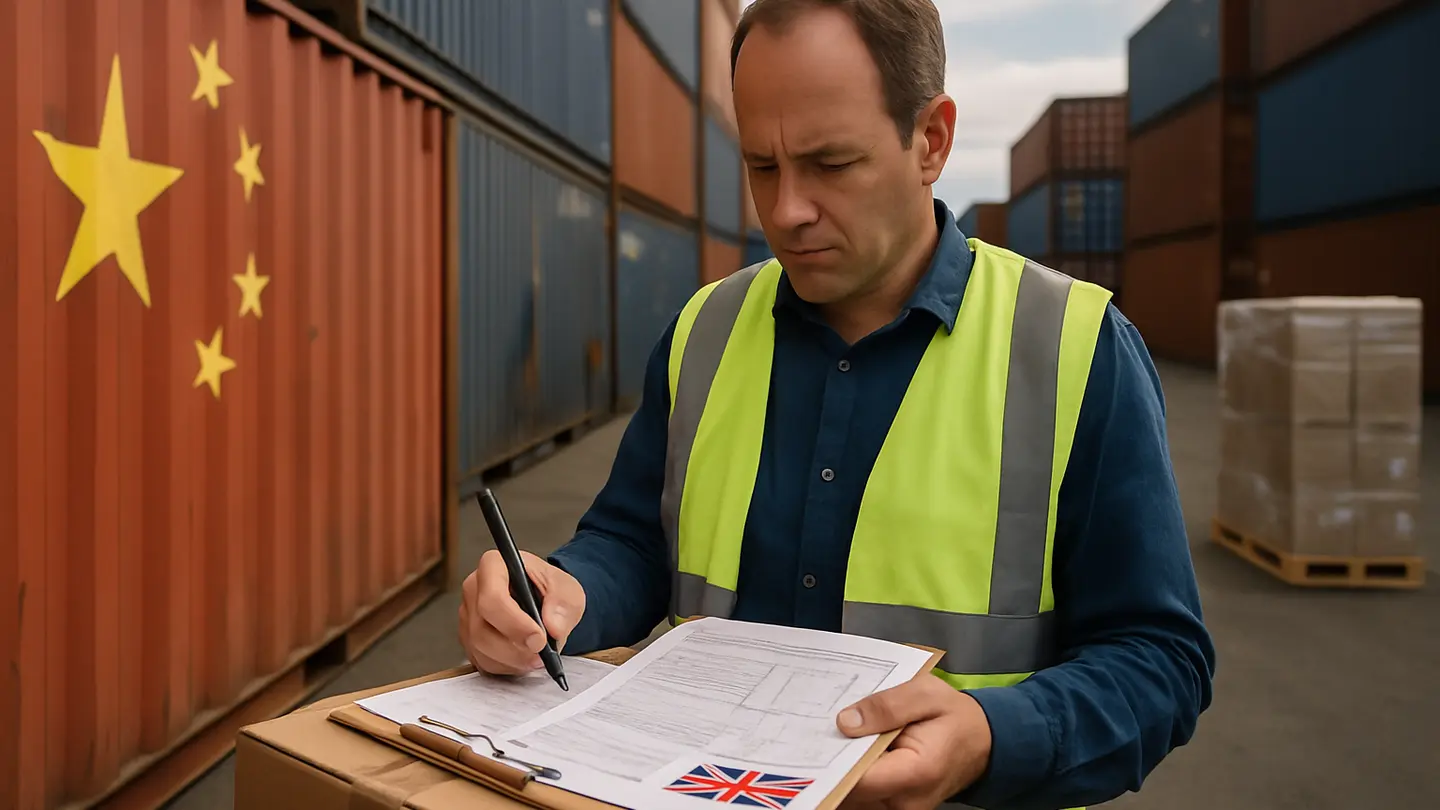
Most UK buyers asking about import duty from China to the UK are really asking: “What will this shipment cost by the time it reaches our warehouse?”
The answer is rarely the supplier’s invoice price plus one tax percentage. A UK import bill can include customs duty, import VAT, clearance fees, courier disbursement fees, port or terminal handling, inspection costs, storage, and inland delivery. Duty is often smaller than import VAT, but it is usually a permanent cost and also affects the VAT calculation.
In practical terms:
- Customs duty is usually calculated from the goods value plus freight and insurance up to the UK border.
- Import VAT is usually charged at 20% for standard-rated goods and is calculated after duty and eligible import costs are included.
- VAT-registered UK businesses may be able to reclaim import VAT if importer details and records are correct.
- Customs duty, clearance fees, port charges, handling charges, and courier admin fees are normally real landed costs.
For B2B buyers, the risk is also using the wrong commodity code, delaying clearance, or finding after arrival that import VAT cannot be reclaimed because the paperwork names the wrong party.
How the UK Import Bill Is Built
Many buyers calculate import tax from the supplier’s product invoice only. UK customs valuation is broader. The taxable customs value is normally based on the price paid or payable for the goods, adjusted where necessary, and includes costs such as freight and insurance up to the UK border.
A simplified landed-cost structure often looks like this:
| Cost element | Usually affects duty? | Usually affects import VAT? | Notes |
|---|---|---|---|
| Supplier’s goods value | Yes | Yes | Main basis for customs value |
| Freight to UK border | Often yes | Yes | Should be separated from inland delivery where possible |
| Insurance to UK border | Often yes | Yes | If charged or applicable |
| Customs duty | No | Yes | Duty is added before VAT is calculated |
| UK port, terminal, or clearance costs | Usually no for duty | Often yes depending on treatment | Ask the broker how costs are declared |
| UK inland delivery after import | Usually no | May carry domestic VAT | Keep it separately itemised |
| Courier handling or disbursement fee | No | Domestic VAT may apply | Usually unrecoverable as a service cost unless VAT rules allow recovery |
The exact treatment depends on the shipment, Incoterms, and how costs are invoiced. If urgent air freight is used, the higher freight charge may increase both duty and VAT, so the tax effect should be visible before the purchase order is approved.
The second major driver is the commodity code. The UK Global Tariff assigns duty rates by classification. Similar-looking products may fall under different codes if they differ in material, function, components, or packaging. Classification should follow the finished product and legal tariff notes, not a casual sales description.
Incorrect commodity codes create risks:
- Overpayment if the code carries a higher duty rate than the correct one.
- Underpayment if the code carries a lower rate, potentially leading to assessments, penalties, or retrospective duty.
- Customs queries if the description, code, and value do not make sense together.
- Clearance delays while the broker requests more information.
- Inconsistent import history if HMRC reviews previous entries.
Chinese export HS codes can be useful references, but the UK import commodity code and duty rate should be checked from a UK perspective.
Recoverable VAT Versus Permanent Landed Costs
Customs duty and import VAT behave differently in a B2B cost calculation.
Customs duty normally remains in the landed cost. If the duty rate is 4%, 6%, or 12%, that amount affects margin, resale pricing, and project profitability.
Import VAT may be recoverable for a VAT-registered UK business if the import relates to taxable business activities and the paperwork is correct. In that case, import VAT is usually a cash-flow issue rather than a margin cost.
That distinction matters. A buyer who adds 20% import VAT as a permanent cost may overstate landed cost if the VAT is recoverable. A buyer who assumes recovery without checking the import record may understate the cost.
For VAT recovery, the importing business usually needs:
- A valid UK VAT registration.
- A UK EORI number used correctly on the customs declaration.
- The business named correctly as importer where it intends to reclaim import VAT.
- A C79 import VAT certificate if VAT was paid at import.
- Or postponed VAT accounting statements if import VAT was accounted for through PVA.
- Supporting records such as invoices, transport documents, and customs entries.
Postponed VAT accounting allows VAT-registered importers to account for import VAT on the VAT return rather than paying it upfront at the border. It does not remove the VAT calculation; it changes how the VAT is accounted for and recovered.
The decision should be made before the goods ship. If the broker is not told to use postponed VAT accounting, or the declaration uses the wrong importer details, it may be hard to fix later.
A practical rule is to split costs into two columns:
- Permanent landed costs: duty, clearance fees, handling fees, freight, inspection, storage, inland delivery, non-recoverable charges.
- Recoverable VAT or cash-flow items: import VAT where the company is VAT-registered, correctly named, and has valid records.
That split gives a clearer view of margin and working-capital exposure.
Why a “VAT Included” Price May Not Be the Final Price
Online orders and marketplace purchases can confuse import costing because “VAT included” does not always mean “all UK import charges included.”
For low-value consignments, VAT may be collected at checkout. However, this does not necessarily cover customs duty, courier administration fees, or charges that arise when the goods enter the UK. Buyers should look at the tax breakdown rather than relying on the headline phrase.
The £135 threshold is particularly important. It generally applies to the value of the consignment or parcel, not to each item separately. If you order 20 units at £10 each in one consignment, the combined parcel value is what matters.
For consignments above the threshold, normal import VAT and duty treatment may apply. The courier may request payment before delivery, including:
- Import VAT paid or to be paid on the importer’s behalf.
- Customs duty, if applicable.
- Courier disbursement or advancement fees.
- Customs clearance administration charges.
- Storage or delay charges if payment is not made quickly.
These fees may be small compared with a commercial shipment, but they are real costs and are usually not part of the supplier’s quoted unit price.
The bigger risk is duplicate VAT treatment. A buyer may pay VAT at checkout and then receive a courier request that appears to include import VAT again. Sometimes the second request is legitimate because the checkout VAT did not apply as assumed. Sometimes the documents are wrong. The buyer needs the invoice, customs entry, and courier breakdown to understand what has been charged.
For B2B purchasing teams, ask before approving an international order:
- Is the seller charging UK VAT or foreign tax?
- Is the order below or above the relevant consignment threshold?
- Who is acting as importer?
- Will the courier charge duty, import VAT, or handling fees on delivery?
- Will the paperwork allow import VAT recovery if the business is VAT-registered?
Small parcels can feel simple, but they often create messy records if the buyer later needs to support VAT recovery or reconcile landed costs.
Check Who Is Named as the Importer of Record
The importer of record is the party legally responsible for bringing the goods into the UK. The importer named on the customs entry is linked to the duty liability, import formalities, and import VAT records.
A buyer may believe it imported the goods because it paid the supplier and received the shipment. However, the customs entry may show another company as importer, such as the supplier’s logistics agent, a courier, or a fulfilment intermediary.
That distinction matters most for VAT recovery. If the buyer wants to reclaim import VAT, its business generally needs to be correctly named on the import record and have supporting evidence. If another party is shown as importer, the buyer may not have the right C79 certificate or postponed VAT accounting statement.
DDP terms can make this more complicated. Under Delivered Duty Paid arrangements, the seller agrees to deliver goods with import duties and taxes paid. That can be convenient, but the seller or its agent may appear as importer of record. If the buyer is not the importer, it may not be able to reclaim import VAT even if VAT has economically been built into the price.
DDP is not necessarily wrong. It can be useful where the buyer wants simplicity or does not have import infrastructure. But VAT-registered B2B importers should review it carefully because it may reduce VAT recovery evidence and visibility over duty and customs valuation.
Key documents to check include:
- The customs import declaration.
- C79 import VAT certificate, where import VAT was paid.
- Postponed VAT accounting statement, where PVA was used.
- Commercial invoice.
- Packing list.
- Freight invoice.
- Broker’s clearance statement.
- Courier duty and tax invoice.
The importer identity should be agreed before shipment, not discovered after the goods arrive.
Get the Customs Paperwork Right Before Ordering
Import problems often begin at the quotation stage, not at the port. If the pro forma invoice, product description, Incoterms, and freight split are vague, the broker may have to make assumptions that affect duty, VAT, and clearance time.
Start with the commodity code. It should be checked against the finished product being imported, not a generic supplier description. Classification may depend on:
- Main material or component composition.
- Product function and intended use.
- Whether the item is a part, accessory, or complete product.
- Whether goods are imported assembled or unassembled.
- Retail packaging contents.
- Sets and kits supplied together.
- Electrical, mechanical, or pressure-related features.
- Any product-specific tariff notes.
Factory-provided HS codes should not be accepted without review. They may reflect Chinese export practice, a different market, or a simplified internal code. The UK classification should be checked using the UK tariff and, where necessary, with a customs broker or specialist adviser.
The commercial invoice should show:
- Seller and buyer details.
- Clear goods description.
- Quantity and unit values.
- Total invoice value and currency.
- Incoterms and named place.
- Country of origin.
- Commodity codes, where agreed.
- Packing details and gross/net weight.
- Freight and insurance charges, if included.
- Shipment reference, purchase order, or contract number.
For B2B imports, the description should be specific enough for customs to understand what is being imported. “Bathroom goods,” “hardware,” “samples,” or “accessories” are usually too vague. A better description identifies the product, material, function, and whether it is complete or part of a set.
Freight allocation also deserves attention. If the supplier or forwarder charges one all-in freight amount from factory to UK warehouse, the broker may need to separate the cost to the UK border from UK inland delivery. Itemising these costs can prevent unnecessary duty valuation issues.
Before placing the order, buyers should confirm four points:
- Commodity code: What code will be declared in the UK, and has it been checked?
- Freight split: Which costs relate to transport up to the UK border, and which relate to UK inland delivery?
- VAT route: Will import VAT be paid at the border or handled through postponed VAT accounting?
- Importer identity: Which company will be named as importer of record?
These questions are easier to resolve before production and shipment. Once goods are on the water or sitting at an airport terminal, the buyer has less leverage and less time.
FAQ
Q1: Does my product need a UKCA mark, and does that change the duty?
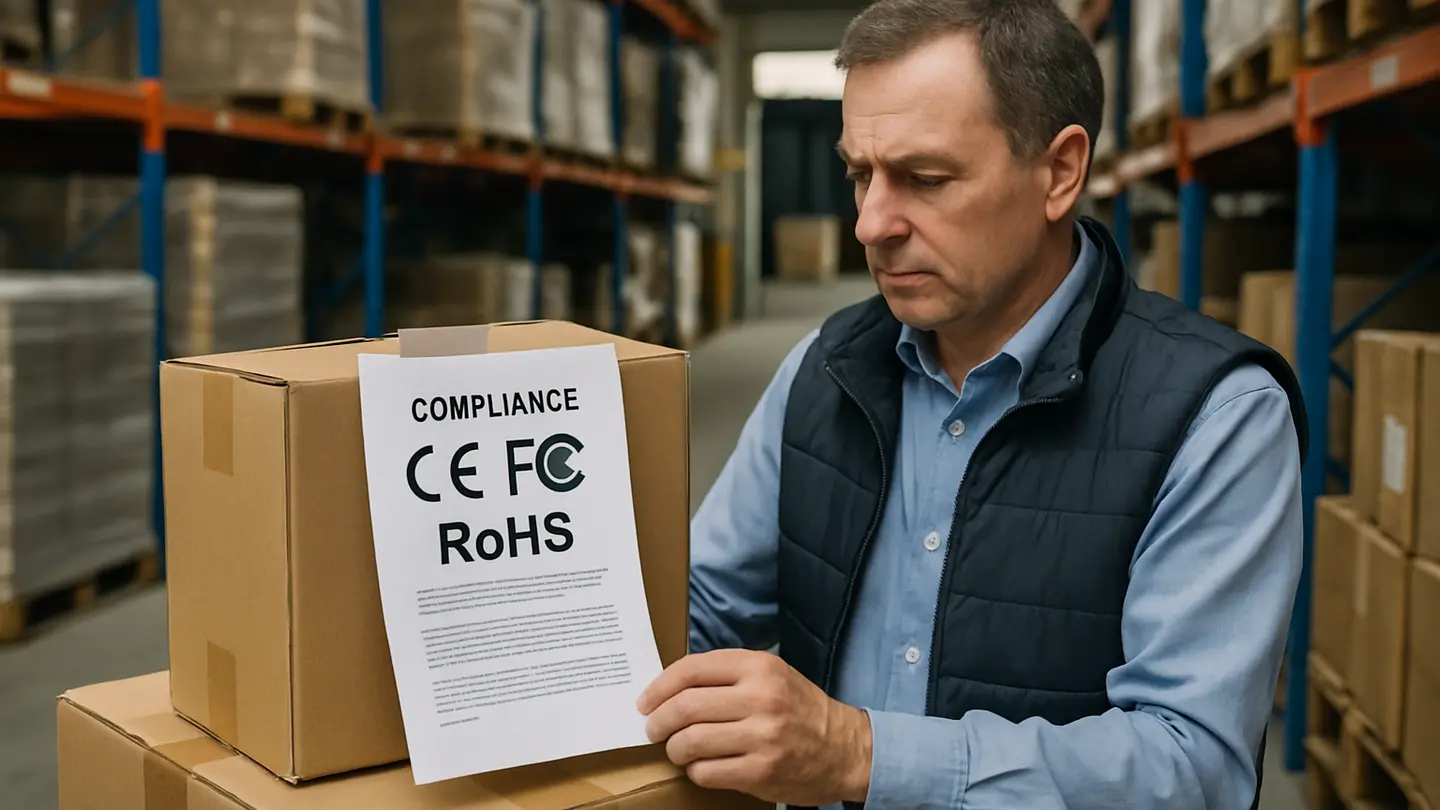
Product conformity marking and import duty are separate issues. UKCA or CE marking relates to product compliance and market access, while customs duty is based on classification, origin, and customs value.
For some product categories in Great Britain, CE marking may still be accepted depending on current rules and transition arrangements. Other categories may require UKCA marking or have additional compliance obligations. Northern Ireland can involve different marking considerations.
The duty rate does not change simply because a product carries a UKCA or CE mark. However, non-compliant goods can still be stopped, delayed, or challenged even if duty has been calculated correctly. Check the marking and conformity requirements for the exact product category before shipment.
Q2: Do I need an EORI number before the goods leave China?
A UK EORI number is the customs identifier used for businesses involved in importing or exporting. If your business is the importer of record, the EORI should be available before the customs entry is filed.
It is best to obtain and verify the EORI before the goods leave China, especially for air shipments or courier movements where clearance can happen quickly. Waiting until arrival can cause avoidable delays.
UK importers can apply for an EORI through HMRC. VAT-registered businesses should make sure the EORI, VAT number, importer name, and accounting records align.
Q3: Will HMRC accept an invoice written in Chinese?
For UK customs purposes, an English commercial invoice is strongly preferable. Customs officers, brokers, finance teams, and auditors need to understand the goods description, values, Incoterms, and shipment details without translation delays.
A bilingual invoice can work where the supplier needs Chinese wording for internal or export purposes. The English wording should still be clear, accurate, and consistent with the packing list and customs declaration.
Agree the product descriptions, values, Incoterms, and shipment references at the pro forma stage so the final commercial invoice supports smooth clearance.
Q4: The mould was invoiced separately from the goods. Does customs still count it?
It may. Tooling, moulds, dies, engineering work, or other assists can sometimes need to be added to the customs value of imported goods, even if they were invoiced separately.
A separate tooling invoice does not automatically remove that cost from customs valuation. The question is whether the tooling was supplied directly or indirectly for use in producing the imported goods and whether its value should be apportioned across the imported units.
Disclose tooling and mould arrangements to the customs broker before the entry is filed. It is better to value and declare the arrangement correctly than to have it questioned later during a customs review.
Key Takeaways for UK Importers
The final import bill is largely determined before the goods reach the UK border. Supplier descriptions, commodity codes, Incoterms, freight allocation, importer identity, and broker declarations all influence what the buyer pays.
For most B2B buyers, customs duty is only one part of the picture. Import VAT is often larger, but it may be recoverable if the business is VAT-registered and the records are correct. Duty, clearance fees, courier administration, and handling charges normally remain in the landed cost.
Do not rely on vague invoice wording or unchecked factory HS codes. Confirm the UK commodity code, taxable freight element, VAT accounting route, and importer of record before placing the order.
Where import VAT reclaim is intended, make sure the buyer’s company is correctly named on the import record and has the necessary C79 certificate or postponed VAT accounting statement. A small paperwork error can turn a recoverable cash-flow item into a commercial cost.
Author Background
This article was prepared by an independent B2B editorial writer focused on international sourcing, import operations, and supply-chain risk management for UK buyers. The guidance is intended as practical commercial information; importers should confirm product-specific duty, VAT, and compliance treatment with HMRC, a customs broker, or a qualified tax adviser.