Importing shower products from China can give UK bathroom retailers, builders’ merchants, ecommerce sellers, and project suppliers broad product choice and competitive manufacturing costs. But the factory price is only part of the landed cost. Freight, port charges, customs delays, compliance issues, VAT treatment, and final-mile delivery can quickly reduce margins.
A reliable workflow helps you define the product, verify the supplier, assign freight and customs responsibilities, secure VAT evidence, and receive stock with a complete audit trail.
What to Prepare Before Ordering from a Shower Manufacturer
Before sending a deposit, prepare your business details: registration information, trading name, billing address, UK delivery address, contact person, and the person responsible for customs instructions. If finance, warehouse, and purchasing teams are separate, decide who approves customs values, VAT treatment, and shipment release.
For imports into Great Britain, you will generally need a GB EORI number. If the movement involves Northern Ireland, you may need an XI EORI number depending on the route and transaction structure. Do not leave this until the goods reach the UK border.
Most SMEs appoint a freight forwarder, customs broker, or courier customs team to handle Customs Declaration Service entries. Even so, the importer remains responsible for accurate information. Before paying a supplier deposit, check the likely commodity code, duty rate, import VAT treatment, restricted-goods rules, and shower-product compliance requirements.
The 8-Step Process for Importing Shower Products from China
The process below applies to common bathroom and shower goods, including shower heads, shower sets, mixer valves, shower hoses, fittings, shower enclosures, rails, brackets, trays, and related bathroom hardware.
The goal is not only to move goods from China to the UK. It is to buy the right product, avoid preventable customs problems, protect cash flow, and calculate landed cost accurately enough to sell profitably.
Step 1: Write a Detailed Shower Product Specification
A vague request such as “quote rainfall shower set” creates risk. A precise specification helps the shower manufacturer quote accurately, helps inspectors check the goods, and helps customs agents understand the import.
Include product details such as:
- Product type and intended use
- Material, such as brass, stainless steel, ABS, aluminium, or glass
- Finish, such as chrome, brushed nickel, matt black, gunmetal, or PVD coating
- Dimensions, wall thickness, hose length, thread size, and connector type
- Water pressure requirements and flow expectations
- Valve, cartridge, diverter, and thermostatic details where applicable
- Accessories, screws, seals, washers, brackets, and installation parts
- Packaging method, retail box artwork, warning labels, and instructions
- Carton size, gross weight, net weight, pallet quantity, and pallet dimensions
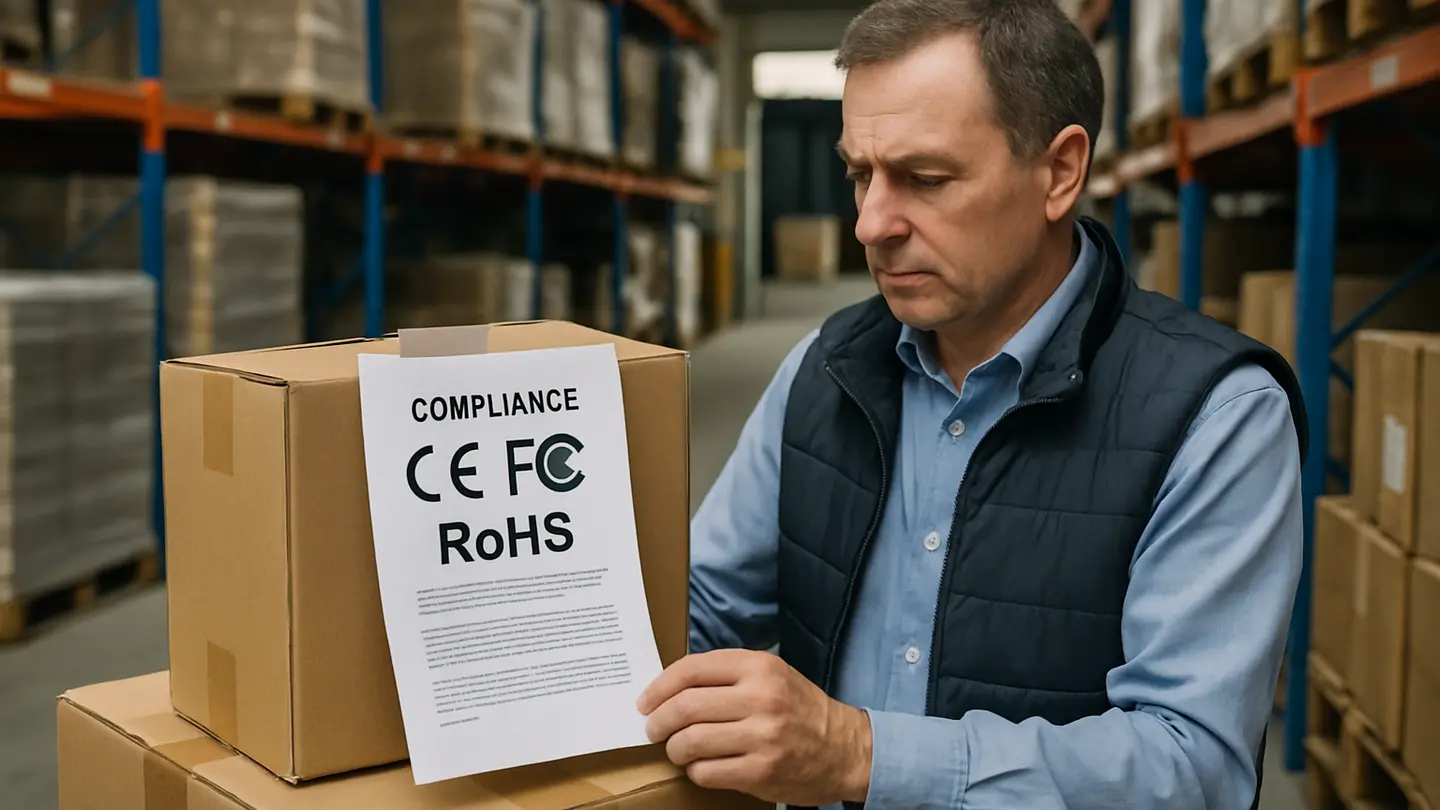
Check compliance before paying for tooling, moulds, custom finishes, packaging printing, or production deposits. Some shower products may need test reports, UK market markings, installation instructions, or technical documentation. If requirements are unclear, verify them before production begins.
Step 2: Vet Shower Suppliers and Confirm the Deal Terms
Supplier vetting should confirm that the company is real, capable, and suitable for UK-bound bathroom products. Ask for the business licence, factory address, export experience, product catalogue, and details of previous UK or EU orders if available. If the supplier is a trading company rather than the factory, the relationship should be transparent.
Payment details need special attention. The beneficiary should match the registered supplier or an agreed trading entity named in the contract or proforma invoice. Requests to pay a personal or unrelated company account are a warning sign.
Lock in the commercial terms before production:
- MOQ and price breaks
- Sample cost and sample approval process
- Tooling or mould ownership if custom parts are required
- Deposit and balance payment terms
- Production lead time
- Packaging and labelling responsibilities
- Warranty handling
- Defect tolerance and replacement procedure
- Responsibility for shortages, wrong accessories, or damaged packaging
The proforma invoice should state freight assumptions clearly, such as EXW factory, FOB port, CIF UK port, or DDP UK address if used. A reliable supplier should provide samples, accurate carton data, clear product descriptions, corrected invoices when needed, and documentation support.
Step 3: Set Freight, Risk, and Customs Responsibilities
Import problems often begin with unclear responsibility. Decide who pays each charge, who books freight, when risk transfers, and who controls customs instructions.
Under EXW, the buyer usually takes on more coordination because collection from the supplier’s premises, export arrangements, inland China transport, and international freight must be organised. Under FOB, the supplier is usually responsible for getting the goods to the named Chinese port and clearing them for export, while the buyer controls the main freight and UK import process.
DDP can appear convenient because the seller offers delivery to a UK address with duties and taxes included. However, it can create problems if the buyer is not clearly shown as importer of record, cannot obtain VAT evidence, or has limited visibility over customs values and declarations. If DDP is used, document it carefully.
For many UK SMEs, FOB with a known forwarder is clearer. Calculate landed cost before ordering. Include product cost, inland charges, freight, insurance, duty, import VAT, port and handling fees, inspection, consolidation, customs brokerage, storage, and final-mile delivery. For shower products, weight and carton volume can make freight and handling a major cost.
Step 4: Review Customs Documents for Consistent Details
Customs paperwork is a risk-control process, not just administration.
The key documents may include:
- Commercial invoice
- Packing list
- Bill of lading or air waybill
- EORI details
- Commodity code
- Import licences or certificates if required
- Product test reports or compliance records where relevant
- Insurance documents where applicable
Check that importer name, supplier name, addresses, currency, Incoterms, quantities, unit values, total values, weights, carton counts, and product descriptions match across the paperwork. The commercial invoice should describe the goods clearly. “Bathroom accessories” is less helpful than “stainless steel shower hose” or “tempered glass shower enclosure panels,” where accurate.
Confirm GB labelling, marking, and packaging requirements before printing retail boxes. If your business files declarations directly, you will need access to the Customs Declaration Service and compatible authorised software. Most importers use an agent, but they still need to provide correct shipment data.
Step 5: Inspect and Consolidate Shower Cargo Before Export
Where commercially possible, make final balance payment after inspection and document confirmation rather than before quality is verified. This is especially important for custom finishes, private-label packaging, mixed-SKU orders, or high-value shower enclosures.
Pre-export quality control should check:
- Carton counts and SKU quantities
- Barcode and label accuracy
- Finish defects, scratches, dents, and colour variation
- Missing hoses, seals, screws, cartridges, brackets, or manuals
- Packaging strength and drop-risk points
- Glass protection for shower enclosures
- Water-related component quality, threads, seals, and visible leakage risks
If you buy from several suppliers, a China warehouse or consolidation partner can receive goods, relabel cartons, check quantities, and combine shipments. Consolidation can reduce repeated destination charges and make UK receiving easier.
Air freight is faster but usually expensive for heavy bathroom products. Sea freight is slower but normally gives a lower unit cost for bulky shower goods. Before the cargo leaves China, confirm who will be importer of record and how VAT evidence will reach your business.
Step 6: Coordinate Shipment Handover and UK Clearance
Border delays often happen when the supplier, forwarder, broker, and buyer each assume someone else is responsible. Create a handover plan before departure.
Most importers appoint a customs broker or freight forwarder to submit the customs declaration. After shipment departure, send the final commercial invoice, packing list, transport document, EORI number, VAT number if applicable, commodity code guidance, and compliance documents to the agent.
Confirm who is responsible for safety and security declarations. Depending on the shipment route and service arrangement, this may sit with the carrier, forwarder, or another appointed party.
Ask to review the draft customs declaration where possible. Check importer details, EORI number, VAT number, product descriptions, commodity codes, customs value, freight allocation, Incoterms, and origin details. A short review before submission can prevent duty, VAT, and clearance errors.
Step 7: Secure VAT Evidence and Reconcile Import Costs
Import VAT treatment should be agreed with your broker before clearance. Eligible VAT-registered businesses may be able to use Postponed VAT Accounting, which allows import VAT to be accounted for on the VAT return rather than paid immediately at the border. Written instructions reduce the risk of the broker selecting the wrong treatment.
If import VAT is paid at import, the C79 certificate is important evidence for VAT recovery by VAT-registered businesses. If Postponed VAT Accounting is used, monthly postponed import VAT statements, often referred to as MPIVS statements, support VAT records.
After clearance, reconcile the full import file. Compare the supplier invoice, freight invoice, duty, VAT, port charges, handling fees, delivery charges, and broker fees against your landed-cost estimate. This improves future pricing and prevents hidden costs from being ignored.
Step 8: Receive the Goods and Close the Import File
When the shipment arrives, compare physical goods against the purchase order and packing list. Check pallets, cartons, SKUs, quantities, and visible carton condition before stock is accepted into inventory.
If cartons are crushed, wet, torn, or missing, document the issue before signing delivery paperwork. Take photographs, note exceptions on the delivery record where possible, and notify the forwarder quickly. This protects your position if an insurance or carrier claim is needed.
Final QC should confirm that shower products are sale-ready. Check packaging, labels, accessories, visible finishes, glass panels, fittings, and manuals. Escalate shortages, transport damage, supplier defects, tax errors, or declaration issues through the supplier, insurer, forwarder, broker, or HMRC amendment process.
Keep a complete import file, including purchase order, invoice, packing list, transport documents, customs entries, duty and VAT evidence, inspection reports, delivery records, and correspondence.
Common Shower Import Problems and Fixes
Even well-planned shower imports can run into issues. The best response is structured escalation: identify the problem, confirm which party controls the fix, collect evidence, and document every correction.
Problem: Mismatched Documents Delay Clearance
Clearance can be delayed if the invoice, packing list, and transport documents show conflicting details. Common issues include different carton counts, inconsistent weights, wrong Incoterms, unclear descriptions, or values that do not match the declaration.
Ask the supplier for corrected commercial documents quickly. The broker may need to amend the customs declaration or resubmit details. The digital customs entry should match the physical shipment records, not an outdated quotation or draft invoice.
Problem: The Commodity Code Is Unclear
Do not copy a commodity code from a competitor listing, old supplier invoice, or previous shipment that may not match the current goods. Shower products can differ by material, function, components, and packaging, all of which may affect classification.
Build the classification logic from the actual product facts: what the product is, what it is made from, how it is used, whether it is a complete set or component, and how it is presented for import. Correct classification reduces the risk of overpaying duty or underpaying and facing later corrections.
Problem: Import VAT Evidence Cannot Be Found
VAT evidence can be lost when another party is shown as the legal importer or when DDP arrangements are not transparent. The customs declaration should identify the correct registered consignee and importer details.
Before shipment, confirm whether your business expects a C79 certificate for VAT paid at import or an MPIVS statement for postponed import VAT. Provide written VAT instructions to the broker and keep them in the shipment file.
Problem: Shower Products Fail UK Compliance Checks
Overseas suppliers may not proactively warn UK buyers about product-specific compliance obligations. Non-compliant goods can be detained, rejected, or seized at the border, and even released goods may be unsellable if markings, instructions, or technical records are inadequate.
If required documentation, markings, standards, or restricted-import rules are uncertain, pause the shipment. Check requirements before the goods leave China, especially for products involving glass, pressure-related components, coatings, chemicals, electrical features, or safety-critical installation parts.
Problem: Duty or VAT Was Paid Incorrectly
Duty and VAT errors can result from wrong customs values, incorrect freight allocation, unsuitable Incoterms treatment, or incorrect classification. These errors may inflate landed cost or create underpayment exposure.
Keep the complete commercial file so your broker or adviser can support post-clearance corrections. HMRC amendment routes may allow overpayment refunds or underpayment settlement where evidence supports the correction. Clear customs roles in the proforma invoice reduce handoff errors.
FAQ
1. Do I need a license to import from China to the UK?
There is no single general import licence for all goods imported from China to the UK. However, you normally need a valid EORI number for customs clearance.
Specific licences, certificates, or controls may apply to restricted goods. Restricted categories can include chemicals, medicines, agricultural goods, animal products, plants, waste, hazardous materials, and other regulated products. Shower-specific requirements depend on the exact product type, materials, coatings, components, and intended use.
2. How long does shipping take from China to the UK?
Transit time depends on freight mode, route, port choice, carrier service, and final delivery location. Air freight is usually faster than sea freight, while sea freight can take several weeks and is commonly used for heavier or bulkier bathroom goods. Rail freight may be available as a middle option.
Always add a buffer for customs checks, port congestion, document corrections, container availability, inspection delays, and final-mile delivery.
3. Do I pay import VAT on goods from China?
Commercial goods imported into the UK can be subject to import VAT. Import VAT is generally calculated on the customs value plus duty and related import costs. The standard UK VAT rate is commonly 20% for many goods, although VAT treatment should always be checked for the specific product and transaction.
Eligible VAT-registered businesses may use Postponed VAT Accounting to manage cash flow, provided the import is handled correctly and the required statements are retained.
4. What is the cheapest way to ship from China to the UK?
Sea freight usually offers the lowest unit cost for heavy or bulky shower products. Full container load shipping may suit higher volume, while less-than-container-load shipping can work for smaller orders.
Be careful with low LCL quotes. They may exclude destination handling, port fees, customs clearance, delivery, storage, or other local charges. Consolidating orders from multiple suppliers can reduce repeated fees and make receiving more efficient.
Final Checklist for Importing from a Shower Manufacturer
Successful importing depends on a repeatable workflow, not one-off problem solving. Before placing an order with a shower manufacturer, define the product specification, verify the supplier, check compliance, confirm the commodity code, and agree Incoterms and customs responsibilities.
Maintain a permanent shipment file covering supplier records, purchase orders, invoices, packing lists, commodity code logic, Incoterms, inspection reports, transport documents, customs declarations, duty calculations, VAT evidence, and delivery records.
As order volume grows, consider consolidating and inspecting goods in China before export. Managing quality, documentation, and shipment structure before departure is safer than discovering problems after the goods reach a UK port.