An initial production check is an inspection carried out when a sourcing order has just begun, while there is still time to stop one mistake from becoming a full shipment of defective goods. It is not final approval. It is an early warning system.
For B2B buyers, the economics are simple: the earlier a problem is found, the cheaper it usually is to fix. A wrong material discovered before cutting, molding, coating, assembly, or packing may require a supplier conversation and a schedule adjustment. The same issue found after completion can mean sorting, rework, repacking, shipment delays, customer claims, returns, or a full-batch remake.
Early-stage inspections often uncover practical problems: the factory is using the wrong material, workers are following an outdated reference, a component is missing, the machine setup is incorrect, or the first finished units already show defects. What matters is finding these issues while the order is still small enough to redirect.
Why the First 10% to 20% Matters Most
An initial production check is normally scheduled after production has started but before most of the order has been made. The useful window is often around the first 10% to 20% of the production run. At that point, the inspector can see real production conditions, but the factory has not yet repeated the same method across the full order.
If inspection happens too early, there may be no finished units to review. If it happens too late, the inspection becomes closer to a during-production or pre-shipment check, with less ability to prevent repetition. The purpose is to identify a defect while the supplier can still change the input, setup, instruction, or handling method.
Even if finished units are not yet available, the visit can still be useful. The inspector can review:
- Raw materials received for the order
- Components and accessories staged for production
- Packaging materials and labels
- Work instructions and production documents
- Approved samples, drawings, color standards, and artwork
- Line setup, tools, fixtures, molds, gauges, or machine settings
- Operator understanding of critical requirements
This is especially important when the product depends heavily on correct inputs. For example, a shower component may have the correct shape but the wrong surface finish, coating thickness, gasket material, hose length, or thread specification. A final inspection can identify the mismatch, but it cannot turn the wrong material into the right one.
An early check also protects against informal substitutions. Factories may use alternative materials because the approved input is unavailable, delayed, more expensive, or difficult to process. Some substitutions are harmless; others affect performance, durability, compliance, appearance, or customer acceptance. Any material substitution should match the approved specification and require written buyer approval before production continues.
The value of the first 10% to 20% is that it converts assumptions into evidence. The buyer no longer relies only on the purchase order, the factory’s promise, or the sample approved weeks earlier.
The Approved Sample in the Office Is Not Enough
Many early production problems are caused by reference-control failure.
A buyer may approve a sample after several rounds of changes. Sales staff may keep that sample in an office. Management may understand the latest specification. But on the production floor, workers may be using an older sample, a photo from a previous version, a partial drawing, or memory from a repeat order. The team may be making the wrong version well.
This communication gap is common because information passes through many hands: buyer, trading company, factory sales, engineering, purchasing, production planning, line supervisors, operators, packing staff, and subcontractors. Each transfer creates a chance for outdated or incomplete information to survive.
An initial production check should therefore ask: what reference is the production line actually using?
Inspectors should confirm and photograph line-side references, not only the polished sample in the meeting room. Useful evidence includes:
- The approved physical sample available at the workstation
- Drawings or technical sheets used by operators
- Color standards or finish boards
- Label artwork and barcode files
- Packaging layout and carton markings
- Assembly instructions or critical control points
- Customer-specific inspection criteria posted at the line
If the approved sample is locked in an office while workers rely on another version, that is an immediate risk. If the line has no drawing, no color reference, or no approved artwork, the risk is even clearer. Missing or incorrect production references should be treated as a production issue, not an administrative detail.
This matters especially for private-label and appearance-sensitive products. A functional item can still fail commercially if the finish, logo position, insert sheet, retail box, or carton label does not match the approved standard.
What an Initial Production Check Should Cover
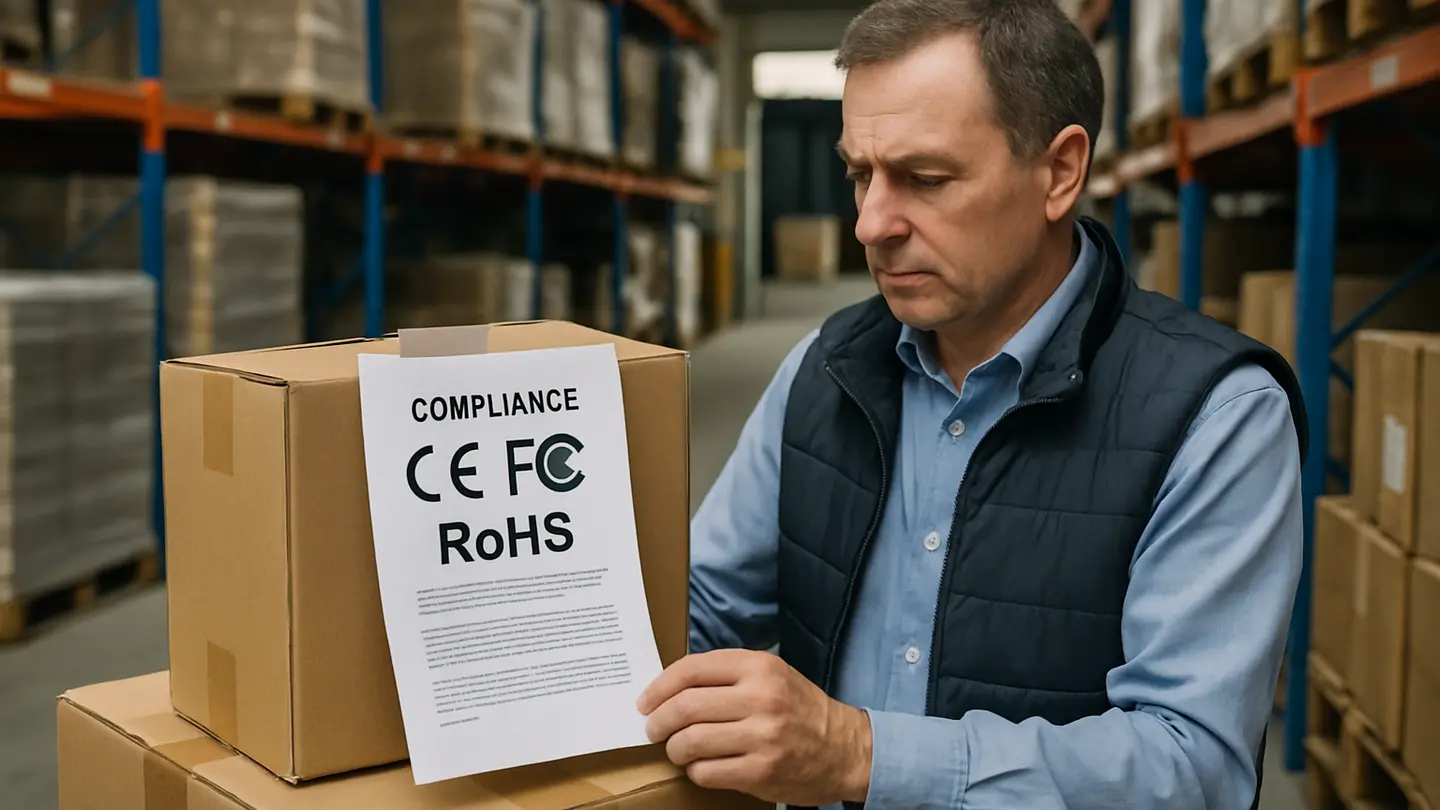
A strong initial production check starts with materials because wrong inputs cannot be repaired by a final inspection. Finished goods may be sorted, reworked, or repacked, but if the resin, metal grade, coating, fabric, seal, adhesive, glass, electronic component, or packaging board is wrong, the problem may be built into every unit.
The checklist depends on the product, but the inspection should usually cover both physical conformity and document traceability.
| Inspection area | What to verify | Why it matters |
|---|---|---|
| Raw materials | Grade, thickness, color, finish, dimensions, batch identity | Confirms the order starts with approved inputs |
| Components | Correct type, model, size, fit, compatibility | Prevents assembly failure or version mismatch |
| Surface finish | Color, gloss, plating, coating, texture, visible defects | Protects appearance and customer acceptance |
| Production setup | Tools, molds, fixtures, machine settings, gauges | Stops repeated defects caused by incorrect setup |
| Line references | Approved sample, drawings, specifications, artwork | Ensures workers follow the buyer-approved version |
| Packaging parts | Labels, inserts, cartons, barcodes, retail boxes | Prevents costly repacking and distribution issues |
| First finished units | Workmanship, dimensions, assembly, function, markings | Tests whether the setup produces acceptable goods |
For shower-related products, the material review might include stainless steel grade, brass composition, plastic resin type, hose flexibility, rubber gasket condition, glass thickness, plated finish, or coating consistency. For other categories, the same logic applies: identify characteristics that cannot be corrected cheaply after production.
Components and packaging deserve close attention because they often come from different suppliers and arrive on different schedules. A factory may have the main product ready but lack the correct screws, seals, brackets, installation kits, instruction sheets, barcodes, or retail cartons. Missing parts may not stop early production, but they can stop packing, shipping, or customer installation later.
The first finished units should be compared against the verified production reference: the approved sample, specification, drawing, and purchase order requirements. The inspector should not simply ask whether the factory believes the units are acceptable.
Buyers should also understand the scope. An initial production check reduces early risk; it does not prove the full order will remain compliant until completion. Production can drift, a new shift may take over, a new material batch may arrive, machine settings may change, and handling damage may increase. Higher-risk orders may still need a during-production inspection and a pre-shipment inspection.
The early check answers one question: has the order started correctly?
The Report Should Trigger a Decision
An inspection report should not be treated as a passive record. Its value depends on the decision it triggers.
For an initial production check, the practical outcomes are usually:
- Continue production because the setup, materials, references, and early units are acceptable.
- Continue only after specific corrections are made and verified.
- Stop affected production until the buyer gives written clearance.
The worst outcome is to document early defects while unchanged production continues. If the inspection finds the wrong gasket, label, finish, drawing, or machine setting, the supplier should not keep producing the same way while the buyer “reviews the report.” Every hour may increase the number of affected units.
Buyers should define stop-work rules before inspection, ideally in the purchase order, quality agreement, or inspection instruction. These rules should identify findings that require immediate escalation and whether the factory may continue production while waiting for buyer feedback.
Examples of issues that may justify pausing affected work include:
- Use of unapproved or untraceable materials
- Critical safety, regulatory, or performance failures
- Incorrect product version or specification
- Wrong private-label branding or customer artwork
- Repeated major defects in the first finished units
- Missing approved sample or critical line reference
- Setup defects likely to affect all units produced
Stopping early can cost time, but continuing with a known defect can multiply the cost across the order. A one-day delay near the start may be cheaper than sorting 10,000 units, remaking retail packaging, air-freighting replacements, or explaining a late delivery to a major customer.
The report should distinguish observation from evidence. A useful report includes clear photos, quantities checked, defect descriptions, location of the finding, reference documents used, material labels, batch numbers where relevant, and the factory’s immediate response.
When the Extra Inspection Day Is Worth It
Not every order needs the same inspection plan. The value of an initial production check depends on the supplier, product, specification, and commercial consequences of failure.
The inspection is usually most valuable when:
- The supplier is new to the buyer
- The product is being made for the first time
- The order uses custom materials, dimensions, finishes, or tooling
- The item has multiple components that must fit together
- The product carries private-label branding
- Color, surface finish, or retail appearance is critical
- Packaging must meet retailer or marketplace requirements
- The cost of late shipment is high
- The buyer has limited confidence in factory communication
- Previous orders showed setup, material, or reference-control problems
Private-label goods are a frequent case. A product may function correctly but still be commercially unacceptable if the logo, carton, insert, barcode, warning label, or color reference is wrong. Retail packaging errors are often discovered late, after goods are already packed, and repacking can be slow and expensive.
Custom products also justify early inspection because the factory cannot rely on routine production habits. New molds, revised drawings, updated finishes, and special components all introduce uncertainty. The first units show whether the factory has translated the buyer’s requirements into real production controls.
Repeat orders of simple products from a proven factory may not always justify the added inspection cost. If the supplier has stable materials, consistent history, unchanged specifications, and low commercial risk, the buyer may rely on other controls, such as incoming material checks, during-production inspection, or pre-shipment inspection.
But a repeat order can become risky again when something changes. Buyers should reconsider an initial production check after:
- A new material source is introduced
- Production moves to a different facility or workshop
- A long gap occurs between orders
- The buyer revises specifications, artwork, or packaging
- The factory changes a key process or subcontractor
- A new color, finish, size, or SKU variant is added
- Previous quality issues suggest weak internal controls
The decision is not whether early inspection is always necessary. The decision is whether one inspection day is justified by the cost of a repeated mistake. For many B2B orders, especially first orders and customized products, the answer is yes.
FAQ
Q1: Can the factory just send photos of the first units instead?
Factory photos are useful, but they are not a substitute for an independent initial production check. Photos usually show selected units, angles, and moments. They may not show failed units, materials stored nearby, line setup, reference samples, or batch labels.
Photos also do not always prove context. A close-up image may look acceptable, but the buyer may not know whether it came from the current order, whether other units look the same, or whether the factory is using the approved reference. For low-risk repeat orders, photos may be enough as a light check. For new, custom, or high-risk orders, they leave too many blind spots.
Q2: What if production has not really started on the booked day?
This happens often enough that buyers should plan for it. A confirmed inspection booking may still create charges if cancellation comes too late, depending on the inspector’s travel and scheduling terms. Before booking, the buyer should push the factory for a realistic production start date, not only the date promised on the order timeline.
If finished units are unavailable, the visit may still have value. The inspector can review materials, components, packaging, approved references, line preparation, and production documents. These checks can reveal problems before the first unit is completed.
The buyer should also request an updated production schedule based on the real start date. A late start may signal wider schedule risk, especially if materials have not arrived, tooling is not ready, or the factory cannot explain the delay clearly.
Q3: What if only one of several SKUs has started?
Inspect the SKU that is actually in production rather than wasting the visit. The inspector can still verify materials, references, setup, and early workmanship for that SKU. The buyer should then ask the factory to confirm real start dates for the remaining SKUs.
Check whether later SKUs will use the same materials, line, workers, tools, and setup. If later variants share most inputs and processes, the first inspection may reduce some general risk. But a successful check on one SKU does not automatically validate all later variants.
Different colors, sizes, finishes, labels, fittings, or packaging can introduce new risks. If the remaining SKUs are materially different or commercially important, the buyer may need additional checks when those variants begin.
Q4: What should I do when the material labels do not match the purchase order?
Do not accept a verbal explanation as final evidence. Material label discrepancies may indicate substitution, mixed batches, supplier error, or poor traceability.
Ask for batch numbers, supplier records, delivery documents, and relevant test reports. The documentation should connect the materials found on the production floor to the approved specification in the purchase order or quality file. If the factory claims the material is equivalent, require written evidence and written approval before accepting the change.
Until proper documentation is supplied, untraceable materials should be treated as unverified. That does not always mean they are defective, but it does mean the buyer lacks proof that the order is being made from approved inputs.
Conclusion: Early Checks Prevent Expensive Repetition
Later inspections can catch defects, but an initial production check can still change the production process. That is what makes it valuable.
The goal is not to create more paperwork or slow the factory unnecessarily. The goal is to stop one error from spreading across the full order. Wrong materials, outdated references, missing parts, incorrect setup, and defective first units are all easier to address before production reaches full volume.
For B2B buyers, the cost logic is clear. Finding a defect near the start may require a correction, a difficult conversation, or a short delay. Finding the same defect after completion can require rework, repacking, storage, shipment changes, customer concessions, or a remake.
About the Author
The author covers B2B sourcing, supplier management, and manufacturing quality control for international buyers, with a focus on inspection planning, production risk, and purchasing decisions.