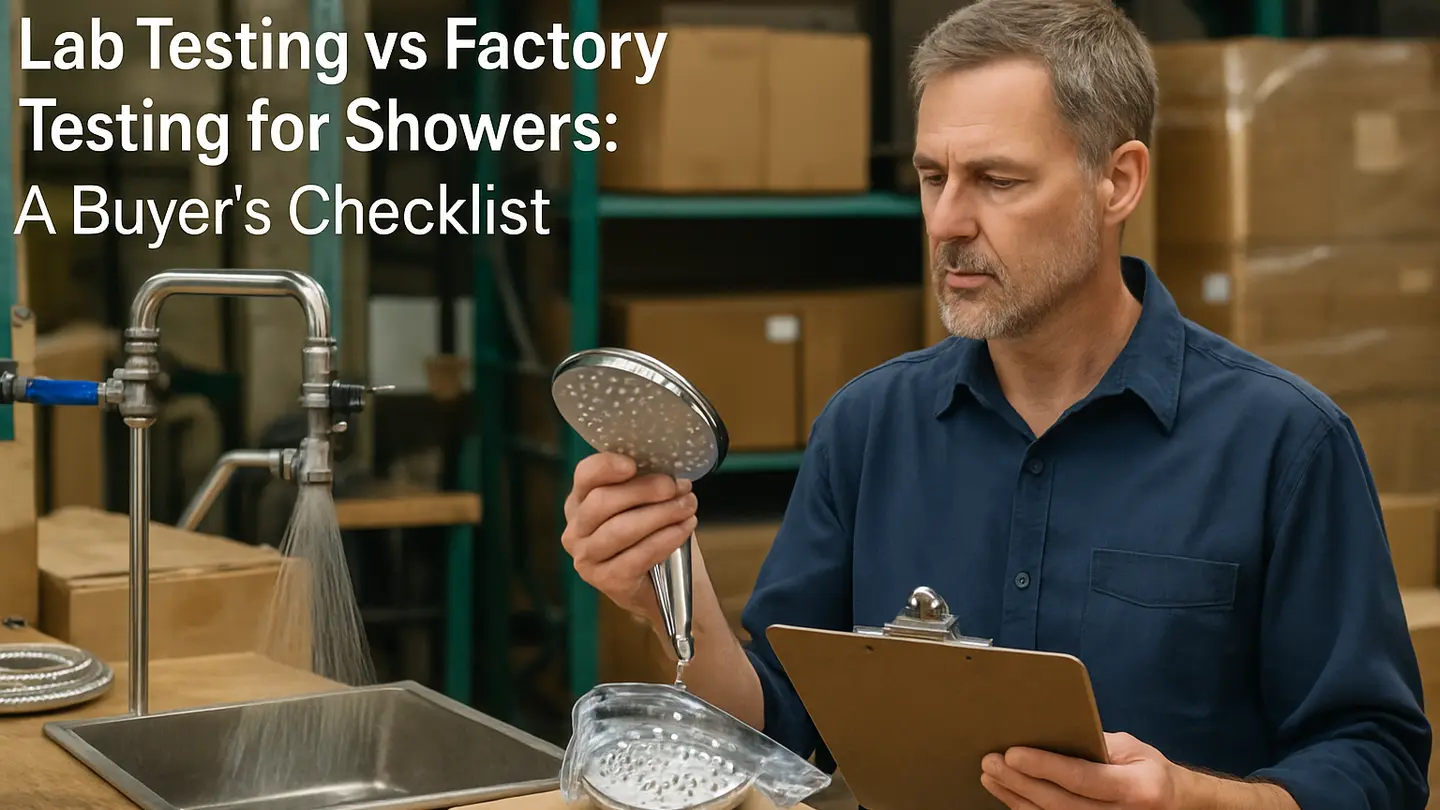
Shower quality cannot be controlled by one inspection or certificate. Independent laboratory testing and factory quality control answer different buyer questions: does the product meet applicable safety and chemical requirements, and does the shipment match the approved specification with acceptable workmanship? A reliable release decision uses both, with samples taken from actual production rather than selected by the supplier.
How Laboratory Checks and Factory QC Differ
The difference between lab testing vs factory testing is mainly the type of risk each method controls. A laboratory measures defined chemical, material, safety, or performance characteristics using specialized equipment. Factory QC checks production consistency, visible workmanship, packaging, assembly, and basic operation.
Neither method should automatically be treated as a substitute for the other. A showerhead may have an attractive finish and pass a water-flow check while containing a material that does not meet the destination market’s requirements. Conversely, a product may have acceptable material composition but arrive with scratches or packaging issues.
Who Owns Compliance and Which Evidence Holds Up?
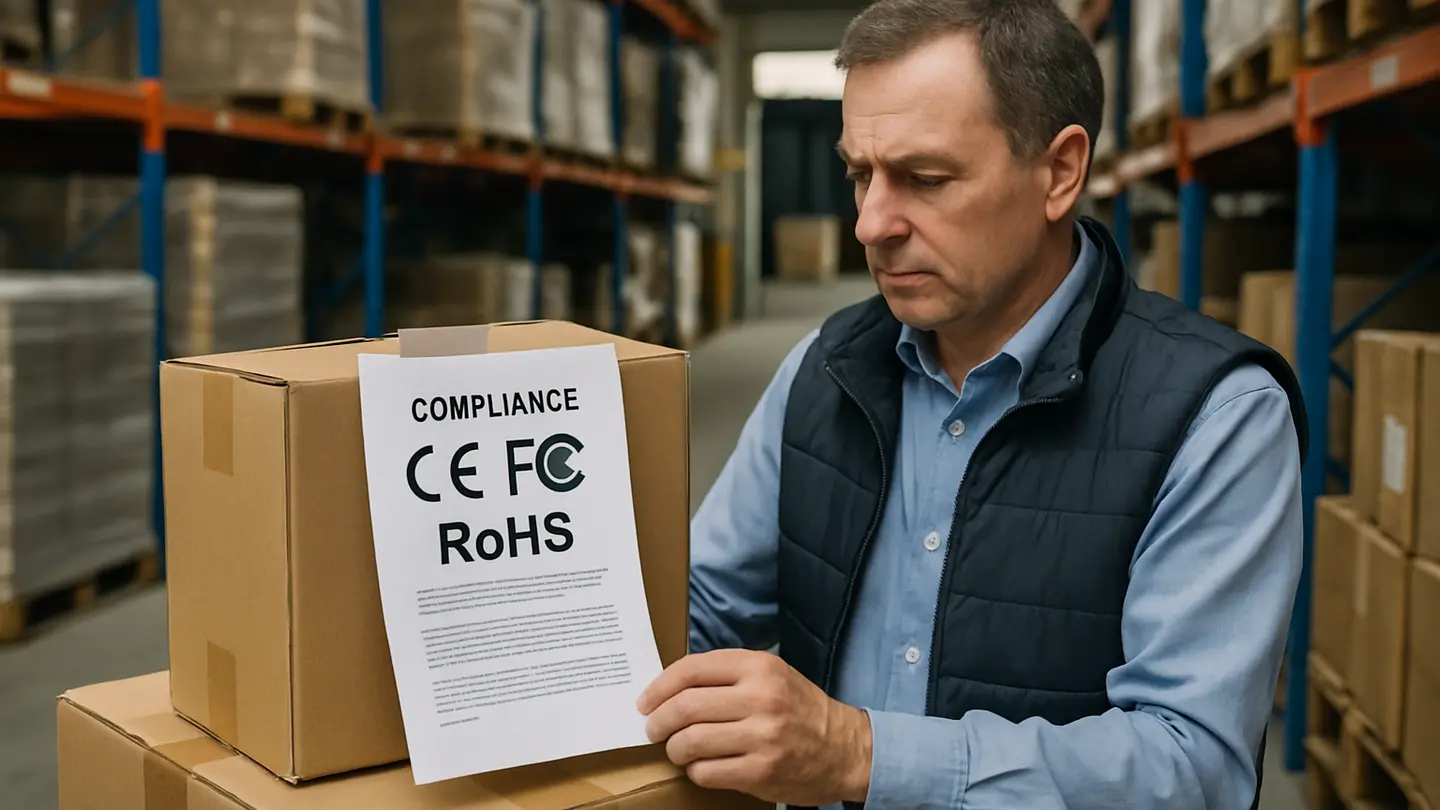
The importer, brand owner, or other responsible economic operator generally remains accountable for ensuring product compliance with market rules. A supplier’s internal report may aid production management, but it may not satisfy authorities, regulators, retailers, or marketplace compliance teams.
An independent laboratory report can provide stronger evidence as it is performed outside the factory. Whether a particular report is accepted depends on product category, destination, applicable regulation, test method, laboratory qualifications, and retailer or marketplace requirements. Buyers should confirm requirements before ordering tests.
Testing needs vary across shower products. Materials like metal alloys, plastics, elastomers, plated finishes, coatings, hoses, and electronic components create different compliance questions.
A practical compliance file may include:
- Final product specification and bill of materials
- Applicable standards or regulatory requirements
- Current independent laboratory reports
- Material declarations and component information
- Production and lot identification
- Factory inspection reports
- Packaging, labeling, and warning approvals
- Records of corrective actions and retesting
A factory QC sheet shows supplier inspection but doesn’t prove chemical or safety compliance. Buyers should verify report relevance to the exact model, finish, materials, and production version.
Which Problems Does Each Testing Method Detect?
Factory QC is suited to issues observable on the production line or during shipment inspection, such as:
- Scratches, dents, plating defects, or uneven finishes
- Poor seams, burrs, or visible molding marks
- Incorrect buttons, handles, labels, or markings
- Loose, missing, or incorrectly fitted components
- Leaks, blocked outlets, or abnormal operation
Simple physical checks provide immediate feedback. Inspectors may connect samples to water, check leakage, examine spray, test hose fit or diverter operation, or verify thermostatic control response. These checks identify production drift before complete packing.
Laboratory testing is necessary for questions unreliable by visual inspection. A lab may assess:
- Material composition
- Restricted substances
- Chemical or performance characteristics
For instance, visual inspections can’t establish whether plastic contains restricted substances or confirm metal alloy composition, which needs lab methods and samples.
Why Production Samples Matter More Than a Perfect Approval Sample
Approval samples are important but not proof that every mass-produced unit is identical. Suppliers may prepare careful samples using selected parts or materials not used consistently in the final lot. Testing samples should be from actual production, connected to:
- SKU and model
- Finish
- Purchase order
- Production lot or batch
Random selection matters. If suppliers choose unsupervised samples, they may not reflect the shipment. Buyer, independent inspector, or agreed third party selects units from finished production or representative stages, with documented selection method.
Tamper-evident sealing and documented custody offer added protection. The selected samples can be sealed, labeled, and sent to the laboratory. Reports should identify samples clearly, connecting results to the shipment.
Approved samples remain as references for dimensions, fit, finish, and accessories. Additional tests may be needed after material or production changes like new materials or supplier changes.
Comparing Speed, Cost, and Production Throughput
Factory QC can operate continuously during production. Line checks may identify assembly issues promptly, allowing immediate correction. A final inspection provides fast findings on defects and basic function.
Laboratory testing requires careful planning before production for new designs, shipment verification, or post-material change checks. Laboratories need samples, test scope, and time for preparation and reporting.
Fees vary with SKUs, materials, market, sample quantity, and test requirements. On-site inspections depend on inspector days, scope, and sample size.
Relevant comparisons aren’t just “inspection cost versus lab cost,” but potential costs of rework, storage, rejected goods, complaints, recalls, customs issues, and brand damage. Factory QC quickly controls production, while lab testing addresses risks unavailable through inspection. They’re complementary methods.
What to Do When Visual Inspection Passes but Laboratory Testing Fails
A passed visual inspection doesn’t override failed lab results. If a laboratory finds nonconformity, hold the shipment. Confirm test scope, sample identity, method, and report details. Determine whether failed samples represent the lot or necessitate deeper inquiry without releasing based on looks alone.
The root-cause review involves:
- Bill of materials and component list
- Material records
- Supplier identities
- Production records
- Changes or engineering modifications
Factory must stop using the questionable material or process. Document any rework and select new samples for retesting before release. Purchase contracts should outline responsibility for nonconformance costs.
Why Shower Buyers Need Both Independent Testing and Factory QC
A balanced quality plan combines compliance testing with ongoing factory controls. Showers include multiple risk areas: water contact, pressure, material composition, finishes, and electrical components. Factory QC monitors production defects, while independent testing checks compliance.
Using only lab tests misses visible defects, packaging issues, or shipment defect rates. Testing every production problem in a lab is inefficient. Factory QC lacks detection for chemical hazards and may be less objective due to commercial pressure.
Independent Laboratory Testing: Strengths and Limitations
Laboratory testing investigates hard-to-measure risks. Specialized equipment assesses chemical composition, restricted substances, coatings, materials, and performance.
Independent reports are objective when controlled by buyers, supporting compliance files and retailer reviews. However, lab testing costs more, scheduling may delay production, and changes or retesting may be required.
A test is only meaningful with a representative sample. Reports should be reviewed for model relevance, finish, material, test method, and any limitations.
Factory Testing and In-House QC: Strengths and Limitations
In-house QC is valuable close to production. Factory workers can identify defects and adjust without outside reports.
For shower products, QC may cover:
- Incoming component checks
- Assembly checks
- Water-flow checks
- Appearance checks
- Packaging verification
These controls prevent drift, providing feedback. But supplier’s QC can be subjective, possibly protecting shipment schedules. Buyers shouldn’t rely solely on internal QC; independent sampling and inspections add assurance.
FAQ
Is factory testing enough for Amazon FBA?
Factory QC may not meet regulatory requirements for Amazon or other marketplaces. Requirements vary by category, jurisdiction, and policy, particularly for regulated products. Confirm current demands before production.
How much does third-party lab testing cost in China?
Costs vary by material, market, quantity, and required panels like RoHS or CPSIA. Inspection costs are separate, based on inspector days and scope.
Buyers should control lab selection to reduce uncertainty and ensure accurate reporting for their product.
What is the difference between AQL and lab testing?
AQL assesses observable defects in lots, while lab testing measures technical or regulatory compliance. They answer different questions and both are necessary for comprehensive quality control.
Does an ISO 9001 factory certificate replace lab testing?
No, ISO 9001 pertains to a management system and doesn’t prove compliance with specific product standards. Testing is needed after material or process changes.
Building a Practical Testing Plan for Shower Products
Conduct a risk review before approvals. Identify shower type, market, materials, seals, and electrical features. Define factory QC and independent lab checks.
Factory QC evaluates workmanship, leakage, packaging, and process controls. Independent testing verifies chemical safety, composition, and compliance requirements.
Testing frequency reflects risk: new, complex, or regulated products require extensive evaluation. Confirm goods match specifications, resolve failures, verify corrective actions, and assign cost responsibility.
Use factory QC for production and function; independent testing provides chemical and compliance evidence. Combining methods protects against visible defects, hidden hazards, and production drift.
A comprehensive strategy should consider the life cycle of the product. Beyond initial tests, ongoing checks ensure that products remain compliant as regulations and market expectations change. Statistical sampling, regular audits, and supplier development initiatives can maintain quality across production cycles, offering additional security for brands seeking long-term reliability.
It’s critical to integrate feedback loops from consumer reports and return analysis into quality systems. By evaluating recurring issues, manufacturers can proactively mitigate risks, adjust production practices, and refine testing parameters, enhancing overall product quality.
Furthermore, building strong relationships with reliable suppliers and laboratories can lead to improved communication and collaboration. These relationships help ensure that early warnings about potential issues are communicated effectively, enabling prompt corrective action and strengthening the product’s compliance profile in the market.