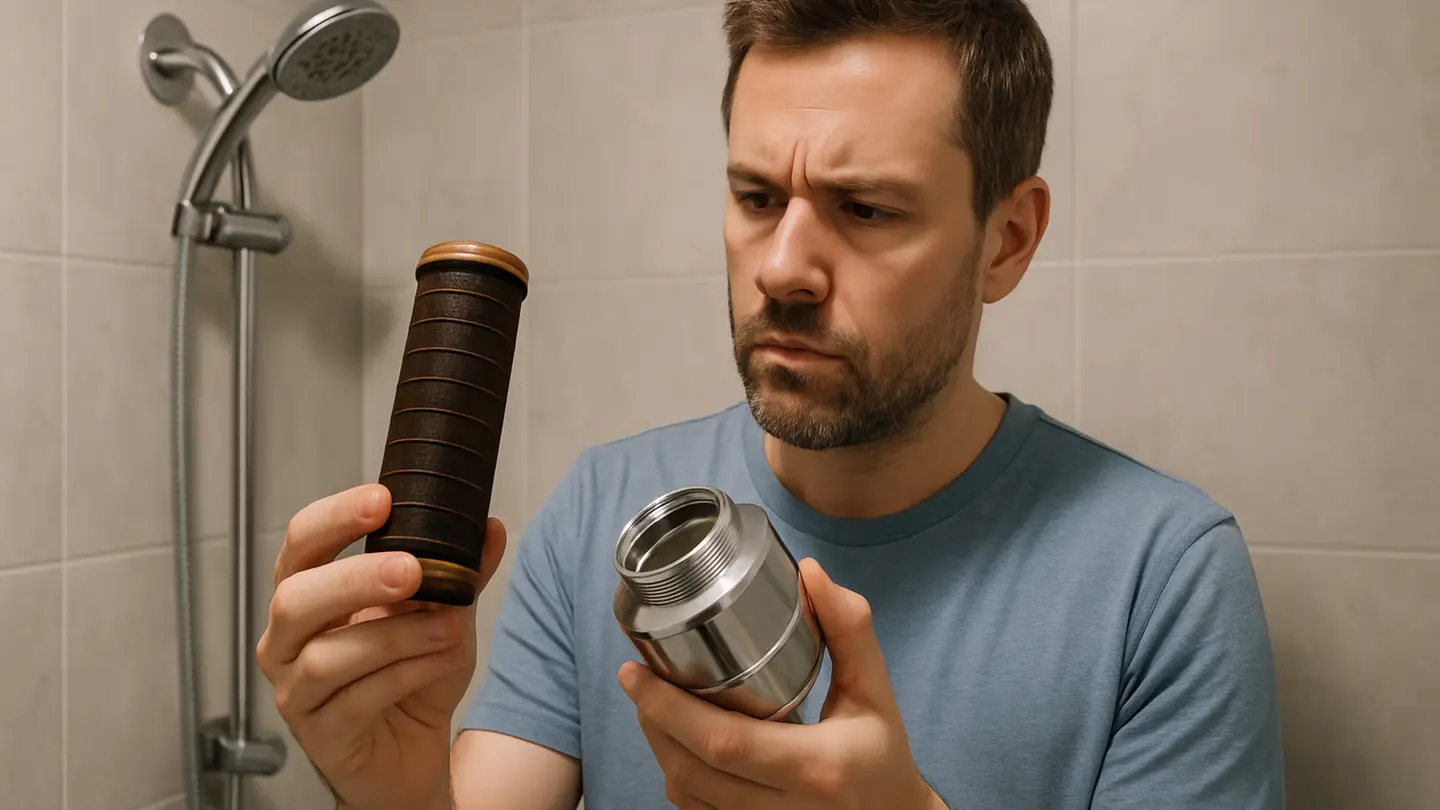
For buyers, distributors, hospitality operators, property managers, and homeowners, how long do shower filters last depends less on a calendar date and more on cartridge performance. A shower filter is useful only while its media still has capacity and water can pass through at an acceptable flow rate.
Shower filters are commonly installed to reduce issues linked to chlorine odor, mineral residue, sediment, discoloration, and unwanted effects on hair or skin. Products may use KDF, activated carbon, calcium sulfite, ceramic balls, sediment screens, or Vitamin C cartridges. Each medium has limits. Once it becomes clogged, saturated, dissolved, or chemically exhausted, performance declines even if the housing looks clean.
For B2B buyers, replacement timing affects both customer satisfaction and operating cost. Replacing too late can cause complaints about odor, pressure loss, or residue. Replacing too early raises consumable costs. The goal is to match cartridge life to water conditions, usage volume, and service expectations.
Typical Shower Filter Lifespan
Most shower filters in regular household use are replaced every three to six months. Many models are marketed with a capacity around 10,000 to 12,000 gallons, although real-world life depends on water quality, shower frequency, flow rate, and cartridge design.
A single-person household may reach the upper end of the stated life. A family bathroom, gym shower, hotel guest room, or staff facility may reach the same gallon capacity much sooner. In commercial or high-turnover environments, usage-based maintenance is often more reliable than a calendar interval.
Filter media also matters. KDF media is often selected for durability and is generally associated with longer service life than some carbon or Vitamin C cartridges. Carbon can be effective for odor and chlorine-related concerns, but may clog or exhaust sooner in sediment-heavy water. Vitamin C media is consumed during use and may require more frequent replacement.
| Filter type or condition | Common replacement expectation | Practical note |
|---|---|---|
| Standard household shower filter | 3–6 months | Follow the manufacturer’s gallon rating and replacement instructions. |
| KDF-based cartridge | Often toward the longer end | Service life still depends on sediment, water chemistry, and flow volume. |
| Carbon-based cartridge | Often moderate | Can clog faster where sediment or rust is present. |
| Vitamin C cartridge | Often shorter | Media is consumed as water passes through. |
| Heavy-use bathroom or shared facility | Shorter than household average | Usage volume can exhaust media before the calendar date. |
Manufacturers may state lifespan in months, gallons, or both. For procurement, gallon capacity is usually more useful because it can be translated into estimated service intervals by site type. A 12,000-gallon cartridge will not last the same length of time in a family bathroom, hotel room, and locker room.
What Can Shorten or Extend Service Life?
Water quality is the main variable. Hard water, sediment, rust, sand, and high mineral load can shorten cartridge life by narrowing internal water pathways and reducing filtration surface. Even if the media is not chemically exhausted, the cartridge may become mechanically clogged.
Higher usage also shortens service life. A shower used once per day places far less demand on a filter than a shared bathroom used by multiple people. In hospitality, student housing, wellness centers, and rental properties, maintenance teams should assume faster cartridge turnover unless metered data proves otherwise.
Filter construction plays a role. Larger cartridges generally have more media capacity and may resist clogging longer than compact units. Better internal design can distribute water more evenly through the media, reducing channeling and improving usable life. Housing quality, sealing, gasket design, and screen placement also affect whether flow remains stable.
Installation conditions matter too. A filter installed after old pipework may receive more rust particles than one connected to newer plumbing. A bathroom supplied by a private well may see more sediment variation than one supplied by treated municipal water. In buildings with known sediment issues, a whole-building prefilter may extend the life of shower-mounted cartridges.
Warning Signs That a Shower Filter Needs Replacement
A shower filter does not need laboratory testing to show it may be overdue for replacement. Buyers, maintenance teams, and homeowners can often identify problems through visible, sensory, or performance-based changes.
The four most common warning signs are:
- Reduced water pressure
- Return of chemical, musty, or sulfur-like odors
- Discolored water or new staining
- Visible sediment or gritty-feeling water
These signs do not always prove the cartridge is the only problem. Plumbing, municipal water changes, water heater issues, or showerhead scaling can also contribute. However, if the filter has been in service for several months and one or more warning signs appear, replacement is a reasonable first inspection step.
Timely replacement helps keep performance consistent. Waiting until a cartridge is fully clogged or ineffective may lead to poor user experience, more cleaning work, and uncertainty about whether the filter is still doing its job.
Reduced Shower Pressure
A noticeable pressure drop is one of the clearest field signals that a shower filter needs attention. Sediment, rust, and mineral deposits can collect inside the cartridge and narrow the water passages. As resistance increases, the shower stream weakens.
Some reduction in flow is normal because any filter adds resistance. The concern is a significant change from the original installation condition. If a newly installed filter delivers acceptable flow but becomes weak after several months, the cartridge may be clogged.
Before replacing the cartridge, check simple causes:
- Is the showerhead scaled with mineral deposits?
- Is the inlet screen blocked with debris?
- Are washers or gaskets seated correctly?
- Is the filter installed in the correct flow direction?
If these items are clear and the cartridge is near or beyond its rated life, replacement is usually practical. In B2B settings, pressure complaints should be logged by location. Repeated early clogging in the same building may indicate upstream sediment or hard-water problems rather than a defective cartridge.
Chemical, Musty, or Sulfur-Like Odors Return
Many buyers install shower filters because of odor concerns, especially chlorine smell in treated municipal water. If the chemical odor that was reduced after installation returns, the filtration media may be exhausted.
Musty or sulfur-like odors require more caution. They may point to water heater conditions, well water chemistry, bacterial activity in plumbing, or other water quality issues. A shower filter may reduce some odors, but it should not be treated as a complete diagnostic tool.
Aging cartridges often lose odor-reduction effectiveness gradually. Users may first notice that water smells “less fresh” or that the bathroom has a stronger smell during hot showers. Hot water can intensify odor perception.
For commercial buyers, odor complaints are important because guests, tenants, or customers notice them quickly. If odor returns before the expected replacement date, review both the water source and the product specification. The installed media may not match the actual contaminant profile.
Discolored Water or New Staining
Brown, yellow, orange, or rusty-looking water can indicate that the shower filter is no longer capturing particulates effectively, or that incoming water has changed. Metallic particles, rust, and pipe scale can contribute to discoloration and staining on fixtures, tiles, grout, and shower curtains.
New staining matters in facilities management because it increases cleaning labor and may create the appearance of poor sanitation even when the issue is water chemistry. If stains appear after a filter has been in service for some time, inspect the cartridge, showerhead, and inlet screen.
Discoloration can also occur after plumbing work, water main disturbances, or periods of low building occupancy. If multiple fixtures show the same change at the same time, the issue may be upstream. Still, if the cartridge is near the end of its rated life, replacement is a low-risk maintenance step.
In procurement, buyers dealing with iron or rust-prone water should check whether the filter includes sediment filtration and whether replacement cartridges are economical enough for more frequent changes.
Visible Sediment or Gritty-Feeling Water
Gritty-feeling water, visible particles, or residue on shower surfaces may mean sediment is passing through the filter. Users may also notice rough towels, powdery deposits, or a sandy feel on the skin after showering.
Sediment can come from municipal line work, well water, aging pipes, water heaters, or mineral scale breaking loose inside plumbing. A shower filter can help only while the cartridge and screens have sufficient capacity.
When sediment appears, remove and inspect the cartridge if the design allows it. Check for dark deposits, blocked screens, or compacted media. If the cartridge is discolored, clogged, or past its expected service date, replace it.
For sites with recurring sediment, buyers should consider whether a shower-mounted filter is enough. In some applications, a point-of-entry sediment filter or additional prefiltration may be more efficient than frequent shower cartridge replacement.
Maintenance Practices That Help Filters Perform Properly
Good maintenance will not make exhausted media new again, but it can help a shower filter perform properly throughout its intended service life.
Start with exterior cleaning. Mineral scale and soap residue can build up on the filter housing, showerhead, and connection points. Wiping these areas periodically helps prevent buildup from being mistaken for filter failure.
Inspect screens and washers when servicing the unit. Small inlet screens can trap debris before it reaches the cartridge, but they can also restrict flow when blocked. Cleaning or replacing screens according to the manufacturer’s instructions can restore pressure without changing the whole assembly.
Use reminders or maintenance logs. In homes, a calendar note may be enough. In commercial properties, logs should include installation date, cartridge type, room or unit number, and expected replacement date. This makes it easier to identify products that underperform or locations with unusually heavy contamination.
Descaling may be useful where mineral buildup is visible, but only if the manufacturer permits it. Some housings and showerheads can be cleaned with mild descaling solutions, while some cartridges should not be exposed to cleaning chemicals. Cleaning the housing does not restore exhausted filtration media.
How to Choose the Right Shower Filter
The right shower filter starts with the local water problem, not the product style. Buyers should first identify whether the priority is chlorine odor, sediment, rust, metals, hard-water effects, or general shower comfort.
Municipal water users often focus on chlorine smell and residual disinfectants. Well water users may be more concerned with sediment, iron, sulfur-like odors, or mineral load. Older buildings may see rust and pipe scale. Hard-water regions may struggle with limescale, residue, poor lather, and a filmy feel after washing.
No standard shower filter solves every water issue. Some are designed mainly for chlorine reduction, some for sediment, and some for mixed-media treatment. Hard water requires realistic expectations. Many shower filters may reduce some effects associated with minerals or capture particulates, but they are not the same as a true water softener.
Usage profile is equally important. A premium cartridge with a long stated life may be economical in a high-use site if it reduces service calls. A lower-cost cartridge may work well in a low-use bathroom but become expensive if it needs frequent replacement. For multi-property buyers, standardizing cartridge models can simplify inventory and training.
Key Features to Check Before Buying
Before purchasing, review the filter as a system: media, flow, compatibility, service life, and replacement cost.
Filtration media should match the water concern. KDF is commonly used for chlorine and certain metals. Activated carbon is widely used for taste and odor applications, though hot water and flow conditions can affect performance. Calcium sulfite is often used for chlorine reduction in shower applications. Vitamin C cartridges are typically used for chlorine or chloramine neutralization, but they are consumed during use. Sediment screens or layered filtration may be useful where particles are visible.
Flow rate is another key factor. A filter that noticeably restricts water may create complaints even if filtration is acceptable. Check the rated flow and installation guidance. For commercial settings, test samples in representative bathrooms before bulk purchases.
Compatibility should not be assumed. Inline filters are often installed between the shower arm and the showerhead or hose, but thread size, clearance, handheld hose position, and fixed-head design can affect fit. Some filters are integrated into a showerhead, while others are separate cartridges or bulky inline housings.
Replacement economics matter more than initial unit price. Compare:
- Cartridge lifespan in months and gallons
- Replacement cartridge cost
- Minimum order quantities for B2B procurement
- Packaging and labeling requirements
- Ease of installation by maintenance staff
- Availability of spare parts, washers, and screens
A low-cost housing can become expensive if cartridges are hard to source or need frequent replacement. A higher-priced unit may be cost-effective if it offers longer service intervals, easier maintenance, and fewer complaints.
A Practical Platform for Building a Supplier Shortlist
For B2B buyers comparing shower filters, cartridges, showerheads, or related bathroom products, Made-in-China.com can be used as one sourcing channel during early supplier research. Its Supplier Discovery tools provide ways to find and narrow potential suppliers, including access to Audited Suppliers and regional supplier channels.
Audited Suppliers are subject to third-party verification and on-site audit, with Audit Reports available for buyer review. These reports can include company details, export trade, manufacturing capacity, quality control, and R&D capability. For procurement teams, that information can support early screening before requesting samples, arranging deeper due diligence, or entering negotiations.
Made-in-China.com also offers Easy Sourcing, where buyers can submit one sourcing request, receive multiple quotations from matched suppliers, compare quotes, and request samples. This can reduce the manual work of contacting suppliers one by one when building an initial shortlist for shower filter programs or broader bathroom product categories.
FAQ
Does a shower filter affect water pressure?
Yes. Any shower filter can add resistance to water flow. A major pressure drop, especially after months of use, often points to clogging from sediment, rust, or mineral buildup. If clogging is the cause, replacing the cartridge can help restore normal flow.
Can I use a shower filter with a handheld showerhead?
Many inline shower filters can be used with handheld showerheads. They are typically installed between the shower arm and the handheld hose. Check thread compatibility, clearance, and the manufacturer’s installation instructions before purchase.
Do shower filters remove fluoride?
Most standard carbon and KDF shower filters mainly target chlorine, odor, sediment, or certain metals. Fluoride reduction usually requires specialized filtration technology. Reverse osmosis can reduce fluoride in drinking-water systems, but it is uncommon in standard shower-mounted filters.
How do I know if my water is “Hard”?
Common signs of hard water include white limescale on fixtures, poor soap lather, and a filmy feeling on the skin after washing. Hard water may also leave residue on glass, tiles, and shower fittings.