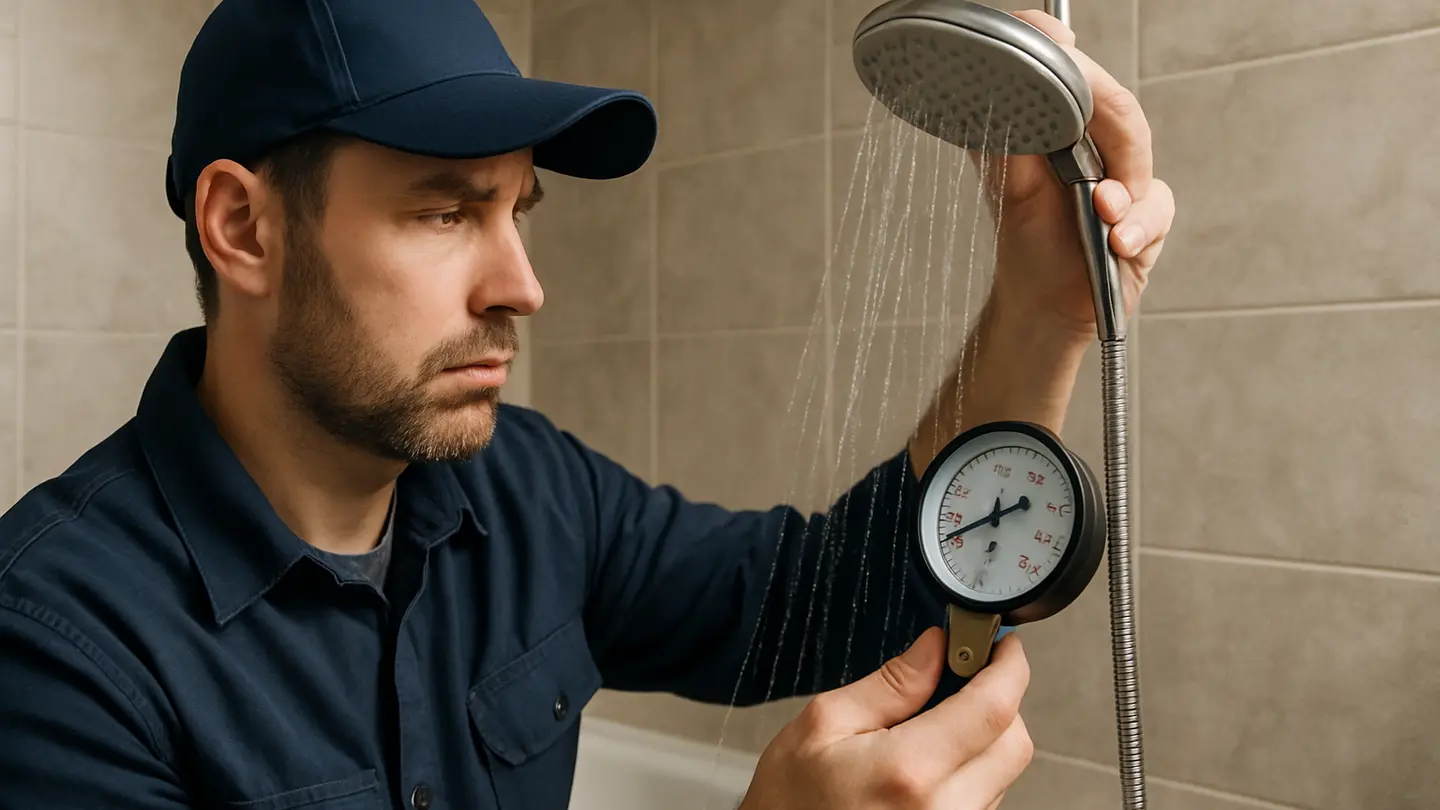
Weak shower flow can affect comfort, cleaning efficiency, and perceived fixture quality in homes, hotels, rentals, gyms, healthcare facilities, and staff accommodation.
Do not assume the showerhead is always the problem. Weak spray may come from mineral buildup, a partially closed valve, a clogged cartridge, a supply issue, or a wider plumbing defect. Before replacing fixtures or scheduling major work, measure pressure, isolate the likely cause, and choose the least invasive fix.
Start with the Basics of Shower Water Pressure
Water pressure is the force that moves water through the plumbing system and out of the showerhead. Shower performance depends on both pressure and restriction. A home may have acceptable supply pressure, but a clogged showerhead can still produce weak spray. A clean showerhead also cannot compensate for a serious supply-pressure problem.
Pressure testing helps separate a showerhead issue from a plumbing or supply problem. For B2B buyers comparing replacement showerheads, it also prevents mismatched product selection. A model designed to improve spray velocity may improve perceived performance, but it cannot repair a leaking pipe, failing valve, or insufficient municipal supply.
What Pressure Range Is Normal for a Shower?
Residential shower pressure is often discussed in the range of 40–60 PSI. Many users find a shower comfortable at around 45–55 PSI, depending on showerhead design, pipe layout, and restrictions.
As a practical benchmark:
- Below 40 PSI is commonly treated as low pressure.
- 40–60 PSI is generally considered normal for residential use.
- 45–55 PSI is often comfortable for showers.
- Above 80 PSI may strain plumbing components and require pressure control.
High pressure is not always better. Excessive pressure can contribute to noisy pipes, fixture wear, leaks, and premature valve or seal failure. If pressure is above 80 PSI, consider a pressure-reducing valve or professional assessment rather than a more forceful showerhead.
How to Measure Pressure at the Shower Arm
A simple water pressure gauge can help confirm whether the issue is at the showerhead or further upstream. Gauges are commonly available at hardware stores and usually attach to threaded plumbing outlets.
Basic steps:
- Turn off the shower.
- Remove the showerhead from the shower arm.
- Clean old tape, scale, or debris from the threads.
- Attach the pressure gauge.
- Turn the shower water fully on.
- Read the PSI.
If the connection leaks, reapply thread tape and reconnect the gauge securely before retesting.
How to Interpret the Reading
The gauge reading gives a useful first clue:
| Pressure reading | General interpretation | Likely next step |
|---|---|---|
| Below 40 PSI | Low pressure | Check valves, leaks, water supply, piping, or pressure controls |
| 40–60 PSI | Normal range | Look for showerhead clogs, cartridge problems, or fixture restrictions |
| 45–55 PSI | Often ideal for shower comfort | If spray is still weak, inspect the showerhead and valve |
| Above 80 PSI | Potentially excessive | Consider pressure control or a plumber’s assessment |
If pressure at the shower arm is normal but the spray is weak after reinstalling the showerhead, the showerhead, filter screen, flow restrictor, hose, or valve assembly may be restricting flow. If pressure is low at the shower arm, the issue is more likely upstream.
Common Reasons Shower Head Pressure Drops
Shower pressure problems usually fall into three groups: fixture-level restrictions, plumbing-system issues, and supply or household demand factors. Identifying the category can prevent unnecessary replacement.
Problems Inside the Shower Fixture
The most common fixture-level issue is mineral buildup. In hard-water areas, calcium and magnesium deposits can clog spray holes, internal screens, and small passages inside the showerhead. The result is often uneven spray, reduced flow, or water shooting in odd directions.
Other debris can also collect inside the fixture, including:
- Sediment from water lines
- Rust particles from aging pipes
- Sand or grit after utility work
- Dirt released during plumbing repairs
If the showerhead has a removable screen or filter washer, check it before replacing the whole fixture.
Valve restrictions can create similar symptoms. A worn seal, damaged cartridge, scaled mixing valve, or partially blocked pressure-balancing valve may limit water before it reaches the showerhead. In these cases, cleaning the showerhead may help only slightly.
A useful clue is whether the problem affects hot water, cold water, or both. If only hot water pressure is weak, the cause may involve the water heater, hot-water line, or mixing valve. If both are weak at the shower but other fixtures are normal, the shower valve or showerhead assembly is more suspect.
Plumbing-System Issues Behind Weak Flow
If multiple fixtures show weak flow, the cause may be in the plumbing system. Hidden leaks can reduce available pressure while increasing water bills and causing secondary damage.
Warning signs include damp wall areas, stained ceilings, musty smells, unexplained meter movement, or water sounds when no fixtures are running. Leaks inside walls, ceilings, slabs, or service lines should be investigated promptly.
Aging pipes are another common source of pressure loss. Galvanized steel and other older materials can corrode internally. Over time, the water pathway narrows, reducing usable flow even if supply pressure at the main line appears acceptable.
Pipe sizing also matters. Undersized, poorly routed, or mismatched piping may create bottlenecks, especially when multiple outlets are used at the same time.
Water Supply and Household Demand Factors
Sometimes the shower is not the root cause. Partially closed valves can reduce flow throughout a property or to a specific bathroom. Check the main shutoff valve, branch valves, and any local stops serving the bathroom.
External conditions can also affect pressure. Municipal repair work, new nearby development, seasonal demand, and high-use periods may reduce available supply pressure. Some properties have weaker pressure at certain times of day.
Water heater issues can affect shower performance too. Sediment buildup, failing components, or restrictions in hot-water lines may cause weak hot-water flow. If the pressure drops only with hot water, include the heater and related valves in the diagnosis.
Household or facility demand is another factor. A shower may perform well until dishwashers, laundry equipment, irrigation systems, or multiple bathrooms run at once. Pressure-balancing valves can help stabilize the experience, but they cannot create supply capacity where the system is overloaded.
DIY Checks and Quick Fixes to Improve Shower Pressure
Many low-pressure complaints can be improved with basic maintenance and simple checks. These steps should usually come before fixture replacement, booster equipment, or major plumbing work.
Clean the Showerhead and Check Basic Maintenance Items
Start by removing and cleaning the showerhead. White vinegar is commonly used because it helps dissolve mineral deposits.
A typical cleaning process:
- Remove the showerhead.
- Rinse loose debris from the inlet and spray face.
- Soak the fixture in white vinegar.
- Gently brush the nozzles, screen, and inlet area with a soft brush.
- Rinse thoroughly before reinstalling.
- Test the shower again.
Avoid aggressive scraping tools that can damage silicone nozzles, finishes, or internal parts. If the showerhead includes a filter screen, remove and clean it carefully, then reinstall it correctly.
Next, confirm the shower valve is fully open and that main or branch shutoff valves are not partially closed. In managed properties, maintenance work can leave valves only partly reopened.
A visual inspection can reveal bigger issues. Look for:
- Damp spots near walls, floors, or ceilings
- Water stains below bathrooms
- Corrosion around fittings
- Dripping sounds behind walls
- Rusty or discolored water
- Unusual pipe noise
If these signs are present, cleaning the showerhead may not be enough.
Consider Simple Fixture or Control Upgrades
If pressure at the shower arm is normal but the spray still feels weak, a different showerhead may improve perceived performance. Low-pressure showerheads usually do not increase actual system pressure. They optimize water velocity, spray pattern, nozzle geometry, and droplet distribution to make the shower feel stronger.
Basic replacement steps are straightforward:
- Remove the old showerhead.
- Clean the shower arm threads.
- Apply fresh thread tape if recommended.
- Thread on the new showerhead by hand.
- Test for leaks and spray quality.
For B2B buyers, compare products by rated flow, spray modes, maintainability, nozzle material, target-market certification requirements, and suitability for hard-water conditions.
Inline boosters may be considered in some cases, but suitability depends on plumbing layout, regulations, and the true cause of weak flow. If the issue is severe or system-wide, get professional evaluation before adding pressure equipment.
Pressure-balancing valves can help stabilize temperature and pressure when other fixtures are in use. They are useful where users experience sudden changes during laundry cycles, toilet flushing, or simultaneous bathroom use.
When Professional Repairs Are the Better Option
Repeatedly replacing showerheads is not a long-term solution if the real problem is a leak, corroded piping, valve failure, or inadequate supply. Professional diagnosis becomes more important when problems are persistent, system-wide, or accompanied by damage.
Signs It Is Time to Call a Plumber
A licensed plumber should be considered when any of the following occur:
- Pressure is low throughout the property.
- Shower pressure drops suddenly without an obvious fixture cause.
- Pipes are noisy, vibrating, or knocking.
- Water appears rusty, cloudy, or discolored.
- There are damp areas, stains, or visible water damage.
- Water bills increase without a clear change in usage.
- Hot-water pressure is much weaker than cold-water pressure.
- The building has old or corroded piping.
A plumber can test pressure at the main supply, water heater outlet, bathroom branch, and shower arm. Comparing readings helps locate where pressure is being lost.
For concealed problems, video inspection may be used to identify leaks, corrosion, heavy scale, root intrusion in service lines, or pipe-sizing issues.
Long-Term Fixes Such as Pipe Replacement
If pipes are severely aged, corroded, scaled, or damaged, replacement may be the only durable fix. Newer pipe materials can provide smoother internal flow paths, reduce friction losses, and lower the risk of future leaks when properly specified and installed.
Pipe replacement is a larger investment, so reserve it for serious or system-wide issues rather than isolated showerhead complaints. It may be appropriate when:
- Several fixtures have poor flow.
- Pipe corrosion is visible or confirmed.
- Leaks are recurring.
- Water quality is affected by old piping.
- Renovation plans already involve wall or floor access.
- The current system cannot support building demand.
For commercial buyers and property managers, pipe replacement decisions should consider downtime, tenant impact, code compliance, future fixture plans, and water-efficiency targets.
How to Prevent Shower Pressure Problems
Prevention is usually less expensive than emergency repair. Consistent maintenance, water-quality management, and periodic pressure checks can keep shower systems performing reliably.
Routine Maintenance Practices
Regular showerhead cleaning prevents mineral deposits from becoming severe restrictions. Monthly vinegar cleaning is practical in many settings, especially where hard water is known to cause buildup. Between deeper cleanings, wiping flexible nozzles can help loosen deposits before they harden.
Facilities with many showers may benefit from a maintenance log. Tracking which fixtures are cleaned, replaced, or reported for weak flow can reveal patterns. Repeated clogging in one building area may suggest sediment, pipe corrosion, or a branch-line issue.
Annual plumbing inspections are also useful. A professional inspection can detect early signs of leaks, valve wear, corrosion, water heater sediment, or pressure-control problems before users experience major performance loss.
Manage Hard Water and Sediment
Hard water contributes directly to mineral buildup in showerheads, valves, and pipes. Over time, it can narrow openings, stiffen moving parts, and reduce spray quality.
Options include:
- Shower filters for a lower-cost starting point
- Point-of-use filtration where selected fixtures need protection
- Whole-house filtration systems for broader sediment control
- Water softeners to reduce scale-forming minerals
Whole-house systems cost more, but they protect more plumbing components and appliances. Shower filters are easier to install and may be appropriate for targeted improvements, but they require cartridge changes and can become flow restrictions if neglected.
Monitor System Performance Over Time
Pressure problems are easier to manage when changes are noticed early. Track water bills for unexplained increases, especially in rental, hospitality, and institutional settings.
Also monitor:
- Pressure readings at key fixtures
- Water color and clarity
- Taste or odor changes
- Pipe noise
- Recurring fixture clogs
- User complaints about sudden pressure changes
When replacing showerheads, choose products based on actual site conditions. A property with normal pressure but heavy scale may need easy-clean nozzles and accessible screens. A property with lower but stable pressure may benefit from a spray pattern optimized for perceived force. A property with system-wide low pressure needs plumbing diagnosis before fixture upgrades can deliver meaningful results.
Another Way to Build a China Supplier Shortlist
For buyers researching shower fixtures, plumbing products, or related components, Made-in-China.com can be used for early-stage supplier discovery. It is a B2B sourcing platform, not a manufacturer, so it is best viewed as a tool for finding, comparing, and contacting potential suppliers.
Supplier Discovery can help buyers identify options and narrow an initial shortlist. For early screening, Audited Supplier information and Audit Reports may be useful because Audited Suppliers are subject to third-party verification and on-site audit, with reports available for buyer review. Audit Reports can include information such as company details, export trade, manufacturing capacity, quality control, and R&D capability.
Easy Sourcing is another option when buyers want to reduce one-by-one supplier contact. Buyers can submit one sourcing request, receive multiple quotations from matched suppliers, compare quotes, and request samples. Buyers should still verify specifications, compliance requirements, sample quality, lead times, and commercial terms before placing orders.
FAQ
What is considered low water pressure in a shower?
A reading below 40 PSI is commonly considered low shower pressure. If the shower feels like a weak trickle, test pressure at the shower arm with a gauge before assuming the showerhead is defective.
Can I fix low shower pressure myself, or do I need a plumber?
You can often fix clogged showerheads, mineral buildup, dirty screens, and partially closed valves yourself. Call a plumber if pressure is low throughout the property, water is rusty, leaks are suspected, bills rise unexpectedly, or pipe damage may be involved.
How often should I clean my showerhead to prevent pressure loss?
Monthly vinegar cleaning is practical, especially in hard-water areas. Regular cleaning helps prevent mineral deposits from blocking spray holes, screens, and internal passages.
Will installing a high-pressure showerhead work if my home’s water pressure is genuinely low?
It may improve perceived spray strength by optimizing water velocity and spray pattern, but it cannot fully solve a supply-pressure problem. Severe low pressure may require valve repair, leak repair, a booster solution, or broader plumbing work.
Related Reading for Shower Fixture Buyers
For broader purchasing decisions, buyers may also want to review guides on showerhead selection, water-saving fixtures, bathroom plumbing maintenance, hard-water care, and pressure-balancing valve options. These topics help connect product choice with real site conditions.