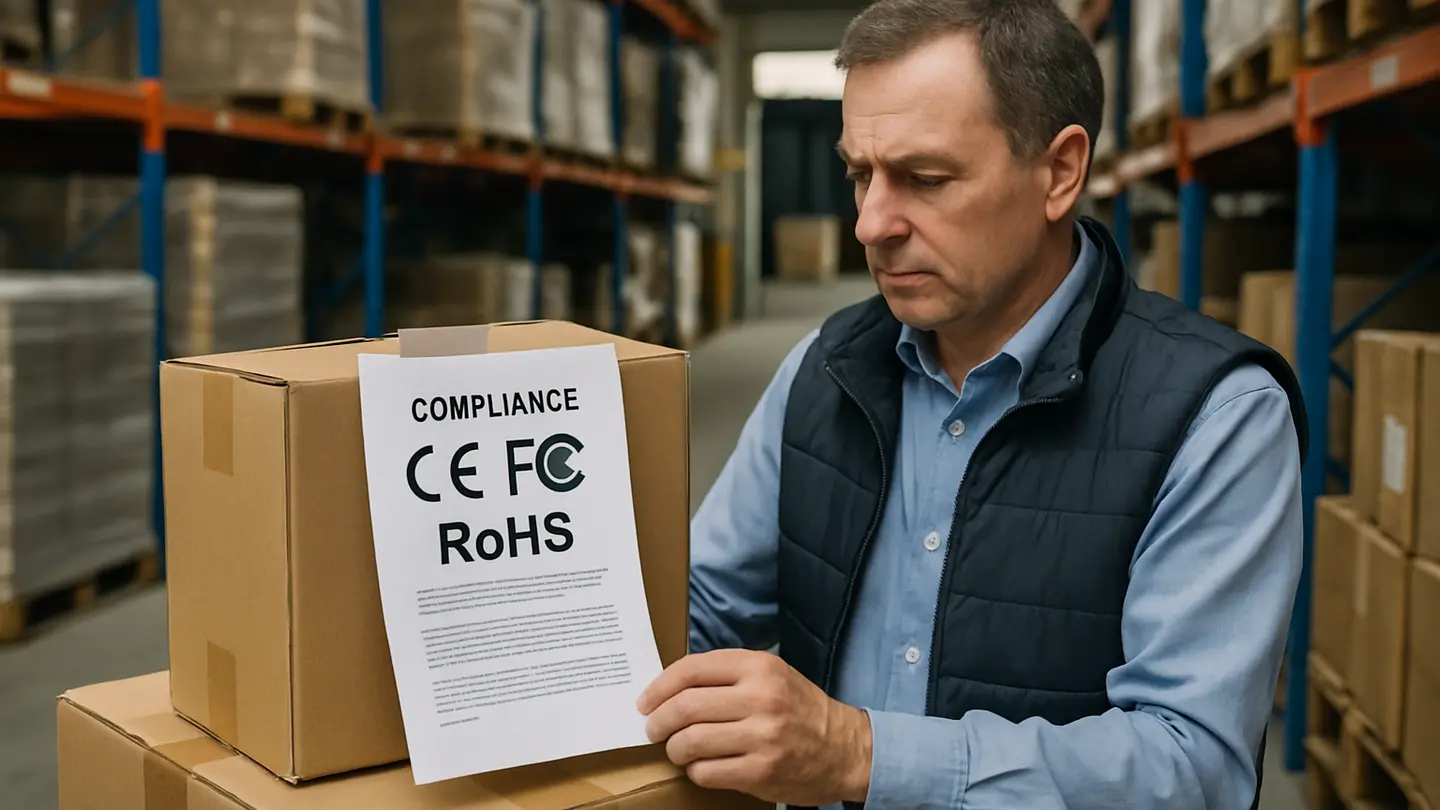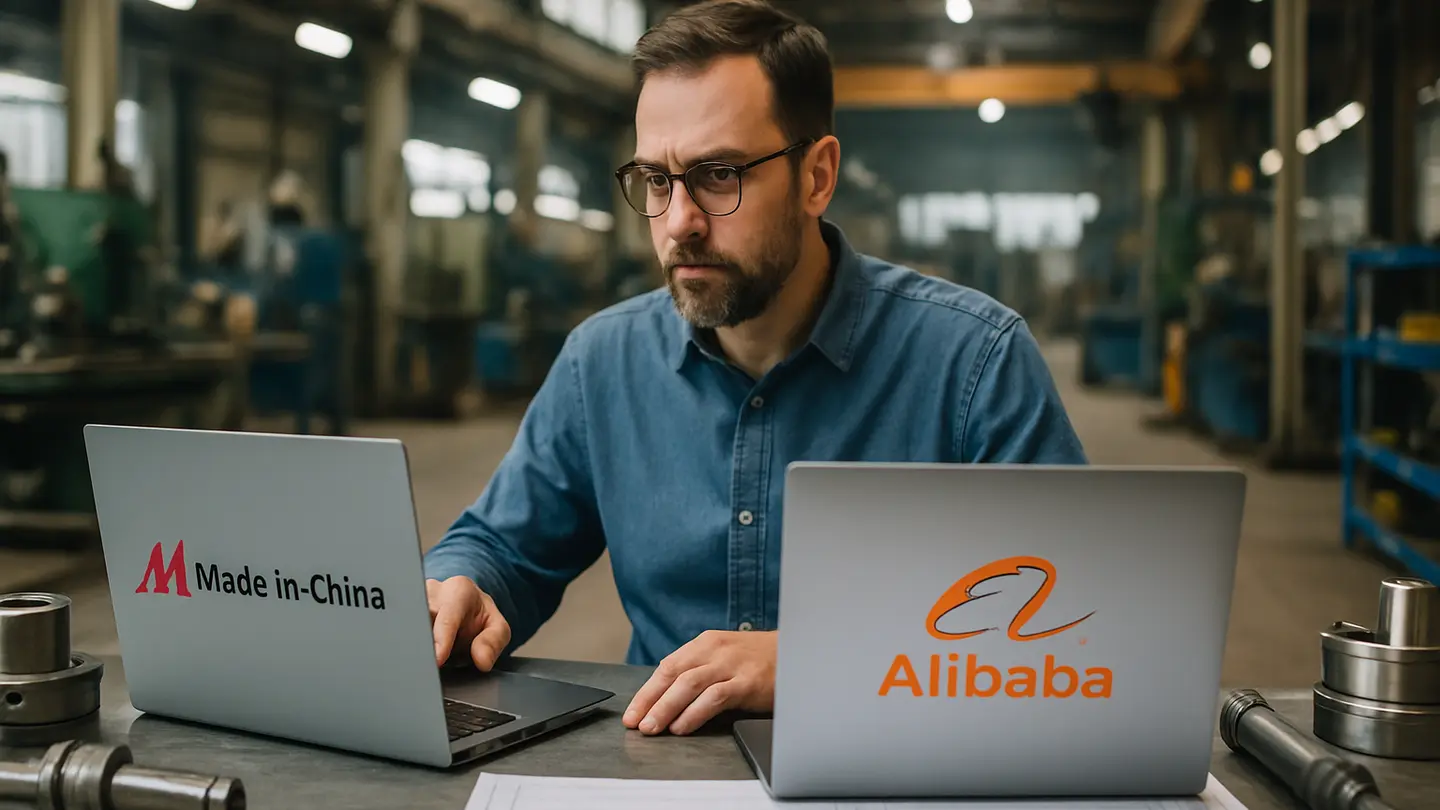
The Made-in-China vs Alibaba decision is not simply about which marketplace is bigger. For industrial buyers, the key question is which platform helps you reach a verifiable production source faster—and how much work remains before that supplier can be trusted with drawings, tooling, deposits, or repeat orders.
Made-in-China.com is often useful when the task is clearly industrial: machinery, components, hardware, equipment, materials, or factory-made technical products. Its listings can help buyers create a shorter list of candidate factories. Alibaba offers broader supplier volume across many categories, from consumer goods to machinery and raw materials. That breadth can be valuable, but it may require more filtering to remove irrelevant listings, trading companies, or suppliers with limited technical fit.
Neither platform replaces supplier verification. Badges, labels, profile claims, and uploaded certificates are screening signals, not final proof of ownership, production capability, compliance, or quality control. The objective is to identify promising suppliers quickly, then validate the operation behind the online profile before committing to production.
How the Two Platforms Start from Different Sourcing Models
Both Made-in-China.com and Alibaba connect international buyers with Chinese suppliers. Both allow buyers to search products, review supplier profiles, send inquiries, compare quotations, and begin discussions remotely. For many buyers, they are a practical first step before audits, samples, tooling, inspections, and negotiations.
The difference is the starting point.
Made-in-China.com is generally more oriented toward manufacturing categories and industrial products. Buyers searching for machinery, fabrication services, construction materials, hardware, pumps, valves, electrical components, sanitaryware, fittings, or mechanical parts may find that the platform’s supplier base is easier to narrow into a factory-focused shortlist.
Alibaba is a larger general B2B marketplace with a wider mix of supplier types and product categories. It is useful for broad discovery, quick price scanning, or access to many suppliers in a short period. However, because it covers so many categories, an industrial buyer may need to filter more aggressively to separate genuine production candidates from resellers, catalog aggregators, and suppliers focused on simpler trading transactions.
For industrial sourcing, the comparison should not be based only on search volume. The better question is: how quickly can the platform help identify a real production source that can meet the technical, quality, delivery, and compliance requirements of the order?
Supplier Base: Targeted Industrial Listings vs Wider Marketplace Volume
Made-in-China.com listings often emphasize industrial goods, machinery, materials, and manufacturing categories. This can help when the buyer already knows the type of factory needed. For example, a company sourcing custom stainless-steel assemblies, die-cast components, injection-molded parts, bathroom hardware, pumps, motors, or production equipment may prefer results that lean toward manufacturing suppliers rather than general merchandise sellers.
Alibaba typically produces broader search results. That breadth can help with standardized or high-volume items because it exposes buyers to more suppliers and more price competition. It is also useful when the sourcing brief spans multiple categories, such as packaging, finished goods, accessories, and replacement parts. The drawback is more screening work.
On both platforms, trading companies and manufacturers can appear side by side. A trading company is not automatically a poor choice; some provide value through supplier management, export documentation, consolidation, and communication. But if the buyer needs engineering feedback, process control, tooling ownership, or direct access to production management, the distinction matters.
A profile claiming “manufacturer” status is not conclusive proof of factory ownership or production capability. A company may operate a workshop, outsource major processes, share facilities, represent related factories, or use multiple subcontractors. This matters for industrial products where quality depends on equipment, operators, process controls, inspection instruments, and material traceability.
Before treating any listing as a real factory lead, buyers should check:
- Business-license information and registered scope
- Factory address and operating address
- Production equipment relevant to the product
- In-house versus outsourced processes
- Quality-control procedures and inspection records
- Capacity for the expected order size
- Experience with similar materials, tolerances, and export requirements
For meaningful orders, a factory audit or equivalent third-party verification is often the practical way to confirm what sits behind the online profile.
Verification Signals: What Platform Badges Can and Cannot Prove
Both platforms use trust signals to help buyers screen suppliers. Alibaba includes supplier status labels, verification information, transaction-related features, and profile data. Made-in-China.com has an Audited Supplier program supported by inspection firms, and supplier pages may display audit-related information or company verification details.
These signals are useful early. They can confirm certain company information, improve transparency, or show that a supplier has passed a platform-related review. However, they should not be read as a guarantee that the supplier can produce your exact product to your required standard.
A verification label may confirm that a company exists, that documents were reviewed, or that some facilities were inspected. It may not prove:
- The supplier owns all claimed production equipment
- The supplier controls every process needed for your product
- The supplier has experience with your tolerance requirements
- The certificates shown apply to your exact product or model
- The factory can pass your customer’s compliance review
- The supplier’s day-to-day quality control is reliable
- Bulk production will match the approved sample
Supplier risk is often order-specific. A factory may be capable in one product range but weak in another. It may be strong on standard parts but poor at custom development. It may have valid certificates for one export market but not for the buyer’s exact use case.
Before placing a significant order, buyers should conduct independent checks. These may include business registration review, certificate verification, factory audits, sample testing, reference checks, and pre-shipment inspections. For regulated goods, certificates should be checked through issuing bodies, recognized databases, or other reliable channels rather than accepted only as supplier-provided PDFs.
Custom and Engineering Orders: Where Industrial Sourcing Gets Harder
Industrial sourcing becomes more complex when the buyer is not purchasing a standard catalog item. Custom and engineering orders often depend on drawings, tolerances, materials, tooling, surface treatment, testing requirements, packaging rules, and revision control. Small misunderstandings can become expensive once tooling is cut or production begins.
A factory-leaning directory can help buyers find suppliers accustomed to technical specifications. Made-in-China.com may be a useful starting point because many listings are positioned around manufacturing categories. Alibaba can also work well if the buyer filters carefully and asks technical questions early.
For custom industrial parts or equipment, buyers should not rely only on a supplier’s willingness to quote. A serious supplier should be able to discuss the product in practical detail. Useful screening questions include:
- Which manufacturing process would you recommend and why?
- Which tolerances are realistic for this material and process?
- Which dimensions are critical to function?
- Which processes are in-house and which are outsourced?
- What testing can be performed before shipment?
- What information is needed before tooling or sampling?
- How are drawing revisions controlled during production?
Buyers should request examples of similar past projects, not just general product photos. For tolerance-sensitive parts, ask for samples produced to measurable specifications and compare them against the drawing. For assemblies, ask how fit, function, leakage, load, finish, or performance will be tested.
Regulated products require another level of diligence. A supplier may show certificates, but the buyer still needs to confirm whether those documents apply to the exact product, market, standard, and production site.
Pre-shipment inspection is also essential for custom and engineering orders. The inspection should compare bulk goods with approved samples, drawings, material specifications, packaging requirements, labeling rules, and any agreed defect classification. Without this step, problems may only appear after the goods arrive.
Price Comparison: Platform Quotes vs the Real Cost of the Order
Both Made-in-China.com and Alibaba can be used to browse suppliers and request quotations. For simple products, quote differences may look straightforward. For industrial products, they rarely are.
Alibaba’s wider supplier base may expose buyers to more price competition, especially for standardized, high-volume items. If the product is widely manufactured and specifications are simple, broad marketplace volume can help a buyer understand the price range quickly.
For technical products, the lowest quote is often the least useful number unless the scope is identical. A low price may exclude tooling, use a different material grade, allow wider tolerances, assume simpler packaging, omit testing, or rely on different payment and delivery terms. A supplier may also quote aggressively to start a conversation, then revise pricing after reviewing drawings.
When comparing quotes across platforms, buyers should normalize the scope by asking each supplier to quote against the same specification package and commercial assumptions.
A normalized RFQ should include:
- Drawings, CAD files, photos, or reference samples
- Material grade and acceptable substitutes, if any
- Surface treatment, finish, color, coating, or plating requirements
- Critical dimensions and tolerances
- Testing and inspection requirements
- Packaging, labeling, and palletization requirements
- Order quantity and annual forecast
- Tooling requirements and ownership expectations
- Incoterms and delivery destination
- Payment terms and sample terms
- Defect standards and acceptance criteria
Only after this information is consistent can the buyer compare price meaningfully. Otherwise, the comparison is not Made-in-China vs Alibaba; it is one supplier quoting a different product from another supplier.
Buyers should also consider verification cost. A supplier that is slightly more expensive but easier to audit, more technically responsive, and better prepared for inspection may be less costly than a cheaper supplier that creates delays, rework, or rejected shipments.
When Industrial Buyers Should Use Made-in-China, Alibaba or Both
There is no universal winner. The better platform depends on product complexity, sourcing objective, verification capacity, and required speed.
Made-in-China.com is often a strong starting point when the product is clearly industrial or manufacturing-driven. It may be especially useful for machinery, equipment, components, hardware, materials, technical parts, and factory-oriented searches where the buyer wants a focused shortlist.
Alibaba is useful for broad discovery, mixed product categories, price scanning, and standardized goods. It can also help when the buyer wants to compare many suppliers quickly or source related items across several categories.
Many experienced buyers use both. One platform may produce a more targeted list, while the other reveals broader pricing, alternative suppliers, or related product options. Comparing leads from both platforms can help buyers judge whether a quote is realistic, whether supplier claims are consistent, and whether the market is fragmented or concentrated.
A practical decision framework is:
| Sourcing situation | Better starting point |
|---|---|
| Machinery, industrial components, fabrication, technical parts | Made-in-China.com may provide a more targeted shortlist |
| Standardized products with many competing suppliers | Alibaba may provide broader price visibility |
| Mixed categories across finished goods, accessories, and packaging | Alibaba may be more efficient for broad discovery |
| Custom parts requiring drawings, tolerances, and engineering discussion | Use either platform, but verify the factory carefully |
| High-risk, regulated, or repeat orders | Platform choice matters less than audit, testing, and inspection |
Some buyers also compare domestic-market sourcing channels for standard parts or commodity components. These may offer more supplier options or local pricing signals, but they usually require language support, payment handling, logistics coordination, and stronger verification processes. They are not always practical for overseas buyers without local support.
For custom engineering projects, the rule is simple: the platform can generate leads, but it cannot qualify the supplier by itself. The buyer still needs technical dialogue, document review, sampling, audits, and production checks.
FAQ
Q1: Can I get a supplier to sign an NDA before I share drawings?
Yes, but the arrangement is negotiated directly between the buyer and supplier. If drawings, CAD files, formulas, tooling concepts, or technical documents are commercially sensitive, request written confidentiality terms before sharing them.
Supplier willingness may depend on the negotiation stage, project value, buyer credibility, and expected order size. Some suppliers will sign an NDA early; others may want basic commercial information first. For highly sensitive projects, involve legal counsel and share information in stages.
Q2: Will these suppliers do design work, or only build to my drawings?
Both situations exist. Some suppliers can support design, development, design-for-manufacturing review, material selection, tooling suggestions, or product improvement. Others mainly manufacture according to buyer-provided drawings and specifications.
To assess capability, ask for past custom projects in the same product family. A capable supplier should be able to discuss materials, tolerances, tooling, testing, failure points, and revision control in practical detail. If the supplier only responds with generic pricing or catalog photos, it may not fit engineering-driven work.
Q3: How do I confirm a supplier actually owns the factory?
Start by comparing the business-license information with the claimed factory name, registered address, and production address. Ask whether the registered manufacturing address matches the operating site where your goods would be produced.
A live video walkthrough can be useful as an early screen. Ask to see production equipment, raw material storage, inspection areas, packaging areas, and current production lines. For sizable, repeat, or high-risk orders, arrange an on-site audit by your own team or a qualified third party. The audit should confirm ownership, production capability, staffing, equipment, quality systems, and whether key processes are in-house or outsourced.
Q4: Can I tell from a listing whether a supplier has exported to my market before?
A listing may mention export markets, but those claims should be treated as preliminary indicators rather than proof. If export history matters, request supporting evidence such as anonymized shipment records, bills of lading where appropriate, customer references, or examples of market-specific documentation.
Prior export experience is helpful, but it does not automatically prove compliance for your exact product. Certificates, labels, test reports, import declarations, and regulatory documents should be checked separately against your product category and destination market.
Conclusion: The Better Platform Depends on the Verification Path
The Made-in-China vs Alibaba choice mainly affects how much filtering work the buyer must do at the beginning. Made-in-China.com may help industrial buyers build a shorter, more targeted factory list. Alibaba may offer broader supplier volume, wider category coverage, and stronger price visibility for standardized products.
Neither platform can replace a disciplined verification path. Product outcomes depend on clear specifications, realistic tolerances, approved samples, valid certificates, factory audits, production monitoring, and pre-shipment inspections. Online directories cannot show day-to-day factory conditions, operator discipline, material control, or order-specific quality management.
Use the platform as a lead-generation tool, not proof of supplier capability. Once a promising listing is found, verify the company, test the product, confirm compliance, inspect production, and document every requirement before shipment. That is what turns a marketplace contact into a reliable sourcing option.
About the Author
The author writes about B2B sourcing, supplier evaluation, and industrial procurement practices for professional buyers, with a focus on practical decision-making, risk control, and clearer communication between buyers and manufacturers.