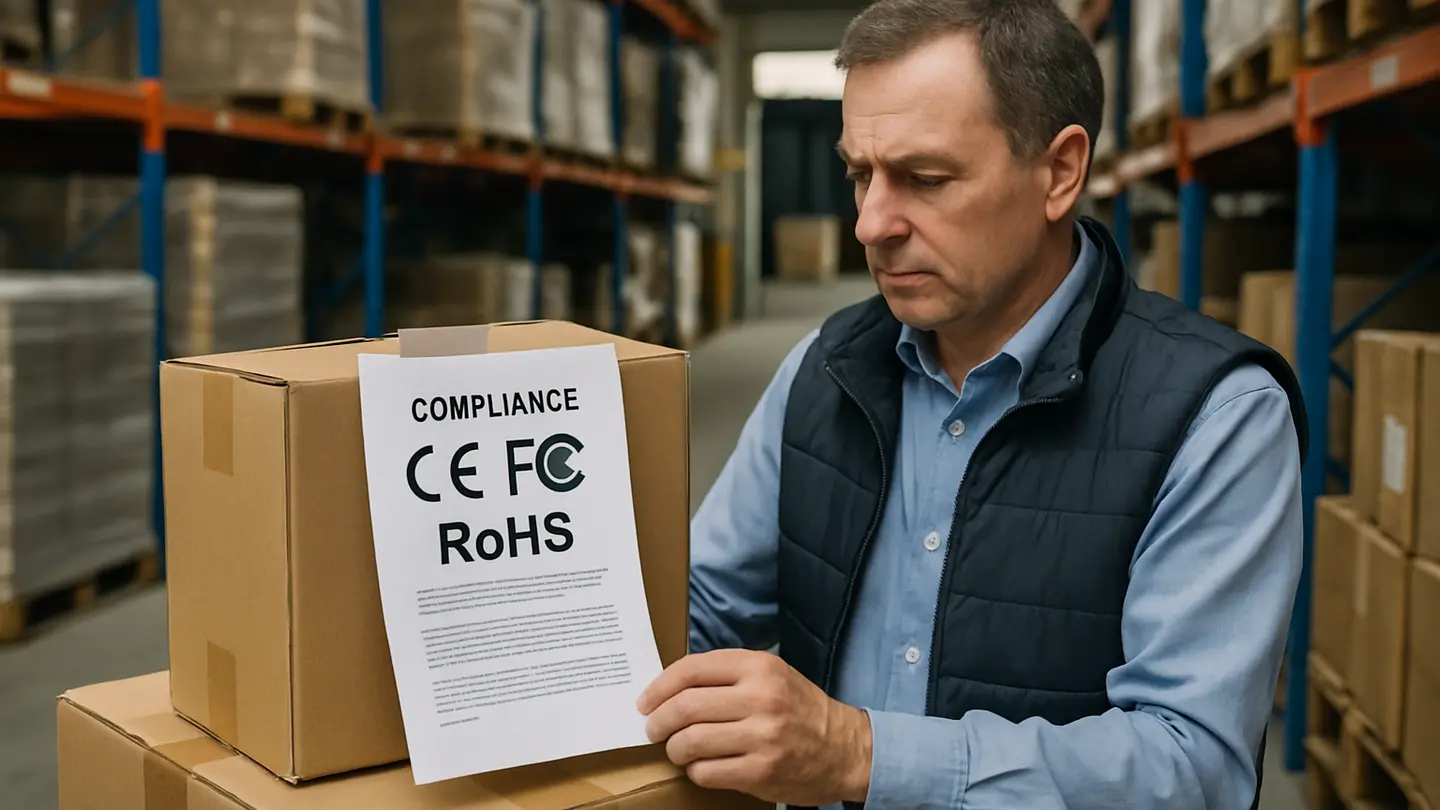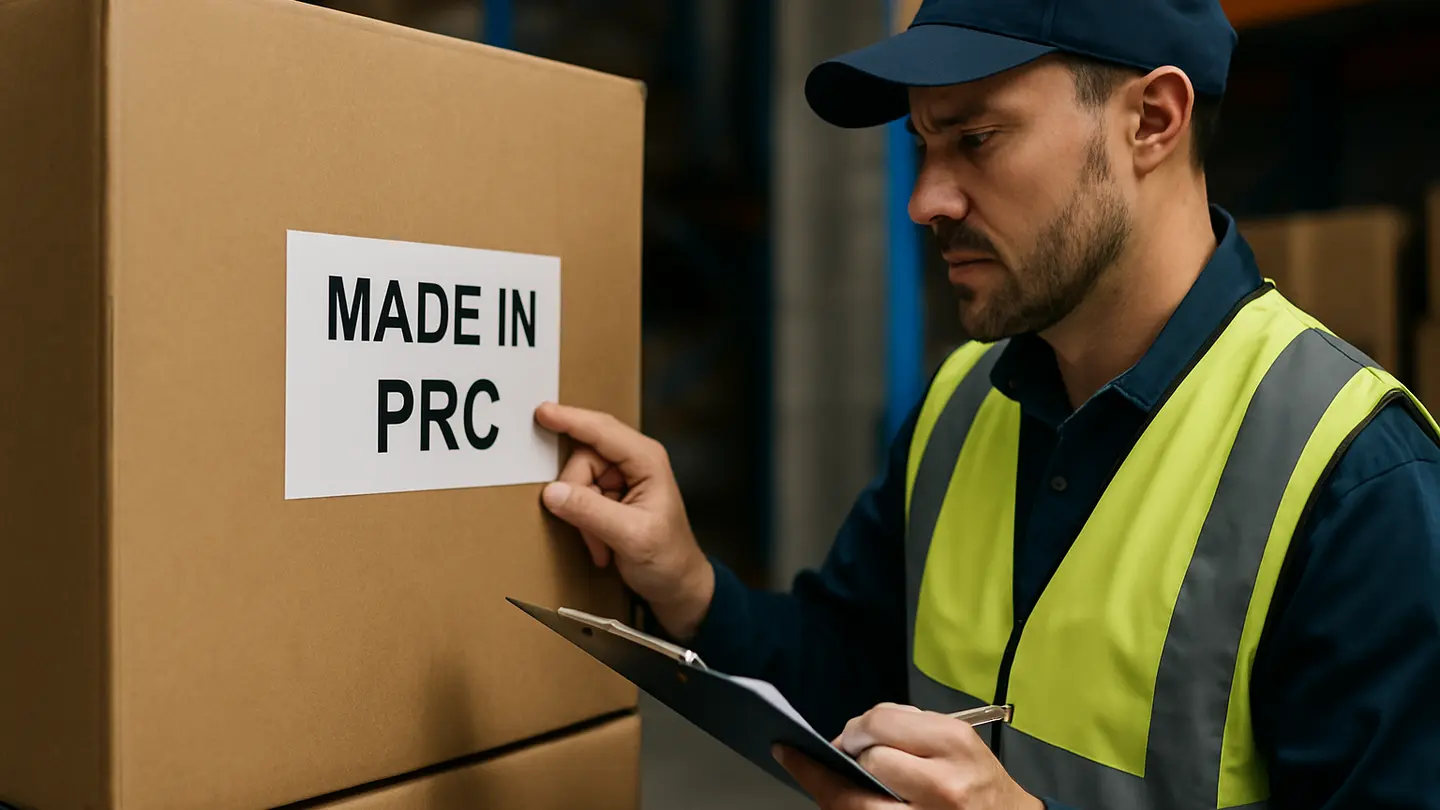
For U.S.-bound imports, a Made in PRC label is risky if it is the only country-of-origin wording. “PRC” means the People’s Republic of China, but U.S. Customs and Border Protection expects the mark to be clear to the ordinary U.S. purchaser.
Safer wording directly identifies the country in familiar English, such as “Made in China,” “Made in P.R. China,” or “Product of China.” Resolve this before labels, retail packaging, master cartons, hang tags, or molded product marks are produced. After shipment, a wording issue can become a customs delay, rework cost, or missed delivery window.
This applies across many product categories, including bathroom and shower products, where limited label space makes early planning important. Treat origin marking as a production specification, not a last-minute packaging detail.
Will U.S. Customs Accept “Made in PRC” on Imported Goods?
U.S. law generally requires imported articles to be marked with their country of origin in a way that is clear, legible, permanent enough, and visible to the ultimate purchaser. The mark must be in English and identify the country where the product is considered to originate for customs purposes.
The issue is whether “PRC” is clear enough for ordinary buyers. Sourcing teams, factories, freight forwarders, and customs brokers may know that PRC refers to China, but Customs evaluates marking from the standpoint of the ultimate purchaser. If wording is unclear, abbreviated, or confusing in context, it can be challenged.
That is why many U.S. importers avoid Made in PRC and specify “Made in China.” The phrase is direct, familiar, and less likely to invite questions. “Made in P.R. China” is also commonly used because it includes “China,” the recognizable country name.
The origin mark also needs to survive ordinary handling. A sticker that falls off, ink that rubs away, or a mark hidden under another label may not satisfy the requirement. For retail goods, the mark should normally still be readable when the product reaches the final buyer.
A common sourcing problem is that factories use default origin wording. Unless the buyer specifies exact U.S.-compliant wording, the factory may print “Made in PRC,” “Made in China PRC,” or another variation. Importers should check origin marking before shipment, when labels, cartons, or instruction sheets are easier to correct.
Which China Origin Markings Are Safer for U.S. Imports?
For goods of Chinese origin, the safest wording usually includes the word “China.” In many cases, the country name alone may be enough.
| Wording | Practical risk level for U.S. imports | Notes |
|---|---|---|
| China | Generally low | The country name is clear, though many importers prefer fuller wording. |
| Made in China | Low | Common, direct, and widely understood by U.S. buyers. |
| Product of China | Low | Also commonly used, especially for some product and packaging contexts. |
| Made in P.R. China | Usually lower than “PRC” alone | Includes “China,” making the origin clearer. |
| Made in PRC | Higher risk | “PRC” may not be recognized by ordinary U.S. purchasers. |
“Made in” is common, but it is not always the legally required phrase. The essential point is that the country of origin must be clearly indicated. Depending on the article, “China” alone may satisfy the marking requirement if it is visible and not misleading.
Context matters. If the product or packaging includes other geographic names, more explicit wording may be necessary. A shower product box might show a U.S. brand address, a “Designed in California” statement, or a collection name that includes a city. In that situation, a small “China” mark on a different panel may not prevent confusion.
For most import programs, the conservative choice is “Made in China” or “Product of China” unless a customs broker or trade counsel has confirmed a different marking is acceptable for the exact product and packaging configuration.
Should the Country-of-Origin Mark Go on the Product or the Packaging?
The default expectation is that the imported article itself should be marked with its country of origin. If the product can be marked legibly, conspicuously, and permanently enough, the mark should usually appear on the product.
For bathroom and shower products, the correct location depends on the item. A metal shower arm may allow a small etched or stamped mark. A plastic handheld shower body may allow molded text near the connection area. A trim plate may have space on the back. A hose, gasket, aerator, or small fitting may be too small for direct marking.
Packaging may be acceptable where the product itself cannot be marked legibly or where marking would damage the article. Packaging is more defensible when it reaches the ultimate purchaser unopened and clearly displays the origin.
The packaging approach becomes weaker if the packaging is removed before the product reaches the buyer. If bulk components are repacked by a distributor or installed into another product before sale, the importer should examine whether product-level marking is required.
Permanent marks should be planned early. Molded, machined, etched, stamped, cast, or engraved origin marks need to be decided before tooling, molds, dies, or finishing processes are finalized. Printed marks also need durability: ink should not smear, labels should not peel off, and polybag marks should remain readable after normal handling.
How U.S. Place Names on Labels Can Affect Origin Marking
A U.S. place name on the product, retail box, instruction manual, warranty card, or outer packaging can change the marking analysis. If a label shows a U.S. city, state, ZIP code, distribution address, customer service address, or other geographic reference, Customs may require the foreign country-of-origin mark to appear close to that reference and in comparable size.
The purpose is to prevent buyers from believing the product was made in the United States. A shower column box, for instance, might display:
- a brand name followed by “Los Angeles, CA”;
- “Designed in California”;
- a U.S. company address;
- “U.S. engineering team”;
- a collection name that resembles a U.S. location.
These statements may be true, but they can create misleading-origin concerns if not balanced with a clear foreign origin statement. A small “Made in China” mark on the bottom flap may not be sufficient if the front panel prominently suggests a U.S. connection.
A common solution is to place the origin mark near the U.S. place name, using comparable visibility. For example:
Designed in California Made in China
This pairing is clearer than placing “Designed in California” on the front panel and “Made in China” on a hidden underside or back corner. The origin statement should not be obscured by graphics, folds, hang holes, warning labels, or retail stickers.
Trademark-related geographic wording can be more complex. Importers should not assume that trademark use eliminates origin-marking concerns.
What Importers Should Specify to Suppliers Before Production
Importers should give suppliers exact origin-marking instructions before production artwork is approved. Vague directions such as “add origin label” or “mark as required for the U.S.” leave too much room for factory interpretation.
A practical specification should include:
- exact wording, such as “Made in China”;
- location on the product;
- location on retail packaging;
- location on master cartons, if required by the buyer’s logistics process;
- application method, such as molded, etched, printed, adhesive label, sewn label, or hang tag;
- minimum type size;
- color contrast;
- durability requirement;
- whether the mark must appear near any U.S. address or design statement;
- approval process for pre-production samples and mass-production photos.
Consistency is also important. The commercial invoice, packing list, product mark, inner packaging, retail carton, and master carton should not give conflicting origin information. If an invoice states China, the carton says PRC, and the product has no mark, the shipment may attract questions. If a supplier ships mixed-origin goods under one purchase order, the documentation and labeling need closer control.
Mismatched origin information can delay customs clearance and create problems for importers selling to retailers, contractors, hospitality projects, or public procurement channels. Downstream buyers may have their own country-of-origin data requirements.
The purchase order should make the supplier responsible for following the approved marking specification. But the importer remains responsible for compliance at entry, so approval and verification should be built into the sourcing process.
How to Verify Origin Marking Before Goods Ship
Importers should review photographs of actual production marks, not just artwork files. Artwork can be correct while the printed carton is wrong. A factory may use an old print plate, substitute a label roll, crop the origin line, or move the mark to a different panel.
Before shipment, request clear photos showing:
- the product-level origin mark;
- retail packaging from all relevant panels;
- master carton marks;
- hang tags, inserts, and labels;
- any U.S. address or other geographic statement;
- close-up images proving legibility;
- random samples from completed production, not only golden samples.
A pre-shipment inspection can include origin marking as a defined checkpoint. The inspector can verify wording, placement, size, legibility, adhesion, and durability. For example, an inspection checklist may require confirmation that each retail box states “Made in China” on the same panel as the U.S. distributor address.
This compliance check is separate from product quality inspection. A shower head may pass flow testing, plating inspection, thread gauge checks, and packaging drop tests while still failing origin-marking requirements.
Printed cartons and labels often differ from approved artwork after production, especially when factories adjust layouts, change carton suppliers, translate packaging, or combine customer templates. For high-volume programs, require first-article packaging approval before full printing.
What Happens If Customs Rejects the Origin Mark?
If Customs finds the country-of-origin marking unacceptable, the shipment may be held. The importer may be required to mark, re-mark, or otherwise correct the goods under supervision before they can be released into U.S. commerce.
The direct costs can include:
- warehouse or exam fees;
- labor for re-labeling or re-marking;
- new labels or packaging materials;
- customs broker coordination;
- port storage or demurrage;
- delayed delivery penalties;
- missed retail or project installation deadlines.
If the marking issue is not corrected within the required time, a marking duty of 10% may apply. That duty is separate from ordinary customs duty and any additional tariffs.
Correcting the physical origin label does not change the tariff classification or applicable duty rate. A product of Chinese origin remains of Chinese origin for tariff purposes even if the importer changes the label from “Made in PRC” to “Made in China.” If Section 301 duties or other trade measures apply based on origin and classification, a label correction will not remove those duties.
It is also important to distinguish marking from origin determination. Marking is the physical disclosure to the purchaser. Origin determination is the legal conclusion about where the product originates. If the declared origin is wrong because production took place in more than one country, reprinting labels will not solve the underlying compliance issue.
FAQ
Q1: What do I mark if my goods are assembled in Vietnam from Chinese parts?
Assembly in Vietnam does not automatically make Vietnam the country of origin. Customs may look at whether the processing in Vietnam creates a new article with a new name, character, or use. This is often called a substantial transformation analysis.
Simple assembly, packaging, testing, or minor finishing may be insufficient. More complex manufacturing may support a different origin conclusion, but the answer depends on the product and process.
Importers should obtain product-specific guidance before labels are printed, especially when shifting production from China to another country for tariff or sourcing reasons.
Q2: Does the origin mark have to be in English?
For U.S.-bound goods, the country name generally needs to appear in English. A non-English translation elsewhere on the packaging does not normally replace the required English country-of-origin mark.
A multilingual package may include origin statements in Spanish, French, or other languages, but the U.S. marking should still clearly identify the country in English, such as “Made in China.”
Q3: Does a Hong Kong office address on my packaging matter?
Yes. A Hong Kong office address is a geographic reference that may affect how the origin mark should be presented, especially if the goods actually originate in mainland China or another country.
The issue is whether the packaging could mislead buyers about where the product was made. If the packaging prominently shows a Hong Kong address, the origin mark may need to clarify the manufacturing origin nearby, such as “Made in China.” The correct approach depends on the full packaging layout and actual origin.
Q4: What do I do if my product is too small to carry legible wording?
Small products may qualify for alternative marking approaches. If the article itself cannot be legibly or safely marked, the packaging may carry the country-of-origin mark, provided the packaging reaches the ultimate purchaser and clearly displays the origin.
This decision should be documented before tooling or production. Importers should keep records showing why product-level marking was impractical and how the packaging mark will remain visible to the buyer. For small shower components, fittings, washers, cartridges, and repair parts, complete this analysis before the supplier prints bags, boxes, or labels.
Final Checklist Before Production and Shipping
Origin marking should be resolved before production and shipping, not after goods arrive at port. The cost of correcting a marking problem rises quickly once products are packed, containerized, and entered for import.
Before approving production, importers should confirm:
- the actual country of origin has been determined;
- the chosen wording is clear for U.S. buyers;
- “Made in China,” “Product of China,” or another approved wording appears where required;
- “Made in PRC” is not used unless specifically confirmed as acceptable for the product and context;
- product marks, packaging, cartons, and documents are consistent;
- U.S. addresses or design statements are balanced with nearby origin wording;
- printed samples or production photos have been reviewed;
- origin marking is included in the pre-shipment inspection checklist.
Mistakes are cheaper to fix before labels, cartons, molded marks, or etched surfaces are made. Once tooling is finalized or retail packaging is printed, even a small text change can affect schedule, cost, and inventory planning.
For U.S. importers, the practical rule is simple: Customs should not be the first party to discover a marking problem. Check the wording, placement, and durability before goods leave China or any other manufacturing country.