Client Experiences With Maple Sourcing’s China Sourcing Services
For shower manufacturers and other B2B buyers, China sourcing support is not only about locating a factory. A workable sourcing process must also address communication, supplier evaluation, product requirements, quality oversight, shipment planning, and follow-up when conditions change.
The Maple Sourcing client testimonials discussed below offer individual perspectives on these parts of the process. They do not represent a technical comparison of factories or a guarantee of a particular outcome. However, they show what several clients considered useful when working with sourcing support in China: clear English-language communication, help identifying suitable suppliers, attention to product condition, factory follow-up, and coordination around delivery.
This is relevant to shower manufacturers because bathroom-product procurement often involves multiple moving parts. A buyer may need to source tempered-glass shower screens, aluminium profiles, hinges, handles, trays, drains, seals, packaging, or installation hardware from different suppliers. Each component can have distinct tolerances, finishes, packaging needs, and lead-time risks. In this setting, a sourcing partner’s value may depend on how well it helps the buyer maintain visibility across the supply chain.
The following client experiences focus on four practical areas that matter to international procurement teams:
- Communication and long-term sourcing guidance
- Identification of specialist factories and commercial discussions
- Product condition, quality consistency, and delivery timing
- Inspection, factory follow-up, reinspection, and shipment coordination
For buyers in the shower industry, the key lesson is not that every project follows the same path. Instead, these accounts highlight the importance of defining responsibilities early. Before appointing sourcing support, a buyer should determine who will approve samples, who owns the product specification, when inspections will occur, what defects are unacceptable, and how shipment timing will be communicated.
Zak Maqsood: Professional Communication and Long-Term Guidance
Zak Maqsood of Rise Traveller Ltd. first met the Maple Sourcing team during a business trip to China. His experience emphasizes professional service, reliable support, English-language communication, and guidance intended to support sourcing over the longer term.
For overseas buyers, effective communication is often one of the most important parts of a sourcing relationship. This is especially true when the buyer and supplier use different working languages, operate in different time zones, or interpret technical descriptions differently. A product request may appear simple at first but contain many decisions that affect quality, cost, and production feasibility.
For example, a shower manufacturer sourcing a new enclosure range may need to clarify issues such as:
- Glass thickness and finish requirements
- Hardware material and surface treatment
- Profile dimensions and wall thickness
- Handle design, hinge movement, and closing position
- Water-sealing arrangement
- Packaging structure for fragile components
- Branding, labels, manuals, and spare-parts requirements
If these points are communicated only as broad requests, factories may make different assumptions. One supplier may quote a polished chrome finish while another interprets the request as a lower-cost plated alternative. A request for “strong packaging” may result in different carton designs unless the buyer specifies corner protection, foam, palletisation, drop-risk considerations, or loading limits.
Zak’s reference to English-language communication is therefore significant in a B2B sourcing context. Communication support can help ensure that commercial discussions, product changes, sample comments, and production questions are understood by all parties. It does not remove the buyer’s need to provide a clear specification, but it can reduce the risk that important details are lost between the purchasing team and the factory.
His comments also point to the value of long-term guidance. A one-time order may focus mainly on price and immediate availability. A longer sourcing relationship, by contrast, may require a wider view of supplier suitability. Buyers may need support as product ranges evolve, demand changes, or new components are introduced.
For a shower manufacturer, long-term sourcing questions could include whether a supplier can maintain a consistent finish across future batches, whether replacement parts will remain available, or whether a packaging approach can be improved after initial shipping experience. These are not matters that can always be resolved by comparing quotations alone.
A practical takeaway from Zak’s experience is that buyers should evaluate communication as a working capability, not simply a convenience. During early discussions, procurement teams can assess whether questions are answered clearly, whether changes are recorded accurately, and whether potential risks are raised before production begins. These behaviours can matter as much as the initial unit price when the project involves customized products or repeat purchasing.
Aurelio Sablone: Finding a Specialist Factory at Competitive Terms
Aurelio Sablone of Rock Dreamer Music Products LLC needed a manufacturer for a specialized guitar-assist device. In his testimonial, he highlighted assistance with identifying a suitable factory, obtaining competitive pricing, responsive communication, and customer service.
His experience illustrates a common sourcing challenge: finding a factory that is appropriate for a specific product rather than selecting the first supplier that appears to offer a broad product category. A supplier may be able to produce something similar, but that does not necessarily mean it has the machinery, technical knowledge, material control, or production discipline needed for the required product.
For shower manufacturers, this distinction is important. The bathroom-products sector includes many different manufacturing specialisms. A company experienced in aluminium extrusion may not be the right source for precision brass fittings. A glass processor may have different capabilities from a supplier producing injection-moulded plastic accessories. Similarly, a factory that produces standard shower doors may not be suitable for a bespoke enclosure with non-standard dimensions, special finishes, or complex packaging requirements.
Factory identification should therefore begin with a detailed sourcing brief. The brief should explain more than the product name. It should cover the intended application, drawings or reference samples where available, expected materials, finishing requirements, target order volumes, packaging expectations, and any known market or installation requirements.
When sourcing a specialized shower component, buyers may want to consider questions such as:
| Evaluation area | Buyer consideration |
|---|---|
| Product fit | Does the factory make comparable products or only broadly similar items? |
| Material control | Can the supplier clearly identify the intended metal, glass, plastic, seal, or coating? |
| Production method | Is the proposed process suitable for the design and expected volume? |
| Tolerance management | Are critical dimensions defined and measurable before mass production? |
| Finish consistency | Can the factory manage appearance expectations across components and batches? |
| Packaging | Is the packaging designed for fragile, heavy, or surface-sensitive parts? |
| Commercial terms | Are quoted terms clear about scope, tooling, samples, packaging, and delivery assumptions? |
Aurelio’s mention of competitive pricing should also be understood carefully. Competitive does not always mean the lowest quotation. A lower price can be less useful if the supplier has misunderstood the specification, excluded necessary components, used an unsuitable material, or quoted a packaging method that does not protect the product adequately.
For shower-product buyers, comparing quotations on equivalent terms is essential. If one factory includes hinges, seals, and branded cartons while another only quotes the main frame or glass assembly, the apparent price difference may not reflect the real landed cost. Buyers should ask for a structured quotation that identifies what is included, what is excluded, and which assumptions remain open.
Responsive communication and customer service, also noted by Aurelio, can help during this comparison stage. A responsive sourcing process should not simply relay prices. It should help identify where quotations differ and where additional clarification is needed. This can be especially valuable for specialist products, where design decisions can have consequences for tooling, assembly, installation, and final cost.
The broader lesson from Aurelio’s experience is that supplier selection should match the complexity of the product. For standard items, a buyer may prioritize capacity, pricing, and consistency. For a specialized design, the ability to identify and assess a suitable manufacturing partner becomes more important. A sourcing team can add value when it helps the buyer ask more precise questions before committing to samples or production.
John Owens: Product Quality and Timely Delivery Support
John Owens of AMN Group emphasized prompt delivery support, stating that it helped his projects meet their objectives and supported business growth. He also described the product quality and condition as consistently strong.
Delivery performance matters because a late shipment can affect more than a single purchase order. For a shower manufacturer, missed delivery dates may delay assembly, disrupt dealer commitments, create gaps in stock, or leave installation projects without required components. The impact can be greater when products are part of a coordinated range. A missing handle, seal, hinge, or tray can prevent completion of a full shower enclosure even if the other parts have arrived.
John’s experience highlights the connection between delivery timing and business planning. Buyers should distinguish between the factory’s stated production completion date and the actual point at which goods are available to move. The full process can include production, packing, inspection, corrections where needed, export preparation, freight booking, consolidation, and transit.
A practical shipment plan should clarify:
- The agreed production completion date
- The timing of any pre-shipment inspection
- The process if issues are identified during inspection
- The earliest realistic cargo-ready date
- The shipment method and booking responsibility
- Documentation requirements
- The destination delivery plan and any storage needs
Product quality and condition are closely linked to logistics. A product may leave the factory in acceptable condition but still arrive damaged if packaging, handling, palletisation, or container loading is not suitable. Shower products can be particularly exposed to transit damage because they may contain glass panels, coated metal surfaces, long profiles, or heavy stone-resin and ceramic components.
For this reason, buyers should treat packaging as part of the product requirement rather than as an afterthought. They should specify which surfaces need protection, how components must be separated, whether cartons need edge reinforcement, and how replacement parts should be packed. Where a shipment contains mixed components, each carton should be identifiable so that warehouse teams can check quantities and assemble complete kits.
John’s testimonial does not provide technical details about the products or delivery arrangements involved. Still, his focus on quality, condition, and prompt delivery reflects the practical outcomes buyers often seek from sourcing support. Product conformance and delivery reliability are both necessary. Strong quality without usable delivery timing may not meet project requirements, while fast delivery of damaged or incomplete goods creates a different set of costs.
For procurement teams, the lesson is to set measurable acceptance points before shipment. This may include approved samples, documented packing requirements, defined inspection timing, and agreement on what happens if defects or shortages are found. Clear preparation improves the buyer’s ability to make informed decisions when production and shipment milestones approach.
Jonathan: Inspection, Factory Follow-Up, and Shipment Coordination
Jonathan of Safe Place Bedding described Maple Sourcing’s support as valuable to his business. His experience included inspections, factory follow-up, reinspection, shipment assistance, and sourcing support for new products.
This is an example of end-to-end sourcing activity rather than a single supplier-introduction service. Once a factory is selected, the buyer still needs visibility over production progress, quality checks, corrective actions, and outbound logistics. These activities become particularly important where the buyer cannot visit the supplier regularly.
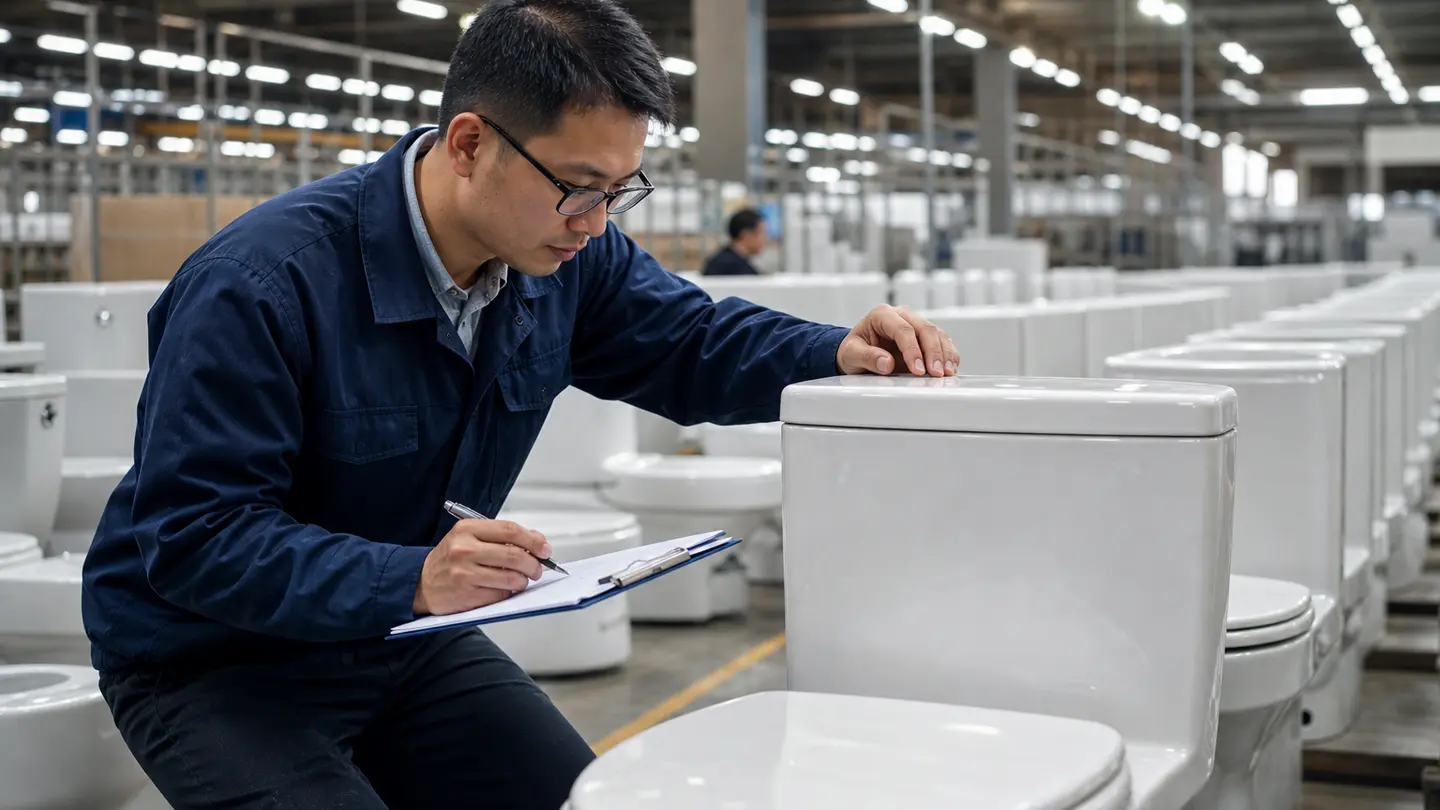
Inspection is one part of this process. For shower manufacturers, inspection criteria should be based on the approved product requirements. An inspection can be less useful if the supplier, sourcing team, and buyer do not share a clear understanding of what must be checked.
Depending on the product, inspection attention may include visible damage, dimensional conformity, component counts, finish quality, assembly fit, basic function, labelling, and packaging condition. For a shower enclosure, this could mean checking whether glass and profiles are protected appropriately, whether fittings correspond to the approved design, whether hardware is complete, and whether cartons contain the correct product identification.
Factory follow-up is also valuable when issues need correction. If an inspection identifies a concern, the next step should be clear: confirm the problem, identify the affected quantity, agree on corrective action, and determine whether another inspection is needed. Jonathan specifically referred to reinspection, which indicates the practical importance of checking whether corrective work has been completed before shipment moves forward.
Reinspection can be relevant when defects relate to appearance, missing components, packing problems, or other matters that could affect product usability or arrival condition. It should not be viewed as a substitute for good manufacturing control, but it can provide an additional decision point after a factory has addressed reported concerns.
Jonathan also noted shipment assistance. Shipment coordination involves more than arranging transport. It can require communication between the factory, freight provider, warehouse, and buyer so that goods are released at the right time and with the required information. For businesses managing several product categories or multiple suppliers, coordination can help reduce confusion around cargo readiness and shipping status.
Finally, his testimonial mentions support in sourcing new products. This is important for manufacturers that periodically expand their ranges, replace discontinued items, or seek alternative suppliers for risk-management reasons. A new product search should restart the evaluation process rather than assume that an existing supplier is always the best option.
Jonathan’s account shows why many buyers assess sourcing support across the full purchasing cycle. Supplier discovery may begin the process, but inspection, factory follow-up, reinspection, shipment coordination, and new-product sourcing can all influence the final commercial result. For shower manufacturers, defining these responsibilities in advance can support better control over quality, timing, and product continuity.