Multi-Stage Shower Filter Cartridges: What Distributors Should Know
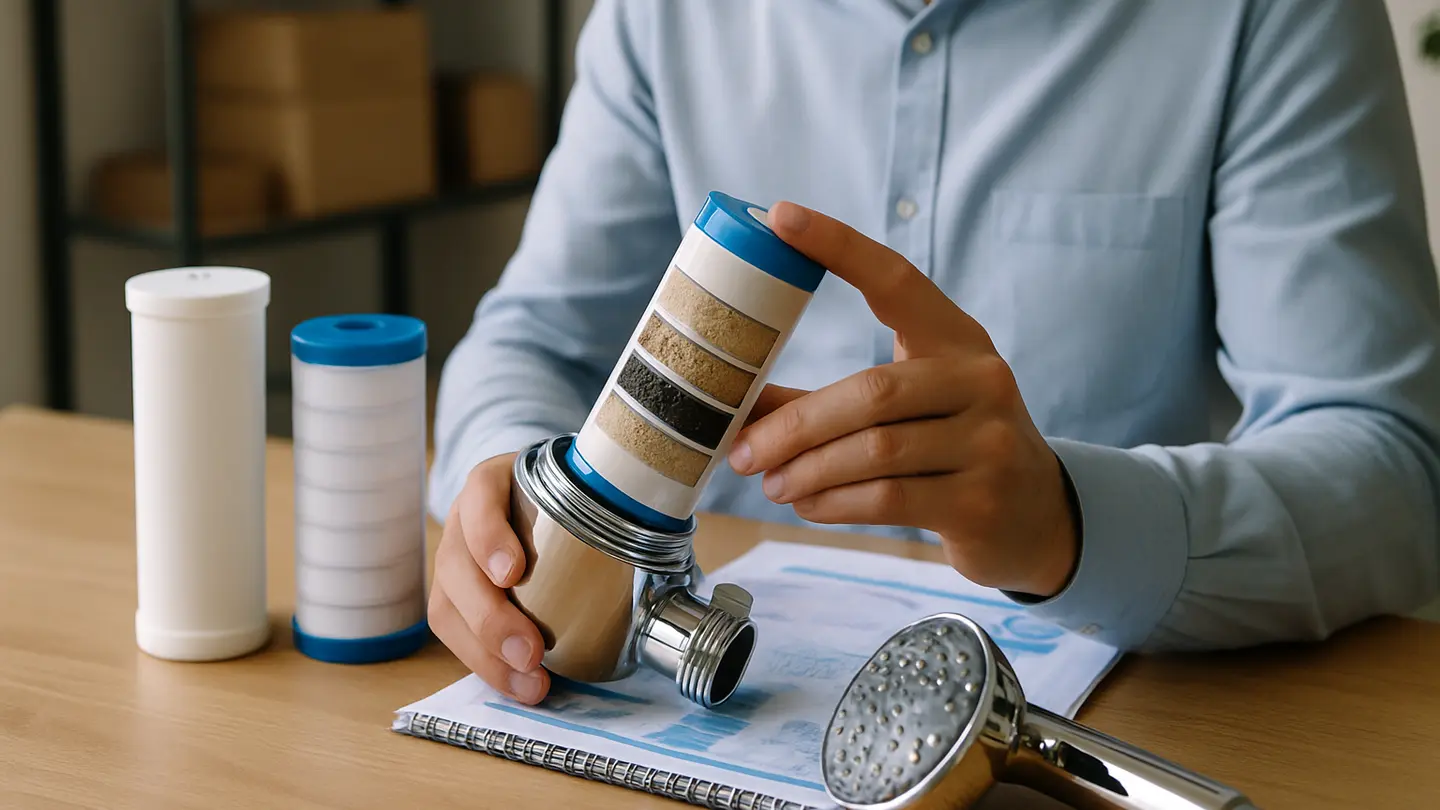
Multi-stage shower filter cartridges are replaceable units that combine several media types in one cartridge. Common layers include calcium sulfite, activated carbon, KDF media, PP cotton, sediment pads, ceramic balls, mineral beads, and other filtration beads.
For distributors, the buying decision is not only whether a cartridge “filters water.” It is whether the product fits common housings, maintains acceptable flow, supports clear replacement cycles, uses credible media combinations, and gives retailers claims they can explain without overstating performance.
How Multi-Stage Shower Filter Cartridges Fit the Shower Filter Market
Multi-stage shower filter cartridges sit within the broader shower filtration category, which includes inline filters, filtered showerheads, handheld shower systems, and replacement refill packs. Their main role is to reduce common shower-water contaminants before water reaches the user’s skin and hair.
For retail channels, the appeal is clear: consumers notice chlorine odor, dry-feeling skin, dull hair, visible rust particles, and inconsistent water quality. A replacement cartridge also creates a repeat-purchase SKU that can be explained as routine maintenance.
The category is especially relevant where municipal water has noticeable disinfectant odor, older plumbing contributes sediment or rust, or consumers already buy bath and beauty products for skin and hair comfort. However, contaminant-reduction statements should match the media, test data, and labeling support.
What Counts as a Multi-Stage Shower Filter Cartridge?
A multi-stage shower filter cartridge is usually one replaceable component containing multiple media layers or zones. Each layer may trap larger particles, reduce chlorine, adsorb odors, or target selected metals.
Stage counts vary widely. Some cartridges are marketed as 10-stage, 15-stage, 20-stage, or more than 30-stage products. Distributors should treat stage count as a design and marketing indicator, not proof of performance. Fewer but higher-volume, well-selected media layers may outperform many thin layers.
Most cartridges sit inside a shower filter housing installed between the shower arm and showerhead, although some are designed for filtered showerheads or handheld units. Many are intended for tool-free replacement.
How Layered Shower Filtration Works
In a layered cartridge, water moves through media in sequence. The arrangement matters because each material has different strengths.
Activated carbon is commonly used to reduce chlorine taste or odor characteristics and adsorb some organic compounds. In shower filters, hot water and high flow can limit some carbon applications, so carbon is often combined with other media.
KDF media, commonly KDF-55 in shower-filter applications, is a copper-zinc medium associated with redox reactions. It is used in many cartridges for chlorine reduction and selected heavy-metal reduction claims, depending on design and test support.
Calcium sulfite is widely used for chlorine reduction in warm or hot water, making it especially relevant for showers. Sediment pads, stainless mesh, PP cotton, ceramic balls, mineral balls, and other beads may support particle capture, media distribution, or user-facing claims.
A typical layered flow starts with a physical barrier for rust, sand, or larger particles, then moves through chlorine-reduction media, adsorption media, and polishing layers. The best arrangement balances contaminant reduction with pressure retention and cartridge life.
Customer Benefits Distributors Can Communicate
The most defensible customer-facing message is reduced chlorine exposure during showering. Some users report that filtered shower water leaves skin and hair feeling less dry, especially where the original water has a strong chlorine odor. Retail interest may also involve itchiness, dandruff, hair softness, color-treated hair appearance, and general shower comfort.
Distributors should avoid guaranteed medical claims. A practical sales message might say that multi-stage cartridges are designed to reduce chlorine and certain impurities that can contribute to an unpleasant shower experience. This is more credible than claiming the product treats skin conditions or delivers universal cosmetic results.
Replacement interval is another useful message. Many cartridges are promoted for about six to nine months of use, although actual life depends on household size, shower frequency, water quality, and cartridge capacity.
Core Filtration Media to Compare Before Buying
When distributors compare multi stage shower filter cartridges, media selection should carry more weight than headline stage count.
| Media or component | Common function in shower cartridges | Buying consideration |
|---|---|---|
| KDF-55 | Redox-based reduction of chlorine and selected metals | Check media volume, flow compatibility, and claim support |
| Activated carbon | Adsorption of some chemicals, organic compounds, and odors | Performance can vary with water temperature, contact time, and carbon quality |
| Calcium sulfite | Chlorine reduction, including in warmer water | Important for shower-specific chlorine-reduction positioning |
| PP cotton or sediment pad | Physical capture of rust, dirt, sand, and larger particles | Helps protect downstream media and maintain user confidence |
| Ceramic, mineral, or filtration beads | Often used for additional filtration, dispersion, or marketing differentiation | Require careful claim review; not all bead types provide the same function |
| Vitamin C media, where used | Chlorine neutralization in some filter designs | Useful for certain product positions but should be supported by clear specifications |
KDF-55 is widely seen in shower filter cartridges because it can support chlorine-reduction positioning and selected metal-reduction claims. Buyers should ask suppliers for actual media weight or percentage, not only whether KDF is “included.”
Activated carbon is familiar to consumers and retailers, which makes it useful for packaging and sales education. For shower applications, distributors should confirm whether the carbon type and cartridge design suit the intended water temperature and flow rate.
Calcium sulfite is particularly relevant where the product is sold primarily for chlorine reduction in hot showers. It is often combined with KDF and carbon to create a broader performance story.
Sediment pads and PP cotton physically trap visible particles such as rust flakes, dirt, or sand. A coarser-to-finer sequence can help preserve flow while extending service life.
For sourcing, ask suppliers for an exploded view or layer diagram, media weights, flow-rate data, pressure-drop information, and available third-party test results.
Installation, Replacement and Maintenance Factors
A cartridge with strong media composition can still generate complaints if installation is confusing, the housing leaks, or replacement requires too much effort. Distributors should evaluate instructions, housing fit, O-ring quality, thread compatibility, cartridge orientation, flushing guidance, and replacement reminders.
Correct installation helps prevent leaks and supports filtration performance. Routine replacement matters because media become exhausted or clogged over time. For average household use, many shower filter cartridges are replaced around every six months, though high-use households or poor incoming water may require shorter intervals.
Typical Installation Steps for Inline Shower Filter Cartridges
Inline shower filter cartridges are usually installed inside a housing placed between the shower arm and showerhead. Exact steps vary by model, but the general process is familiar:
- Remove the showerhead from the shower arm.
- Clean the shower arm threads and apply thread sealing tape if recommended.
- Open the filter housing and insert the cartridge, following any marked flow direction.
- Hand-tighten the housing onto the shower arm. Over-tightening can damage threads or seals.
- Attach the showerhead to the outlet side of the housing.
- Turn on the water gradually, flush the new cartridge, and check for leaks.
Flow direction matters when media are arranged for a specific sequence. If installed backward, performance may decline, sediment may reach media in the wrong order, or the cartridge may clog sooner.
For distributors, clear diagrams, hand-tightening reminders, spare sealing washers, and flushing instructions can reduce returns.
When and How to Replace the Cartridge
Many average households are advised to replace shower filter cartridges about every six months. Some products may be marketed for six to nine months, but timing should be tied to capacity, usage, and water quality.
Common replacement signs include reduced shower pressure, return of chlorine odor, visible cartridge discoloration, or complaints that the filtered-water feel has changed.
A typical replacement process is simple:
- Turn off the shower.
- Open the filter housing.
- Remove the old cartridge.
- Inspect the housing, screen, and seals for buildup or wear.
- Insert the new cartridge in the correct orientation.
- Reassemble the housing.
- Flush for several minutes before normal use.
Distributors should check whether replacement cartridges are individually wrapped, labeled with installation direction, and packed with clear replacement guidance.
Simple Maintenance That Can Support Cartridge Life
Basic maintenance can help preserve water pressure and satisfaction. Monthly screen cleaning is one of the simplest recommendations because screens or inlet areas can collect rust, mineral scale, or sediment.
Some cartridges may be rotated periodically to use media more evenly, but only when manufacturer instructions support it. If the cartridge has a marked flow direction or staged arrangement, rotation could reduce performance.
Distributors should avoid universal maintenance advice that conflicts with supplier instructions. Instead, compare products by how clearly they explain maintenance, whether they include replacement reminders, and whether the housing can be opened and resealed repeatedly without leakage.
Performance, Water Quality and End-User Expectations
Multi-stage cartridges are marketed around measurable improvement in shower-water quality, but the central performance claim is usually chlorine reduction. Other claims may include sediment reduction, odor reduction, selected heavy-metal reduction, and improved skin or hair comfort.
For B2B buyers, the key is to connect technical indicators to realistic customer benefits. Chlorine reduction can be linked to less noticeable odor and a more comfortable shower experience for some users. Sediment capture can be linked to clearer water and fewer visible particles. Flow-rate consistency supports the overall user experience.
If a supplier provides test data, review the test conditions: flow rate, water temperature, influent concentration, total gallons tested, and whether the result applies to the cartridge alone or the complete housing system.
Skin, Hair and Nail Comfort Claims
Filtered shower water may help some users experience less dryness in skin and hair, particularly when incoming water has noticeable chlorine. Consumers with sensitive or eczema-prone skin may seek products that reduce exposure to harsh-feeling chemicals, but distributors should not present shower cartridges as medical devices or guaranteed treatments.
Lower chlorine exposure is also marketed to users with color-treated hair. The message is usually about helping hair feel softer, appear shinier, or maintain a more comfortable look and feel. Similar claims may appear around nail condition.
A careful listing might say: “Designed to reduce chlorine and selected impurities that can contribute to dry-feeling skin and hair.” That is more responsible than claiming the cartridge cures irritation, stops dandruff, or produces identical results for every user.
Chlorine, Chloramine and Other Contaminant Reduction
Activated carbon, calcium sulfite, KDF, and vitamin C stages may appear in chlorine-reduction systems. However, chlorine and chloramine should not be treated as interchangeable. Municipal water systems may use either free chlorine or chloramine, and chloramine can be more difficult to reduce.
Standard carbon alone may not be sufficient for chloramine reduction, especially at shower flow rates. If a product is marketed for chloramine, distributors should ask what media are selected for chloramine treatment and whether the claim is supported by relevant testing.
Layered shower cartridges may also target heavy metals, sediment, pesticides, organic compounds, odors, and dissolved impurities. These claims vary by formulation. A distributor should confirm whether the supplier distinguishes between “designed to reduce,” “tested to reduce,” and “certified to reduce.”
Water Testing and Ongoing Performance Checks
Water testing gives distributors and retailers a practical way to demonstrate before-and-after differences. Simple test strips can compare conditions before installation and after the cartridge has been flushed. Common checks include chlorine, pH, and total dissolved solids.
Chlorine testing is the most directly relevant for many shower filters. pH can help users understand general water characteristics, although most shower cartridges are not designed primarily to correct pH. Total dissolved solids should be interpreted carefully: many shower filters reduce chlorine and certain contaminants without dramatically lowering TDS.
Periodic testing can help monitor performance over time and show when performance begins to decline.
Another Way to Build a China Supplier Shortlist
For distributors comparing overseas supply options, Made-in-China.com can be used as a B2B sourcing platform to identify and compare potential suppliers. It is not a substitute for product testing, sample review, or commercial due diligence, but it can help structure the early search process.
Supplier Discovery provides ways to narrow supplier options, including access to Audited Suppliers and regional supplier channels. Audited Suppliers are subject to third-party verification and on-site audit, with Audit Reports available for buyer review. Those reports can include company information, export trade, manufacturing capacity, quality control, and R&D capability.
Easy Sourcing can reduce manual outreach. Buyers submit one sourcing request, receive multiple quotations from matched suppliers, compare quotes, and request samples. For shower filter cartridge sourcing, this can help distributors compare pricing, MOQ, media specifications, packaging options, and sample availability before deeper negotiation.
FAQ
How can the filtration effectiveness of the cartridge be verified?
Filtration effectiveness can be checked through before-and-after water testing. Users or distributors can test incoming shower water, install and flush the cartridge, then test filtered water under similar conditions.
Common checks include chlorine, pH, and total dissolved solids. Chlorine is usually most relevant. Periodic testing after several months of use can also help determine whether the recommended replacement interval is realistic.
Which contaminants do these cartridges primarily reduce?
Most multi-stage shower filter cartridges primarily target chlorine and sediment such as rust, sand, or dirt. Many models also position themselves around odor reduction because chlorine odor is one of the most noticeable shower-water complaints.
Depending on media composition, some cartridges may reduce selected heavy metals, organic compounds, pesticides, or other impurities. Any broader contaminant claim should be supported by product-specific testing or supplier documentation.
What are the main differences between different models?
Models differ by filtration stage count, but that is only one comparison point. Buyers should also compare media volume, media composition, cartridge dimensions, flow direction, pressure impact, and replacement capacity.
Some cartridges include KDF, calcium sulfite, activated carbon, PP cotton, ceramic balls, mineral beads, or vitamin media. Others emphasize higher media weight, longer service life, or stronger chlorine-reduction positioning. Distributors should compare the actual filtration design rather than relying only on the largest stage number printed on the package.
Are these cartridges compatible with standard shower filter housings?
Many replacement cartridges are designed for common shower filter housings and can be installed without specialized tools. However, compatibility is not universal. Cartridge diameter, length, gasket design, flow direction, and housing structure can all affect fit and performance.
Before buying in volume, distributors should confirm cartridge specifications against the intended housing. Sample testing is especially important when sourcing replacement cartridges for an existing private-label housing or mixed retail assortment.
Related Buying Guide Resources
If the publication uses a footer or related-content module, this topic pairs naturally with resources on inline shower filter housings, filtered showerheads, shower filter certification questions, replacement-cartridge merchandising, and private-label bathroom filtration sourcing.
For distributors, related guides should remain practical: compare specifications, explain installation variables, clarify claim language, and help buyers understand how each product fits a retail or wholesale assortment.