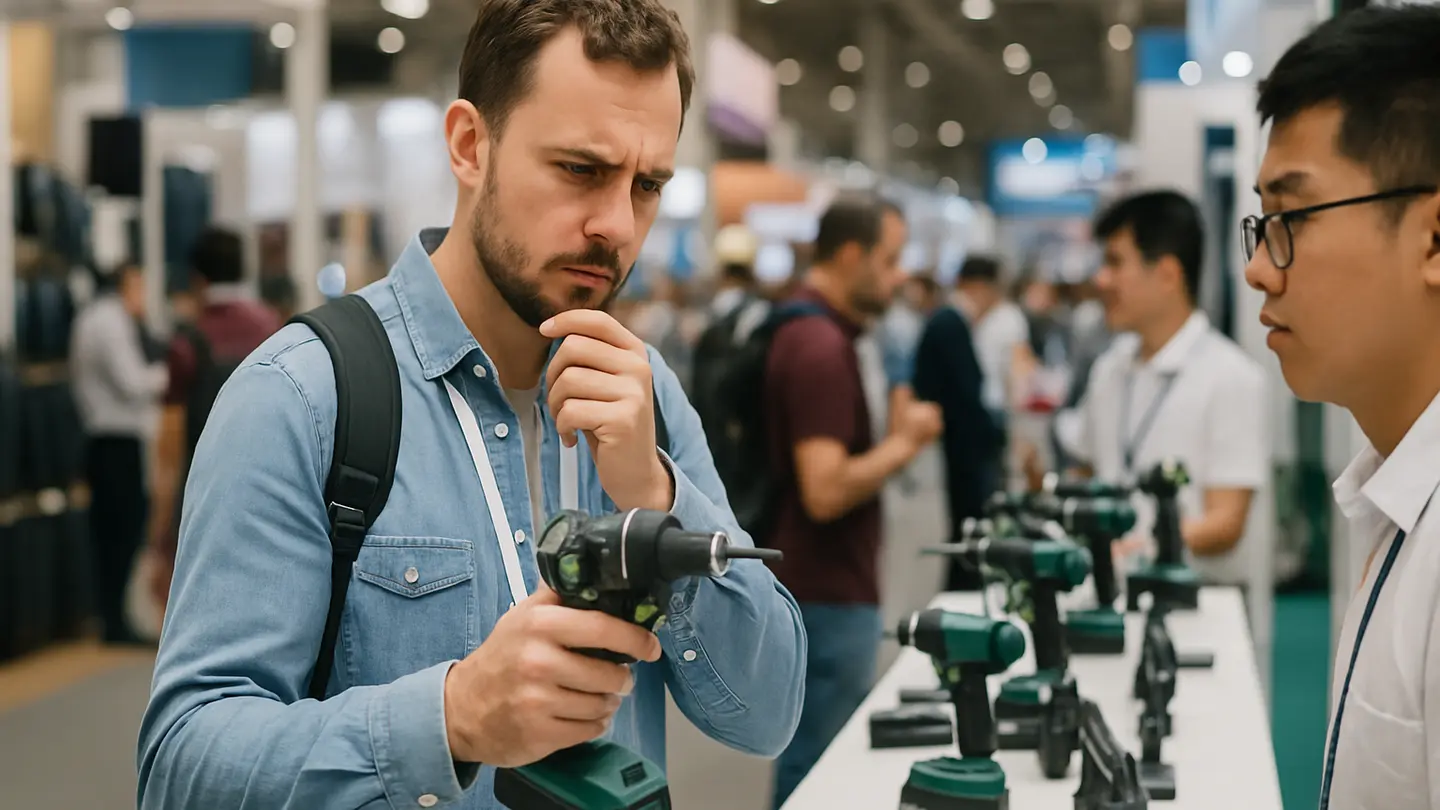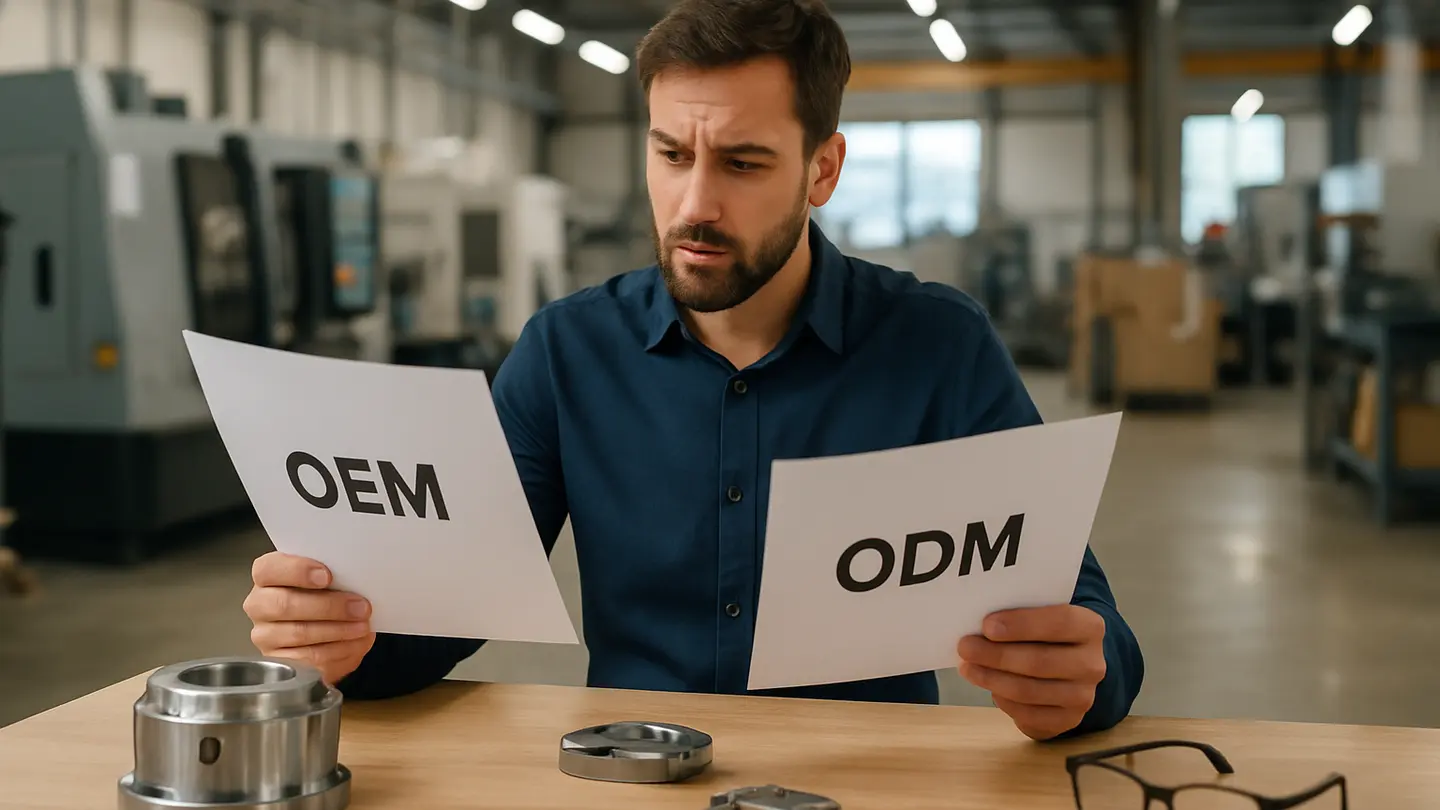
OEM vs ODM manufacturing is a strategic sourcing choice. In an ODM model, the buyer adapts a factory-designed product with branding, packaging, colors, or limited feature changes. In an OEM model, the buyer brings specifications, drawings, performance requirements, or a product concept, and the factory manufactures to that custom brief.
ODM can shorten launch timelines and reduce early investment. OEM can create stronger differentiation, tighter specification control, and clearer ownership of custom IP. Buyers should compare design ownership, tooling, minimum order quantities, lead time, cost exposure, quality control, and supplier-switching flexibility.
Key Decision Factors When Comparing OEM and ODM
OEM and ODM are not simply “custom” versus “ready-made.” They represent different approaches to product control, risk, cash flow, and brand strategy.
A startup validating demand may choose ODM for speed and lower upfront cost. A mature brand may choose OEM for unique features, tighter standards, or protection from direct copycat competition. A distributor may use ODM for seasonal products and OEM for core lines where differentiation matters.
Buyers should ask:
- Is the product itself a defensible asset, or is the brand/channel the main advantage?
- How quickly must the product reach the market?
- How much can the company invest before sales are proven?
- Does the buyer need control over materials, components, tolerances, and testing?
- Can the product be sourced elsewhere if the supplier relationship changes?
- Is the goal market testing or long-term product ownership?
These questions help prevent two mistakes: choosing ODM for speed, then finding competitors can source nearly the same item; or choosing OEM too early, then tying up cash before demand is validated.
Design Ownership, IP Rights, and Contract Control
The central difference between OEM and ODM is ownership of the product design.
In OEM manufacturing, the buyer normally provides the product concept, technical drawings, bill of materials, specifications, performance requirements, and testing criteria. The factory manufactures according to those instructions, often with design-for-manufacturing input. The buyer usually has more influence over materials, dimensions, tolerances, finishing, components, and performance.
In ODM manufacturing, the factory already has a base design. The buyer selects from that portfolio and requests allowed modifications, such as logo placement, packaging, color, finish, accessories, firmware settings, or limited feature changes. The buyer can create a branded product, but usually does not own the underlying design.
This affects contract control. In OEM, buyers should clarify ownership of molds, tooling, design files, prototypes, test data, and engineering improvements. Paying for tooling does not automatically mean the buyer controls it. Contracts should state who owns the tooling, who can use it, where it is stored, whether it can be transferred, and what happens if the supplier relationship ends.
In ODM, the factory often owns the base design and related tooling. That can create supplier lock-in. If the buyer’s product depends on the factory’s proprietary design, switching manufacturers may require redesigning the product, negotiating file access, or accepting a different platform. Buyers may own trademarks, packaging artwork, and buyer-created modifications, but not the core item unless the agreement says so.
IP protection should be addressed early. For China sourcing, buyers often use NNN agreements—non-use, non-disclosure, and non-circumvention—rather than relying only on Western-style NDAs. Early trademark registration in manufacturing and sales markets can also reduce risk before sharing brand assets, packaging designs, or product concepts.
Upfront Investment, Tooling Costs, and Cash-Flow Exposure
OEM usually requires higher upfront investment because the buyer funds custom development. Costs may include industrial design, engineering, CAD files, prototypes, molds, tooling, test fixtures, pilot runs, compliance testing, packaging development, and revisions. These expenses often occur before revenue.
That exposure can be justified when the product has strong demand signals, clear margin potential, or strategic importance. A distinctive OEM design may defend pricing better than a widely available ODM item.
ODM usually reduces startup cost because the supplier has already developed the design and production process. Tooling may exist, and sampling can be less expensive than a full custom program. Buyers can often evaluate a sample, request branding or packaging adjustments, and move toward a trial order without funding a complete engineering cycle.
However, ODM is not cost-free. Hidden costs can appear when changes fall outside the factory’s standard options. Packaging redesign, special inserts, label changes, new colors, component upgrades, target-market testing, documentation corrections, and compliance gaps can all add cost. A simple customization may require new tooling, new supplier inputs, or line adjustments.
Buyers should compare total landed and launch costs, not only unit price. An ODM product with low development cost may still create margin pressure if competitors sell similar versions. An OEM product may be expensive to launch but more profitable if it creates meaningful differentiation.
Launch Speed, Minimum Order Quantities, and Market Testing Flexibility
OEM projects generally take longer because the buyer and factory must align on specifications, create samples, test performance, adjust tooling, validate materials, confirm packaging, and approve pre-production units. Any engineering error or unclear specification can trigger another sample round.
For OEM products, lead time includes more than factory production time. Buyers should budget for design review, tooling fabrication, pilot runs, reliability testing, compliance checks, and approvals. Regulated or technically complex products can take longer.
ODM can support faster market entry because the factory already has a product platform and established production line. The buyer can select an existing item, approve a sample, adjust branding or packaging, and place an order more quickly. This makes ODM useful for trend-driven categories, early validation, promotional programs, or channel tests.
Minimum order quantities also differ. ODM suppliers may accept smaller test orders because they use existing tooling and known processes. OEM projects often require higher MOQs to justify setup, calibration, tooling use, custom materials, or dedicated production planning.
For buyers testing demand, ODM reduces risk. It allows the company to launch, collect feedback, test pricing, and learn which features customers value before investing in custom design. But speed does not guarantee long-term defensibility: the same accessibility may make the product easier for competitors to match.
Quality Control, Compliance Checks, and Supply Chain Oversight
Quality control requirements differ by model, but neither OEM nor ODM removes the buyer’s responsibility for verification.
In OEM manufacturing, quality control depends on clear specifications. The buyer must define materials, dimensions, tolerances, workmanship standards, performance tests, packaging requirements, labeling, acceptable quality limits, and inspection methods. If the specification is vague, the factory may make production choices that do not match expectations.
ODM products may benefit from a proven base design. The factory may already know the production process, common defect points, and stable component sources. However, modifications can introduce problems. A color change may affect surface finish. A component substitution may alter performance. New packaging may fail transit testing. A branding change may affect labeling compliance.
Golden samples are essential in both models. An approved golden sample gives the buyer, supplier, and inspector a benchmark for mass production. It should represent the exact approved materials, finish, dimensions, packaging, labeling, and functional performance.
Spec drift is a common risk in ODM because the factory controls more of the baseline design and component sourcing. The supplier may change materials, subcomponents, finishes, or packaging details without considering the buyer’s market requirements. Contracts and purchase orders should restrict unauthorized substitutions and require written approval for changes.
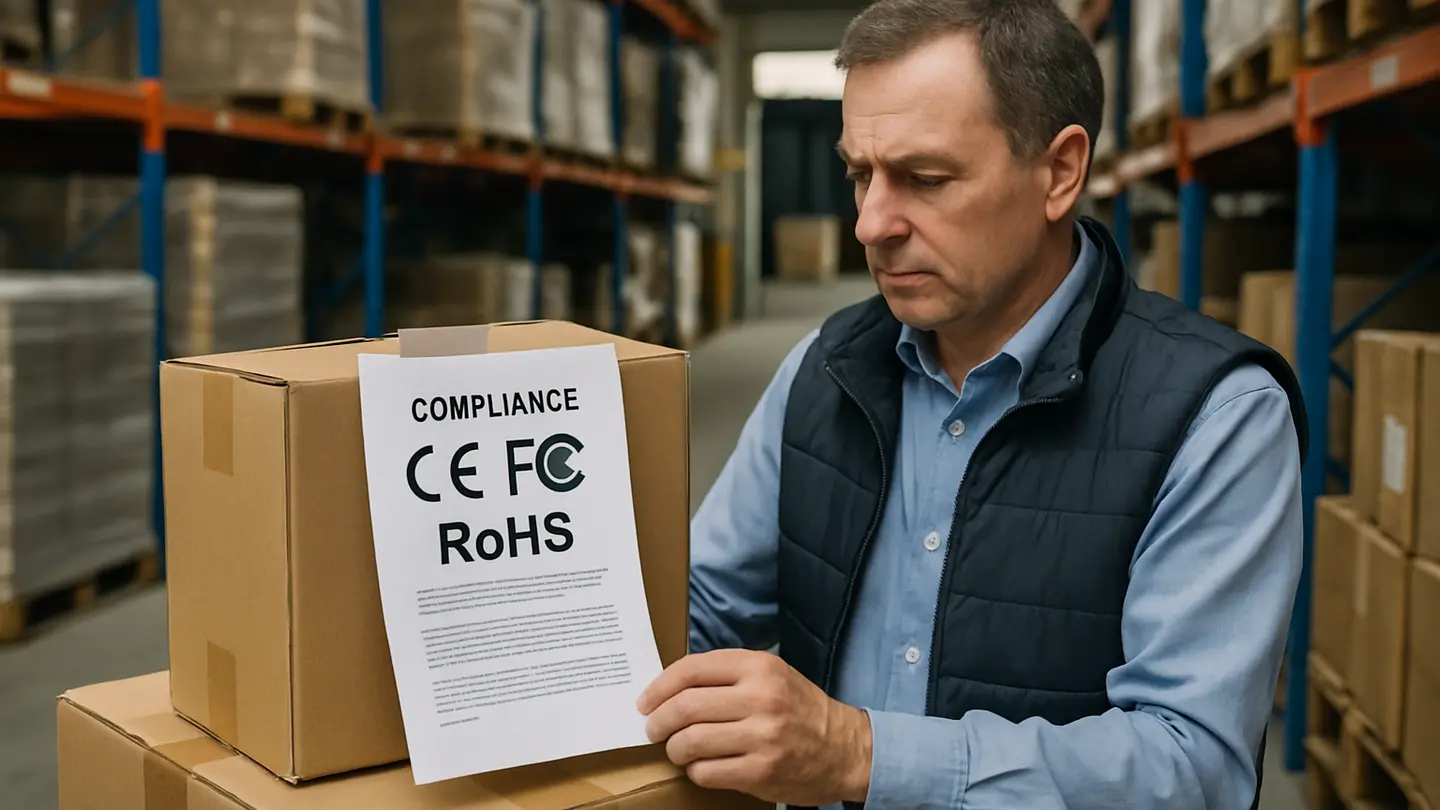
Compliance oversight should include more than the product itself. Shipments can fail because of incorrect labels, missing barcodes, wrong carton marks, incomplete documentation, non-compliant claims, packaging errors, or inaccurate country-of-origin details. Buyers should verify these items before shipment, especially when selling through retailers, marketplaces, or regulated channels.
Brand Differentiation, Private Label, White Label, and Hybrid ODM Options
White label, private label, ODM, and OEM are often used loosely, but buyers should distinguish them.
White label generally means selling a generic product under a brand or sales channel with minimal product-level differentiation. The same product may be offered to many buyers, sometimes with only a logo or packaging change. It is usually the fastest route to market and the easiest to replicate.
Private label usually adds more brand identity. The buyer applies branding, packaging, and selected customizations to an existing product. These may include color, finish, accessories, bundles, instructions, packaging format, or minor feature differences. Private label commonly fits within ODM because the supplier provides the underlying design.
OEM is stronger when the product design itself is the brand asset. If customers buy because of proprietary performance, unique construction, exclusive features, or specialized specifications, OEM gives the buyer more control and supports premium positioning.
There is also a middle path: modified ODM. The buyer starts with a factory-designed product but invests in targeted changes that improve differentiation without full custom tooling, such as upgraded components, a revised housing, improved packaging, a custom accessory set, or a feature bundle unavailable in the supplier’s standard catalog.
Modified ODM can be practical when a buyer wants more uniqueness than white label but is not ready for full OEM. The key is to clarify which modifications the buyer owns, whether the supplier can offer the same changes to others, and whether development fees create exclusive rights.
OEM vs ODM Pros and Cons for Product Buyers
OEM and ODM both have legitimate advantages. The right model depends on whether the buyer is optimizing for speed, cost, exclusivity, operational control, or market validation.
| Criteria | OEM Manufacturing | ODM Manufacturing |
|---|---|---|
| Product design | Buyer-owned custom specifications | Factory-designed base product |
| Launch speed | Slower due to development and validation | Faster using existing designs |
| Upfront cost | Higher due to engineering and tooling | Lower because tooling often exists |
| Differentiation | Stronger if design is unique | Limited unless modified |
| IP control | Potentially stronger with clear contracts | Factory often owns core design |
| MOQ | Often higher | Often lower for test orders |
| Supplier switching | Easier if buyer controls tooling and files | Harder if factory owns the platform |
| Best fit | Long-term, defensible product lines | Fast launch, validation, private label |
This comparison is not a universal ranking. ODM may be right for market entry within a short sales window. OEM may be right for a brand that cannot compete on generic products. Many buyers use ODM first, then move toward OEM once demand and product requirements are clearer.
OEM Manufacturing: Strengths, Limits, and Best-Fit Use Cases
OEM manufacturing is best suited to buyers that need control over product performance and differentiation. It allows the buyer to define materials, dimensions, tolerances, components, finishes, features, packaging, and testing expectations. This makes it useful for proprietary products, technical goods, premium lines, or products where small specification differences affect customer experience.
The main strength of OEM is defensibility. A well-executed custom product is harder for competitors to source directly from the same catalog. If the buyer owns the design files, molds, tooling, and related IP, it may also have better negotiating leverage and more flexibility to move production if pricing, quality, capacity, or service deteriorates.
OEM can also support premium positioning. When the buyer controls the design, it can build features around customer needs rather than accepting the factory’s standard offering. This can improve perceived value, support stronger margins, and reduce direct price comparison.
The limits are significant. OEM requires investment before market validation. If demand is weak, the buyer may be left with sunk development costs, tooling expenses, and inventory risk. Engineering mistakes can be expensive to correct, especially after tooling is cut. Disputes may arise over mold ownership, design changes, production delays, or responsibility for defective prototypes.
OEM also requires stronger internal capability. Buyers need clear specifications, technical review, supplier management, inspection planning, and documentation control. A factory can manufacture, but it cannot reliably guess the buyer’s intended standard.
ODM Manufacturing: Strengths, Limits, and Best-Fit Use Cases
ODM manufacturing is best suited to buyers that need speed, lower development burden, and reduced capital risk. Because the supplier already has a design and production process, the buyer can often move from sample review to order placement faster than with OEM. This is useful for e-commerce sellers, distributors, new brands, seasonal categories, and companies testing a product concept.
ODM lowers the need for engineering resources. The factory may already have product documentation, packaging templates, component sources, and production experience. Existing documentation can simplify early testing or compliance review, although buyers should still verify whether the product meets target-market requirements. A supplier’s existing test report may not cover the buyer’s exact configuration, labeling, claims, or destination regulations.
The biggest commercial advantage is lower upfront cost. Buyers can avoid most custom tooling expenses and preserve cash for inventory, marketing, channel development, or additional product testing. Lower MOQs may also help buyers launch with smaller orders and adjust based on demand.
The main limitation is weaker uniqueness. Other buyers may source the same or very similar product from the same factory. Even if branding is different, the underlying item may be easy to compare, creating price pressure and reducing margin defense.
ODM can also limit control. The factory may restrict material changes, component selection, dimensions, internal construction, or testing modifications because the product is built around its existing design and production process. If the buyer needs deeper changes, the project may become more like OEM, with added cost, longer timelines, and new tooling requirements.
ODM works best when speed and validation matter more than exclusive product ownership. It is less suitable when the buyer’s long-term strategy depends on proprietary design, technical performance, or strict specification control.
FAQ
1. Is private labeling considered OEM or ODM?
Private labeling usually aligns more closely with ODM than OEM. The buyer applies its brand, packaging, artwork, colors, or limited customizations to an existing factory-designed product.
It does not normally require full custom engineering, new product development, or buyer-owned tooling. The buyer may own the brand assets and packaging design, but the factory typically retains ownership of the base product design unless a contract states otherwise.
2. Which manufacturing model is cheaper?
ODM is usually cheaper upfront because the buyer avoids many custom mold, modeling, prototype, engineering, and testing expenses. The factory has already developed the product platform and production process.
OEM can be more expensive at launch, but it may support better long-term margins if the custom design creates meaningful differentiation or exclusivity. Buyers should compare total commercial value, not only initial cost.
3. Who owns the intellectual property in ODM?
In ODM, the factory typically owns the core product design, tooling, and underlying technical files. The buyer may own its trademark, packaging artwork, brand assets, and specifically agreed modifications.
The same base product may be sold to other buyers unless exclusivity is negotiated and documented. Buyers providing confidential changes, requirements, or product ideas should use appropriate contracts, such as NNN agreements in China-focused sourcing, to reduce misuse or circumvention risk.
4. Can I switch from ODM to OEM later?
Yes. Many brands start with ODM to test demand, then move to OEM once sales volume justifies investment in custom tooling and development.
ODM results can inform the later OEM design. Buyer feedback, return reasons, customer reviews, pricing data, and channel performance can show which features matter most. If the new OEM product creates real differentiation, the switch may improve margins, brand control, and long-term supplier flexibility.