Evaluating Outdoor Product Suppliers in China by the Numbers
Outdoor products are often easy to judge visually and difficult to judge technically. A tent can look well finished in a showroom but leak during sustained rain. A backpack can have attractive fabric and branding but fail at the shoulder-strap anchor after repeated loading. A sleeping bag can appear lofty when unpacked yet provide less insulation than the stated temperature claim suggests.
For buyers evaluating outdoor product suppliers in China, the central question is not whether a sample looks acceptable on arrival. It is whether the supplier can demonstrate controlled performance under the weather exposure, load, abrasion, compression, and repeated use expected in the target market.
The strongest evidence is measurable and model-specific. It includes material specifications, seam construction details, hardware identification, stated load or temperature limits, test methods, sample-test records, and reports that clearly identify the product being tested. Broad statements such as “premium quality,” “waterproof material,” or “strong stitching” are not enough for a meaningful supplier comparison.
A practical sourcing process converts customer expectations into measurable requirements before quotations are compared. This helps buyers distinguish between suppliers that can control production variables and suppliers that are only matching the appearance of a reference product.
Where Outdoor Product Manufacturing Clusters Are Located in China
China has several broad manufacturing regions associated with outdoor goods, technical textiles, soft goods, apparel, and related components. These regional strengths can help buyers narrow an initial supplier search, but they should not replace direct capability verification.
Zhejiang is commonly associated with tents, camping equipment, technical fabrics, metal and plastic accessories, and related outdoor-product supply chains. Buyers sourcing shelters, camp furniture, tarps, or camping accessories may find suppliers with relevant material and component familiarity in this region.
Fujian can be a useful starting point for backpacks, bags, footwear-related soft goods, and sewn outdoor products. Its manufacturing base includes suppliers experienced in fabric cutting, sewing, padding, laminating, and assembly processes used in packs and soft goods.
Guangdong has broad strengths in apparel, accessories, consumer electronics, and products combining textiles with electronic components. It may be relevant for outdoor clothing, wearable accessories, lighting products, and certain connected outdoor items.
However, location is only an initial screening indicator. A registered address does not prove that a supplier owns or operates the production lines it claims to use. Buyers should compare the supplier’s legal registration and operating address with its claimed capabilities. If a supplier presents itself as a tent manufacturer, for example, ask whether it performs cutting, sewing, seam sealing, pole assembly, and final water checks in-house or relies on subcontractors.
The objective is not to exclude trading companies or specialist assemblers automatically. It is to understand the actual production chain, who controls critical processes, and where quality responsibility sits when a problem appears.
Why Outdoor Product Failures Appear After Visual Inspection
Many important outdoor-product defects do not become visible during a brief sample review. They emerge only after exposure to water, weight, movement, temperature changes, or repeated packing and unpacking.
For tents, a visually neat seam may still leak if the seam tape is poorly applied, the seam construction is unsuitable, or the coating is inconsistent. A fabric may feel substantial but have inadequate waterproof performance for the intended use. A floor may require different water resistance from a rainfly because it encounters standing water and ground pressure.
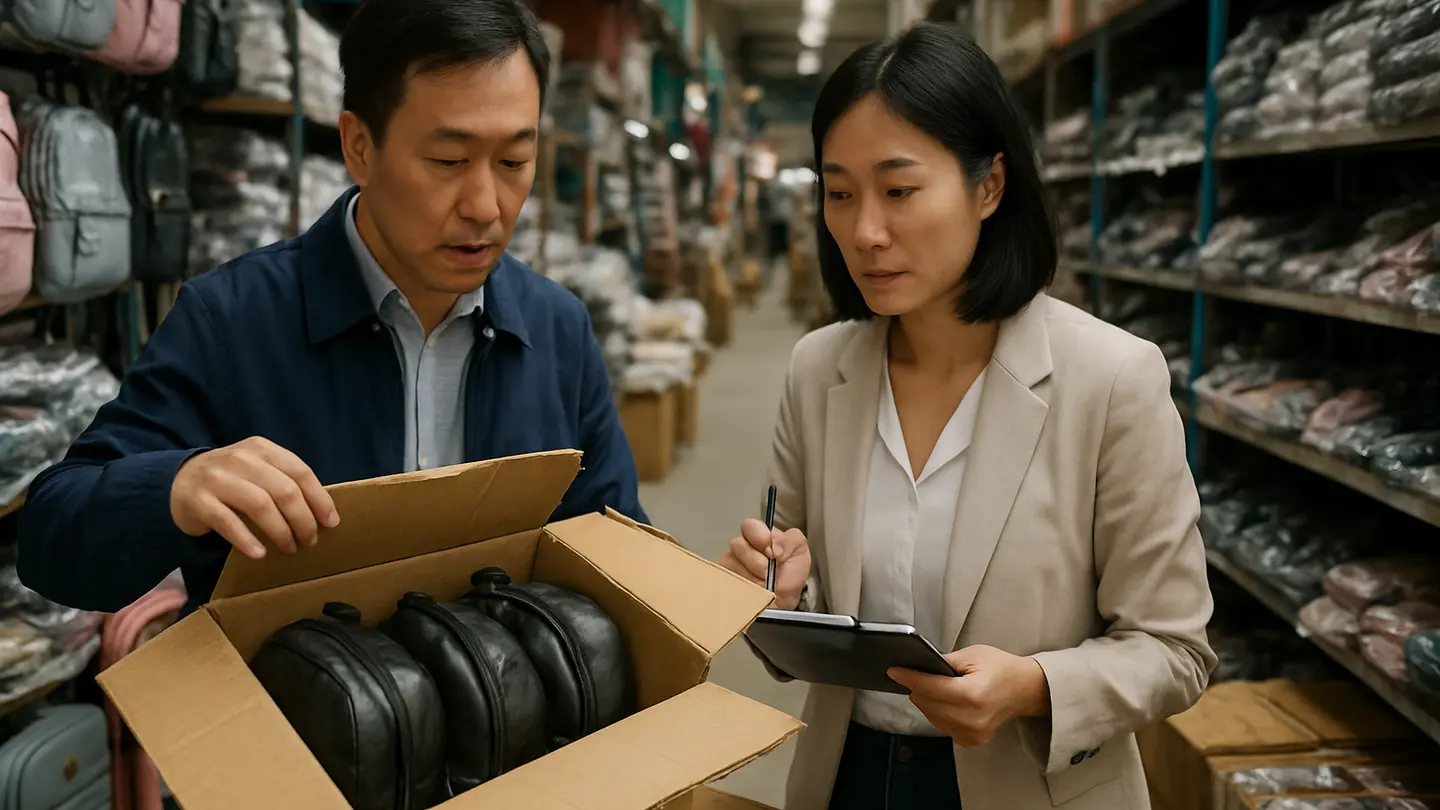
For backpacks, webbing, buckles, and zippers may look acceptable before use but perform poorly under load. Failures can occur at strap anchors, bartacks, frame connections, zipper tracks, or molded hardware. These defects may not be apparent until the bag is carried at its rated capacity.
For sleeping bags, insulation performance depends on more than overall appearance. Fill distribution, fill weight, fill power, baffle construction, shell fabric, lining, and compression recovery all affect real-world use. A bag can feel soft and bulky yet fall short of the intended temperature range.
Instead of asking whether a product is “high quality,” ask questions that require technical answers:
- What is the stated performance rating, and which test method supports it?
- Which parts of the product does the rating apply to?
- What materials, coatings, hardware, and stitch patterns are used?
- What conditions could limit product performance?
- What in-process or final inspections are performed on this model?
A supplier that understands its product should be able to explain both the intended performance and the boundaries of that performance.
Request Measurable Specifications Instead of General Quality Claims
Before comparing quotations, request a technical specification sheet for each proposed product. The sheet should use the same fields across all suppliers so that differences in material, construction, and claimed performance are visible.
For tents, request details such as:
- Fabric denier and, where relevant, fabric weight
- Coating type
- Hydrostatic-head rating
- Rainfly, floor, and inner-tent material specifications
- Seam construction and seam-sealing method
- Pole material, diameter, and connection details
- Zipper type and placement
- Packed dimensions and finished weight
Hydrostatic-head requirements should not be treated as a general “waterproof” statement. Buyers should clarify whether the stated rating applies to the rainfly, floor, groundsheet, or another component. These areas can require different performance levels.
For sleeping bags, the specification sheet should include:
- Fill type
- Fill power
- Fill weight
- Total finished-product weight
- Shell and lining materials
- Baffle or chamber construction
- Zipper details
- Stated temperature rating and the basis for that claim
Temperature ratings require particular care. If a supplier provides a temperature claim, buyers should ask whether the claim is supported by an applicable product test and understand the scope of that test. For example, sleeping-bag temperature performance may be evaluated under ISO 23537-1 within the scope and conditions defined by that standard. A broad marketing temperature statement without supporting context is not equivalent to tested performance.
For backpacks, key fields include:
- Main fabric construction and weight
- Lining fabric
- Webbing width and construction
- Buckles, adjusters, zippers, and other hardware details
- Frame-sheet or internal-support materials, where applicable
- Shoulder-strap and hip-belt construction
- Strap-anchor stitching and reinforcement method
- Rated load, if claimed
- Finished dimensions and weight
The purpose is not to create unnecessary documentation. It is to establish a controlled comparison. Two quotations with similar product photos may represent very different fabric weights, coating systems, hardware grades, and stitching requirements. A technical sheet reveals whether suppliers are pricing the same product standard.
Test Samples Under Realistic Customer-Use Conditions
A pre-production sample should be treated as a test article, not simply a display item. The buyer’s checks should reflect the way customers will use the product and the conditions the product is expected to withstand.
For tents, practical sample checks can include repeated setup and takedown, pole insertion, zipper operation, seam review, and controlled water exposure. Inspect seams, corners, floor edges, vestibules, and attachment points after water testing. Check whether water enters through sewn seams, coating defects, vents, zipper areas, or fabric contact points.
For backpacks, load the sample to its agreed rated capacity or a defined evaluation load. Carry it, lift it repeatedly, and inspect the shoulder-strap anchors, haul loop, webbing ends, buckles, zipper seams, and bottom panel. Monitor whether stitches stretch, thread breaks, foam deforms excessively, or hardware cracks.
For sleeping bags, inspect fill distribution before and after packing, compression, and washing where appropriate for the care instructions. Allow the bag to recover after compression and observe loft consistency across chambers. Compare the finished weight with the approved specification and sample benchmark, while recognizing that total weight alone cannot confirm fill weight or fill power.
Document the process. Record the sample identity, test date, conditions, observed defects, photographs, measurements, and pass/fail criteria. These records become a production reference. If a later shipment differs from the approved sample, the buyer has a defined basis for discussing corrective action rather than relying on general impressions.
Distinguish Factory Certifications From Product-Level Evidence
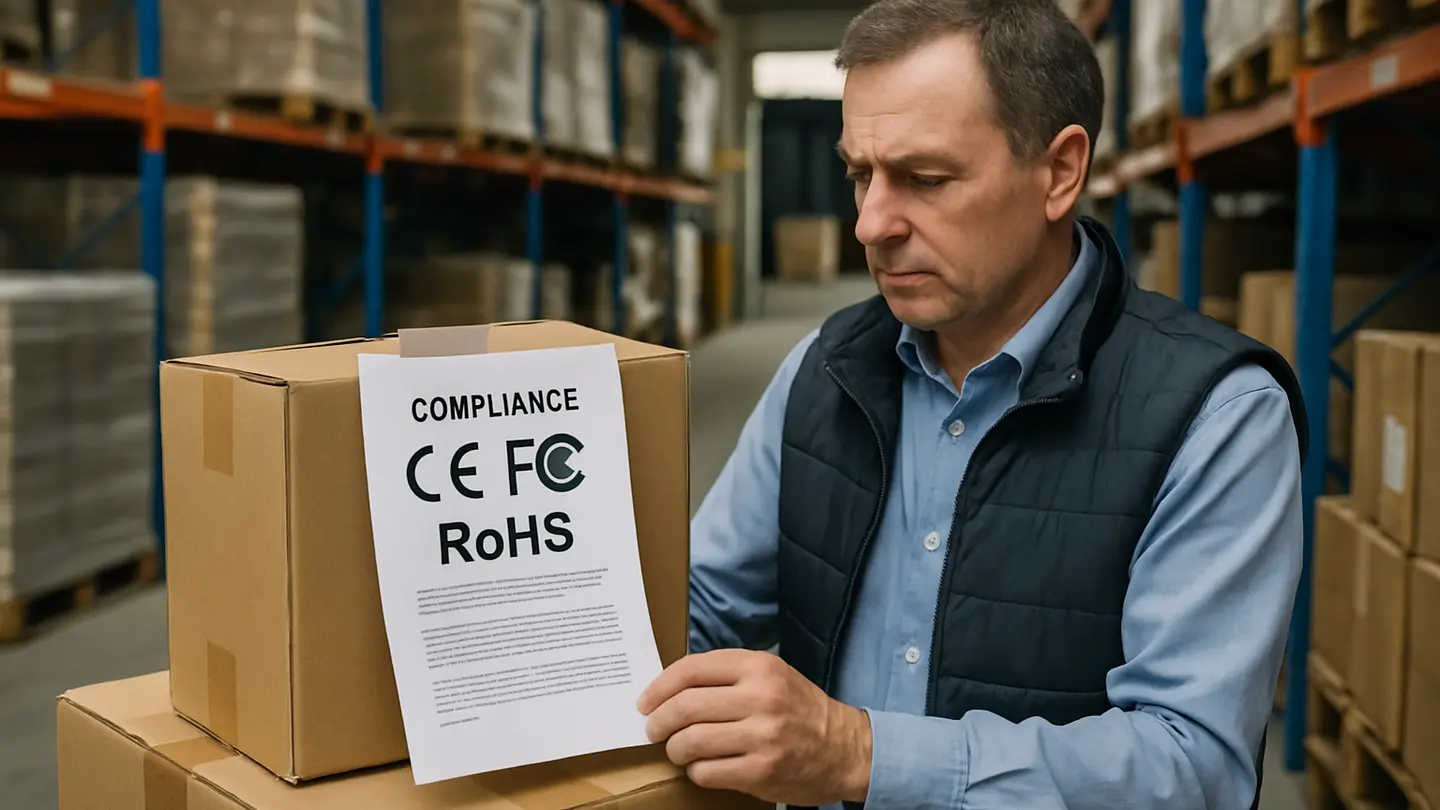
Factory certificates can be useful indicators of management systems or documented operating processes. They do not, by themselves, prove that a particular tent, backpack, sleeping bag, or outdoor accessory meets a specific performance requirement.
A management-system certificate addresses the factory or organization covered by that certificate. It is not the same as evidence that a specific product model achieves a stated waterproof rating, temperature rating, load capability, or material-compliance requirement.
A useful product-level test report should identify:
- The product model or a clearly traceable sample description
- The applicable standard or test method
- The laboratory that performed the test
- The result and relevant units of measurement
- The date of testing
- Any limitations, conditions, or scope stated in the report
Buyers should also verify whether the tested item corresponds to the current production specification. A report for a previous model, different fabric, different coating, or different insulation configuration may not support the product now being ordered.
Compliance needs vary by product category and destination market. Children’s outdoor goods, high-visibility garments, and safety-related equipment may be subject to additional requirements. Harnesses, helmets, and buoyancy aids deserve heightened scrutiny because failure can create direct safety risks. These categories should not be evaluated solely through ordinary appearance inspections or return-rate assumptions.
How a Low Quote Can Increase Total Sourcing Costs
A low unit price can be attractive, particularly when multiple suppliers present products that appear similar. Yet the lowest quotation may omit the details that determine field performance: fabric construction, coating type, waterproof rating, insulation amount, hardware quality, reinforcement stitching, or inspection requirements.
If those requirements are undocumented, the supplier has greater room to substitute materials or interpret the brief differently during production. The result may be a product that passes an initial visual review but causes customer complaints later.
The total cost of a weak specification can include:
- Returns and replacement shipments
- Retailer chargebacks or customer discounts
- Rework and corrective production orders
- Lost selling time during peak outdoor seasons
- Additional inspection and freight costs
- Damage to brand trust
- Delays caused by long sea-transit timelines
Sea freight creates a particular risk because defects may not be discovered until goods arrive at the destination warehouse. By that point, the factory may have completed the entire order, seasonal demand may have changed, and the time available for correction may be limited.
A better comparison method is to evaluate quotations against an agreed specification baseline. If one supplier offers a lower price, ask exactly what differs: fabric weight, coating, seam treatment, hardware, fill quantity, packaging, inspection level, or warranty-related replacement allowance. Price differences are more useful when they can be tied to identifiable product differences.
Use Audits and Pre-Shipment Inspections When Capability Is Unclear
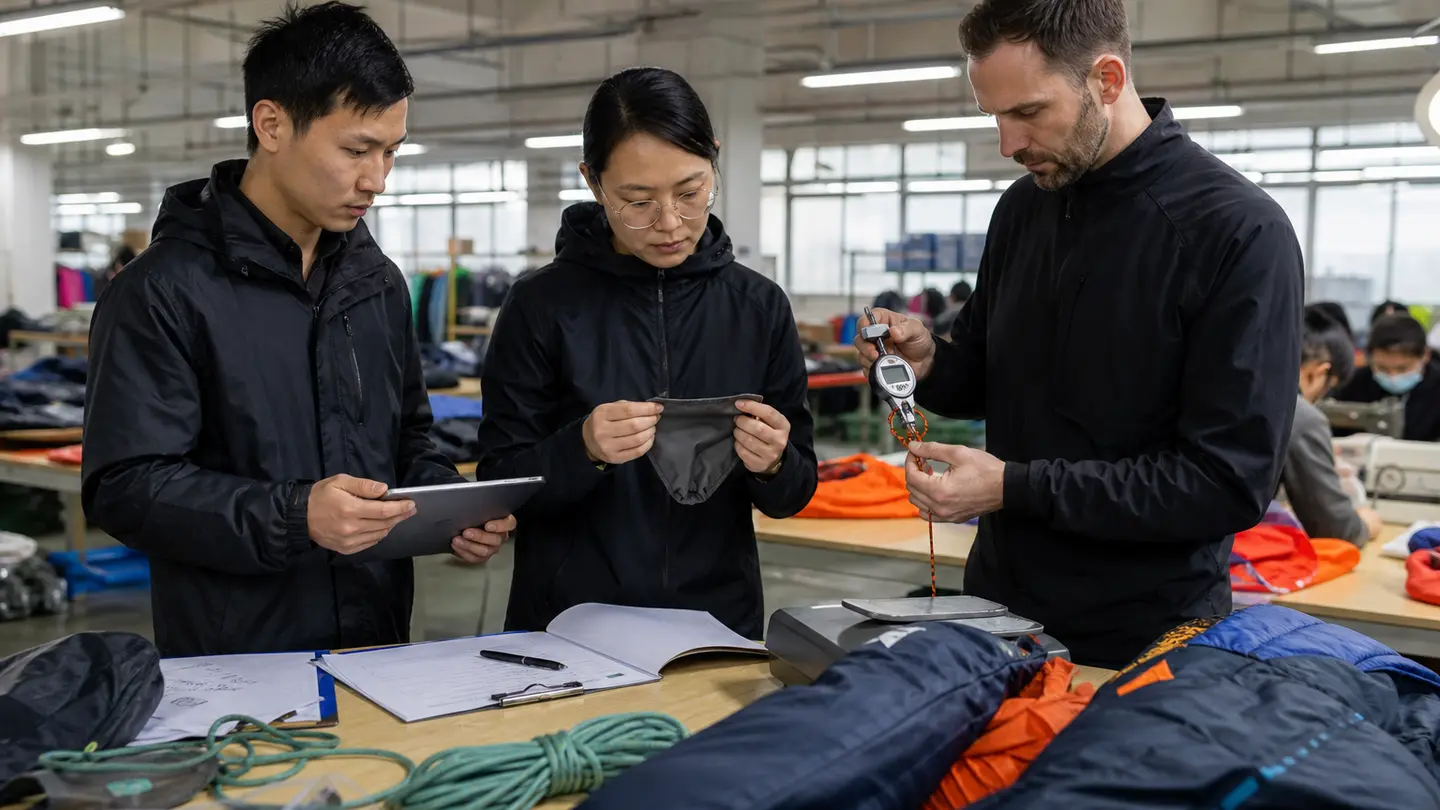
When a supplier’s capability is uncertain, an audit can help verify whether its claimed production lines, equipment, quality controls, and testing capacity are actually present. This is especially important where product performance depends on specialized processes such as seam sealing, insulation filling, lamination, waterproof coating, load testing, or controlled cutting and stitching.
An audit can review the relationship between the supplier’s claims and its operating reality. Relevant questions include whether the supplier has the necessary machinery, whether key processes are performed on site, how materials are identified and controlled, and how nonconforming goods are handled.
Inspection requirements should be defined before production begins and before the purchase order is issued. Waiting until goods are ready to ship can lead to disputes over what counts as a defect.
Depending on the category, pre-shipment checks may include:
- Finished dimensions and weight
- Fabric and component identification against the approved specification
- Stitch density and reinforcement at stress points
- Strap-anchor and handle construction
- Hardware operation and loading checks
- Seam finish and seam-tape application
- Controlled water exposure where relevant
- Zipper, buckle, and pole-function checks
- Packaging integrity
- Carton markings, labels, care instructions, and country-of-origin information
The inspection plan should identify sampling rules, tolerances, test methods, and acceptance criteria. It should also link the shipment to the approved sample and technical specification sheet. This reduces ambiguity when a production unit differs from what was approved.
FAQ
Q1: Which outdoor categories carry the most risk?
Waterproof, down-filled, and load-bearing products carry elevated sourcing risk because key performance properties are not fully visible at the time of inspection. Tents, rainwear, sleeping bags, backpacks, climbing-related goods, and products with structural or load-bearing components therefore require more detailed specifications and testing.
Safety-critical products, including harnesses, helmets, and buoyancy aids, require especially careful evaluation. A failure may create a safety hazard rather than merely an inconvenience. For these products, buyers should establish applicable compliance, testing, traceability, and inspection requirements before selecting a supplier.
Q2: What makes a waterproof requirement testable?
A testable waterproof requirement identifies three elements: a measurable rating, the test method, and the product area covered. For example, a buyer should distinguish between a rainfly requirement and a tent-floor requirement rather than accepting a single unqualified waterproof claim.
The specification should also state whether seams, zippers, vents, or attachment points are included in the intended water-resistance expectation. “Waterproof” without a rating, method, or defined coverage leaves too much room for interpretation.
Q3: Does the factory need to know the climate my customers use this in?
Yes. Expected use conditions should be part of the product brief. Temperature range, rain exposure, humidity, ultraviolet exposure, salt air, storage conditions, and repeated packing can affect material selection and construction choices.
Coatings, foams, adhesives, fabrics, and insulation systems can perform differently in heat, cold, or moisture. Share the intended environment with the supplier and ask what material or construction changes it recommends. The buyer should then decide whether those changes are necessary and record them in the final specification.
Q4: How do I check down fill without a lab?
Finished-product weight is a useful preliminary check when compared with the approved sample and agreed product specification. However, shell fabric, lining, zippers, draft tubes, labels, and other components all contribute to total weight, so it cannot confirm fill weight by itself.
Loft recovery after compression can provide an informal indication of how the fill behaves, and uneven chambers may indicate fill-distribution problems. Accurate confirmation of fill weight and fill power requires appropriate testing rather than visual inspection alone.
Make Evidence-Based Supplier Decisions Before Final Payment
Reliable outdoor product suppliers in China demonstrate control through technical answers, consistent documentation, approved samples, and verifiable performance checks. Their value is not established by polished catalog images or general assurances of quality.
Before final payment, buyers should confirm that the goods match the agreed specification and are suitable for expected rain, load, temperature, and repeated-use conditions. This means reviewing model-specific documentation, comparing production goods with approved samples, and applying the inspection criteria established before production.
An evidence-based process may take more preparation than a photo-and-price comparison. It also gives buyers a stronger basis for selecting suppliers, managing quality expectations, and reducing costly failures after goods reach customers.
About the Author
This article was prepared by the publication’s editorial team for B2B buyers researching supplier discovery, product specifications, and quality-control practices for outdoor goods.