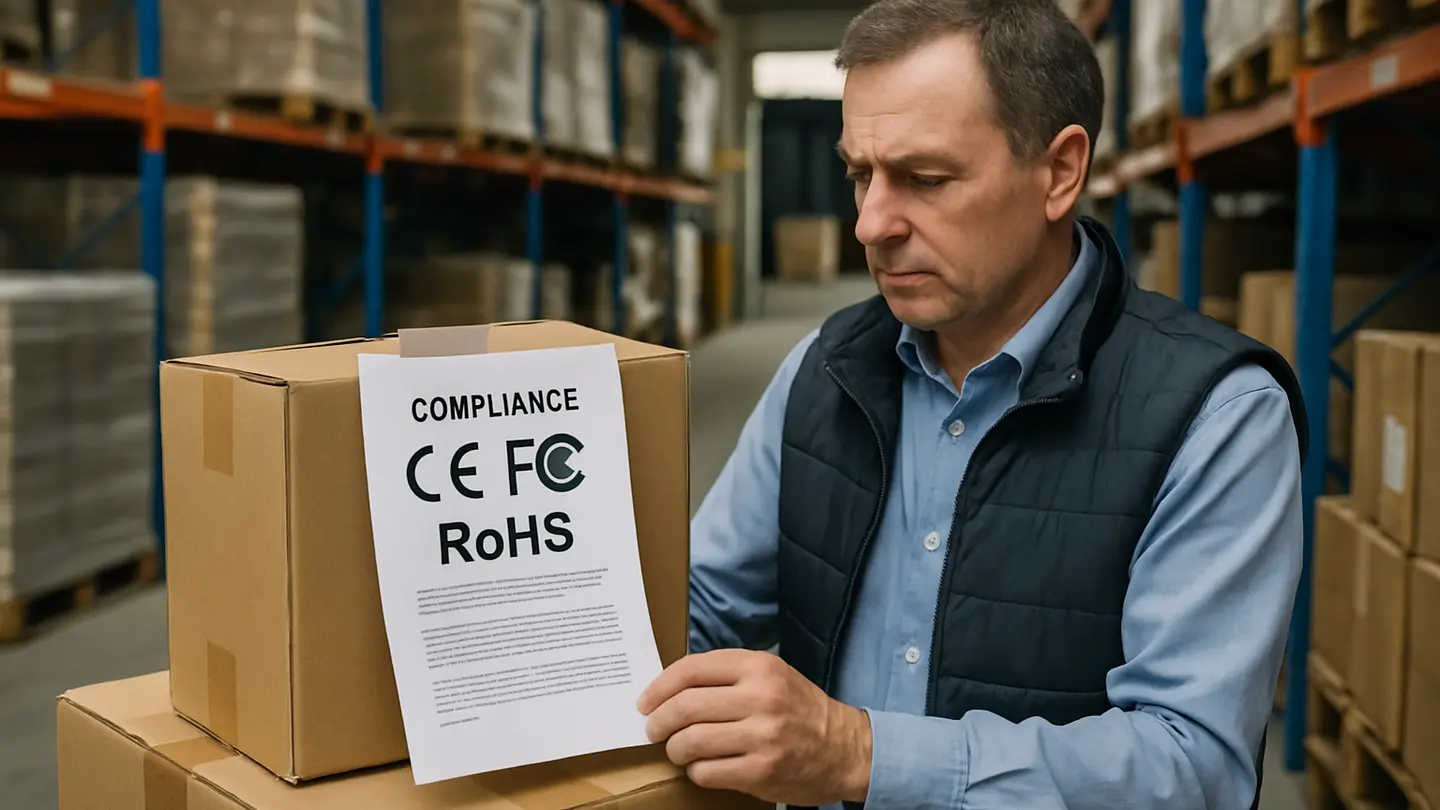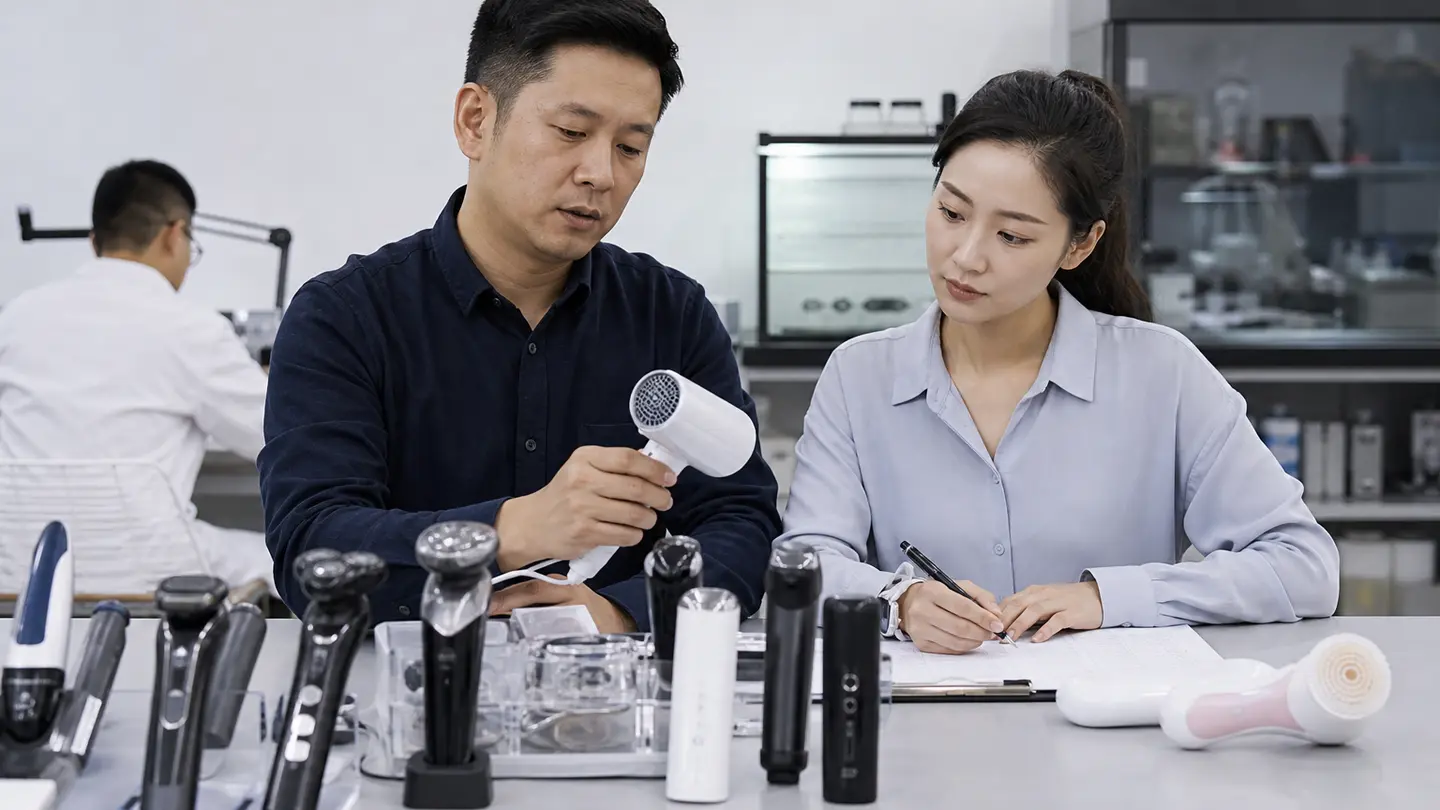
Personal care appliances from China can offer broad product choice and flexible customization, but plug-in and battery-powered devices require a compliance-first buying process. Grooming tools, hair dryers, electric shavers, facial cleansing devices, epilators, heated styling products, and similar appliances can involve electrical safety, battery transport, water-resistance, labeling, and product-claim considerations.
The critical point is that approvals and test documents are connected to the finished production configuration—not simply to a supplier, product category, or early sample. A late packaging correction may be manageable. A change to circuitry, battery, housing seal, plug, or charging arrangement can be much more consequential, potentially affecting testing, shipment readiness, or product-market access.
For buyers, the lowest quoted unit price is not always the lowest landed cost. Retesting, delayed battery documentation, unexpected accessory tooling, rejected labels, or a shipment that does not match the approved model can quickly outweigh an initially lower purchase price. Compliance should therefore be considered during supplier selection, product specification, and pre-production approval rather than treated as a final shipping task.
Product Approvals Apply to a Specific Model, Not an Entire Factory
A factory may produce many personal care appliances, but a certification document does not automatically cover every version produced there. Buyers should confirm that the documentation applies to the exact model being ordered, including the relevant manufacturing entity, electrical configuration, circuitry, plug type, voltage markings, and major components.
This is particularly important when buying products offered under several private-label brands. A supplier may show documentation for a similar device, but similarities in appearance do not establish that the ordered model is covered. A different charging base, power cord, battery, motor, heating element, or printed rating label may create a materially different configuration.
The company issuing the commercial invoice may also differ from the manufacturer identified on a certification record. This is not necessarily a problem, but the relationship should be clear. A trading company may coordinate the purchase while a separate factory performs final assembly. In that case, buyers should identify which entity is named in the relevant records and which party is responsible for maintaining production conformity.
Where public certification databases are available, buyers can use them to independently check document details. Useful points to compare include:
- Model designation and product description
- Manufacturer name and address
- Electrical ratings and plug configuration
- Certificate status and issue date
- Whether the document appears to cover the intended product category
Electrical requirements also vary by destination market. A plug, voltage range, marking format, or documentation set that is acceptable in one sales market may not be appropriate in another. Buyers should define the intended market before requesting approval documents, rather than asking suppliers for a generic “certificate package.”
Water-Resistance Ratings Are the Claims Buyers Notice Most
Water-related claims are highly visible to end users of personal care appliances. Buyers frequently request terms such as “washable,” “wet and dry,” or “waterproof,” but these phrases do not replace a verified ingress-protection rating or product-specific test evidence.
Different water exposures create different risks. Splash exposure is not the same as rinsing a device under running water, and neither is equivalent to immersion. A device designed to tolerate limited splashes may fail if submerged. Similarly, an appliance may be suitable for cleaning after use without being safe to operate in a shower or bath environment.
The finished product’s water resistance depends on more than the main housing shape. Common vulnerabilities include:
- Housing seams and welded joints
- Elastomer gaskets and O-rings
- Adhesives around covers or display windows
- Blade-head interfaces
- Battery-door closures
- Charging contacts and charging ports
- Aging or deformation of seals after repeated use
A sample that passes a basic water check during development does not automatically prove that mass production will maintain the same performance. Changes in assembly pressure, adhesive application, seal material, molding tolerances, or component fit can affect ingress resistance.
Packaging, manuals, online listings, and product labels should match the claims supported by finished-product testing. Avoid broad descriptions that imply immersion resistance, wet-use capability, or shower suitability unless the actual production unit has been evaluated for those conditions. A water rating also does not independently establish electrical safety during use in wet environments; both the claim and intended use need careful review.
Battery Choices Affect the Order Before Production Begins
Rechargeable personal care appliances introduce requirements that should be addressed before production begins. Battery-powered devices may need battery-specific transport documentation, suitable packaging, required markings, and shipment handling arrangements. These matters can affect both logistics planning and launch timing.
Buyers should confirm the battery manufacturer and model number early in the sourcing process. Battery-related documentation is tied to the actual battery used in production, not merely to a general battery chemistry or nominal capacity. If the supplier substitutes a battery late in production, the existing transport information may no longer align with the shipped goods.
Battery decisions can also affect the product itself. A change in battery dimensions, capacity, connector type, protective circuitry, or placement may alter:
- Internal casing design
- Charging performance
- Product weight and balance
- Runtime claims
- Repairability
- Electrical approvals or technical reviews
- The accuracy of product-life and replacement-battery claims
For appliances with replaceable batteries, buyers should consider whether replacement is intended to be performed by consumers, service centers, or not at all. This decision influences enclosure design, instructions, spare-parts planning, and messaging about service life.
Before shipment, confirm that the battery fitted in the production unit matches the approved bill of materials and shipping documents. It is much easier to resolve a mismatch before goods are packed into export cartons than after a forwarder requests documentation at the point of shipment.
Charging Bases and Accessories Can Drive Tooling Costs
The main appliance housing is often only one part of the tooling budget. Charging stands, protective caps, combs, storage cases, blade covers, cleaning brushes, and travel accessories may each require their own molds or production tools.
For a buyer launching a customized product range, accessory complexity can materially affect development cost and timing. A charging base, for example, may involve separate molded parts, contact components, cable routing, assembly fixtures, and packaging changes. Even small accessories can require dedicated tools when their shape, fit, color, or branding differs from an existing item.
Request tooling quotations that identify every tool separately. The quotation should state:
| Tooling item | Points to confirm |
|---|---|
| Main housing mold | Cost, lead time, cavity assumptions, ownership terms |
| Charging stand tool | Tooling scope, electrical component responsibility, assembly requirements |
| Protective cap or comb tool | Material, fit tolerance, color requirements, ownership |
| Travel case tool | Construction, lining or closure details, branding feasibility |
| Inspection fixtures | Whether special gauges or test fixtures are needed for production checks |
Tool ownership terms matter, particularly if the buyer may change manufacturers later. Clarify who owns the mold after payment, who stores and maintains it, whether it may be used for other customers, and what happens if production stops.
Reducing the number of custom accessories can lower launch costs and shorten development timelines. This does not mean that accessories lack commercial value, but every additional component should have a clear purpose in the product specification.
Product Customization May Trigger Retesting
Not all customization carries the same compliance impact. Low-impact changes, such as a logo, outer carton artwork, color box design, or manual language, may be relatively straightforward if they do not alter required markings or make unsupported claims.
Technical modifications deserve more caution. Changes to the following areas may require additional review, retesting, or updates to approval documentation:
- Housing material or pigment
- Internal circuitry or electronic controls
- Motor or heating element
- Battery type or battery protection arrangement
- Charging port, contacts, cable, or power supply
- Gaskets, seals, adhesives, or housing joints
- Voltage configuration or plug type
- Functional features that affect electrical or thermal behavior
A pigment or plastic-material change may appear cosmetic, but it can still require material review where heat resistance, flammability characteristics, durability, or molding performance are relevant. Changes to a housing, seal, or charging port can affect water-ingress performance. Functional changes can affect electrical safety or require a certification update.
An additional comb, cap, or storage accessory may not affect ingress testing if the sealed appliance itself is unchanged. However, it may still require tooling, fit verification, packaging changes, and a revised bill of materials.
The practical rule is simple: do not assume an existing approval remains applicable after a design change. Provide the supplier and relevant testing party with a controlled list of proposed modifications, then obtain a clear assessment before releasing production.
Separate the Factory From the Trading Company
Personal care appliances are often produced through a network of specialized suppliers. Plastic molding may be performed at one site, while motors, heating elements, printed circuit boards, battery packs, and final assembly come from other parties. A trading company may coordinate the purchase without owning the assembly plant.
This structure is common, but buyers need visibility into responsibility. The key question is not whether a supplier is a factory or a trading company in isolation. It is whether the supply chain can consistently produce the approved configuration and whether accountability is clear when a component changes or a defect occurs.
When auditing or evaluating a supplier, focus on the plant named in relevant certification documentation, especially where it performs final assembly. Buyers should also document:
- Which processes are completed in-house
- Which components are subcontracted
- Who approves incoming motors, batteries, electronics, heating elements, and molded parts
- How supplier changes are controlled
- Who verifies final assembly and functional performance
- Which party maintains compliance records and production specifications
Incoming-material controls are particularly important for personal care appliances. A compliant sample can be undermined if production substitutes a motor, battery, seal, charging component, or heater without adequate review.
For an initial order, a single accountable supplier often simplifies communication and corrective action. More complex supply arrangements may become practical later, but only when the buyer has sufficient purchasing volume and technical control to manage them.
Verify That Production Units Match the Approved Product
A certified sample and a mass-production shipment are not the same thing. Buyers should treat production verification as a separate compliance step rather than relying only on pre-production documents.
Inspection instructions should include compliance-related checkpoints alongside cosmetic and functional requirements. At minimum, compare production units with the approved specification for:
- Model number and product markings
- Plug type and voltage rating
- Required labels and warning statements
- User manual content and language
- Battery manufacturer and model reference
- Charger or charging-base configuration
- Included accessories
- Packaging claims, especially water-resistance and runtime claims
If battery identity is critical, inspectors may need to open selected sealed units to confirm the installed battery. External carton markings or supplier declarations alone may not be sufficient where the battery model must match shipment documentation.
Production checks should also look for uncontrolled substitutions. A change in cable, adapter, seal, charging contact, blade head, or battery can have greater compliance significance than a minor visual variation. The approved bill of materials, label artwork, manuals, and relevant documents should be available to the inspection team.
This approach helps buyers detect mismatches before goods leave the factory, when corrective action is usually more feasible.
FAQ
Q1: Should I use one supplier for the whole device or split it?
For initial orders, one supplier generally simplifies accountability. The supplier can coordinate components, assembly, testing, packaging, and corrective actions under one purchase arrangement.
Split sourcing may make sense when a specific component materially constrains cost, quality, or lead time. For example, a buyer with sufficient volume may wish to control a critical motor, battery, or specialized accessory separately. However, this approach increases coordination demands and can blur responsibility when failures occur. It is most practical when the buyer has clear specifications, stronger technical oversight, and enough volume to justify the added management effort.
Q2: Do blades, heads, and combs that touch skin need their own check?
Yes. Skin-contact components can raise considerations beyond the appliance’s electrical safety requirements. Buyers should specify the material, surface finish, edge condition, coating, colorant, and intended contact area for blades, heads, combs, rollers, or other user-contact parts.
Broad quality assurances are less useful than defined requirements. For example, a purchase specification should identify whether a comb must have smooth rounded teeth, whether a shaving head requires a particular finish, and whether contact parts must remain free from sharp edges, burrs, cracking, or unwanted surface residue.
Q3: What should I ask about a heated product before I order it?
Ask how the product behaves under abnormal operating conditions relevant to its design. Depending on the appliance, this may include blocked airflow, extended operation, restricted ventilation, or other foreseeable conditions that could increase temperature.
Request a clear explanation of the product-specific overheating-protection mechanism. Automatic shutoff can be useful, but it does not by itself explain how the product manages all abnormal conditions. Buyers should understand the roles of temperature controls, thermal cutoffs, airflow design, housing materials, and user instructions before approving a heated appliance.
Q4: Can I put a noise limit in the specification?
Yes. A noise limit can be included for products such as hair dryers, electric shavers, and facial devices. However, a decibel figure is only useful when the measurement method is clearly defined.
The specification should state the operating condition, measurement distance, product mode, test environment, background-noise expectations, and whether the appliance is loaded or unloaded during testing. Without these details, a stated noise target can be interpreted inconsistently by the buyer, factory, and inspection provider.
Conclusion: Build Compliance Into the Sourcing Process
Buying personal care appliances from China requires more than comparing unit prices and product appearance. Approvals should be connected to the exact ordered model and production configuration. Water-resistance claims should reflect verified testing on the finished product. Battery documentation, packaging, and labels need to be ready before shipment, not after goods have been completed.
Buyers should also identify tooling costs for charging bases and accessories early, control customization changes carefully, distinguish the final assembly factory from the invoicing party, and verify that production units match approved samples and documents.
A structured compliance process does not eliminate every sourcing risk, but it helps prevent late-stage surprises that can delay launches, increase landed cost, or create unsupported product claims.
About the Author
The author is a B2B sourcing and product-compliance writer focused on practical procurement considerations for consumer appliances. Their work covers supplier evaluation, production specifications, quality-control planning, product documentation, and the commercial risks associated with customized electrical and battery-powered goods.