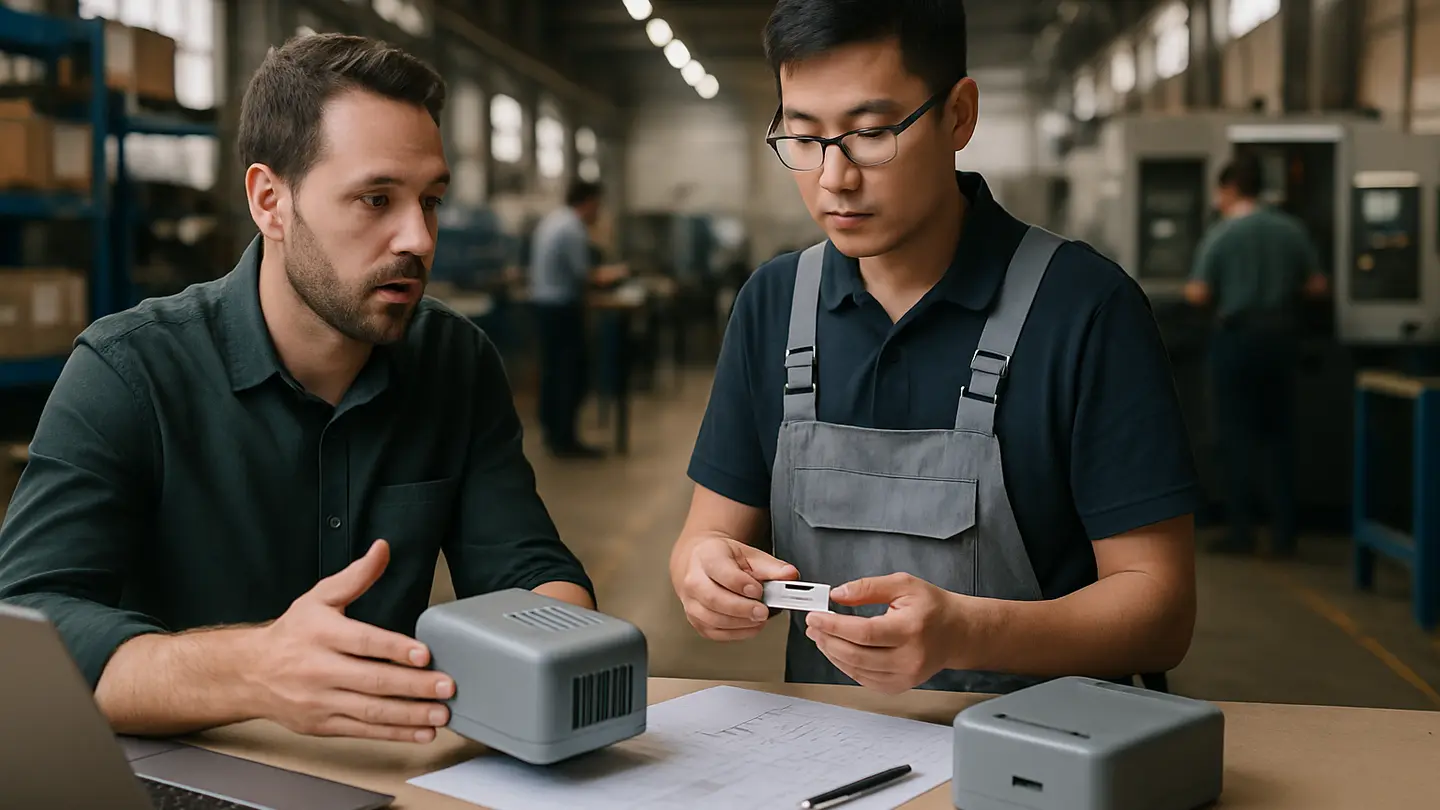
For B2B buyers, product development in China usually follows one of three routes: buying an existing product, modifying a supplier’s design, or building from scratch. The best choice depends on market validation, budget, timeline, risk tolerance, and required differentiation.
A buyer launching a bathroom accessory, shower component, fitting, dispenser, or related consumer product may not need a fully custom design at first. A stock item may be enough to test demand. A dimensional, finish, material, or functional change may improve market fit without the cost of a full engineering project. A custom build makes sense when the concept, channel, and margin potential justify the complexity.
| Route | Best for | Main advantage | Main limitation |
|---|---|---|---|
| Buy existing product | Fast market entry, demand testing, lower-risk launches | Quickest and usually cheapest | Limited product exclusivity |
| Modify supplier design | Differentiation without full development cost | Better fit for brand or market needs | Changes can trigger tooling, testing, or compliance issues |
| Build custom product | Defensible product strategy, unique features, long-term programs | Strongest differentiation | Highest cost, longest timeline, greatest execution risk |
The key is to match the route to the project stage. Paying for custom molds before proving demand can drain capital. Relying on generic catalog products in a crowded category can make margins hard to protect.
Buying an Existing Product: Quick Launch, Limited Differentiation
Buying an existing product means sourcing something already in a factory’s catalog or production range. The buyer may add a logo, choose available colors, adjust packaging, change labels, or request minor presentation changes, but the core product remains the supplier’s standard design.
This is usually the fastest and lowest-cost way to enter a market. The supplier already understands the materials, tooling, assembly steps, packaging method, and typical quality risks. Samples are often available quickly, and pricing can be quoted with fewer assumptions.
For B2B buyers, this route works when speed matters more than exclusivity: testing a sales channel, filling a range gap, supplying a private-label program, or responding to seasonal demand. In categories such as shower accessories, bathroom storage, basic fittings, hoses, brackets, dispensers, and simple molded items, factories may already offer many ready-made options.
The tradeoff is that competitors may be able to buy the same or similar product from the same factory, a trading company, or another manufacturer. Differentiation therefore comes from outside the product itself, such as:
- Brand positioning
- Packaging and retail presentation
- Product photography and merchandising
- Bundle or assortment strategy
- Customer service and warranty handling
- Distribution relationships
- Stock availability and delivery speed
- Consistent quality control
The risk is assuming that a branded catalog product is “exclusive” because the packaging is unique. Unless exclusivity is negotiated and documented, the supplier may continue selling the same item to other customers.
Modifying a Supplier Design: More Control Without a Full Custom Build
Modification sits between private labeling and full custom development. The buyer starts with an existing supplier design but changes selected elements, such as finish, color, materials, dimensions, accessories, water-flow characteristics, packaging, mounting details, labeling, or added features.
This route is attractive because it uses an existing production platform. The factory already has experience with the base product, so the buyer does not have to solve every engineering question from the beginning. Compared with a full custom build, modification can reduce time, cost, and uncertainty.
However, small changes can create real consequences. A color change may require pigment matching or minimum raw-material commitments. A finish change may affect corrosion resistance. A dimensional adjustment may require mold changes. A new label claim may require supporting test evidence. A packaging change may affect carton strength, barcode placement, or retail compliance.
Buyers should ask whether the modification affects:
- Existing molds or new tooling
- Raw materials or approved suppliers
- Assembly process or labor time
- Product testing or inspection method
- Compliance documentation
- Packaging drop tests or transport performance
- Labeling, warnings, manuals, or instructions
- Spare parts or after-sales support
For products involving electricity, water pressure, load-bearing use, child safety, chemical contact, or performance claims, even a limited design change may require fresh testing. If the original product was tested in one configuration, the modified version may not automatically be covered.
Modification also raises ownership questions. If the buyer pays to improve the design, who can use that improvement later? Can the factory sell the modified version to other customers? Can the buyer move it to another supplier?
These points should be defined before development begins. Contracts and purchase documents should identify the base supplier design, buyer-funded modifications, exclusive elements, and the factory’s resale rights.
Building a Custom Product: Stronger Differentiation, Higher Risk
A custom build means the buyer brings its own concept or design and relies on a Chinese supplier’s engineering, tooling, and production capabilities to make it real. This can range from refining a rough concept to producing a fully engineered design with detailed drawings and specifications.
The main advantage is differentiation. A custom product can be designed around a specific market need, installation condition, user preference, retail price point, or brand promise. Competitors cannot simply order the same catalog item if the product is genuinely unique and properly protected.
A custom build is also the most demanding route. It usually requires concept refinement, engineering review, material selection, prototypes, sample revisions, tooling, testing, pilot production, and production debugging. The first sample may not be right. Tooling may need adjustment. Packaging may fail drop testing. A part that works in a prototype may be difficult to produce consistently at scale.
Supplier feedback is useful but should be managed carefully. Factories often optimize for manufacturability, cost, or existing process convenience. That can help, but it may dilute the original concept if the buyer has not clearly defined performance requirements.
Custom spending alone does not guarantee ownership. If the buyer uses the supplier’s existing tooling, platform design, internal mechanism, standard mold base, or previous engineering work, the buyer may own only part of the final result. This matters if the buyer later wants exclusivity, supplier switching rights, or protection against copycat versions.
A custom build works best when there is a clear commercial reason: stronger margin, channel exclusivity, brand differentiation, technical performance, patentable features, or a product roadmap that justifies repeat production.
Breaking Down the Real Cost of a Custom Build
Custom development rarely comes as one simple fee. Costs appear in stages, and some are easy to overlook during early negotiations.
Common paid stages include:
- Concept refinement or engineering review
- Industrial design or CAD work
- Functional prototypes
- Appearance samples
- Sample revisions
- Material trials
- Mold or tooling fabrication
- Jig, fixture, or gauge development
- Laboratory testing or certification work
- Pilot production
- Production setup
- Packaging development
- Pre-shipment inspection and corrective actions
The timeline also includes work not always shown in the supplier’s quotation: writing specifications, comparing suppliers, reviewing samples, approving materials, confirming compliance requirements, arranging testing, negotiating contracts, booking freight, and preparing receiving plans.
Tooling costs should be separated from unit prices. A supplier may offer a low unit price but high tooling cost, or hide development recovery inside the unit price. If a mold costs $10,000 and expected order volume is low, the real product cost is very different from the quoted unit price alone.
Before mass production, buyers should negotiate:
- Pilot-run quantity
- Unit price at different order volumes
- Tooling ownership and maintenance terms
- Setup fees
- Sample charges and revision fees
- Material minimums or special component commitments
- Lead times for pilot and mass production
- Acceptance criteria for samples and finished goods
- What happens if the product fails testing
- Whether tooling can be transferred if the relationship ends
The first purchase order should not be treated as a formality after tooling is complete. It is where technical assumptions become commercial risk. If pricing, tolerances, packaging, inspection standards, and defect definitions are unclear, disagreements may appear when the buyer has the least leverage.
Why Customization Does Not Automatically Create Exclusivity
One common mistake in product development in China is assuming that customization automatically creates exclusive rights. In practice, many changes do not create meaningful ownership.
A logo, color, surface finish, packaging design, or minor cosmetic edit usually gives the buyer control over those brand elements, not the underlying product. If the factory already had the product in its range, it can usually continue selling the base version unless it agreed otherwise. If the buyer paid for a modified component but did not define ownership, the factory may believe it can reuse the improvement.
Exclusivity should be negotiated before tooling is made or samples are finalized. Once the buyer depends on the factory’s samples, molds, or engineering work, it becomes harder to renegotiate rights.
A good development agreement should clarify:
- Which design elements belong to the buyer
- Which elements are the factory’s pre-existing design
- Whether the factory can sell the original product to others
- Whether the factory can sell the modified version to others
- Whether exclusivity applies globally or only to certain markets
- Whether exclusivity depends on annual purchase volume
- Who owns the tooling
- Whether the buyer can transfer tooling to another supplier
- How confidential drawings, samples, and specifications must be handled
For serious custom products, buyers should consider appropriate non-disclosure, non-use, and non-circumvention provisions, plus relevant trademark, design, patent, or copyright registrations where applicable. The core principle is simple: commercial expectations should be written down before value is created.
Moving From Development Choice to First Purchase Order
Once the buyer chooses to buy, modify, or build, the decision must become sourcing execution. A good concept can still fail because of poor supplier selection, weak sampling discipline, unclear quality standards, or incomplete landed-cost analysis.
Landed cost should include more than the supplier’s unit price. Buyers need to account for freight, duties, customs brokerage, inland transport, packaging, labeling, testing, inspection, warehousing, financing, returns allowance, and import-related fees. A product that looks profitable at factory price may be less attractive after all costs are included.
Demand validation is equally important. Before committing to expensive tooling or large inventory, buyers should test whether the market wants the product at the required selling price. Stock products or lightly modified products can help gather sales data, customer feedback, channel response, and return information before deeper custom development.
First production runs should usually be small enough to limit exposure. A buyer may discover that a specification is incomplete, a finish is not durable enough, instructions are unclear, packaging is weak, or the market prefers a different configuration.
Regardless of the route, sourcing fundamentals still matter:
- Qualify suppliers before relying on quotations.
- Compare production capabilities, not only prices.
- Request samples that match intended production materials.
- Document specifications in writing.
- Define acceptable quality limits and inspection points.
- Confirm packaging and labeling before production.
- Use contracts that reflect the actual development route.
- Inspect goods before shipment where risk justifies it.
The more custom the product, the more important documentation becomes. But even a catalog product needs clear specifications. If the buyer does not define material, finish, dimensions, packaging, or inspection criteria, the factory’s default assumptions may control the result.
FAQ
Q1: Can a factory develop the product if all I have is a sketch?
Some factories can begin with a sketch, especially if the product is simple and close to items they already manufacture. However, a sketch leaves many decisions open. The supplier may fill in missing details based on low cost, available materials, existing molds, or production convenience.
Buyers should provide as much information as possible: dimensions, materials, target price range, performance requirements, reference products, finish expectations, packaging needs, compliance requirements, and intended use conditions. Even rough priorities help. If durability matters more than lowest cost, the supplier needs to know early.
Clear specifications keep design control with the buyer. Without them, the factory may make reasonable production choices that are commercially wrong for the brand.
Q2: Which products are hardest to build from scratch?
Products involving batteries, motors, electronics, heating elements, pumps, pressure control, wireless functions, or complex mechanisms are generally harder to build from scratch. They require more engineering coordination and carry higher risks around reliability, safety, certification, and after-sales service.
Products with heavy certification requirements are also more difficult. A design change may require testing, documentation, factory controls, and approval before the product can legally enter certain markets.
Simpler molded products, basic metal parts, textile items, and soft goods are often more manageable first custom-build projects. They can still have quality risks, but the development path is usually easier than complex electromechanical products.
Q3: At what volume does a build start to pay for itself?
A simple way to estimate tooling payback is to spread the tooling cost across expected sales volume. If a mold costs $10,000 and the buyer sells 1,000 units, the tooling adds $10 per unit. If the same mold supports 20,000 units, the tooling adds only $0.50 per unit.
Higher volume makes custom development easier to justify, but volume is not the only factor. Buyers should also consider demand certainty, mold life, expected defect rates, additional margin, and whether the custom design improves channel access or customer retention.
A build starts to make sense when the added margin, defensibility, or sales opportunity outweighs the development cost and execution risk.
Q4: Should development and mass production sit with the same factory?
Keeping development and mass production with the same factory can be efficient. The development supplier understands the design history, tolerances, process limits, material choices, and reasons behind earlier revisions. That knowledge can prevent mistakes during scale-up.
However, splitting development and production may be necessary if the development supplier lacks capacity, suitable equipment, quality systems, or cost competitiveness for mass production. In that case, the handover must be carefully managed.
A proper handover requires complete drawings, specifications, approved samples, bills of materials, testing records, packaging files, inspection standards, and production notes. Without buildable documentation, the new factory may reinterpret the design and create a product that looks similar but performs differently.
Conclusion: Match the Development Route to the Market Stage
Buying, modifying, and building are development routes that should match the buyer’s market evidence and commercial goals.
Buying an existing product is useful when speed, low upfront cost, and demand testing matter most. Modification is appropriate when the buyer needs better fit or partial differentiation without taking on the full burden of custom development. Building from scratch is strongest when the opportunity justifies higher investment, longer timelines, and stricter control over design ownership.
Many sourcing teams overspend by paying build-level costs before proving demand. Others stay too long with generic products and struggle to defend margins. The better approach is to align spend and complexity with the project’s validation stage.
Timelines often slip during sampling, supplier selection, specification control, testing, approvals, and production readiness. Buyers can reduce delays by running parallel workstreams where possible: supplier qualification, costing, packaging, compliance review, demand validation, and logistics planning should not wait until the final sample is approved.
The right route gives the buyer enough differentiation for the current market stage without creating unnecessary cost, delay, or operational risk.