Importers do not reduce sourcing risk by collecting more supplier names. They reduce risk by using a controlled system: defining the product clearly, verifying supplier capability, locking specifications, planning inspections, and coordinating export and delivery before committing money at scale.
Effective Product Sourcing connects commercial targets with operational control. The goal is not just a low unit price, but inventory that can be produced consistently, shipped legally, delivered on time, and sold at a profitable landed cost.
What Product Sourcing Means in Importing
Product sourcing is the process of identifying, evaluating, negotiating with, and securing suppliers capable of manufacturing or providing goods for resale, distribution, or brand development. For importers, it connects supplier selection, cost control, quality assurance, compliance, and logistics.
A complete sourcing process usually includes:
- Supplier discovery and screening
- Requesting quotations and comparing terms
- Reviewing factory capability and export experience
- Defining specifications, packaging, and labeling
- Confirming regulatory and documentation requirements
- Sampling, testing, and approving benchmarks
- Planning inspections, freight, customs clearance, and delivery
Product sourcing is often confused with procurement. Sourcing is strategic: it determines which suppliers, production models, cost structures, and risk controls the business will use. Procurement is operational: it executes purchase orders, payments, replenishment, and supplier administration after sourcing decisions are made.
Common sourcing models include:
- Wholesale sourcing: buying ready-made goods in smaller or standard batches.
- Direct manufacturing: working with a factory to produce goods to agreed specifications.
- Private label: applying the buyer’s brand, packaging, or minor customization to existing products.
- OEM manufacturing: producing according to the buyer’s design or technical requirements.
- ODM manufacturing: using a supplier’s existing design with possible modifications.
- Dropshipping: selling without holding inventory, with the supplier shipping directly to the customer.
Each model changes the buyer’s control, capital needs, quality risk, and margin potential.
How a Controlled Product Sourcing Process Works
A controlled sourcing process moves from product idea to landed inventory through defined checkpoints. It prevents buyers from relying only on supplier claims, catalog photos, or low headline prices.
Online B2B marketplaces can be useful for early supplier mapping. A buyer might use a marketplace such as Made-in-China.com to identify possible manufacturers, compare categories, and understand general price ranges. But marketplace listings should be treated as a starting point, not proof of factory capability or compliance readiness.
1) Define Product Requirements and Margin Targets First
Before contacting suppliers, importers should define what factories are being asked to quote. This includes materials, dimensions, functions, tolerances, accessories, packaging, labeling, certifications, and destination-market requirements.
A vague inquiry such as “quote your best price” invites inconsistent quotations. One supplier may quote a lower-grade material, another may exclude accessories, and another may omit testing costs.
The sourcing brief should include:
- Target landed cost
- Maximum acceptable unit cost
- Minimum required gross margin
- Acceptable MOQ
- Required production lead time
- Quality tolerances and defect limits
- Packaging and carton requirements
- Compliance or testing needs
Target landed cost is especially important. Freight, duties, customs brokerage, inspections, testing, domestic delivery, fulfillment, storage, and returns exposure all affect profitability.
2) Match the Sourcing Model to the Business Goal
The right sourcing model depends on the buyer’s stage and objectives.
Dropshipping may help test demand with limited upfront inventory risk, but it gives the buyer less control over packaging, shipping speed, consistency, and customer experience.
Wholesale sourcing can suit importers that need smaller batches of ready-made goods. It may reduce development time, but products are often less differentiated and easier for competitors to compare directly.
Direct factory sourcing becomes more attractive when a buyer needs customization, stronger margin control, or closer influence over production. It can support private-label goods, specification changes, packaging control, and longer-term supplier relationships. The trade-off is more work: factory vetting, sampling, quality control, and logistics coordination.
Mature buyers may combine approaches, such as sourcing core products directly from factories, using an agent for supplier management, and maintaining regional suppliers for faster replenishment or risk diversification.
3) Use Supplier Discovery Channels Strategically
Supplier discovery should match the buyer’s size, category complexity, customization needs, and order volume.
Online B2B marketplaces are convenient for early research, especially for smaller sellers or importers entering a new category. They can reveal supplier types, common MOQs, product variations, and regional production clusters. However, a polished online profile is not enough evidence of capability.
Sourcing agents can support brands that need help with language, verification, negotiation, sampling, inspection coordination, and factory follow-up. Their value depends on transparency, category knowledge, local execution ability, and clear separation between the buyer’s interests and supplier commissions.
Larger procurement teams may use trade shows, industry referrals, chambers of commerce, factory clusters, and existing supplier networks. These channels can provide access to specialized manufacturers, but still require structured verification.
4) Verify and Compare Suppliers Before Shortlisting
Supplier catalogs, showroom photos, and online claims do not prove that a supplier can manufacture consistently, export properly, or meet compliance requirements.
Before shortlisting, importers should request and review relevant documents such as:
- Business license or company registration
- Export registration or export experience evidence
- Factory address and production scope
- Quality-system documentation where applicable
- Product certifications relevant to the category
- Test reports matched to the intended product and market
- References or shipment history where available
Factory visits are ideal when order value or product complexity justifies the cost. If an in-person audit is not practical, a live video walkthrough can help confirm production areas, equipment, warehouse conditions, and sample rooms.
Supplier comparison should go beyond price. Importers should evaluate materials, capacity, lead time, communication, willingness to document specifications, MOQ flexibility, compliance readiness, export experience, and responsiveness.
5) Freeze Specifications Before Bulk Production
Bulk production should not begin until specifications are frozen in writing. A technical specification file, often called a tech pack, should define the product in enough detail that the supplier, inspector, and buyer can all judge whether production conforms.
A strong specification file may include:
- Materials, grades, finishes, and colors
- Dimensions and tolerances
- Functional and performance requirements
- Components, accessories, and spare parts
- Packaging materials and carton specifications
- Labeling, barcodes, inserts, and user manuals
- Private-label artwork and brand placement
- Applicable standards, certifications, or test requirements
- Inspection criteria and acceptable defect limits
Private-label and packaging requirements should be finalized before production starts. Late changes can cause delays, rework, mislabeling, or packaging shortages.
The golden sample is the approved physical benchmark for mass production. It should represent the exact product, materials, finish, packaging, and labeling the buyer expects. Both buyer and factory should retain approved reference samples.
6) Negotiate Price, Payment Terms, and Incoterms Together
A low unit price is not meaningful unless it is evaluated with payment terms, freight responsibility, risk transfer, and landed cost.
Incoterms are internationally recognized rules that define how transport costs and risk are allocated between buyer and seller. They do not replace a full purchase agreement, but they are essential for understanding shipment responsibility.
Under EXW, the buyer generally takes on most transport coordination from the supplier’s premises onward. This can give experienced importers control, but requires strong logistics management.
Under FOB, the supplier typically handles delivery to the named port and export clearance, while the buyer arranges main freight and destination-side processes. Many importers use FOB because it balances supplier responsibility at origin with buyer control over international shipping.
Under DDP, the seller takes broader responsibility for delivery to the named destination, including more logistics and import-related obligations. This can seem simpler, but the importer should still understand how duties, taxes, documentation, and compliance are handled.
Payment timing also affects risk. Many suppliers request a deposit before production and a balance before shipment. Importers should connect final payment release to inspection approval and documentation readiness wherever possible.
7) Build Quality Control, Freight, and Inventory Planning Into the Order
Quality control should be planned before production, not added after goods are packed. Depending on product complexity and order value, inspections may include:
- Pre-production checks of materials and components
- In-line inspection during manufacturing
- Final random inspection before shipment
- Packaging and carton checks
- Loading supervision for high-risk shipments
A pre-shipment inspection before final payment release gives the buyer a chance to identify defects, shortages, labeling errors, or packaging failures before goods leave the factory.
Packaging also needs attention. A product may pass functional inspection but still arrive damaged if cartons, inner packaging, palletization, or moisture protection are inadequate.
Once cargo is approved, logistics planning connects production to freight forwarding, customs clearance, fulfillment centers, or importer warehouses. The sourcing plan should include realistic lead times for production, inspection, freight booking, export documentation, customs clearance, and domestic delivery.
Why Strategic Product Sourcing Matters for Importers and Brands
Strategic sourcing improves more than purchase price. It affects total landed cost, product consistency, inventory availability, and brand differentiation. These outcomes come from disciplined supplier selection and order control, not one-off supplier searching.
Reduces Total Landed Cost
Strategic sourcing focuses on total landed cost rather than unit price alone. A supplier offering the lowest factory price may create higher total costs if the goods require rework, fail inspection, miss the shipping window, or trigger customs problems.
Total landed cost may include:
- Product unit cost
- Tooling or mold charges
- Packaging and labeling
- Quality inspection
- Testing and certification
- Inland transport
- Ocean or air freight
- Duties, taxes, and customs brokerage
- Storage and fulfillment
- Returns and defect-related costs
Supplier consolidation can sometimes reduce duplicated handling, domestic transport, and container costs. Cost avoidance is also valuable: preventing one failed shipment, customs hold, or unusable production batch can protect more margin than negotiating a small discount.
Improves Quality Consistency Across Orders
Quality consistency depends on detailed sampling, written specifications, and production monitoring. Without these controls, the first batch may look acceptable while later batches drift.
Small technical differences can change perceived quality. A textile item may feel different because of yarn density or fabric weight. A plastic product may lose durability if resin grade changes. A metal component may corrode sooner if the finish or coating thickness is reduced.
AQL inspections are commonly used to check a statistically selected sample of finished goods before shipment. They help identify major, minor, and critical defects against pre-agreed acceptance limits. AQL does not guarantee every unit is perfect, but it provides a structured way to detect unacceptable defect levels before export.
Quality failures can lead to refunds, negative reviews, marketplace performance issues, customer complaints, and long-term brand damage.
Strengthens Inventory Resilience
Depending on a single supplier or region can expose importers to avoidable disruption. Dual sourcing reduces the risk that one factory delay, capacity constraint, compliance issue, or transport interruption will stop sales entirely.
Backup suppliers may cost more, especially if they receive smaller order volumes or operate in a higher-cost region. Even so, the added cost may be justified for high-volume, seasonal, or strategically important products.
Inventory resilience also depends on realistic lead-time planning. Importers should track supplier capacity, holiday schedules, freight volatility, and customs timing when setting reorder points.
Supports Product and Brand Differentiation
OEM and custom manufacturing can help brands move away from generic goods that are directly comparable on price. Custom materials, improved features, exclusive packaging, better instructions, bundled accessories, and stricter quality standards can all support differentiation.
For sellers that began with dropshipping or wholesale, moving toward custom production may improve margin and control. It can also reduce exposure to competitors selling identical products from the same supplier.
However, customization increases the need for specification control, sampling, testing, and IP protection. Importers should judge suppliers by their ability to deliver repeatable quality, not only by willingness to quote aggressively.
Product Sourcing Risks Importers Need to Manage
Product sourcing carries commercial, operational, legal, and reputational risks. The main risks include fraudulent intermediaries, quality drift, compliance failures, hidden costs, production delays, freight disruption, and stockouts.
Risk management should be built into the sourcing system from the beginning. Waiting until after a deposit is paid or goods are finished leaves the importer with fewer options.
Fraudulent Intermediaries and Intellectual Property Exposure
Online supplier listings may represent actual factories, trading companies, brokers, or false entities. Intermediaries are not always a problem; many legitimate trading companies provide useful coordination. The risk is lack of transparency. The buyer needs to know who is producing the goods, who controls quality, and who is legally responsible for the order.
Importers should avoid sharing proprietary designs, molds, formulas, technical drawings, or sensitive specifications with unverified parties. Once confidential information is distributed widely, it is difficult to control.
Supplier fraud and wire-transfer fraud are serious B2B sourcing risks. Buyers should verify company identity, bank account ownership, contact details, and commercial documents before sending deposits. Any sudden change in payment instructions should be treated as a red flag and verified through a trusted channel.
Quality Drift After Sample Approval
An approved sample does not guarantee that bulk production will match it. Mass production can diverge because of component substitution, cheaper materials, machine changes, rushed labor, inconsistent raw materials, or weak process control.
Quality drift may appear gradually across batches. Later orders may show thinner materials, weaker packaging, looser tolerances, or color variation. This is why reference samples, written specifications, and inspections matter.
In-line inspections can detect problems while production is underway. Pre-shipment inspections can identify defects before final payment and export.
Hidden Costs, Duties, and Compliance Problems
Hidden costs can quickly erode margin. Importers should account for tooling charges, mold fees, sample costs, bank fees, inspection fees, testing, domestic transport, freight adjustments, duties, taxes, storage, and fulfillment charges.
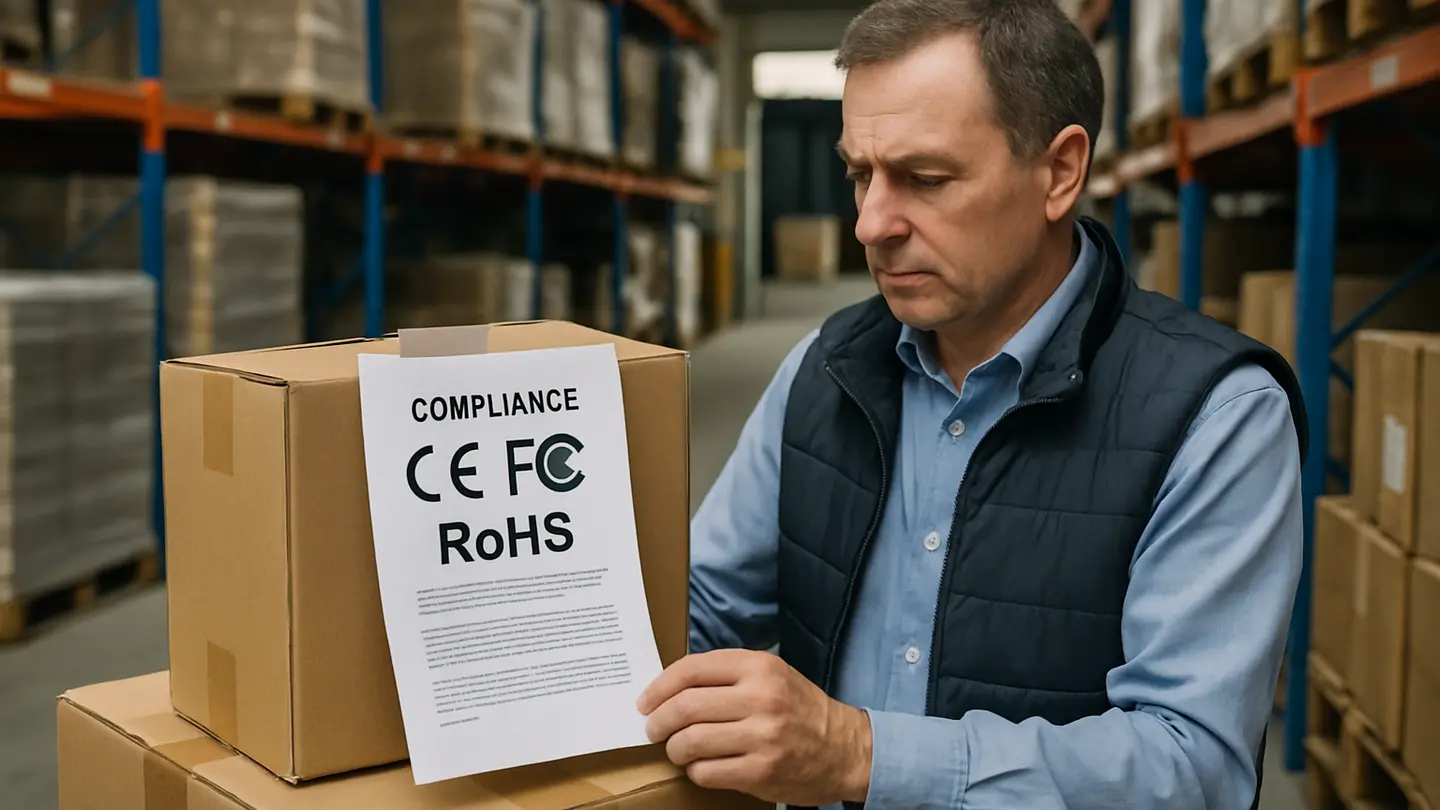
Compliance risk is equally important. Destination markets may require safety standards, product labels, warnings, materials declarations, energy or chemical compliance, user instructions, or test documentation. Requirements vary by product category and country, so assumptions can be costly.
Missing labels, incorrect documentation, or unsupported certificates can cause customs holds, storage charges, delayed sales, or forced rework. Compliance should be checked before goods leave the origin country.
Production Delays, Freight Disruption, and Stockouts
Smaller importers may receive lower production priority than large customers, particularly during peak seasons or when factory capacity is tight. Delays can affect launch dates, retail commitments, promotional windows, and marketplace rankings.
Real lead time includes more than production days. It also includes sampling, packaging procurement, inspection scheduling, freight booking, export clearance, international transit, customs clearance, and domestic delivery.
Local oversight, milestone tracking, and coordinated shipping can reduce schedule risk. Importers should confirm production start dates, material readiness, inspection dates, expected completion, cargo handover, and document availability throughout the order.
Pre-Deposit Checklist Before Committing to a Supplier
Before sending a deposit, importers should complete a structured review. At minimum, confirm:
- Supplier identity, business registration, and operating address
- Whether the supplier is a factory, trader, or broker
- Export experience and documentation capability
- Product certifications or test reports relevant to the destination market
- A tested and approved golden sample
- Final specifications, materials, dimensions, labeling, and packaging
- MOQ, unit price, tooling costs, and sample charges
- Production lead time and shipment schedule
- Payment schedule and final payment conditions
- Incoterms and freight responsibility
- Inspection milestones before final payment release
- Remedies for defects, late delivery, or nonconforming goods
- Bank account details verified against supplier identity
For regulated products, lab tests and certificates should match the actual product, materials, supplier, and destination market requirements. Generic documents or unrelated reports should not be accepted without review.
Final Takeaway: Treat Sourcing as a System, Not a Search
Product sourcing is a structured system for securing profitable, compliant, and consistent inventory. Importers that treat it as a simple supplier search often expose themselves to preventable losses: defective goods, missed shipments, hidden costs, customs problems, and brand damage.
A stronger system starts with the right sourcing model, exact product specifications, realistic landed-cost analysis, and careful supplier verification. It continues through sampling, golden sample approval, written commercial terms, inspection planning, and coordinated logistics.
Before scaling to large production runs, importers should use samples and small trial orders to test supplier reliability, communication, quality discipline, and export execution. Disciplined sourcing is a core capability for importers, not an administrative task.