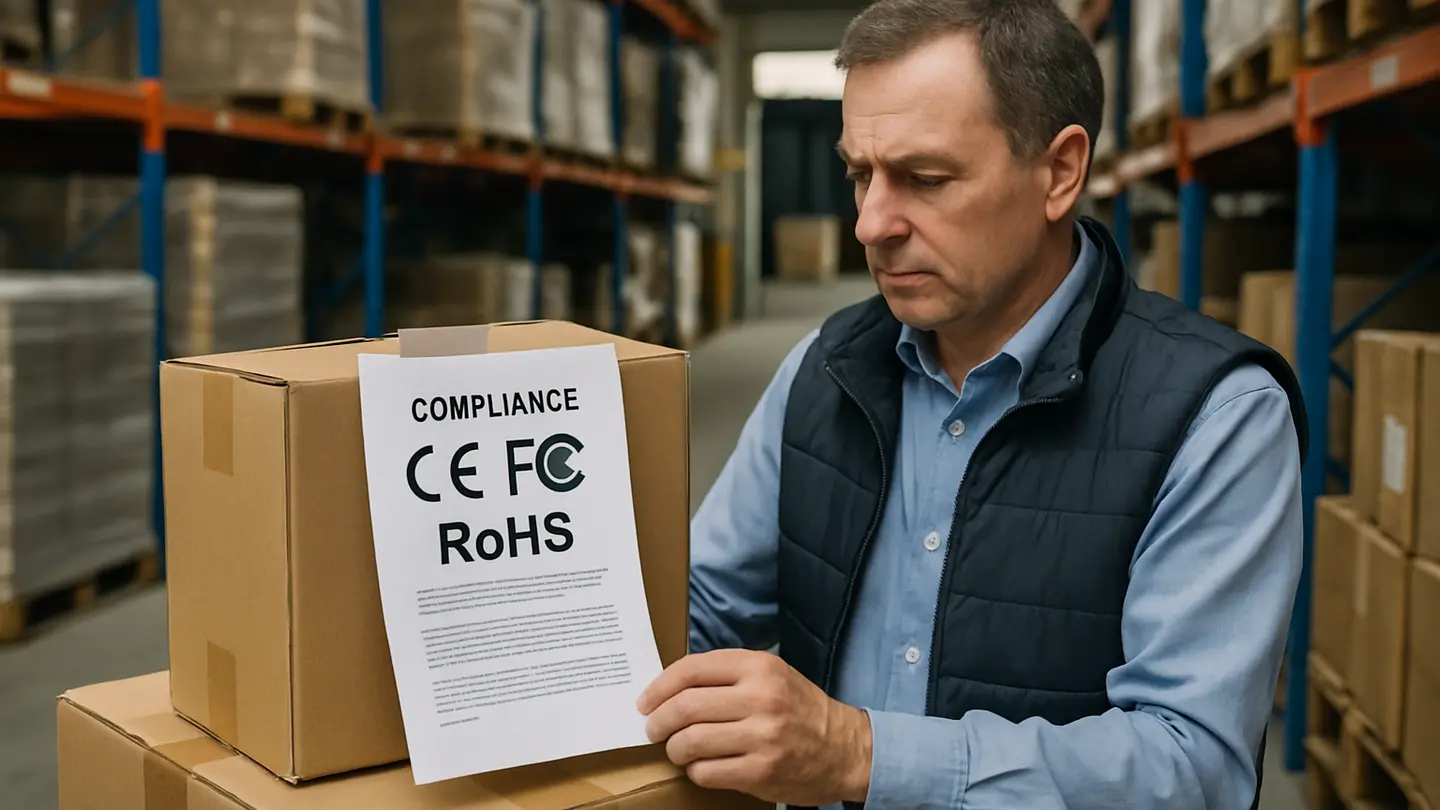
For importers and B2B buyers, product testing in China should not be treated as a generic pre-shipment checkbox. The right question is not “How much testing can I afford?” but “Which tests are necessary for this product, market, sales channel, and risk profile?”
Shower products, bathroom accessories, electrical fittings, plastic components, textiles, children’s goods, and consumer electronics can face very different obligations. Some tests are mandatory for legal market access. Others are required by retailers, marketplaces, insurers, or internal quality policies. Some are optional but sensible because a failure could create safety issues, recalls, customs delays, warranty claims, or blocked inventory.
The opposite problem is also common: buyers pay for tests that are not tied to a clear requirement. A factory may suggest tests because “other customers do them,” or a lab may quote for markets the buyer has no immediate plan to enter.
A practical testing plan starts with five priorities:
- Legal requirements in the destination market
- Requirements from retailers, distributors, marketplaces, or customs brokers
- Customer safety and product liability exposure
- Margin risk from returns, claims, or unusable inventory
- Supply continuity if a failure would interrupt launches or repeat orders
For repeat orders, full retesting may not be necessary if the product, materials, components, suppliers, process, and destination market are unchanged. But if the factory changes a coating, pigment, cable, cartridge, adhesive, plating process, packaging material, or sub-supplier, the old result may no longer support compliance.
Identify Who Requires the Test Before Looking at the Price
Testing requirements usually come from five sources: law, regulators or customs authorities, sales channels, buyer risk controls, and factory or lab recommendations.
Legal requirements depend on the product category and destination market. A shower mixer, LED mirror, bath toy, rechargeable grooming device, plastic food-contact accessory, or skin-contact textile can trigger different standards. The fact that a product is made in China does not determine the test requirement; the key factors are what the product is, how it is used, who uses it, and where it will be sold.
Certain categories often face stricter controls, including:
- Children’s products and toys
- Electrical goods and lighting
- Battery-powered products
- Products that contact skin
- Food-contact materials and kitchen or bathroom accessories used with consumables
- Plumbing, sanitaryware, and water-contact components in regulated markets
- Products with coatings, pigments, inks, adhesives, or soft plastics
Sales channels can be just as important as regulators. A product may be legally sellable in a country, yet still fail a retailer’s onboarding process or marketplace listing review because documentation is missing. Without the required documents, a buyer may be unable to list the item, reinstate a suspended listing, or keep inventory moving.
Buyer risk controls are different again. A company may test even when the law does not clearly require it because the product has a high claim risk or a failure would be expensive. For example, a bathroom product with a wall-mounted glass component may justify strength or installation-related checks. A shower hose or valve assembly may need pressure, leakage, corrosion, or durability evaluation even if the supplier claims routine production control.
Factory and lab recommendations can be useful, but they should not be accepted blindly. If a supplier suggests a test, ask whether it is tied to a regulation, standard, retailer rule, marketplace requirement, or known failure risk. “This is common” is not enough.
Separate lab testing from per-order quality control. Testing addresses compliance, material safety, design performance, or hidden risks that require laboratory methods. Inspection checks whether the actual shipment matches the purchase order: quantity, appearance, workmanship, basic function, packaging, labels, and visible specifications. A lab report and a pre-shipment inspection are complementary, not interchangeable.
Do Not Assume the Factory’s Test Report Covers Your Order
Many factories can provide test reports. Some are useful. Others are only loosely related to the buyer’s order.
A supplier’s report may cover a different model, older version, alternative material, different color, different component supplier, different formula, or a sample made for another customer. It may have been issued years earlier, before a regulation or standard was updated. It may also have been issued to the factory, a trading company, a component vendor, or another importer rather than to the current buyer.
Before relying on an existing report, check at least the following:
| Item to verify | Why it matters |
|---|---|
| Product name, model, and description | Confirms whether the tested product matches the order |
| Photos and sample description | Helps identify visible differences from the buyer’s version |
| Materials and components listed | Shows whether the report covers the same construction |
| Test standard and version | Confirms relevance to the current market requirement |
| Test date | Older reports may not reflect current materials or rules |
| Applicant and manufacturer | Some channels require documents in the importer’s or brand owner’s name |
| Lab identity and accreditation | Acceptance may depend on the lab’s credentials |
| Result details, not just “pass” | Shows what was actually evaluated |
Supplier paperwork does not automatically transfer compliance responsibility. In many markets, the importer, brand owner, or distributor remains responsible for placing compliant goods on the market. If a regulator, retailer, or marketplace challenges the product, the buyer may need to prove that the report applies to the exact product being sold.
This is especially relevant when a product is customized. A different plating on a shower fitting may affect corrosion or restricted substances. A new pigment in a plastic handle may change chemical results. A different power adapter for an LED bathroom mirror may require separate electrical review. A new adhesive, gasket, hose, seal, or cartridge supplier may affect performance or safety.
The safest approach is to send the existing report, technical specifications, photos, bill of materials, and intended market information to a qualified lab or compliance adviser. Ask whether the old result is technically reusable and what gaps remain. Also confirm acceptance with the party that will review the document, such as a retailer, marketplace, certification body, customs broker, or regulatory consultant.
A report can be technically relevant but still not accepted by a sales channel because the applicant name, lab, format, or issue date does not meet that channel’s rules. Confirm this before production, not after goods are packed.
Understand What Drives Testing Cost
Testing cost is mainly driven by scope. The more standards, parameters, materials, variants, samples, and destination markets included, the higher the cost tends to be.
A narrow test for one material characteristic is usually cheaper than a full compliance package for several markets. A simple mechanical check costs less than a complex chemical program covering multiple restricted substances. Electrical products, battery-powered devices, children’s products, and food-contact materials often require more extensive evaluation because the risk areas are broader.
Common cost drivers include:
- Number of standards or regulations covered
- Number of chemical parameters or performance items tested
- Number of product versions, colors, sizes, or materials
- Number of samples required by the method
- Whether destructive testing is involved
- Whether multiple destination markets are included
- Whether documentation review, labeling review, or certification is required
- Whether retesting is needed after a failure or design change
Buyers often overspend by testing for markets they may enter “someday.” If a company is launching only in the EU this season, testing simultaneously for the US, UK, Australia, and other markets may not be justified unless the launch plan is firm. Future-market testing can be smart when tooling, design, and timing make later changes expensive, but it should be a conscious decision.
Color and material variations deserve attention. If only appearance changes and the underlying material, pigment system, coating, ink, and supplier remain the same, a lab may allow reduced or representative testing. But if each color uses a different pigment, paint, coating, dye, or ink, additional checks may be needed. A black plastic component, chrome-plated fitting, and soft-touch coated handle may present different risks.
The same applies to components. A product using an approved cable, plug, battery, cartridge, hose, valve, motor, or LED driver may have a clearer test path than one using undocumented parts. Certified components can reduce uncertainty, but they do not eliminate the need to assess the assembled product.
The purchase order and product specification should support the testing strategy. Buyers should lock critical materials, component models, approved suppliers, and change-notification requirements in writing. A useful clause requires the factory to notify the buyer before changing any material, formula, coating, pigment, component, sub-supplier, tooling, production process, or packaging material that could affect compliance or performance.
Frequent buyers may be able to negotiate better lab pricing through high-volume programs, repeated scopes, or annual plans. However, price should not be the only selection factor. The lab must be technically competent and acceptable to the regulator, retailer, or marketplace that will rely on the report.
Know the Limits of a Passing Lab Report
A passing lab report is valuable, but it is not a guarantee that every unit in the shipment is compliant or well made. It proves that the submitted sample passed the listed tests under the stated conditions.
A factory can submit a good sample to the lab and later ship goods made with different materials or weaker process control. A shipment can match the tested design but still suffer from poor assembly, scratches, leakage, missing accessories, wrong labels, weak cartons, incorrect barcodes, or mixed models. Lab testing does not replace order execution control.
Pre-shipment inspection usually checks practical shipment issues such as:
- Quantity and assortment
- Workmanship and visible defects
- Dimensions and basic specifications
- Simple function checks
- Assembly and fit
- Packaging, cartons, markings, and barcodes
- Labels, warnings, and instructions
- Drop tests or handling checks where appropriate
- Shipping marks and order documentation
Inspection is especially useful for catching visible or functional problems before final payment or shipment release. For shower and bathroom products, inspection may find scratches on plated parts, poor sealing, missing washers, incorrect thread sizes, rough edges, wrong installation kits, misprinted labels, weak cartons, or inconsistent finishes.
But inspection cannot prove hidden chemical or formulation compliance. An inspector cannot reliably determine whether a pigment contains a restricted substance, whether a plasticizer exceeds a legal limit, whether a coating meets a chemical restriction, or whether a metal alloy composition matches the compliance file without laboratory analysis.
Chemical and material risks require traceability and change control. Buyers should know which materials are used, where critical components come from, and whether the factory can segregate approved inputs from substitutes. For products with variable raw materials or higher regulatory exposure, batch-level testing may be justified.
A practical model is to treat testing as design- or material-based and inspection as shipment-based. Test when launching a new product, changing materials, entering a new market, updating a design, or verifying a compliance risk. Inspect most orders, especially early shipments, high-value shipments, or products with visible workmanship and packaging risks. As the supplier proves consistent, inspection frequency may be adjusted, but it should not disappear without a reasoned control plan.
FAQ
Q1: Is it enough that the factory’s parts supplier is already certified?
Usually not. Component certification can be helpful, but many compliance obligations apply to the finished product as sold. A certified plug, hose, battery, cartridge, coating, or plastic material may reduce uncertainty and help narrow the final test scope, but it does not automatically prove that the assembled product meets all requirements.
The final product may introduce new risks through assembly, enclosure design, user access, labeling, instructions, performance, or interaction between components. Ask the lab which component certificates can be used and what still needs to be checked on the complete product.
Q2: Do I need a separate report for each market I sell in?
Often, but not always. The US, EU, UK, and other markets may use different standards, regulatory frameworks, documentation formats, labeling rules, and responsible-party requirements. A report prepared for one market may not be enough for another.
Some underlying test results may be reusable. A chemical result, material identification, or performance test may support more than one market if the method and limits are acceptable. Before ordering duplicate tests, ask the lab to map the product against all target markets and identify which results can be shared and which gaps need separate testing.
Q3: Does the packaging get tested too?
Sometimes. Packaging may require testing when it contacts food, forms part of a regulated children’s product, or uses materials subject to specific controls. Certain inks, coatings, plastics, recycled materials, or treated packaging may also raise compliance questions depending on the market and product category.
For ordinary non-regulated packaging, buyers more often review labels, warnings, barcodes, carton strength, shipping marks, and handling durability rather than ordering a full compliance test. Packaging still matters commercially: weak cartons, unclear labels, or missing warnings can cause damage, delays, relabeling costs, or rejected deliveries.
Q4: Can I use a lab at home instead of one in China?
Yes. Testing can be arranged in China or in the buyer’s home market. China-based testing may be faster and more convenient when samples are already at the factory, inspection site, or consolidation warehouse. It may also make retesting quicker if the supplier needs to adjust materials or production.
A home-market lab may be necessary if a regulator, retailer, marketplace, or certification program requires a specific local laboratory or report format. Before booking any lab, confirm who must accept the report and whether that lab’s report will satisfy the requirement.
Final Takeaways for Choosing the Right Test Scope
The best testing scope supports a clear business decision. A worthwhile test helps secure legal market access, obtain sales-channel approval, protect customer safety, reduce product liability exposure, or prevent major financial loss from blocked or unsellable inventory.
Optional testing can still be valuable, but it should be justified. Ask: What risk are we reducing? Who needs this report? What standard applies? Will the result affect whether we approve production, change the design, select another material, or enter a market?
Do not rely on the factory to flag every issue. Suppliers may not proactively identify risks related to plugs, electrical ratings, pigments, coatings, inks, adhesives, plasticizers, water-contact materials, packaging, warnings, or component substitutions. Some factories know their production process well but are less familiar with the buyer’s legal market and sales-channel obligations.
The most efficient time to define product testing in China is before samples are sent, purchase orders are finalized, and production begins. A clear scope helps avoid unnecessary tests, missed compliance requirements, rejected reports, and expensive retesting. It also gives the factory a specific standard to build toward, rather than a vague instruction to “make it compliant.”
For repeat orders, do not retest automatically, but do not assume old results remain valid forever. Retesting or partial verification is sensible when materials, components, suppliers, formulas, processes, tooling, labeling, packaging, or destination markets change. The buyer’s control system should make those changes visible before goods are produced.
Author Background
The author is a B2B sourcing and quality-control writer focused on supplier management, product compliance, factory inspections, and import risk planning for buyers working with Asian manufacturing supply chains.