Shenzhen is one of the world’s best-known manufacturing centers for electronics-led products. Buyers searching for products made in Shenzhen usually find smartphones, chargers, power banks, drones, wearables, smart home devices, batteries, mobility products, and connected hardware.
The reputation is deserved, but often misunderstood. A brand headquartered in Shenzhen does not prove every product under that brand is manufactured there. It also does not mean a smaller buyer can access the same production line, engineering team, component allocation, or quality controls.
For B2B buyers, Shenzhen’s value lies in its ecosystem. Suppliers can often source chips, sensors, circuit boards, batteries, casings, packaging, and test fixtures nearby. That density can shorten development cycles and help suppliers respond when specifications change. At the same time, sourcing risk varies sharply by product type. A passive phone stand is not the same challenge as a wall charger, lithium battery pack, drone, or app-connected device.
The practical question is not simply “What does Shenzhen manufacture?” It is: which Shenzhen suppliers can reliably manufacture the exact product, at the required quality level, with the right documentation for the buyer’s market?
Why Shenzhen Became a High-Speed Manufacturing Hub
Shenzhen’s manufacturing strength is closely tied to electronics. Products with many components—printed circuit boards, connectors, screens, batteries, wireless modules, molded housings, firmware, sensors, and packaging—benefit from a dense local supplier base. When component vendors, tooling shops, assemblers, testing providers, and logistics companies operate near one another, coordination becomes faster.
That speed matters. A buyer developing a Bluetooth accessory, smart lock, charger, wearable, or control module may need several sample changes before production. In Shenzhen, suppliers can often obtain alternative components, adjust a PCB design, test a revised casing, or source a new display module without waiting weeks for distant vendors.
However, Shenzhen is not the lowest-cost option for every product. Its advantage is often speed, flexibility, engineering access, and ecosystem depth—not necessarily the cheapest final assembly. Simpler goods with fewer electronic components may be more cost-effective in other Chinese manufacturing regions, including furniture, ceramics, textiles, basic hardware, and some bathroom fixtures.
Buyers should also avoid assuming capability from geography. A Shenzhen address may belong to a genuine manufacturer, trading company, design office, sales agent, or reseller. Even a factory may specialize narrowly. A supplier experienced in USB cables is not automatically qualified to make certified wall chargers, battery products, or connected devices.
The first sourcing task is specific verification: does the supplier actually build the target product, or only sell something that looks similar online?
Consumer Electronics: Shenzhen’s Best-Known Product Base
Consumer electronics remain the product group most closely associated with Shenzhen. The city is linked to smartphones, tablets, earbuds, speakers, chargers, adapters, power banks, cables, hubs, docks, gaming accessories, screens, small cameras, and many private-label electronic accessories.
This breadth creates opportunity for importers, distributors, online retailers, promotional product companies, and OEM buyers. It also creates risk because two products that appear identical in photos may be very different internally. A charger housing may look the same while using different capacitors, transformers, protection circuits, soldering quality, or thermal design. Earbuds with similar shells may differ in chipsets, microphone quality, battery cells, Bluetooth stability, and firmware.
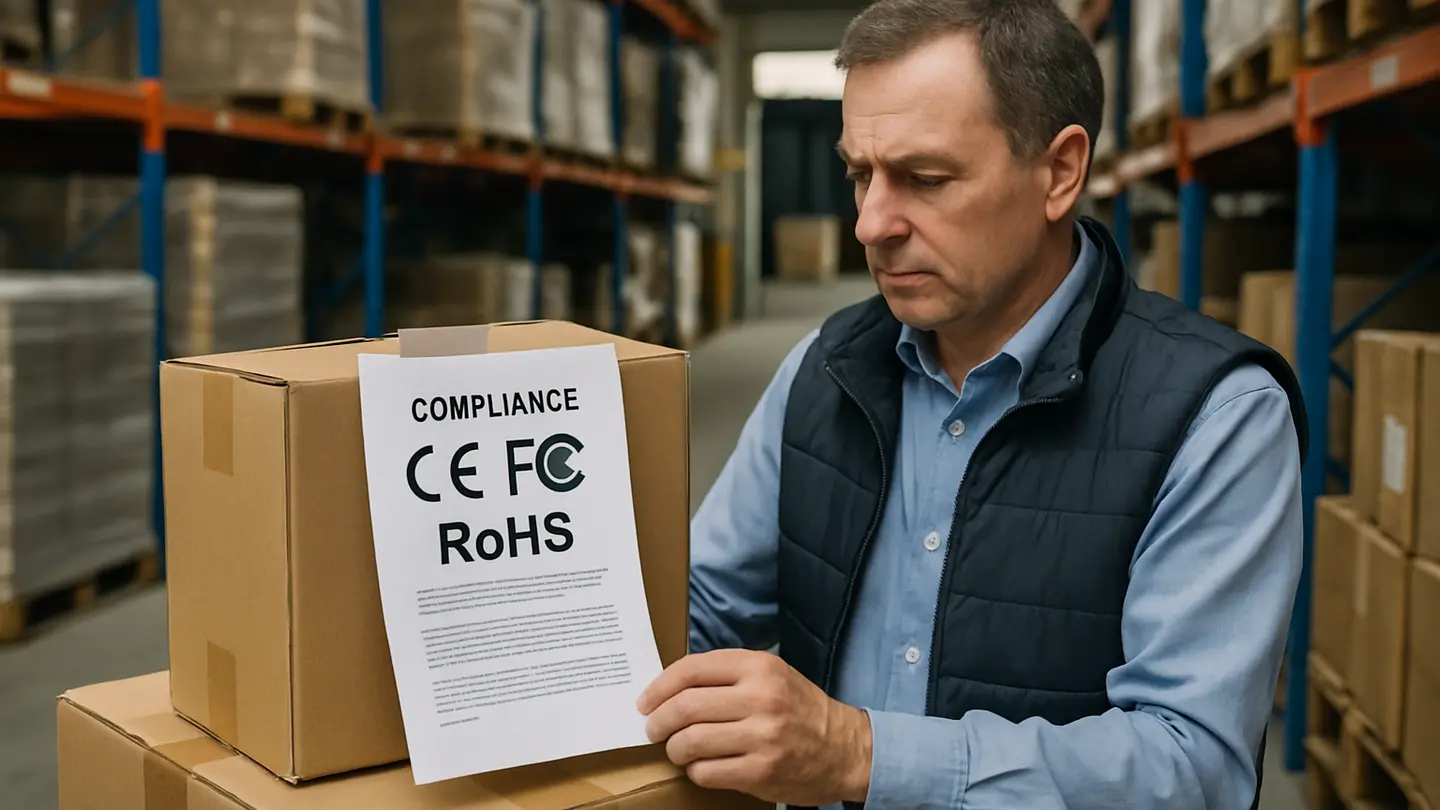
Charging and power-related products deserve particular caution. Buyers should confirm which safety standards, electromagnetic compatibility requirements, labeling rules, and market-specific certifications apply before ordering. A supplier’s existing certificate may not cover the exact model, plug type, component configuration, cable, battery, or private-label version being purchased.
Marketplace listings are useful for discovery, but they are not proof of a stable supply chain. Before treating any listing as a serious option, buyers should request a written specification sheet, factory details, certificate copies, sample production records, and confirmation of which components will be used in mass production.
Drones, Robotics and Wearables Built Around the Same Component Ecosystem
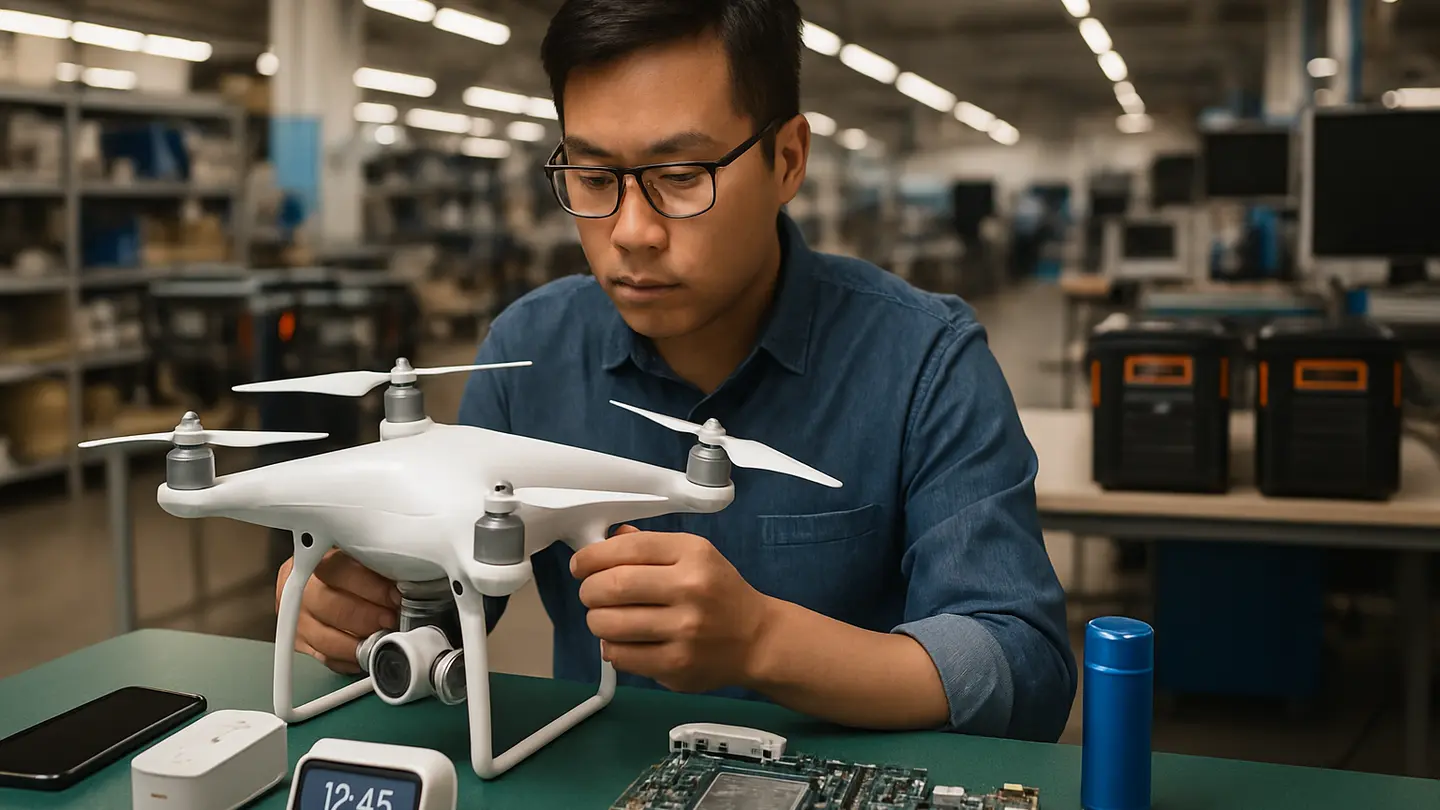
Shenzhen is strongly associated with consumer drones. Drone manufacturing relies on many of the same strengths that define the city’s electronics sector: motors, batteries, sensors, controllers, camera modules, plastic parts, composite structures, firmware, wireless transmission systems, and compact assembly experience.
The same ecosystem supports robotics and wearables. Small robots, educational robotics kits, service robots, wearable health devices, smart watches, trackers, smart rings, and sensor-based devices often depend on local access to chips, batteries, displays, antennas, molded enclosures, charging components, and embedded software teams.
These categories are more technically sensitive than standard electronics accessories. In drones, substituting a motor, battery, propeller, electronic speed controller, GPS module, camera, or flight control board can affect stability, flight time, heat, safety, structural load, and firmware behavior.
Wearables bring different risks. The casing may look acceptable, but quality depends heavily on firmware stability, sensor accuracy, battery behavior, water resistance, app synchronization, and long-term charging reliability. Health and fitness claims can also create regulatory exposure in some markets, especially if marketing shifts from general wellness to medical or diagnostic claims.
For buyers, these products require more than visual sample review. Test plans should include battery cycling, firmware use cases, connectivity checks, environmental conditions, sensor comparison, and production-unit testing.
Smart Home Devices and Connected Hardware
Smart home products are another important Shenzhen category because they combine hardware, sensors, wireless communication, firmware, and app integration. Common examples include smart plugs, switches, locks, cameras, sensors, lighting controls, thermostats, hubs, alarms, curtain controllers, and appliance-control modules.
The sourcing challenge is that smart home quality is not limited to assembly appearance. A product may pass a basic power-on test but still fail in real use because of weak Wi-Fi performance, unstable Bluetooth pairing, poor app design, delayed notifications, firmware bugs, server dependency, or inconsistent over-the-air updates.
Suppliers with app-integration support can shorten development time, especially for private-label buyers that need a working product quickly. Some factories support common app ecosystems or third-party platforms. This can reduce engineering complexity, but it may also limit differentiation if many competitors use the same framework.
Custom development offers more control over design, user experience, data handling, and integration features. It also requires more budget, longer timelines, clearer intellectual property arrangements, and stronger project management. Buyers should clarify early whether they want a fast private-label route, a modified ODM product, or a genuinely custom design.
For connected devices, written specifications should cover materials and dimensions as well as wireless standards, supported app versions, firmware update procedures, data security expectations, power behavior, and warranty responsibilities for software-related failures.
Battery Technology, Mobility Products and Power Storage
Shenzhen’s electronics base is closely connected to battery technology. The local ecosystem supports power banks, lithium battery packs, electric scooter components, e-bike accessories, portable power stations, tool batteries, rechargeable consumer devices, emergency power products, and small energy storage systems.
Battery products are attractive because demand is broad, but they carry stricter safety and logistics requirements than many basic electronics. Lithium batteries can create fire, thermal runaway, transport, storage, and disposal risks. Buyers should treat battery sourcing as a compliance-driven category, not just a price comparison.
Documentation must match the exact battery model and configuration ordered. This includes cell type, capacity, pack structure, protection circuit, enclosure, charger compatibility, labeling, and transport paperwork. A certificate or test report for a similar model may not be enough if the purchased product uses a different cell, capacity, casing, or battery management system.
Buyers also need to distinguish transport testing from market approval. Transport documentation may support shipping by air, sea, or courier, but it does not automatically prove the product can be legally sold in the destination market. Safety standards, electrical approvals, recycling obligations, labeling rules, and retailer requirements may be separate issues.
Battery-related products should be sampled and tested carefully before mass production. At minimum, buyers should define the approved cell supplier, capacity tolerance, charging behavior, protection functions, operating temperature, storage conditions, and packaging requirements.
What May Change Between Sample Approval and Mass Production
One common sourcing problem in Shenzhen electronics is the gap between an approved sample and later production. The sample may be built with one set of components, while mass production uses substitutes because of cost pressure, stock shortages, supplier convenience, or undocumented purchasing decisions.
Substitutions can affect more than performance. A different chip may change firmware stability. A different battery cell may affect capacity, charging safety, or transport documentation. A different plastic grade may reduce impact resistance or alter flame-retardant properties. A different cable, adapter, capacitor, adhesive, coating, or sensor can affect durability, compliance, or user experience.
This is why “same as sample” is too vague. Buyers should lock critical components, materials, firmware versions, colors, finishes, packaging, labeling, and test requirements in written specifications. For regulated products, the approved bill of materials should align with the documentation used for certification or testing.
A signed or sealed approval sample is useful, but it must be supported by paperwork. The sample should be labeled with date, version, model number, firmware version, and key component references. Reorders should be tested against that approved sample, not only against the supplier’s latest catalogue or marketplace listing.
Production inspections should focus on hidden variables as well as appearance. For electronics, this may include internal component checks, functional testing, charging behavior, firmware version confirmation, packaging review, barcode checks, and carton marking verification.
How B2B Buyers Can Source More Safely in Shenzhen
Online sourcing makes Shenzhen suppliers accessible, but it also blurs supplier roles. A seller may be a manufacturer, trader, reseller, design house, sourcing agent, or a company that outsources most production. None of these roles is automatically bad, but buyers need to know who is responsible for engineering, purchasing, assembly, quality control, after-sales support, and documentation.
A safer sourcing process starts with a written specification rather than a vague product description. Instead of asking for “best price for smart plug” or “high-quality power bank,” buyers should define voltage, plug type, capacity, casing material, wireless standard, packaging, certification requirements, logo placement, test requirements, and target market.
Samples should be built to that specification. If the supplier sends a generic stock sample, it may be useful for early screening, but it should not be treated as approval for mass production. Once the buyer selects a supplier, order documents should define what happens if components change, who pays for retesting, and how nonconforming goods will be handled.
Confidentiality and ownership issues should be addressed early, especially for custom designs. Buyers should clarify tooling ownership, mold storage, design file access, firmware rights, branding use, and restrictions on selling the same design to other customers.
Supplier verification and in-person oversight can reduce risk. Factory audits, video walkthroughs, document checks, production monitoring, pre-shipment inspections, and third-party lab testing are not guarantees, but they improve visibility.
FAQ
Q1: Do the famous brands and the small suppliers use the same factories?
Sometimes small suppliers may buy components from vendors that also serve well-known brands. That does not mean they use the same assembly lines, engineering controls, quality systems, or approved materials.
Large brands often have dedicated supplier agreements, custom tooling, strict incoming inspection, controlled bills of materials, and long qualification processes. A small supplier selling a similar-looking product may use a different factory, component grade, or design.
Buyers should ask: What will your company actually manufacture for this order? Which steps are done in-house? Which are outsourced? Can you provide production photos, process details, sample records, and quality-control documents for the exact product category?
Q2: Which category is the easiest entry for a first-time buyer?
Passive accessories are often easier for first-time buyers. Examples include simple phone stands, protective cases, non-powered mounts, basic cable organizers, packaging accessories, or mechanical parts with limited safety exposure.
Defects in simple accessories can still be costly if they affect fit, finish, branding, or customer satisfaction. However, they are usually easier to inspect and less expensive to manage than failures in powered or battery-containing products.
Wall-powered products, chargers, lithium batteries, connected devices, drones, and wearables usually involve higher approval burdens. They may require safety testing, electromagnetic compatibility checks, transport documentation, firmware testing, labeling review, and stronger supplier control.
Q3: Why do two identical-looking products have very different prices?
The largest differences are often inside the product. Photos may show the same shape, color, and packaging style, while the internal components are completely different.
For electronics, price differences may come from chips, battery cells, circuit protection, speaker drivers, microphones, sensors, connectors, cables, soldering quality, firmware, and testing procedures. For physical parts, differences may come from casing material, wall thickness, coating, mold quality, tolerances, and assembly method.
A low quote is not automatically wrong, but buyers should ask what changed to make the price lower. Request a bill of materials summary, component brands or grades where possible, capacity tolerances, test standards, and confirmation that the quoted product matches the sample.
Q4: Do Shenzhen suppliers handle packaging and branding?
Many Shenzhen suppliers can support logo printing, private-label packaging, manuals, stickers, barcodes, and retail cartons. Some can also help coordinate packaging design or source packaging from nearby vendors.
The buyer should include packaging, labeling, compliance marks, barcode placement, carton markings, language requirements, and artwork files in the written order. These details should be approved before mass production, not left for the final shipping stage.
Artwork ownership should also be agreed in advance. Buyers should clarify who owns the design files, whether the supplier may reuse the packaging concept, and whether the supplier may display the branded product in listings, catalogues, or trade show materials.
Another Way to Build a China Supplier Shortlist
Direct outreach, referrals, audits, and factory visits all have a place in Shenzhen sourcing. Buyers can also use B2B platforms to widen the early search and compare supplier responses before committing to samples or travel.
Made-in-China.com is one option for building an initial China supplier shortlist. Its Supplier Discovery tools can help buyers find and narrow potential suppliers, including by using Audited Supplier channels where available. According to the platform’s buyer information, Audited Suppliers are subject to third-party verification and on-site audit, with Audit Reports available for review.
Those Audit Reports can provide structured information for early comparison, such as general company information, export trade, manufacturing capacity, quality control, and R&D capability. This does not replace buyer due diligence, but it can help screen candidates before deeper verification.
For buyers who want multiple quotations, Made-in-China.com’s Easy Sourcing service allows them to submit one sourcing request, receive quotations from matched suppliers, compare responses, and request samples. Used carefully, this can reduce manual outreach while still leaving room for specification checks, sample testing, and factory verification.