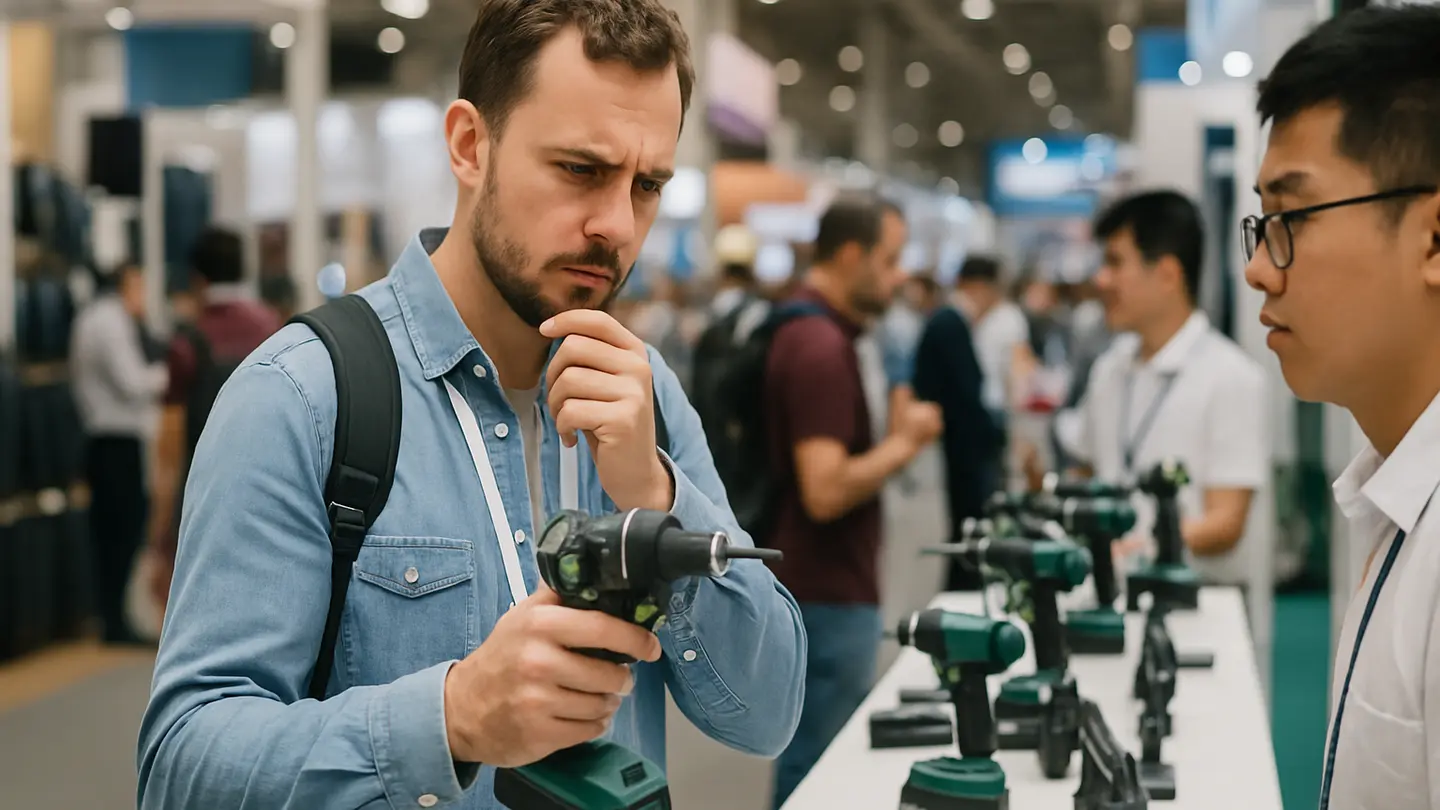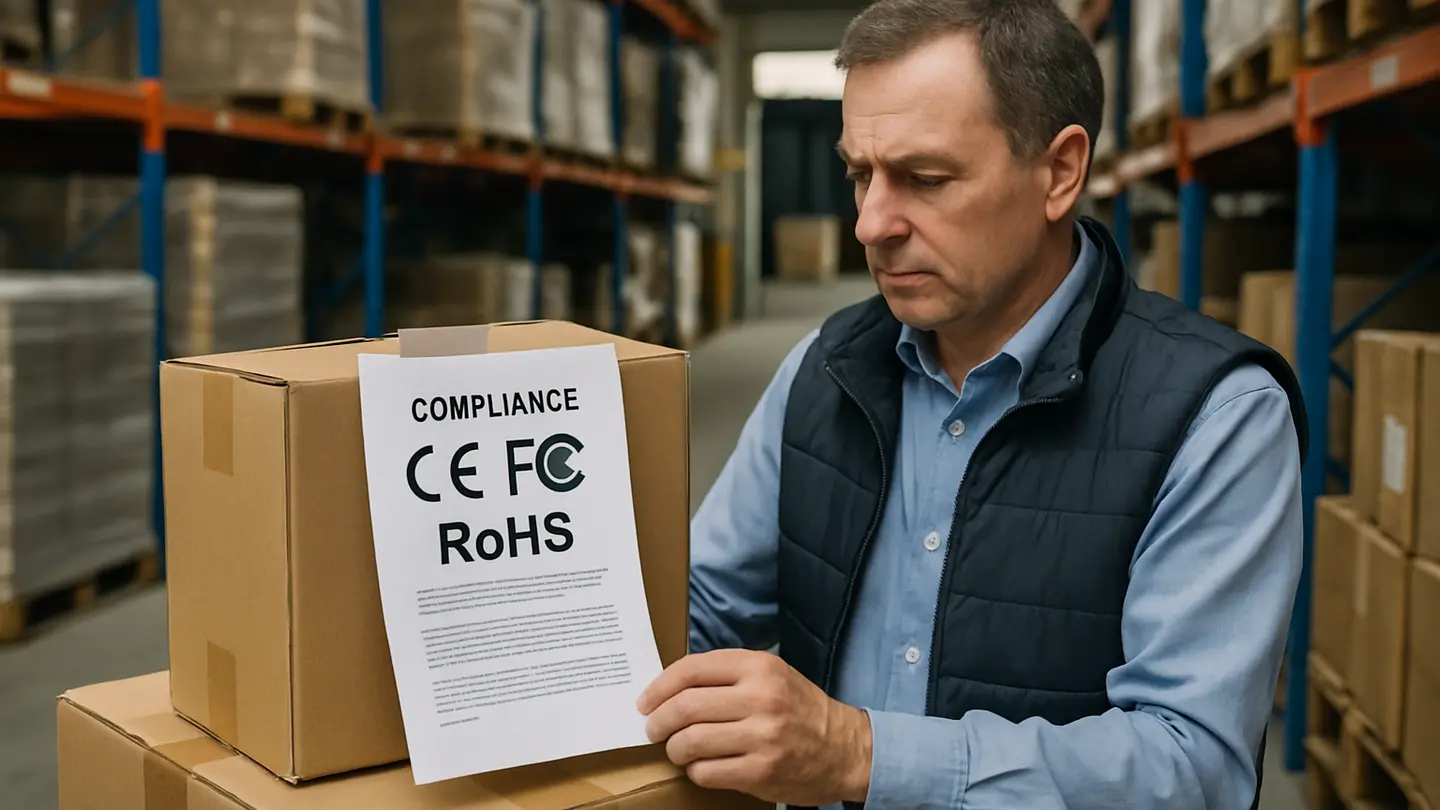
Weak quality control can trigger returns, chargebacks, shipment delays, missed launch dates, and supplier disputes. For manufacturing buyers, the goal is not to “inspect quality into” a finished order, but to prevent, detect, and correct defects before products reach the market.
Reliable sourcing programs combine sampling standards, production monitoring, product testing, factory audits, and corrective action. Together, these methods make quality decisions less subjective and give buyers evidence when a shipment must be reworked, reinspected, accepted, or rejected.
10 Practical Quality Control Methods Buyers Can Use
Importers, sourcing teams, e-commerce brands, procurement managers, and operations leaders all need the approved development sample reproduced consistently in mass production.
The methods below help buyers reduce defects, improve order reliability, and hold suppliers accountable. The right mix depends on product risk, order value, sales channel requirements, and supplier performance.
1. Apply AQL Sampling for Objective Pass-or-Fail Decisions
Acceptable Quality Level sampling is one of the most widely used quality control methods for finished goods inspection. Instead of debating whether “too many” defects exist, AQL provides a statistical framework for deciding whether a production lot passes or fails.
Under ISO 2859-1, lot size, inspection level, sample size, and acceptance limits are linked through sampling tables. The buyer and inspection team define how many units will be checked and how many defects can be accepted before the lot fails.
Defects are usually classified into three categories:
- Critical defects: safety, regulatory, or serious usability risks.
- Major defects: issues likely to cause product failure, customer rejection, or loss of function.
- Minor defects: cosmetic or small workmanship issues that do not normally prevent use.
Critical defects often justify rejection even if only one is found. Major and minor defects are judged against agreed acceptance limits.
Sampling must be genuinely random. If a supplier prepares “good” cartons or selects samples in advance, the result is unreliable. Independent random sampling from packed goods gives buyers a more accurate view of the order.
2. Inspect Goods Before Shipment and Final Payment
A pre-shipment inspection is the final quality checkpoint before goods leave the factory and before the buyer releases final payment or authorizes shipment. It is usually performed when production is complete or nearly complete and most goods are packed.
A strong final inspection should verify:
- Workmanship and visible defects
- Product dimensions, weight, color, and finish
- Order quantity and assortment
- Labels, barcodes, hangtags, inserts, and manuals
- Retail packaging and export cartons
- Carton markings and shipping marks
- Packing method and packaging condition
Packaging and labeling errors deserve close attention. A product may be acceptable but still create problems if the barcode is wrong, the carton label does not match the purchase order, or shipping marks fail warehouse requirements.
Buyers usually have more leverage before balance payment and shipment release. If an inspection fails, typical next steps include factory rework, sorting, reinspection, negotiated concession, or lot rejection.
3. Use Statistical Process Control to Spot Process Drift Early
Statistical Process Control, or SPC, uses production data to monitor whether a manufacturing process remains stable. Instead of waiting until defects appear in finished goods, SPC helps identify variation before it becomes a shipment-level problem.
SPC is most useful in repeatable, high-volume production where key variables can be measured consistently, such as:
- Product dimensions
- Component weight
- Torque values
- Temperature or pressure settings
- Coating thickness
- Cycle time
- Moisture content
- Electrical or mechanical performance readings
Control charts show whether a process is staying within expected limits or drifting toward failure. If a dimension moves toward the edge of tolerance, corrective action can be taken before many units become nonconforming.
SPC depends on reliable data. Operators need clear measurement procedures, calibrated tools, consistent records, and honest reporting.
4. Add During-Production Inspection to Catch Defects Mid-Run
During-production inspection, often called DUPRO, checks goods while mass production is still underway. A common timing is around 20% completion, once enough units represent real production conditions but before the full order is affected by a systemic issue.
DUPRO is useful for new suppliers, new products, tight launch schedules, or technically risky orders. Inspectors compare early production units against the approved sample, purchase order, drawings, specifications, and packaging requirements.
DUPRO can reveal problems such as:
- Material substitution
- Incorrect components
- Workmanship inconsistency
- Poor line setup
- Wrong assembly sequence
- Color or finish variation
- Early packaging and labeling errors
- Incomplete in-process quality checks
The advantage is timing. If a defect is found mid-run, the factory can isolate affected units, adjust the process, retrain workers, replace materials, or correct tooling before the full order is complete.
5. Define Testing Protocols for Function, Safety, Durability, and Transit
Visual inspection cannot prove everything a buyer needs to know. A product may look acceptable but fail during use, break during shipping, deteriorate in storage, or miss a regulatory requirement. Testing protocols close that gap.
Depending on the product category, testing may cover:
- Functional performance
- Safety requirements
- Durability or life-cycle use
- Load, stress, or fatigue resistance
- Environmental exposure
- Material composition
- Packaging strength
- Drop, vibration, or transit simulation
- Regulatory or market-entry compliance
A testing protocol should define the test method, sample quantity, acceptance threshold, testing frequency, and responsible party. It should also state whether testing is performed in-house, by the factory, by the buyer, or by an accredited third-party laboratory.
Retesting responsibilities should be agreed before production. If a product fails, the buyer and supplier should already know who pays for retesting, replacement samples, corrective work, and related delays.
6. Audit Factories With Evidence-Based Checklists
A factory audit should verify what the supplier can actually do, not what a sales presentation claims. Certificates, showroom samples, and polished online profiles do not prove that a factory has the capacity, controls, or discipline to produce every shipment correctly.
An evidence-based audit should review:
- Legal identity and business registration
- Actual production capacity
- Equipment and process ownership
- Subcontracting risk
- Incoming material inspection
- In-process quality controls
- Finished-goods inspection procedures
- Traceability systems
- Nonconforming product handling
- Corrective and preventive action records
- Compliance controls
- Communication responsiveness
Auditors should examine records, not just walk the production floor. Useful documents include work instructions, approved specifications, inspection records, CAPA files, training logs, maintenance records, calibration certificates, and material traceability documents.
Certification can be helpful, but it is not a shipment guarantee. A certified factory can still misunderstand a specification, use the wrong label, pack the wrong assortment, or fail to control a subcontracted process.
7. Use CAPA for Recurring Defects Instead of Batch-by-Batch Rework
Rework fixes a batch. CAPA—Corrective and Preventive Action—targets the cause of the defect so the same problem does not return in the next order.
A proper CAPA process should document:
- The defect description
- Affected product, batch, or process
- Immediate containment action
- Root-cause analysis
- Corrective action
- Preventive action
- Responsible owner
- Completion deadline
- Verification evidence
Root-cause tools such as fishbone diagrams and the 5 Whys method help teams move beyond surface explanations. “Worker mistake” is rarely complete. The real issue may be unclear work instructions, poor fixture design, missing incoming inspection, inadequate training, worn tooling, or an unapproved supplier change.
Corrective actions should be verified before repeat production is approved. If the factory claims it updated a work instruction, the buyer or inspector should confirm that the new instruction is present on the line and reflected in inspection records.
8. Reserve Six Sigma DMAIC for Chronic, Measurable Quality Problems
Six Sigma is best suited to defects that are recurring, costly, and measurable. It is not always necessary for small, one-off, low-risk orders, but it can help repeat production with an important supplier.
DMAIC stands for:
- Define: identify the problem, scope, customer impact, and target.
- Measure: collect reliable data on the current process.
- Analyze: determine the causes of variation or failure.
- Improve: implement process changes that address the causes.
- Control: maintain the gains through monitoring and standardization.
For example, if a supplier repeatedly produces parts near the edge of dimensional tolerance, DMAIC can help determine whether the cause is tool wear, machine setting variation, operator method, material inconsistency, or measurement error.
The method requires data discipline. If the defect cannot be measured consistently, or if the order is too small to justify the effort, simpler tools such as inspection, CAPA, or process checklists may be more practical.
9. Use Lean Quality Practices to Remove Waste That Hides Defects
Lean quality practices reduce defects by improving flow and removing waste from the production environment. Many quality problems are made worse by excessive handling, cluttered workstations, unmanaged work-in-progress, and unnecessary movement between processes.
A basic 5S program—sort, set in order, shine, standardize, and sustain—can make abnormalities easier to see. If tools, materials, fixtures, and work instructions all have defined locations, it becomes obvious when something is missing, mixed, damaged, or out of sequence.
Practical lean quality controls include:
- Segregating approved, rejected, and pending materials
- Using first-in-first-out handling for time-sensitive materials
- Marking floors for storage and movement lanes
- Creating visual status boards for production stages
- Defining areas for rework and nonconforming goods
- Reducing unnecessary product handling
- Keeping inspection tools available and protected
Lean does not replace inspection, but it makes defects harder to hide. A clean, organized, visually controlled production area reduces mix-ups, contamination, damage, and missed checks.
10. Build Total Quality Management Across the Whole Supply Chain
Total Quality Management treats quality as a company-wide and supply-chain-wide responsibility. It is not only the job of the final inspector or the factory’s quality department.
Purchasing affects quality by choosing suppliers, negotiating realistic prices, and avoiding pressure that encourages shortcuts. Engineering affects quality through drawings, tolerances, materials, and change controls. Factory management affects quality through training, equipment, supervision, and planning. Logistics affects quality through packaging, handling, loading, and documentation. Customer service affects quality by feeding return data and field failures back into improvement work.
A TQM approach may include:
- Clear specification control
- Engineering change approval procedures
- Supplier scorecards
- Regular quality review meetings
- Cross-functional communication routines
- Customer complaint analysis
- Return-rate tracking
- CAPA follow-up
- Logistics performance review
TQM connects audits, inspections, testing, CAPA, supplier management, and logistics. Without it, each quality activity becomes isolated, and buyers keep solving the same shipment-level problem.
How to Design a Quality Control Strategy for Overseas Sourcing
There is no single quality control plan that fits every order. The right strategy depends on product risk, order value, sales channel, supplier history, defect cost, and customer expectations.
High-risk products generally need stronger controls: detailed specifications, supplier audits, in-line inspections, final inspections, laboratory testing, documentation review, and stricter CAPA follow-up. Low-risk promotional products may justify lighter controls if the supplier has a strong track record and commercial exposure is limited.
Buyers should ask:
- What happens if the product fails in the customer’s hands?
- Is there a safety, compliance, or liability risk?
- Will a labeling error cause warehouse or retailer penalties?
- Is the supplier new or proven?
- Is this a first order or a repeat order?
- Can defects be repaired, or would they make the goods unsellable?
- Is the launch date flexible or fixed?
The answers determine how much control is commercially justified.
Step 1: Verify Suppliers Before Issuing the Purchase Order
Supplier verification should happen before a deposit is paid or a purchase order is issued. Once money is committed and production is scheduled, the buyer has less flexibility.
A factory visit or third-party audit can confirm whether the supplier is a real manufacturer, a trader, or a company that relies heavily on subcontracting. It can also verify legal identity, production capacity, equipment, workforce, and management systems.
Social compliance and certification claims should be checked against records. Buyers should not rely only on certificates sent by email or claims made in sales materials.
Step 2: Freeze Specifications and the Approved Sample
Specifications should be finalized before mass production begins. Ambiguous requirements create room for disputes, substitutions, and quality downgrades.
The specification package should include product drawings, dimensions, materials, tolerances, colors, finishes, performance requirements, packaging materials, labels, barcodes, manuals, certification documents, and approved testing standards. For OEM and ODM orders, responsibilities should be written clearly, including design ownership, performance expectations, and restrictions on changes.
A physical approved sample should serve as the benchmark for mass production, but it should not stand alone. Written specifications are still needed because samples cannot define every tolerance, material grade, label rule, or test requirement.
Step 3: Combine In-Line Checks With Final Inspection
A practical overseas sourcing plan often combines in-line checks with final inspection. In-line inspections monitor production after mass manufacturing begins, while final inspections verify goods before shipment release.
DUPRO inspections can catch systemic problems before the full order is affected. Final inspections then confirm whether the completed and packed goods meet the purchase order, approved sample, and inspection checklist.
For private-label and e-commerce orders, packaging accuracy is especially important. Barcodes, carton labels, inserts, product labels, and shipping marks must match sales channel and fulfillment requirements to reduce receiving disputes, relabeling costs, and fulfillment errors.
Step 4: Correct Root Causes and Track Repeat-Order Performance
A failed inspection should trigger root-cause analysis, not only negotiation. Discounts, concessions, or partial acceptance may solve the immediate dispute, but they do not prevent the same defect from appearing again.
Buyers should require formal corrective action for significant or recurring defects. Follow-up inspections should verify that agreed changes were implemented on the production line, not only documented in an email.
For repeat suppliers, useful metrics include inspection pass rate, defect rate by category, on-time CAPA closure, repeat-defect frequency, customer return rate, complaint type, and reinspection rate. SPC and lean tools can also help monitor chronic production issues across multiple orders.
Buyer Matrix: Match Quality Controls to the Team’s Risk Priorities
Different teams may use the same quality system but prioritize different controls.
E-commerce brands often focus on pre-shipment inspection, retail packaging, barcode accuracy, insert correctness, carton condition, and fulfillment readiness. A minor labeling error can become a major operational problem when inventory enters a third-party warehouse or marketplace fulfillment network.
Procurement teams usually emphasize supplier audits, traceability, compliance documentation, contract requirements, supplier scorecards, and cost of quality. Their priority is reducing supplier risk and improving long-term sourcing reliability.
Operations managers often focus on process stability, production timing, CAPA closure, rework control, and repeat-order trend data. Their concern is whether the factory can produce consistently without disrupting launch dates or customer commitments.
The best quality strategy aligns these priorities rather than treating inspection as a standalone task.
FAQ
1. Is AQL just a percentage of defects you are allowed to have?
No. AQL is a statistical sampling framework, not permission to ship a fixed percentage of defective goods. ISO 2859-1 tables use the lot size and inspection level to determine the sample size and acceptance limits.
Two orders with different quantities may require different sample sizes even if the same AQL settings are used.
2. When should you use 100% inspection instead of AQL sampling?
100% inspection may be justified for high-value, complex, customized, or safety-critical products where the cost of a single defect is too high. It may also be used after an AQL inspection fails, so acceptable units can be sorted from defective units.
For standard high-volume consumer goods, AQL sampling is usually more efficient. It balances inspection cost, speed, and statistical confidence.
3. Do you still need a pre-shipment inspection if your factory is ISO 9001 certified?
Often, yes. ISO 9001 certification indicates that a factory has a quality management system, but it does not guarantee that a specific shipment is defect-free.
Certified factories can still make order-level mistakes in production, labeling, packing, assortment, or documentation. An independent pre-shipment inspection verifies the actual goods before final payment or shipment release.
4. What is the difference between QA and QC?
Quality Assurance focuses on preventing defects through process design and management systems. Examples include supplier qualification, calibration, workflow design, training, document control, and production planning.
Quality Control focuses on detecting defects in products, orders, or shipments. Examples include product inspections, barcode checks, measurements, packing verification, and physical tests.
Effective manufacturing quality systems need both. QA reduces the chance of defects occurring, while QC verifies whether finished or in-process goods meet requirements.