Mobility Aids: High-Demand Products With High Safety Exposure
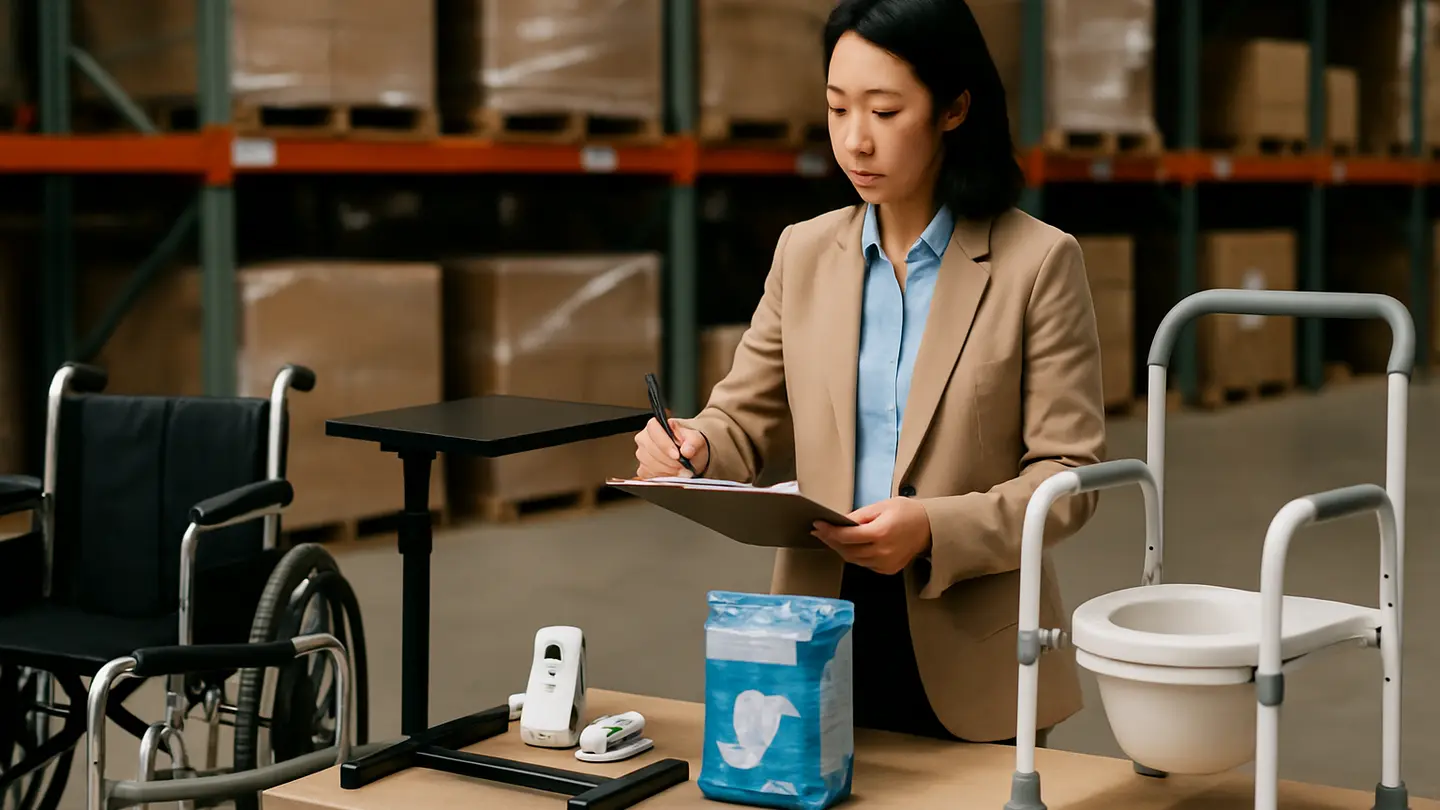
Mobility aids are among the most important senior care products from China because they directly support independent living, caregiver assistance, and safer movement at home or in care settings. Common sourcing categories include walkers, rollators, transport chairs, folding wheelchairs, and folding powerchairs.
These products can have strong demand, but they also carry significant safety exposure. A weak frame, unstable wheelbase, poor brake design, or inaccurate weight rating can create serious user risk and expensive returns. Buyers should therefore evaluate mobility products as safety-critical equipment rather than simple metal-and-plastic consumer goods.
Retail buyers and care providers often value practical features that improve day-to-day use:
- Larger wheels for uneven pavements and outdoor movement
- Adjustable handle heights for different user sizes
- Dependable locking brakes on rollators and transport chairs
- Easy-fold mechanisms for storage and vehicle transport
- Removable bags, baskets, footrests, or armrests
- Comfortable grips and seat materials
- Clear instructions for folding, locking, and safe use
The stated weight capacity should be supported by appropriate evidence for the specific model. Static load claims alone may not show how a product performs during real use. Buyers should also consider stability, brake effectiveness, wheel retention, frame strength, and dynamic performance under movement and repeated loading.
For regulated mobility products, medical-device classification and market-entry obligations can differ by destination market. A product sold as a general mobility aid may be treated differently from a product promoted with rehabilitation, therapeutic, or medical claims. Where relevant, buyers may also assess whether the supplier operates a quality management system such as ISO 13485. However, the relevance of any quality system depends on the product and destination-market requirements.
Bathroom Safety Products Deliver Consistent Year-Round Demand
Bathroom safety products are dependable categories for senior-care distributors, online sellers, healthcare suppliers, and home-improvement channels. Bathrooms create a high-risk environment because wet floors, limited space, and difficult transfers can make ordinary routines challenging for older adults and people with reduced mobility.
Core products include:
- Grab bars
- Shower seats
- Shower stools
- Transfer benches
- Bedside commodes
- Raised toilet seats
- Threshold ramps
- Non-slip bathroom accessories
The strongest products balance practical safety features with a home-friendly appearance. Many end users do not want their bathrooms to look institutional. Finishes such as brushed metal, white-coated frames, neutral plastic surfaces, and compact folding designs can improve consumer acceptance without changing the product’s functional purpose.
Grab bars require especially careful sourcing. Their capacity does not depend on the bar alone. It also depends on the mounting hardware, wall construction, fixing points, installation method, and whether the user installs the product correctly. A strong stainless-steel bar can still fail if it is fixed into unsuitable wall material or attached using an unapproved mounting method.
Installation instructions should therefore identify:
- Approved wall substrates
- Required fasteners and fixing locations
- Minimum installation conditions
- Whether installation into studs, solid masonry, or other structures is required
- Prohibited substrates or mounting methods
- Any limitations on using adhesive, suction, or temporary fixing systems
Buyers should avoid broad safety claims that are not supported by product-specific evidence. For example, statements about accessibility, load support, or suitability for specific user needs should be linked to applicable standards or other documented evidence relevant to the destination market.
For shower seats and transfer benches, inspect the seat surface, drainage design, anti-slip feet, weld quality, adjustment mechanisms, and corrosion resistance. Bathroom products are exposed to moisture, cleaning chemicals, and repeated loading, so appearance at the factory inspection stage is not enough. Functional checks should include height adjustment, stability on wet-like surfaces where appropriate, locking mechanisms, and safe folding performance.
Health Monitoring Products Face the Highest Documentation Requirements
Health monitoring products can offer recurring demand, particularly where consumers and caregivers want to monitor common health indicators at home. Frequently sourced products include blood pressure monitors, pulse oximeters, digital thermometers, medication reminders, and pill dispensers.
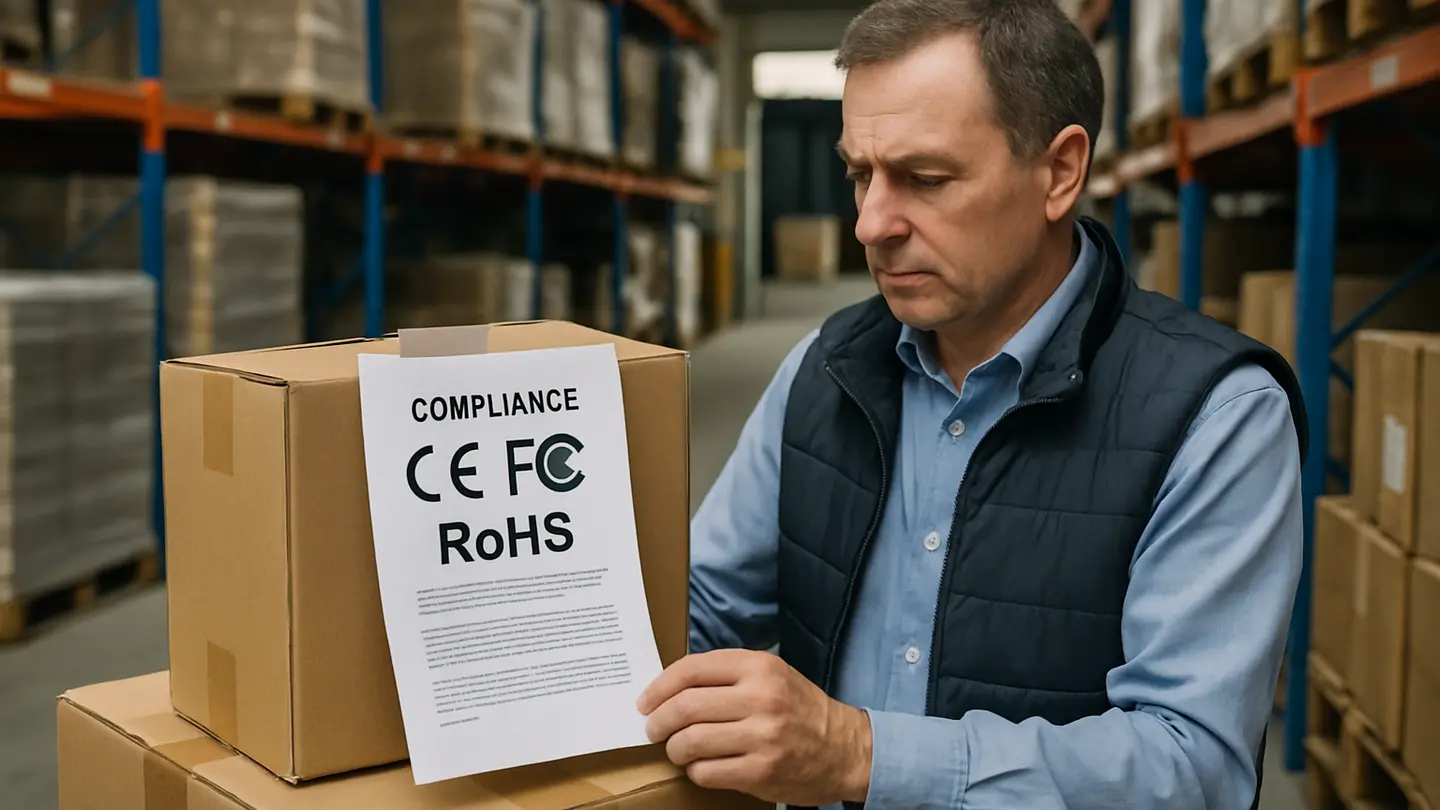
However, these categories generally have the highest documentation requirements among senior care products from China. The regulatory obligations may depend on the device classification, intended use, destination market, and claims used in marketing materials. A product described as a wellness accessory may face different requirements from one promoted as a diagnostic or medical device.
Accuracy claims need model-specific supporting evidence. A generic supplier statement that a factory produces accurate devices is not sufficient evidence that a particular blood pressure monitor, thermometer, or pulse oximeter performs as claimed. Buyers should request documentation tied to the exact model, configuration, and intended use.
Blood pressure monitors may require clinical validation under recognized protocols, depending on the target market and product claims. Buyers should not assume that an existing report for one model automatically covers a different cuff size, software version, sensor configuration, or housing design.
Before placing an order, review export and compliance documents against the requirements of each destination market. Relevant review areas may include:
- Product classification
- Intended-use statement
- Product labels and instructions
- Technical documentation
- Test reports and validation records
- Electrical or battery-related requirements
- Claims used on packaging, listings, and advertising
- Traceability and complaint-handling capability
Pill dispensers also need careful assessment. Basic non-powered organizers are relatively simple products, while electronic dispensers may introduce battery, charging, alarm, connectivity, and software considerations. A dispenser marketed merely as a reminder device may be assessed differently from one that claims to ensure adherence to prescribed medication.
For B2B buyers, the key principle is straightforward: do not build marketing around accuracy, diagnosis, monitoring, or treatment claims until the supporting evidence and destination-market obligations have been reviewed.
Daily Living Aids Can Build High-Volume Sales
Daily living aids are often less regulated than health monitors or powered mobility products, but they can be valuable high-volume product lines. They are designed to make routine tasks easier for older adults, people with limited grip strength, and caregivers.
Common categories include reachers, dressing aids, adapted utensils, jar openers, button hooks, magnifiers, long-handled shoehorns, and grip supports. These products are often relatively compact, easy to bundle, and suitable for home-care, pharmacy, rehabilitation, and online retail channels.
Durability should still be verified. A reacher may look acceptable in a sample but fail after repeated trigger operation. A jar opener may use weak plastic or low-grade rubber that loses grip quickly. Adapted cutlery can develop loose handles, poor edge finishing, or material issues after washing.
Repeated-use or cycle testing is useful for hand-operated products. Buyers should define the expected use conditions and verify that moving parts, springs, grips, hinges, and joints can withstand ordinary repeated operation.
Material confirmation matters for products that contact skin or food. For example:
- Adapted utensils should have suitable food-contact materials.
- Handles and grips should be checked for odor, tackiness, sharp edges, and durability.
- Skin-contact aids should use materials appropriate for their intended contact conditions.
- Magnifier lenses should be checked for distortion, scratch resistance, and edge finishing.
Powered daily-living aids should be evaluated separately from manual products. Electric jar openers, powered can openers, massage-style aids, and rechargeable assistance devices may create additional electrical compliance, battery transport, charging, and after-sales requirements. The supplier’s ability to manage replacement parts, instructions, battery documentation, and consistent assembly becomes more important.
Bundles can raise average order value without requiring excessive opening inventory. A practical bundle might combine a reacher, jar opener, adapted utensils, and a magnifier. The products should still make sense together for the intended user. Bundling unrelated items simply to increase basket value can create confusing listings and unnecessary inventory complexity.
Incontinence Products Can Generate Repeat Purchase Revenue
Disposable and reusable incontinence products can produce repeat business when their performance is consistent. Demand may come from home users, adult children purchasing for parents, caregivers, assisted-living providers, pharmacies, and medical supply distributors.
Typical products include disposable pads, protective underwear, bed pads, reusable absorbent underwear, washable chair pads, and waterproof mattress protectors. Unlike one-time durable goods, these categories may create repeat orders if users are satisfied with absorbency, comfort, fit, and discretion.
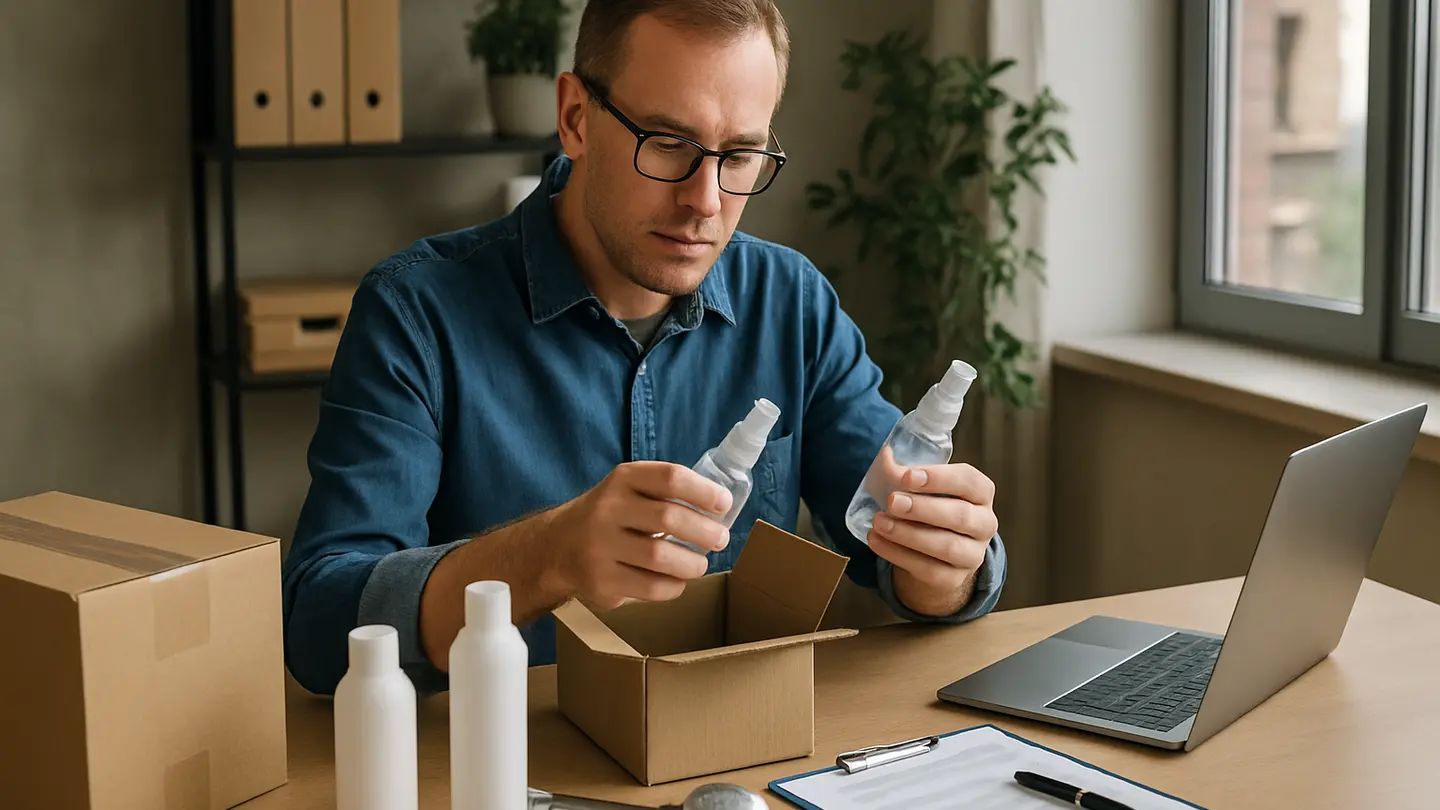
Absorbency should not be assessed only by a headline capacity figure. Buyers should evaluate performance in ways that reflect expected use, including:
- Fluid uptake
- Rewet performance, or how dry the surface remains after absorption
- Leakage resistance under pressure
- Fit and fastening security
- Edge leakage protection
- Material softness and skin-contact suitability
- Odor-control claims, where made
Latex content should be confirmed, especially for products with elastic components, fasteners, or coated materials. Product documentation and labeling should accurately reflect the materials used. Buyers should also review whether fragrances, dyes, lotions, or other added materials could affect market suitability for sensitive users.
Reusable products should be assessed against their stated wash-life claims. If a washable pad is marketed as suitable for repeated laundering, its absorbency, waterproof layer, stitching, shape retention, and fastening performance should be evaluated after the claimed wash cycles. A reusable product that performs well only when new can quickly generate complaints and replacement costs.
Freight is a major landed-cost issue for many incontinence items because they can be bulky relative to their weight. A low ex-factory price does not automatically create a profitable import. Buyers should compare carton dimensions, compression options, container utilization, warehouse costs, and fulfillment fees before committing to large volumes.
Common Quality Failures When Ordering Senior Care Products
Many sourcing problems occur because approved samples are treated as complete specifications. In reality, a sample only shows one version of a product at one point in time. If the purchase order does not define materials, dimensions, construction details, components, and performance expectations, production goods may differ from the approved sample.
Common failures include:
- Lower-grade foam substituted in cushions or seat pads
- Thinner metal tubing in frames or grab bars
- Lower-quality cables or chargers in powered products
- Weaker springs, brakes, fasteners, or wheel components
- Different plastic resin grades
- Reduced stitching quality in reusable textile products
- Altered battery capacity or electronic components
- Missing accessories, instructions, or installation hardware
These substitutions can affect more than appearance. Lower-grade foam may compress too quickly. Inferior cables may create safety or reliability concerns. Weaker fasteners may reduce the real-world safety margin of a bathroom or mobility product.
Purchase orders should define critical requirements in writing. Depending on the product, this can include material grades, dimensions, tolerances, color references, component specifications, load ratings, performance requirements, packaging details, and labeling rules.
Unapproved material substitutions should be treated as nonconforming deliveries. Buyers should also establish a change-control process: the supplier must request written approval before changing any safety-relevant material, component, production process, or design detail.
What to Confirm Before Paying a Supplier Deposit
A supplier deposit should follow technical and commercial verification, not replace it. Before committing funds, confirm regulatory classification and market-entry requirements separately for every destination market. A product suitable for one region may need different labels, electrical configurations, documentation, or conformity routes elsewhere.
Document the following before production begins:
| Area | What to confirm |
|---|---|
| Product specification | Materials, dimensions, colors, construction, accessories, packaging, and instructions |
| Safety and performance | Load ratings, stability, brake function, absorbency, accuracy, wash life, or other product-specific requirements |
| Compliance | Applicable market-entry requirements, product claims, labels, and supporting documentation |
| Quality control | Inspection points, defect limits, sampling plan, and functional test procedures |
| Change control | Written approval process for components, materials, factories, and design changes |
| Commercial fit | Landed cost, freight, duties, storage, channel fees, target margin, and return risk |
Functional inspections are essential. A cosmetic inspection can identify scratches, color variation, or poor packaging, but it may not reveal whether a rollator brake holds, a grab-bar fitting is secure, a thermometer operates correctly, or a reusable pad leaks after washing.
Supplier audits may be appropriate for higher-risk or larger-volume products. The goal is not simply to confirm that a supplier can make a good sample. It is to assess whether the approved quality can be reproduced at production scale through controlled materials, documented processes, trained workers, and reliable inspection.
Technical verification should also be paired with sales-channel fit. A product may be safe and well made but still be commercially unsuitable if it is too bulky for parcel shipping, difficult to explain online, vulnerable to high returns, or priced outside the expectations of the intended customer group.
FAQ
Q1: Can I list senior care products on a marketplace without extra approval?
Not always. Products marketed with medical, diagnostic, therapeutic, or health-monitoring claims may require additional marketplace approval or compliance documentation. Platforms may ask for test reports, registration details, labels, certificates, or other supporting information before allowing a listing to go live.
Check marketplace category rules before committing to inventory. This is particularly important for blood pressure monitors, pulse oximeters, thermometers, powered mobility products, and products making strong safety or medical claims.
Q2: Who is actually buying these products?
End users are important buyers, but adult children frequently purchase senior-care products for parents or relatives. Caregivers, home-care providers, pharmacies, clinics, and assisted-living organizations may also be relevant customer groups.
Listings should explain user suitability in clear practical language. Helpful information includes dimensions, weight limits, installation conditions, mobility requirements, care instructions, and what the product is designed to help with. Reassuring packaging and informative product photography can also support confidence, especially when the purchaser is buying on behalf of someone else.
Q3: What if the supplier cannot produce a usable test report?
Missing supplier reports do not remove the need for product-specific supporting evidence. If the product requires testing or validation for your destination market, consider commissioning testing through an independent qualified laboratory.
A supplier may have legitimate reasons for lacking a current report, such as a new design or an untested configuration. However, resistance to justified testing requests, refusal to disclose materials, or attempts to substitute generic documents for model-specific evidence are significant sourcing risks.
Q4: Do these products need different versions for the US and Europe?
They may. Powered and medically claimed products can require market-specific versions because plug types, labels, electrical obligations, documentation, and conformity routes may differ. Packaging and instructions may also need adaptation for language, warning statements, and regional requirements.
Simpler mechanical aids, such as basic reachers or shower stools, may sometimes use the same product build across markets. Even then, buyers should confirm destination requirements rather than assuming that one version is suitable everywhere.
Conclusion: Demand Must Be Matched With Evidence and Control
Senior care products from China can offer durable B2B opportunities because demand is linked to long-term demographic and care needs. However, demand alone is not a reason to bypass safety, compliance, or production-quality checks.
Weight ratings, absorbency figures, accuracy claims, wash-life statements, and accessibility claims should all be supported by product-specific evidence. Buyers should verify documentation, installation conditions, materials, performance requirements, and the consistency between approved samples and production goods.
The lowest unit price is rarely the best purchasing decision when a product supports mobility, bathroom safety, personal care, or health monitoring. A more reliable sourcing approach is to define requirements clearly, verify evidence before sale, inspect real performance, and maintain control over production changes.
About the Author
The author is a B2B sourcing and product-quality writer covering supplier evaluation, import risk, product compliance considerations, and practical purchasing requirements for consumer and care-related product categories.