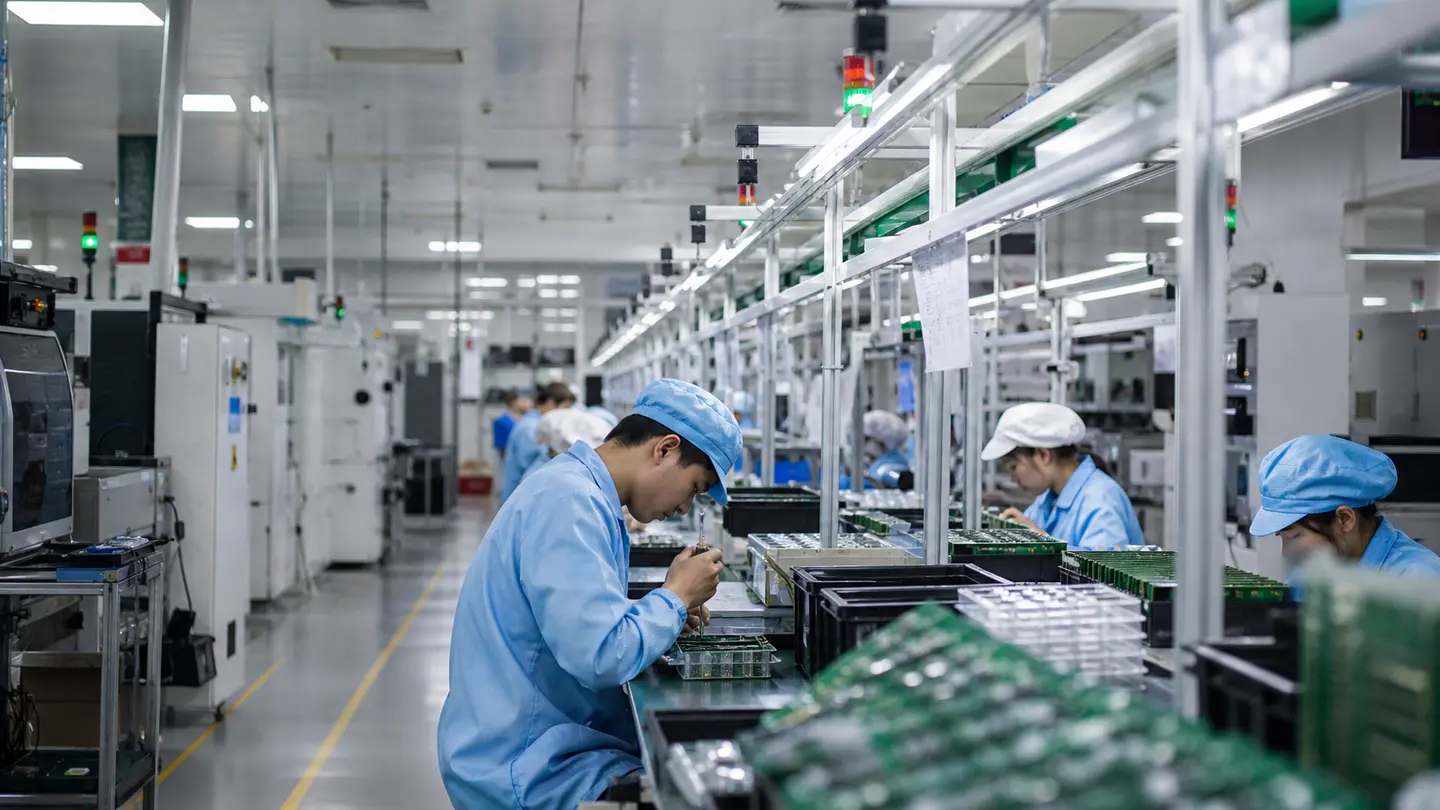
Shenzhen Electronics Manufacturing: Costs, Suppliers, and Key Risks
Shenzhen electronics manufacturing attracts buyers because the city and surrounding Pearl River Delta area bring component sellers, PCB specialists, tooling shops, contract manufacturers, packaging providers, and logistics services into a closely connected supply network. For businesses developing electronic shower controls, smart bathroom accessories, sensors, displays, wireless modules, or other connected products, this density can shorten the time needed to source parts, revise designs, and build samples.
However, fast access to suppliers does not remove the work required to make an electronic product production-ready. A low unit-price quotation may exclude engineering, prototype work, test fixtures, injection molds, certification testing, packaging development, and component minimum-order quantities. These expenses can arise before any sellable units are produced.
As an early planning range, engineering and sample development may cost approximately $2,000 to $15,000, depending on the product’s complexity, the number of design revisions, required firmware, enclosure design, and testing needs. A simple controller using established components may sit toward the lower end, while a custom connected device with a display, sensors, battery system, mobile-app integration, or waterproof housing can require substantially more development effort.
The main sourcing objective is therefore not simply to find the lowest quoted factory price. Buyers need to identify the right supplier type, clarify the full cost structure, control critical components, and establish quality and compliance requirements before production begins.
What Shenzhen’s Electronics Cluster Can Offer Buyers
Shenzhen’s primary advantage is proximity. Buyers can often access component markets, PCB fabrication, SMT assembly, cable assembly, plastic molding, metalwork, packaging, and final-product assembly through suppliers located within the same regional ecosystem. This can improve communication and response times when a component is unavailable, a PCB needs revision, or a prototype requires a mechanical adjustment.
For example, a product developer may need to change a connector, sensor, display module, or wireless chip after prototype testing. In a dense electronics cluster, the manufacturer may be able to identify alternatives, obtain samples, and evaluate fit more quickly than a factory located far from component distribution channels. This can be valuable for products with multiple electronic and mechanical interfaces, such as digital shower controllers or smart bathroom devices that combine PCBs, touch panels, valves, wiring harnesses, displays, and moisture-resistant enclosures.
That said, local availability does not guarantee that every component is suitable or authentic. A difficult-to-source chip, sensor, power-management IC, or wireless module can become the true bottleneck in a project. If the specified part has limited availability, a long procurement lead time, or uncertain supply, the entire production schedule may be delayed even if the assembly line is ready.
Open-market component sourcing also creates risks. Depending on the source and controls used, buyers may encounter counterfeit, salvaged, remarked, or otherwise unauthorized parts. Such components may function during initial testing but show inconsistent performance, shorter service life, or higher failure rates in the field.
To reduce this exposure, buyers should identify critical components early and define acceptable sourcing channels. For higher-risk or safety-relevant components, it is sensible to require traceability, approved manufacturer part numbers, and written approval before any substitution is made.
Understanding the Full Cost of Electronics Manufacturing in Shenzhen
A unit price is only one part of the cost of Shenzhen electronics manufacturing. Before comparing quotations, buyers should separate recurring production costs from non-recurring expenses.
Recurring costs are generally tied to each unit produced. They may include components, PCB assembly, labor, housing materials, final assembly, packaging, and routine testing. Non-recurring engineering and setup costs, by contrast, are paid for development or production preparation and may not be recoverable if the project is cancelled or moved to another supplier.
Common cost categories include:
| Cost category | Typical scope | Buyer consideration |
|---|---|---|
| Engineering | Schematics, PCB layout, firmware, mechanical design, bill of materials work | Confirm deliverables, revision limits, and ownership rights. |
| Prototype and sample builds | Initial samples, component purchases, hand assembly, sample testing | Expect multiple rounds if the design is not yet stable. |
| Tooling | Injection molds, stamping tools, molds for custom housings, jigs | Establish who owns the tooling and where it will be stored. |
| Production fixtures | Functional test jigs, programming fixtures, assembly aids | Define the test coverage and maintenance responsibility. |
| Compliance and testing | Product-specific testing, documentation, laboratory work | Plan requirements before tooling and shipment commitments. |
| Packaging development | Inserts, labels, cartons, protective materials | Include transport protection and regulatory labeling needs. |
Engineering work can cover several disciplines. Electrical engineering may include circuit schematics, component selection, power design, signal integrity considerations, and PCB layout. Firmware work may cover device logic, user-interface control, communication functions, error handling, and production programming. Mechanical design can include enclosure geometry, mounting features, seals, cable routing, button placement, and heat-management considerations.
For bathroom-related electronics, environmental conditions deserve particular attention. A device intended for humid or wet environments may require design decisions around sealing, corrosion resistance, condensation, connectors, strain relief, and the separation of low-voltage electronics from water-exposed interfaces. These requirements can affect both development cost and production testing.
Buyers should also ask whether each sample revision is included in the quoted engineering fee. A supplier may quote an initial prototype but charge separately for later PCB changes, updated firmware, modified housings, or new tooling. Similarly, molds, fixtures, and certification testing are often quoted as separate upfront items rather than included in the finished-product price.
A useful quotation review should therefore request:
- Unit pricing at stated order quantities.
- A complete bill of materials or at least a clear component-cost breakdown for critical items.
- Non-recurring engineering charges.
- Tooling and fixture charges.
- Sample quantities, revision allowances, and sample lead times.
- Testing scope and test-equipment requirements.
- Packaging, labeling, and shipping-related costs.
- Payment terms and conditions for component price changes or substitutions.
Four Types of Shenzhen Electronics Suppliers
Buyers commonly encounter four supplier types in Shenzhen. Each can be appropriate in the right situation, but they offer different levels of technical involvement and production control.
1. Assembly factories
An assembly factory typically focuses on manufacturing work such as PCB assembly, product assembly, testing, and packaging. These suppliers are often suitable when the buyer already has production-ready files, including schematics, Gerber files, PCB assembly drawings, bills of materials, firmware, test specifications, mechanical drawings, and approved samples.
The advantage is that the buyer can retain more control over the design and may compare manufacturing quotations across multiple factories. The limitation is that an assembly factory may not be responsible for solving incomplete design problems. If documentation is unclear or components are unavailable, delays and additional engineering charges can follow.
2. Design-and-manufacturing suppliers
Design-and-manufacturing suppliers can provide both engineering and production support. They may help create the schematic, PCB layout, firmware, enclosure, prototype, test fixture, and finished product. This option can be practical for buyers without a complete internal engineering team.
The trade-off is usually higher development cost and a greater need for contractual clarity. Buyers should define what files will be delivered, who owns the design, whether source code is included, and whether the supplier may reuse the work for other customers.
3. Trading companies
Trading companies may arrange sourcing, communication, quality coordination, and export without operating the manufacturing plant themselves. Some provide useful project-management support, especially for buyers who need help coordinating multiple suppliers. Others may add cost while offering limited technical visibility.
A trading company is not automatically unsuitable, but buyers should understand the relationship. Ask which factory will manufacture the product, who controls component purchasing, who performs quality checks, and whether direct factory access is possible.
4. Component dealers
Component dealers supply electronic parts rather than complete finished-product manufacturing services. They can be useful for sourcing individual components, especially when buyers manage their own production or need alternatives for obsolete parts. However, they should not be assumed to provide the same traceability, quality controls, or warranty structure as an authorized distribution channel.
The right supplier type depends on design maturity. A buyer with a validated design and technical documentation may only need a competent assembly factory. A buyer with a product concept, incomplete electronics, or limited internal engineering resources may need a design-and-manufacturing supplier, with stronger controls over cost, intellectual property, and technical deliverables.
How to Verify Whether a Supplier Is a Factory or Middleman
A supplier’s website, catalog, or sales presentation does not by itself confirm whether it operates a factory. Buyers should conduct practical verification before placing a substantial purchase order.
Start by asking detailed operational questions. A genuine manufacturer should normally be able to discuss its production lines, main equipment, testing process, capacity constraints, assembly sequence, and manufacturing limitations. For example, an electronics supplier should be able to explain whether it performs SMT assembly internally, what functional testing is conducted, how firmware is programmed, and how defective boards are handled.
Useful verification requests include:
- Factory address and operating-site address.
- Business license and legal-registration details.
- Equipment list for SMT, assembly, testing, and inspection.
- Production-line photographs or live video walkthroughs.
- Relevant quality-management or product-related certificates, where applicable.
- Sample inspection records and manufacturing process documentation.
- Details of subcontracted operations, such as molding, coating, or battery-pack assembly.
- Previous experience with similar production processes, without relying solely on customer logos or marketing claims.
A factory visit can provide useful evidence, but it is not the only option. Overseas buyers can use an independent audit provider or qualified local representative to verify the legal entity, operating address, production capability, quality controls, and actual relationship between the seller and the manufacturing site.
An audit should not be treated as a guarantee of future performance. It is a point-in-time review. Nevertheless, it can help detect basic mismatches between a supplier’s claims and its actual equipment, workforce, processes, or premises before a major order is released.
Common Failure Points in Shenzhen Electronics Orders
Many electronics orders fail not because production is impossible, but because specifications, sourcing controls, or compliance responsibilities were not defined early enough.
One common problem is unauthorized component substitution. A supplier may replace an unavailable or more expensive component with what it considers an equivalent alternative. The replacement may fit physically but differ in electrical performance, firmware compatibility, reliability, operating temperature, or long-term availability. In products that control water flow, heat, motors, sensors, or wireless communication, such differences may affect the final user experience or product safety.
Buyers should identify critical components in the purchase order and bill of materials. These may include microcontrollers, power supplies, sensors, relays, displays, wireless modules, connectors, batteries, and safety-related parts. The agreement should state that substitutions require written buyer approval before use.
Another issue is overreliance on generic test reports. A factory may present a report for a previous product or a similar component, but this does not necessarily demonstrate that the buyer’s specific model meets its required performance or compliance expectations. Product configuration, enclosure material, power input, firmware version, battery type, and intended market can all affect applicability.
Testing should be linked to the actual model and production configuration. Buyers should define what must be tested, what constitutes a pass or fail result, how results will be recorded, and how failed units will be segregated or repaired.
Lithium batteries introduce additional planning requirements. Battery-powered products can involve transport testing, packaging controls, labeling requirements, and carrier restrictions. These factors can affect whether a product can ship by air, sea, or courier and may require specific documentation before booking transport.
Battery planning should begin before tooling and mass-production scheduling. A late discovery that the intended battery, packaging, or shipment method does not meet carrier requirements can delay delivery and create costly rework. The same principle applies to other compliance needs: confirm target-market requirements while the design can still be changed economically.
FAQ
Q1. Do I have to be in Shenzhen to manufacture there?
No. Overseas buyers can manage Shenzhen electronics manufacturing remotely, particularly when specifications, drawings, and approval procedures are well organized. However, remote management should not mean uncontrolled production.
Use qualified local representation, independent inspections, or a pre-production visit when the project value or technical complexity justifies it. Evaluate samples from the same production line and process intended for mass production. A hand-built engineering sample may not accurately represent the quality, assembly consistency, or test coverage of a production run.
Q2. Is Shenzhen still cheaper than inland China for electronics?
Inland factories may offer lower direct labor costs in some cases. However, labor is only one element of total cost. Shenzhen may still be competitive when a product depends on numerous locally sourced components, frequent design revisions, specialist tooling, or fast logistics coordination.
The relevant comparison is total landed and project cost, not only hourly labor or quoted assembly price. Delays caused by component shortages, slow engineering changes, or repeated shipping between regions can outweigh a lower labor rate.
Q3. Will a Shenzhen factory take a small first order?
Some suppliers accept low-volume initial orders, especially for prototypes, pilot runs, or early-market testing. The unit price is usually higher because setup, programming, fixture use, line changeover, and quality-control effort are spread across fewer units.
Component minimum-order quantities can also increase the initial investment. A buyer may only need a few hundred finished units but still need to purchase larger quantities of certain components, displays, custom cables, or packaging materials.
Q4. Does the factory own the firmware it wrote for me?
Firmware ownership depends on the development agreement and intellectual-property terms. It should not be assumed that payment for development automatically gives the buyer unrestricted ownership or access to source code.
Before development begins, define the required deliverables, including source-code files, compiled firmware, documentation, version-control access, reuse rights, licensing terms, and ownership of modifications. The agreement should also clarify whether the supplier may reuse code, hardware designs, or product features for other customers.
Conclusion: Prepare for Production Before Chasing Shenzhen Speed
Shenzhen electronics manufacturing can support rapid development and sourcing, but speed is most valuable when the buyer has clear specifications and disciplined controls. A supplier cannot reliably manufacture what has not been defined, tested, and documented.
Before scaling to production, confirm the bill of materials, protect critical components from unauthorized substitution, define model-specific testing, and establish battery and shipping documentation where relevant. Clarify engineering deliverables, tooling ownership, firmware rights, and the division of responsibility for compliance work.
A well-prepared buyer can use Shenzhen’s supply-chain density to move efficiently from development to production. A poorly defined project, by contrast, can move quickly into expensive revisions, uncertain component choices, and avoidable delays.
About the Author
The author is a B2B manufacturing and sourcing writer focused on practical procurement topics, including supplier evaluation, product-development planning, quality control, and electronics supply-chain risk management.