SEG E-Market and SEG Communication Markets: A 2026 Buyer Guide
Huaqiangbei in Shenzhen remains one of China’s most active electronics sourcing districts for components, finished devices, accessories, repair parts, and small-batch product ideas. Within this district, the Shenzhen SEG Market is one of the names international buyers hear most often, but the term can be confusing because it is used for more than one market area.
Buyers usually need to distinguish between SEG E-Market, also known as SEG Electronics Market, and the nearby SEG Communication Markets, often called SEG COM. Both sit within the broader Huaqiangbei ecosystem, where trading booths, component shops, wholesalers, repair counters, accessory vendors, and sourcing agents operate side by side.
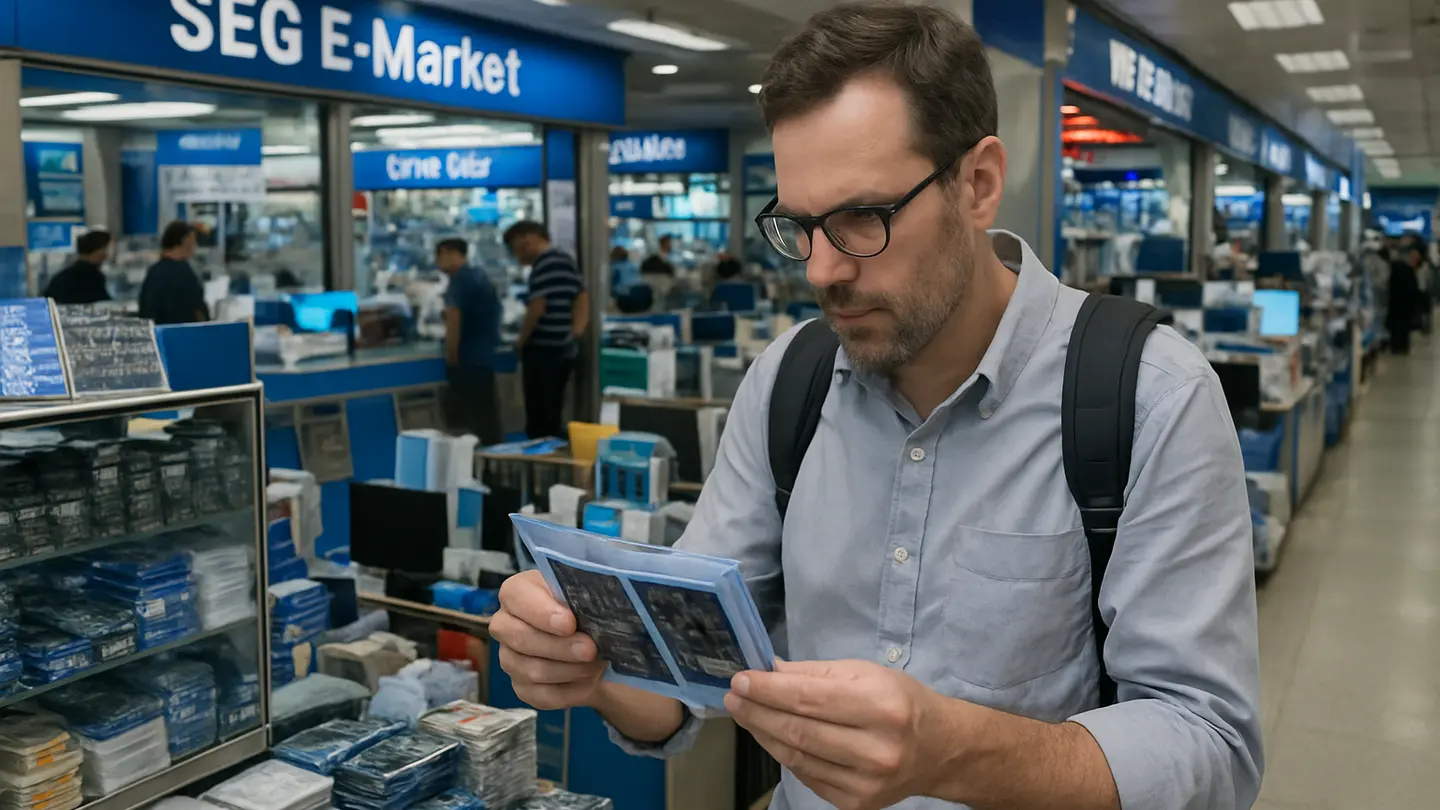
SEG E-Market is especially useful for components, chips, PCBs, modules, computer-related products, and niche electronics. SEG Communication Market is more strongly associated with mobile phone accessories, cases, screen protectors, wearables, and small gadgets.
This guide explains what the Shenzhen SEG Market includes, how the main SEG areas differ, which buyer profiles are most active there, and what precautions importers should take before placing orders.
What the Shenzhen SEG Market Includes
“Shenzhen SEG Market” is not always used with one precise meaning. It can refer broadly to the SEG electronics cluster around Huaqiang North Road, or more specifically to two related but different destinations:
| Market name | Common reference | Main sourcing focus | Best fit for buyers seeking |
|---|---|---|---|
| SEG Electronics Market | SEG E-Market | Electronic components, devices, PCBs, computer-related products, parts, niche electronics | Components, repair parts, prototype supplies, specialist electronics |
| SEG Communication Market | SEG COM | Mobile phone accessories, cases, screen protectors, smartwatches, small gadgets | Phone accessory wholesale, fast-moving consumer electronics accessories |
SEG Electronics Market occupies floors 1 through 10 of SEG Plaza. For many buyers, this is the core location associated with the Shenzhen SEG Market. Its product mix leans toward electronics products and components useful for engineering teams, repair businesses, traders, and product developers.
SEG Communication Market is nearby and more accessory-oriented. Buyers looking for mobile phone cases, tempered glass, charging accessories, smartwatch bands, earphones, and small consumer gadgets may find SEG COM more efficient than spending the whole day inside SEG Plaza.
In practice, serious buyers often visit both. SEG E-Market helps with technical parts and product discovery, while the communication markets are better for fast-moving accessories and visually driven consumer items. Because booths change and similar products appear in several buildings, it is best to treat the area as a sourcing cluster rather than a single market.
SEG Electronics Market: Components, Devices, and Niche Electronics
SEG Electronics Market, commonly called SEG E-Market, is located in SEG Plaza at 1002 Huaqiang North Road, Futian, Shenzhen. Typical opening hours are around 9:30 AM to 6:30 PM, though this can vary by booth, season, and local business conditions.
The market covers floors 1 through 10 of SEG Plaza and has long been associated with Huaqiangbei’s electronics trading culture. The product range can include:
- Electronic components and modules
- Chips, ICs, connectors, sensors, and LEDs
- PCBs and related assembly supplies
- Laptop parts and computer accessories
- Mobile phones and phone-related parts
- Dash cams and automotive electronics
- Cables, adapters, chargers, hubs, and peripherals
- Repair tools, testing equipment, and miscellaneous electronic accessories
For B2B buyers, the main value of SEG E-Market is concentration. A buyer looking for a connector, display module, adapter board, replacement component, or niche electronic part may be able to compare several booths quickly.
This is especially useful for:
- Engineering teams sourcing prototype samples
- Repair businesses looking for replacement parts
- Traders searching for small or mixed lots
- Importers testing new consumer electronics categories
- Buyers checking market availability before factory negotiations
SEG E-Market can also help when online product descriptions are insufficient. For components and technical parts, photos and catalog listings may not show markings, package condition, board layout, cable quality, connector fit, or packaging style. Seeing the item directly can speed up decisions.
That said, the market is not a substitute for supplier qualification. Some booths are traders, some may be connected to manufacturers, and some may specialize in surplus, replacement, or mixed-origin goods. For chips and components, buyers should be cautious about authenticity, date codes, storage condition, compatibility, and testing. If parts are for regulated, safety-critical, or high-reliability applications, market sourcing should be followed by strict inspection and traceability checks.
For finished electronics, SEG E-Market is best viewed as a discovery and sampling location. Buyers can identify trends, compare build quality, test functions, and ask about wholesale quantities, but they should still confirm warranty terms, export packaging, certifications, after-sales support, and production consistency before scaling up.
SEG Communication Market: Mobile Accessories and Small Gadgets
SEG Communication Market, often called SEG COM, is more focused on mobile accessories and small consumer electronics than SEG E-Market. Buyers come here for phone cases, screen protectors, smartwatch accessories, charging cables, compact gadgets, earphones, holders, and related wholesale items.
Phone cases and screen protectors are especially important. These products have short trend cycles and are closely tied to new smartphone releases. When major phone brands launch new models, accessory designs can appear quickly in Huaqiangbei because the district is supported by a dense Pearl River Delta manufacturing base. For wholesalers and retailers, this speed can be valuable when local demand changes before traditional import channels respond.
SEG Communication Market is commonly described as having four market areas. These are not always obvious to first-time visitors because they are part of a nearby cluster rather than one simple floor plan. Buyers should plan walking time, photograph entrances and booth numbers, and confirm the exact building name when collecting quotations.
Compared with SEG E-Market, SEG COM is more visual and retail-wholesale oriented. Buying often involves comparing designs, materials, packaging, color options, model compatibility, and unit pricing. For phone cases and screen protectors, details such as mold accuracy, edge finishing, coating, transparency, glue quality, packaging, and drop protection claims can matter to overseas customers.
Buyers should also distinguish between generic ready-stock goods and products offered with branding or packaging options. Some booths may support simple packaging customization, while others only sell available stock. For private-label orders, verify the supplier’s actual production relationship rather than assuming a booth is the factory.
SEGCOM Baohua Factory Market
SEGCOM Baohua Factory Market is located in Baohua Building Block B, next to SEG Plaza. Floors 1 through 4 are part of the SEG Communication Market area, making it a convenient stop for buyers moving between SEG E-Market and the accessory-focused SEG COM cluster.
Floors 3 and 4 are especially known for device cases and screen protectors. Buyers searching for these categories should compare styles, model coverage, packaging options, and stock availability. A single phone case design may be available in several grades, with differences in material thickness, texture, button feel, camera-ring protection, MagSafe compatibility, kickstand quality, or printed finish.
For screen protectors, buyers should not compare only the unit price. Important points include:
- Glass thickness and claimed hardness
- Edge curvature and phone model fit
- Transparency and touch sensitivity
- Oleophobic coating quality
- Adhesive performance
- Packaging and installation kit contents
- Breakage rate during transport
- Compatibility with phone cases
Because these categories move quickly, availability can change fast. If a buyer needs bulk supply for a specific new phone model, it is better to confirm lead time, supply-chain output capacity, carton packing details, and replacement policy for damaged goods.
Connected SEGCOM Buildings: Kangle, Industry, and Economic Areas
Baohua Building Block A connects with additional SEG communication market buildings. Nearby related buildings include SEG Kangle, the Industry Building, and the Economic Building. Together, these areas form part of the broader SEG communication market cluster around SEG Plaza.
These connected and nearby buildings contain phone accessory booths, gadget vendors, and wholesale counters. Product categories may overlap with Baohua Block B, but buyers can still find differences in price positioning, product freshness, packaging, and supplier flexibility.
For importers, the main challenge is organization. In a dense market cluster, it is easy to see similar products repeatedly and lose track of specifications and prices. A disciplined approach helps:
- Photograph the booth sign before photographing products
- Record the building name, floor, booth number, and contact person
- Ask whether the quoted price is for ready stock, mixed wholesale, or bulk production
- Confirm the minimum order quantity by model, color, and packaging type
- Keep separate notes for samples, quotations, and promising suppliers
The connected SEGCOM areas are useful for buyers who need to build an accessory assortment rather than source one product. A retailer, for example, may need phone cases, screen protectors, cables, chargers, power banks, earbuds, smartwatch straps, and display packaging. Walking several SEGCOM buildings provides a quick view of available price tiers.
Who Buys from SEG and Huaqiangbei Markets?
SEG and the broader Huaqiangbei market attract technology enthusiasts, electronics manufacturers, repair professionals, online sellers, regional wholesalers, retail chain buyers, sourcing agents, and entrepreneurs testing new product ideas.
Their goals vary by country, sales channel, and business model. A buyer supplying premium e-commerce customers in Germany will assess products differently from a wholesaler serving discount accessory shops in Southeast Asia. A repair-parts buyer will care about compatibility and defect rates, while a gadget reseller may care more about packaging, novelty, and speed to market.
The Shenzhen SEG Market is therefore not one uniform sourcing destination. Different buyer groups use the same buildings for different purposes.
Buyers from the United States and Europe
Buyers from the United States and Europe often prioritize functionality, reliability, compliance, and user experience rather than only the lowest price. The product must usually justify its price through performance, design, packaging, certifications, or differentiated features.
AI-related features are attractive in some consumer electronics categories. For example, AI-powered earbuds may cost more than regular models, but buyers may consider them if they offer useful features such as translation support, adaptive noise control, voice enhancement, or app-based functions. A higher price can be acceptable if the product has a clear sales story and performs consistently.
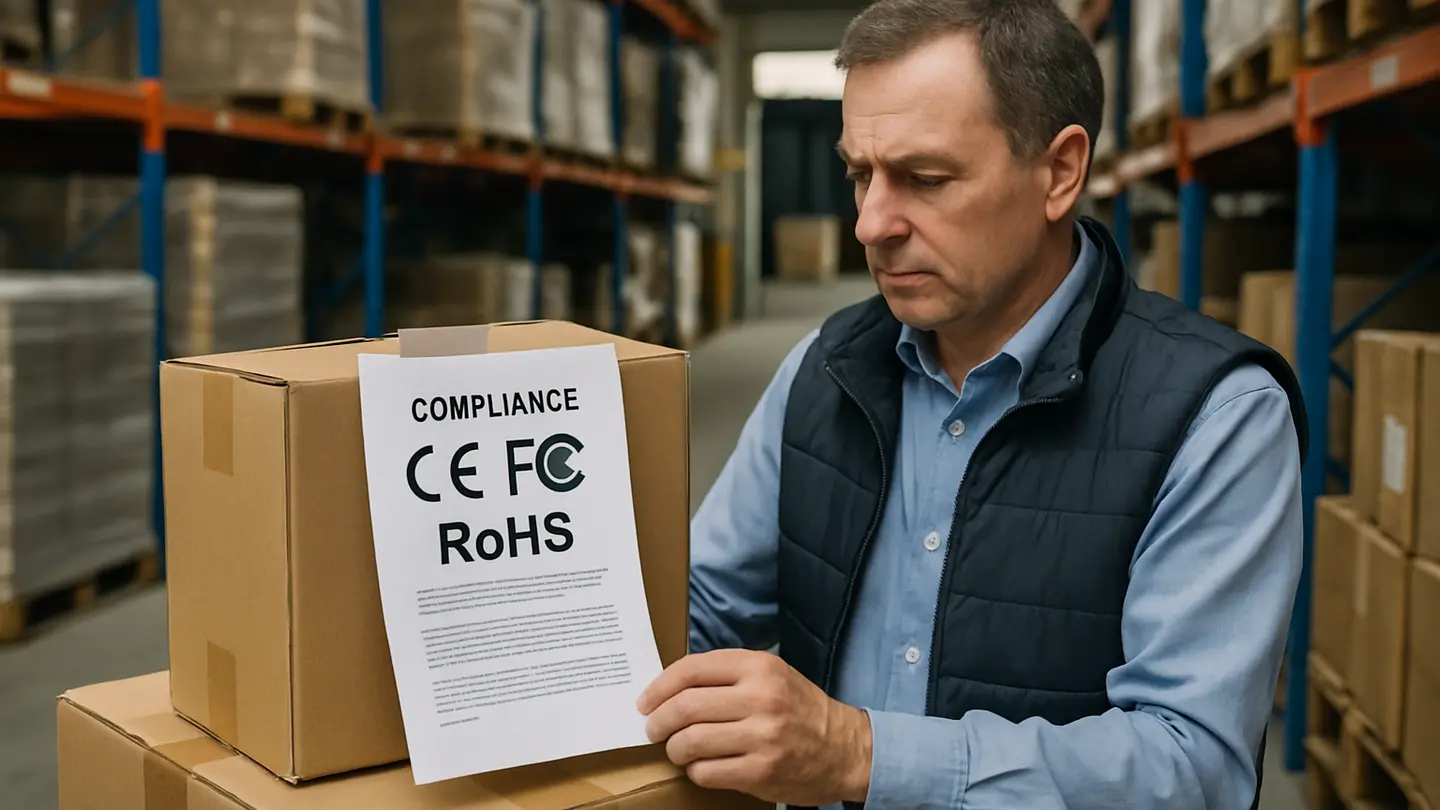
However, buyers in these markets should be strict about compliance. Depending on the product and destination, requirements may include CE, UKCA, FCC, RoHS, REACH, battery transport documentation, safety testing, or local labeling rules. Market vendors may provide certificates, but importers should verify that documents match the actual product model, manufacturer, and technical configuration.
For US and EU buyers, SEG is often best used for product discovery, sampling, trend research, and supplier introductions. Larger repeat orders should still go through structured quality control, contract terms, and pre-shipment inspection.
Wholesalers and Retailers from Emerging Markets
Buyers from emerging markets may be more price-sensitive, especially when serving open markets, electronics malls, street retail, and high-volume accessory channels. Their customers often compare similar-looking products quickly, so unit price, availability, and assortment depth can be decisive.
Thai electronics mall buyers, for example, may look for bulk quantities of affordable phone cases, screen protectors, cables, and small accessories that can be resold with quick turnover. In such cases, the buyer may prefer a broad SKU mix at competitive pricing rather than a narrow selection of premium goods.
Indian buyer interest in audio devices has also grown, including wired earphones, Bluetooth earbuds, portable speakers, microphones, and related accessories. Importers need to compare sound quality, battery claims, chipset stability, packaging, and after-sales risk. Audio products can look similar but perform very differently.
Middle Eastern buyers may source smart home chips, modules, and related electronic parts for assembly, repair, integration, or trading. For chips and modules, price matters, but so do compatibility, documentation, supply continuity, and authenticity.
For price-sensitive buyers, the biggest risk is assuming the cheapest booth is the best source. A very low quote may reflect lower-grade materials, mixed stock, weak packaging, limited warranty, or inconsistent follow-up. Buyers should compare both price and execution capability.
International Tourists and Small-Quantity Buyers
International tourists and small-quantity buyers also visit Huaqiangbei for personal electronics, souvenirs, repair parts, or small resale experiments. The district is attractive because it offers both components and finished electronics across varied order quantities.
A visitor may buy a few gadgets for personal use, while a small online seller may purchase samples to test local demand. Some booths sell small lots, especially for ready-stock accessories. Others quote wholesale prices only when the buyer reaches a certain quantity.
Huaqiangbei’s strength comes partly from its connection to the Pearl River Delta manufacturing ecosystem. Nearby factories, workshops, packaging suppliers, mold makers, logistics companies, and trading firms allow new accessories and electronic products to move quickly from design to market. This is why new phone accessories can appear soon after major smartphone launches.
Small-quantity buyers should still be careful. A product that works during a quick booth demonstration may not perform reliably after repeated use. Accessories may fit one phone model but not another regional version. Chargers, batteries, and wireless products may require certifications that are not obvious at the point of purchase. Buyers should keep receipts, supplier contacts, and clear product photos.
Practical Precautions When Sourcing in SEG Market
The Shenzhen SEG Market is efficient, but it rewards preparation. Buyers who arrive without a product brief or quality standard can be overwhelmed by similar booths, inconsistent terminology, and fast negotiations.
Before choosing suppliers or products, compare several booths. For the same product, ask multiple sellers about price, minimum order quantity, available stock, packaging, lead time, warranty, and customization. Differences in answers reveal which booths understand the product and which are simply reselling.
Check product appearance and performance carefully, especially for components and chips. For finished products, inspect materials, assembly, ports, buttons, screens, cables, labels, manuals, and packaging. Test core functions where possible. For components, check markings, packaging condition, storage method, part numbers, and compatibility information. If the component is critical, arrange professional testing before committing to volume.
Take photos of relevant booths and products for later follow-up. A useful photo set should include the booth sign, business card or WeChat contact, product close-ups, packaging, quoted specification, and any written price details.
Importers should confirm required electronics certifications in their target markets before ordering, especially for products with batteries, wireless functions, chargers, power supplies, LEDs, children’s use cases, or direct contact with the body. Do not rely only on verbal statements. Request documents, check model numbers, and confirm whether the certificate applies to the exact product being purchased.
Communication also affects sourcing results. Some vendors may speak basic English, but technical details, quality expectations, packaging requirements, and after-sales terms are easier to manage with clear translation support. Translators, translation tools, or local sourcing agents can help with booth communication, negotiation, sample collection, supplier follow-up, quality control, and logistics.
For professional buyers, the best approach is to treat SEG and Huaqiangbei as a fast discovery and validation environment. Use the market to see what is available, compare suppliers, collect samples, and understand price levels. Then apply standard import discipline: verify the supplier, confirm specifications in writing, test samples, check certifications, agree on inspection criteria, and control shipment details before scaling orders.