Most international shipments depend on two core records: a commercial invoice and a transport document. The invoice tells customs what was sold, to whom, for how much, and under what trade terms. The transport document shows that a carrier or logistics provider received the goods for movement.
For B2B importers, the main risk is that shipping documents are issued by different parties at different times. The supplier prepares some documents. The carrier or freight forwarder issues others. Chambers of commerce, testing bodies, government agencies, or certification organizations may issue additional records depending on the product and destination.
That creates room for mismatches. A supplier may use one product description on the invoice and another on the packing list. A forwarder may book the shipment under a consignee name that does not match the importer’s customs registration. If the details conflict, goods can be delayed, inspected, amended at extra cost, or refused entry.
What the Main Shipping Documents Are Used For
A complete document set depends on the shipment, but most importers encounter the same core documents repeatedly.
| Document | Main purpose | Common issuer |
|---|---|---|
| Commercial invoice | Customs valuation, duty calculation, transaction record | Supplier/exporter |
| Packing list | Carton-level contents, weights, dimensions, shipping marks | Supplier/exporter |
| Bill of lading, sea waybill, air waybill, or courier waybill | Carrier receipt and transport record | Carrier or freight forwarder |
| Certificate or proof of origin | Confirms country of origin for duty treatment or import rules | Supplier, chamber of commerce, or approved authority |
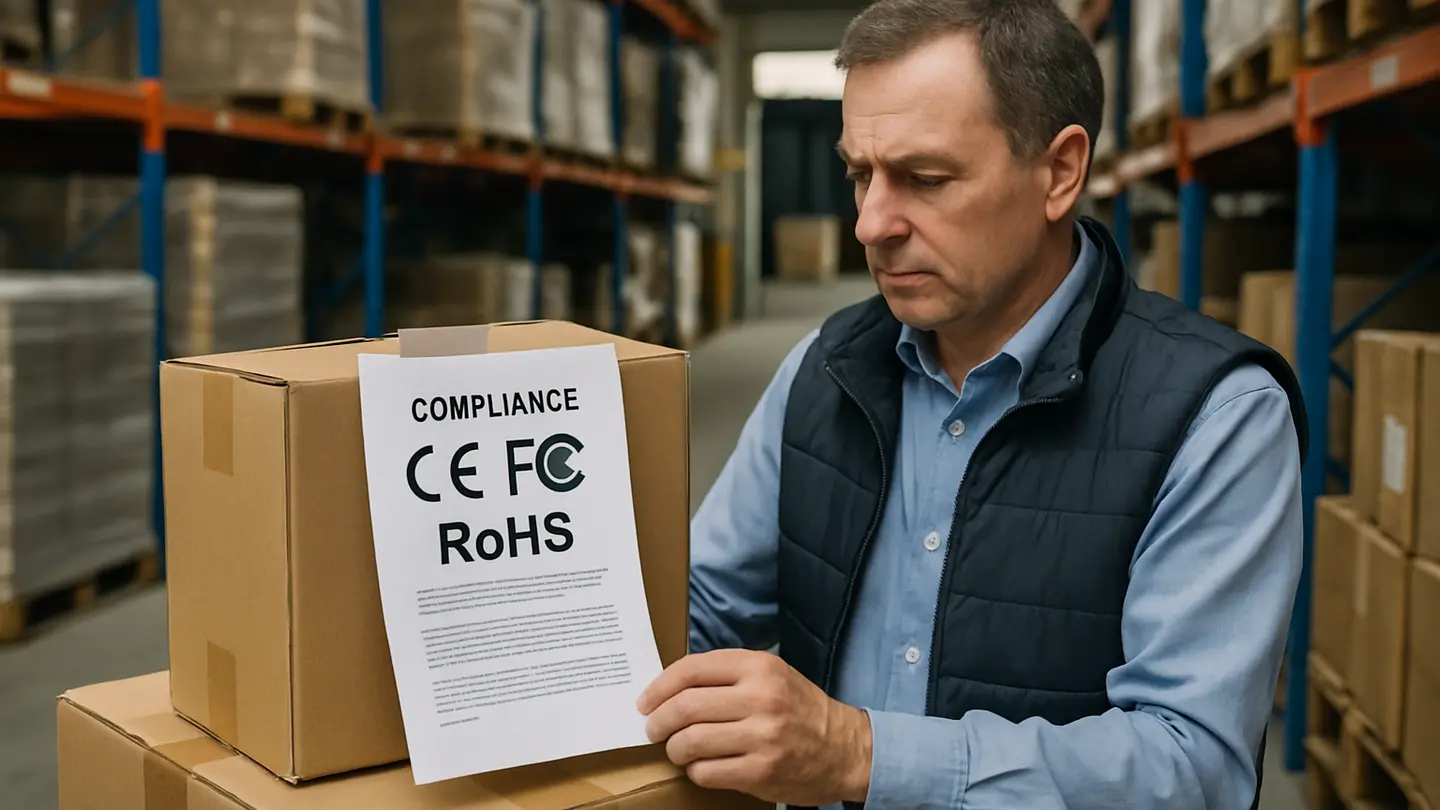
| Product compliance documents | Shows product meets destination-market requirements | Testing lab, certification body, manufacturer, or supplier |
| Insurance certificate, where applicable | Evidence of cargo insurance coverage | Insurer, broker, or forwarder |
The commercial invoice is the central document for customs valuation. It normally shows the seller, buyer, consignee if different, product description, quantity, unit price, total value, currency, Incoterms, country of origin, and sometimes HS code or tariff classification.
The packing list supports the physical side of the shipment. It identifies packages, item quantities, net and gross weights, dimensions, and shipping marks. For mixed containers, it helps warehouses, inspectors, and receiving teams understand what is inside each package.
The transport document depends on the shipping mode. Ocean shipments may use an original bill of lading, a telex release, or a sea waybill. Air shipments use an air waybill. Courier parcels use a courier waybill. These records provide transport data such as shipper, consignee, notify party, vessel or flight details, ports, package count, and gross weight. An ocean bill of lading may also function as a document of title.
Proof of origin can affect duty rates and eligibility for preferential treatment under trade agreements. It may be a certificate of origin, a supplier declaration, or a preferential origin statement using prescribed wording.
Product compliance documents vary widely. For bathroom and shower products, these might include test reports, water-efficiency documentation, material declarations, plumbing approvals, safety certificates, or market-specific conformity records. Requirements depend on the destination country, product function, materials, installation environment, and regulatory category.
Who Issues Each Document and When Buyers Should Request It
Suppliers usually prepare the commercial invoice and packing list because they know what was produced, packed, sold, and loaded. Still, importers should not leave the wording entirely to the supplier.
The purchase order should specify documentation requirements before production or at least before shipment, including:
- Exact product descriptions for the invoice and packing list
- Model numbers, SKU references, or buyer item codes
- Quantity units, such as pieces, sets, cartons, or square meters
- Country-of-origin wording
- Currency and agreed value basis
- Incoterms and named place
- Certificate requirements
- Consignee, importer of record, and notify party details
- HS code handling process
- Special wording needed for customs, banks, or trade agreement claims
This matters when the factory’s internal product name differs from the buyer’s customs description. A supplier may call an item “bathroom accessory,” while customs may need “chrome-plated brass shower mixer valve.” Vague wording increases the chance of customs questions.
A proforma invoice is not the same as a commercial invoice. The proforma invoice is generally a quotation or pre-shipment document used for buyer approval, payment arrangement, or import permit application. The commercial invoice is the final transaction document used for customs clearance after the goods are sold and shipped.
Transport documents are issued by the carrier or by a freight forwarder acting as a logistics intermediary. They are created after the carrier or forwarder has accepted the goods or confirmed shipment details. Buyers should review the draft bill of lading or waybill before final issuance, especially for consignee, notify party, port, cargo description, package count, and release terms.
Compliance documents should be ready before shipment. Importers should not wait until the vessel has sailed to ask for test reports, certificates, origin statements, or regulated product declarations. If customs or a market authority requires a document at import, its absence can stop the shipment even if the invoice and bill of lading are correct.
Where Shipping Document Sets Commonly Break Down
Customs does not read each document as an isolated form. The document set is treated as one connected record of the transaction and movement of goods. When one document answers a question differently from another, clearance becomes harder.
Common mismatch points include:
- Product descriptions
- Item quantities
- Carton or package counts
- Net weight and gross weight
- Dimensions and volume
- Shipping marks
- Buyer, seller, consignee, and notify party names
- Addresses and tax or customs registration numbers
- Country of origin
- HS codes or product classifications
- Invoice numbers and purchase order references
Some inconsistencies are minor and easy to explain. Others can change the duty rate, trigger a licensing requirement, or raise suspicion about valuation or origin.
HS code inconsistencies deserve particular attention. Suppliers often provide a classification based on export experience, but the importer is usually responsible for correct classification in the destination country. A code used for export from one country may not be right for import into another. Even where the first six digits of the Harmonized System are shared internationally, national tariff schedules add further digits and rules.
Importers should not automatically rely on a supplier’s previous classification. The supplier may have shipped to a different country, used a broad category, or classified the goods for export declaration rather than import duty assessment. For technical products, assemblies, plumbing fixtures, electrical shower components, or mixed kits, classification should be checked with a customs broker or qualified trade professional before shipment.
Breakdowns also happen when the commercial arrangement changes but the paperwork does not. The buyer may change importing entities, but the supplier uses an old invoice template. A shipment may be split into two containers, while the packing list still reflects one consolidated shipment. These errors can delay customs release, bank document presentation, and warehouse receiving.
The Details That Should Match Across the File
The goal is not to make every number identical across all shipping documents. Different documents measure different things. The goal is to ensure the same facts are consistent and different figures can be logically reconciled.
The commercial invoice and packing list should align on the basic transaction details:
- Seller and buyer
- Invoice number and date
- Purchase order number, if applicable
- Product descriptions
- Item codes or model numbers
- Quantity by product
- Unit of measure
- Total shipment quantity
The packing list and transport document should align on the physical shipment details:
- Number of cartons, pallets, crates, or packages
- Gross weight
- Container number, where applicable
- Seal number, where applicable
- Shipping marks
- Port or place of loading
- Port or place of discharge
- Consignee and notify party details
Weight figures require careful comparison. Net weight, gross weight, chargeable weight, volumetric weight, and verified gross mass are not the same thing. A packing list may show net product weight and gross packed weight. An air waybill may show chargeable weight. An ocean shipment may include verified gross mass for container safety purposes. Buyers should compare like with like.
The commercial invoice is usually the main place for value, currency, origin, and classification details. It should clearly state the transaction value, currency, and agreed Incoterms because customs valuation may depend on whether freight, insurance, and other charges are included or excluded. For example, if the purchase order says FOB Shanghai but the invoice says CIF destination port, the customs broker may need clarification before filing the entry.
A practical pre-shipment review should check at least the following:
- Does the product description make sense for customs and match the purchased goods?
- Do invoice quantities match the packing list?
- Do carton counts and gross weight match the draft bill of lading or waybill?
- Are the buyer, consignee, importer of record, and notify party correct?
- Are invoice value, currency, and Incoterms consistent with the order?
- Is the country of origin stated consistently?
- Are required certificates already available?
- Has the customs broker reviewed classification if there is uncertainty?
This review should happen before goods ship. Once cargo is moving, amendments become slower and more expensive.
What to Do If a Document Error Is Found
The first step is to identify which document is wrong and whether the shipment has already departed.
Commercial invoice and packing list errors are often easier to correct because the supplier controls those documents. If the invoice has the wrong product description, missing purchase order number, or incorrect carton breakdown, the supplier can usually issue a corrected version. The freight forwarder and customs broker should be told which version is final.
Transport document errors can be more difficult because a bill of lading or air waybill is tied to carrier systems and cargo movement records. If a consignee name, notify party, package count, port, or release instruction is wrong, the forwarder should be notified immediately. Corrections before vessel arrival are usually less disruptive than corrections after arrival.
Bill of lading amendments are slower because the carrier must approve and process the change. Depending on the carrier and document type, amendments may involve fees, written authorization, shipper approval, or return of original bills of lading before a revised set is issued. If originals have already been couriered to a bank, buyer, or seller, retrieving them can delay release.
Errors discovered at the port stage can create storage, demurrage, detention, customs examination fees, amendment fees, courier charges, broker rework charges, and receiving delays. For time-sensitive projects, the operational cost of late paperwork can exceed the direct amendment fee.
If an error affects customs value, origin, classification, or admissibility, involve the customs broker before submitting or amending the entry. Trying to “make the documents match” without addressing the legal issue can create compliance risk. The correction should reflect the true transaction and product facts.
FAQ
Q1: How do I make sure the supplier prepares these correctly?
Put documentation requirements directly into the purchase order instead of treating them as an afterthought. The supplier should know the required product descriptions, item codes, values, currency, Incoterms, certificate requirements, consignee details, and special wording before shipment.
For repeat orders, provide a document template or previously approved sample. For new products, ask the customs broker or import compliance team to approve the description and classification approach before the supplier issues final documents.
Request draft copies of the commercial invoice, packing list, and draft transport instructions before the goods leave the factory or port. Correcting a draft is usually cheaper than amending a customs declaration, revising a bill of lading, or explaining conflicting paperwork after arrival.
Q2: Do I need paper originals, or are scans enough?
Many customs authorities and brokers now work with electronic copies for routine clearance. Scanned commercial invoices, packing lists, certificates, and waybills may be sufficient for many shipments.
However, original paper documents are still required in some situations. This can depend on the destination country, carrier, type of bill of lading, bank payment terms, certificate format, or trade agreement requirement. Certain certificates of origin, legalized documents, or negotiable ocean bills of lading may still need originals.
Confirm original-document requirements with the freight forwarder and customs broker before shipment. If originals are needed, agree who will issue them, who will hold them, how they will be couriered, and what happens if payment is delayed.
Q3: Who holds the original bill of lading until I pay?
This should be defined in the payment terms and order documentation. In some transactions, the supplier holds the original bill of lading until payment is received. In others, documents are handled through a bank under a letter of credit or documentary collection. For trusted trading relationships, a sea waybill or telex release may be used instead.
The key point is that cargo-control arrangements should not be vague. If an original bill of lading is required for cargo release, the parties need to know who controls it, when it will be released, and what conditions must be met.
Improper release without the required original can create serious cargo-control risk. Buyers and sellers should align payment terms, document release terms, and freight instructions before the shipment is booked.
Q4: Do these apply to a small courier shipment or a sample?
Yes, but the document set is usually simpler. Cross-border samples and courier shipments generally still need a commercial invoice. The invoice should describe the goods accurately and show a realistic value, even if the goods are samples, free of charge, or not intended for resale.
Descriptions such as “sample,” “gift,” or “parts” are often too vague on their own. A better description would identify the actual item, such as “stainless steel shower hose sample” or “plastic shower head sample for evaluation.”
A full packing list is more common for freight shipments, especially multi-carton or palletized cargo. Courier parcels may only require basic package information through the courier system. Ocean bills of lading do not apply to courier shipments; the courier waybill serves as the transport record.
Final Takeaways for Avoiding Shipping Document Delays
Shipping documents describe the sale, movement, origin, and admissibility of imported goods. The commercial invoice answers what was sold and for how much. The packing list explains how the goods are packed. The transport document confirms how cargo is moving and who receives it. Origin and compliance documents support duty treatment and market entry.
Shipments stall when these documents answer the same question inconsistently. A different quantity, vague product description, wrong consignee, inconsistent origin statement, or unsupported HS code can turn routine clearance into a delay.
The commercial invoice is the best place to start. If it is accurate, specific, and aligned with the purchase order, the rest of the document set is easier to control. From there, importers should check the packing list, transport document, origin proof, and compliance records as a connected file.
The most effective habit is simple: review the documents before the goods ship. Once cargo is moving, every correction becomes more urgent, expensive, and dependent on outside parties.