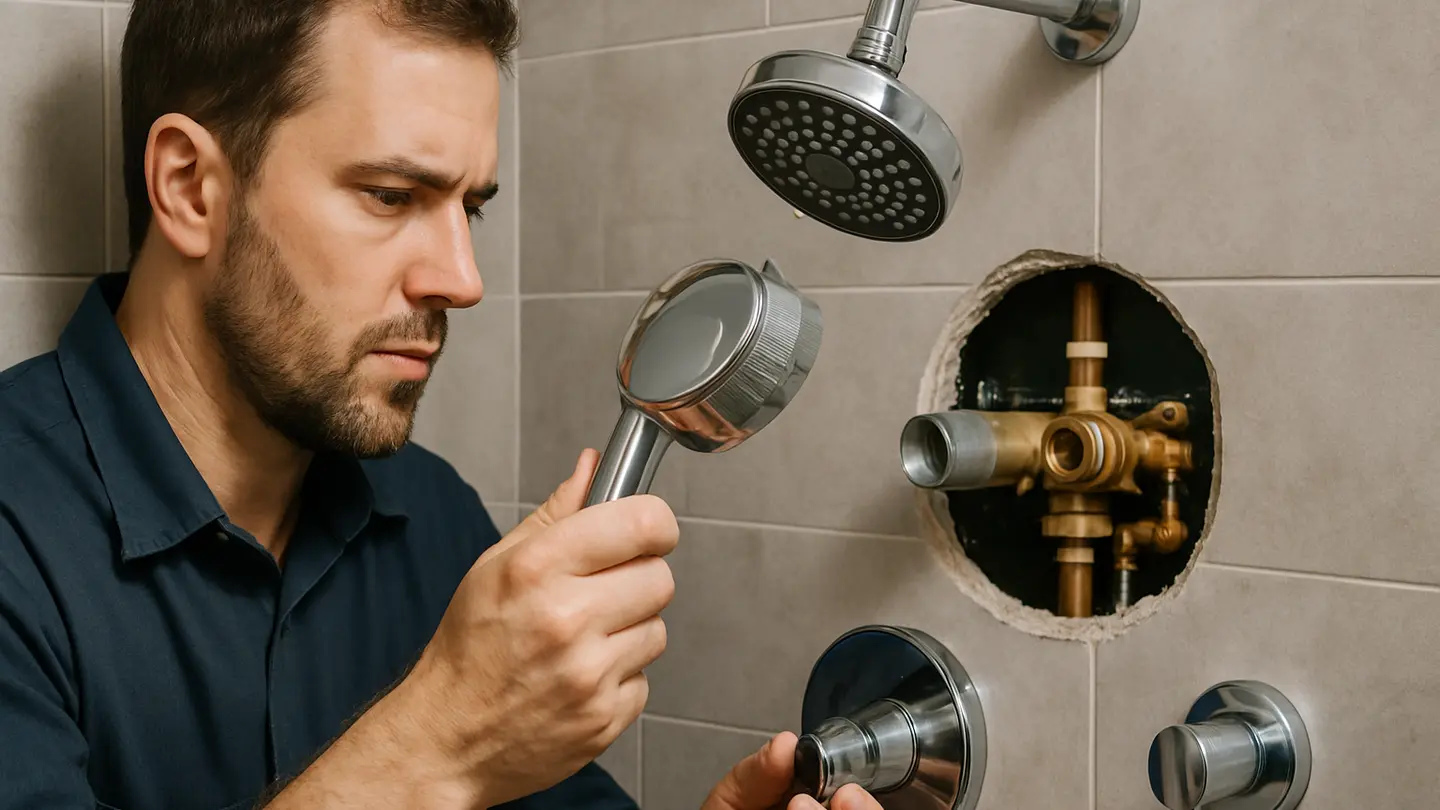
A shower faucet assembly does more than deliver water from the wall. It converts plumbing flow into a controlled spray using visible parts, internal channels, flow-control elements, and sometimes filtration or thermostatic temperature regulation. For B2B buyers, understanding shower faucet anatomy supports better product selection, supplier discussions, maintenance planning, and fewer post-installation complaints.
In hospitality, multifamily housing, residential development, retail distribution, and renovation projects, the right showerhead can influence perceived bathroom quality, water consumption, cleaning workload, and replacement costs. This guide explains the main components, cleaning needs, and procurement criteria buyers should evaluate before choosing a showerhead or building a product line.
Visible Showerhead Components and Their Role in Spray Performance
The external components of a showerhead are the parts users see, touch, adjust, and clean. They shape first impressions and affect spray direction, water distribution, coverage, and durability.
A rain showerhead may prioritize broad coverage and a soft droplet feel. A compact wall-mounted model for rental housing may prioritize durability and easy cleaning. A hand shower may require more focus on ergonomics, hose quality, and adjustability.
Faceplate: Where Water Distribution Begins
The faceplate is the front surface where water exits. Its diameter, shape, and nozzle layout determine how water is distributed over the user.
A wide, flat faceplate with many outlets is often used for rain-style sprays. A smaller faceplate with concentrated outlets typically produces a more direct standard spray. Some designs combine nozzle zones for rain, mist, jet, or massage-style settings.
Common faceplate materials include:
- Chrome-plated brass, often used where a heavier, premium feel is desired.
- Stainless steel, valued for corrosion resistance and a modern appearance.
- ABS plastic, widely used in cost-sensitive or lightweight showerheads and often finished with decorative coatings.
For procurement teams, faceplate evaluation should include spray coverage, resistance to deformation, finish consistency, and ease of cleaning.
Nozzles: How Individual Streams Are Shaped
Nozzles direct and shape individual streams of water. Their number, size, spacing, angle, and material affect spray feel.
Silicone or rubber nozzles are common because they can help resist mineral buildup and simplify cleaning. Users or maintenance staff can often rub the nozzle tips by hand to loosen deposits, which is useful in hard-water regions where scale can distort spray and reduce flow.
| Nozzle design | Typical spray effect | Common application |
|---|---|---|
| Fewer, larger nozzles | Stronger, more targeted streams | Standard or massage-style sprays |
| Many small nozzles | Softer, rain-like coverage | Rain showerheads and comfort-focused bathrooms |
| Mixed nozzle zones | Multiple spray modes | Retail lines and upgrade models |
| Angled nozzles | Wider or directional coverage | Compact showers or adjustable spray patterns |
For B2B buyers, nozzle quality should be tested under realistic water pressure. A showerhead that performs well in a showroom may behave differently in older buildings, high-rise plumbing systems, or low-pressure installations.
Swivel Ball Joint: Adjusting the Spray Angle
Some showerheads connect to the shower arm through a swivel ball joint. This joint allows the head to tilt or rotate, helping users aim the spray.
Adjustability is useful in hotels, rental apartments, student housing, and family residences where users and shower layouts vary. In smaller enclosures, a swivel joint can also help prevent water from spraying toward the door or curtain.
The ball joint is also a potential leak point if poorly machined, incorrectly installed, or not sealed properly. Buyers should check adjustment smoothness, whether the joint holds position under water pressure, and whether instructions specify sealing requirements.
Shower Arm and Flange: Support, Reach, and Finish
The shower arm is the pipe or support piece that extends from the wall and holds the showerhead. Its length and angle influence where the spray falls and how much usable space remains inside the shower area.
A short arm may suit compact fixed showerheads but may not position a large rain showerhead far enough from the wall. A longer arm can improve coverage but may require stronger support and careful installation. Ceiling-mounted rain showers use a different arm or drop pipe configuration and should be matched to the plumbing layout early.
The flange, or escutcheon, covers the wall opening around the shower arm. It does not control spray, but it affects the finished appearance and can conceal rough-in variations.
Common finish options include chrome, brushed nickel, matte black, and oil-rubbed bronze. For commercial or multi-unit projects, finish consistency matters across the showerhead, arm, flange, valve trim, towel bars, and other accessories. Buyers should confirm whether visible components are supplied as a coordinated set or sourced separately.
Internal Showerhead Parts That Control Flow and Function
Internal components often determine whether a showerhead performs consistently over time. These parts control how water enters the head, how it is distributed to the nozzles, whether flow is limited, and whether functions such as filtration or thermostatic control are included.
For B2B procurement, internal design should be reviewed through specification sheets, sample disassembly when possible, supplier technical drawings, and performance testing. An attractive product may still underperform if channels are poorly designed or sealing components are weak.
Flow Restrictor: Managing Water Volume
A flow restrictor limits the volume of water passing through the showerhead. Its primary role is to reduce water consumption, which can lower utility costs and support efficiency targets.
Flow restrictors are especially relevant in markets with water-efficiency regulations or voluntary green-building requirements. Buyers should confirm the rated flow rate, test conditions, and compliance requirements in the destination market.
The tradeoff is perceived pressure. In buildings with low supply pressure, a restrictive design may produce a weak shower experience. Some showerheads maintain a satisfying spray while using less water, but this depends on nozzle design, internal channels, and aeration or pressure-compensating features.
Removing or altering a flow restrictor can increase water use and operating costs. It may also affect compliance, warranty coverage, or performance. Buyers should specify the correct flow rate and spray design at the sourcing stage rather than modifying products after purchase.
Filter Elements: Reducing Sediment and Selected Impurities
Some showerheads include filter elements intended to reduce sediment or selected water impurities. These filters may be built into the body, installed between the shower arm and head, or integrated into a hand shower handle.
Common filter media can include:
- Mesh screens for trapping larger particles and sediment.
- KDF-55 media in some filter cartridges.
- Activated carbon in selected filtration designs.
Filtered water may feel cleaner or gentler for skin and hair, especially in areas with sediment, odor, or water quality concerns. However, buyers should be cautious with claims. Filtration performance depends on media, contact time, cartridge size, flow rate, and the specific impurities being targeted.
Filters also create maintenance obligations. Cartridges require cleaning or replacement according to manufacturer instructions. For hotels, gyms, and multifamily properties, replacement intervals, spare cartridge availability, and maintenance labor should be included in total cost of ownership.
Internal Water Channels: Routing Flow to the Nozzles
Internal water channels guide water from the inlet to the nozzle outlets. Their design affects spray pattern, balance, and consistency. A good channel system distributes water evenly across the faceplate, helping prevent some nozzles from spraying strongly while others underperform.
Different spray modes require different routing. Massage sprays may vary pressure or pulse water through selected outlets. Rain sprays require even distribution across many nozzles. Multi-function showerheads rely on diverter mechanisms or rotating plates to redirect flow between spray zones.
Internal channel quality is difficult to judge from photos. Sample testing should evaluate spray uniformity, pressure feel, mode-switching smoothness, noise level, and performance after repeated use. In hard-water regions, consider whether the design may trap mineral deposits.
Thermostatic Mixing Chamber: Supporting Stable Water Temperature
In broader shower faucet anatomy, thermostatic components regulate the balance of hot and cold water to help maintain a preset outlet temperature. Depending on the product type, this function may be located in the thermostatic mixing valve rather than inside the showerhead itself, but it remains important when specifying a complete shower system.
A thermostatic mixing valve responds to changes in water temperature and pressure, adjusting the hot-cold balance to reduce sudden temperature swings. This can improve comfort and safety where multiple fixtures may be used at the same time.
Anti-scald performance is valuable in installations used by children, older adults, healthcare users, or safety-conscious households. For B2B projects, buyers should confirm applicable safety standards, temperature adjustment range, maximum temperature stop, and plumbing compatibility. Thermostatic systems may cost more than basic pressure-balance or manual systems, but they can add value in higher-spec projects.
Cleaning and Maintenance for Consistent Showerhead Performance
Regular maintenance helps preserve performance and extend service life. Even a well-designed showerhead can develop clogged nozzles, uneven spray, or reduced pressure if mineral deposits accumulate.
Maintenance requirements should be part of the buying decision. A product that is difficult to clean may increase labor costs in hotels, rental portfolios, gyms, and public facilities. Buyers should consider whether the faceplate is easy to wipe, nozzles are flexible, filters are accessible, and replacement parts are available.
Routine Cleaning for Mineral Deposits
Hard water contains minerals that can form limescale on the faceplate, nozzles, and internal passages. Over time, limescale can narrow openings, redirect spray, and reduce perceived water pressure.
White vinegar soaking is a common method for dissolving mineral deposits. For fixed showerheads, maintenance staff often secure a plastic bag filled with vinegar around the faceplate for a limited soaking period. Removable heads can sometimes be detached and soaked separately. After soaking, the nozzles should be rinsed and wiped clean.
Commercial limescale removers may also be used, but only according to label directions and manufacturer recommendations. Some chemicals can damage finishes, seals, or plastic components if too strong or left in contact too long.
For light cleaning, a baking soda paste can be used as a gentle option on compatible surfaces. It should be applied carefully and rinsed thoroughly.
Cleaning Guidance by Showerhead Type and Finish
Cleaning methods should match the model and finish. Chrome, brushed nickel, matte black, oil-rubbed bronze, stainless steel, and plated plastic can respond differently to chemicals and abrasion.
Manufacturer cleaning instructions should guide maintenance teams, especially for decorative finishes, coated surfaces, silicone nozzles, and integrated filters. Abrasive powders, rough scouring pads, steel wool, and harsh chemicals may scratch or discolor certain finishes.
For B2B buyers, written cleaning guidance is useful during supplier evaluation. In commercial settings, it can be incorporated into housekeeping or facility maintenance procedures and reduce the risk of finish damage.
Practical Ways to Limit Limescale Buildup
Preventive maintenance can reduce cleaning frequency and extend product life. Simple practices include wiping the faceplate after use, especially in hard-water areas. Removing standing water from the nozzle surface reduces residue as water evaporates.
Flexible rubber or silicone nozzles can often be rubbed by hand to loosen early mineral deposits before they become severe. This makes them practical for high-use environments where quick maintenance is preferred.
For properties with significant hard-water issues, a water softener may be considered as a broader plumbing-system solution. While outside the showerhead itself, it can reduce mineral buildup throughout the system, including faucets, valves, showerheads, water heaters, and appliances.
How to Choose the Right Showerhead for a Project or Product Line
Choosing the right showerhead starts with the operating environment. B2B buyers should evaluate water pressure, user expectations, installation conditions, budget, design requirements, and maintenance capacity before finalizing specifications.
| Buying factor | Why it matters | Questions to ask suppliers |
|---|---|---|
| Water pressure | Determines whether the spray feels strong, weak, or balanced | What pressure range is the model designed for? |
| Flow rate | Affects water use, comfort, and compliance | What is the rated flow rate and test condition? |
| Spray pattern | Shapes user experience and market appeal | Are rain, standard, massage, or multi-function modes available? |
| Material | Influences durability, weight, cost, and corrosion resistance | Which parts are brass, stainless steel, ABS, or rubber? |
| Finish | Affects design coordination and perceived quality | Is the finish consistent across head, arm, and flange? |
| Connection size | Must match existing plumbing | Is the thread type compatible with the target market? |
| Maintenance | Impacts long-term operating cost | Are nozzles easy to clean and filters replaceable? |
Available water pressure should guide selection. A large rain showerhead may look attractive, but if the project has low pressure, the user experience may be disappointing. Conversely, a compact high-pressure spray may feel too aggressive for hospitality or wellness-oriented bathrooms.
Spray pattern should match the application. Hotels may prioritize comfort and premium feel. Multifamily housing may prioritize reliability and broad appeal. Retail product lines may need multiple tiers, from basic fixed showerheads to multi-function hand showers and filtered models.
Budget affects material choice, features, finish options, and overall quality. Lower-cost models may be appropriate for some projects, but buyers should confirm that savings do not come from weak threads, poor seals, inconsistent plating, or unreliable mode selectors.
Style and finish should coordinate with the bathroom design. Matte black and brushed finishes are popular in many modern interiors, while chrome is widely used for its clean look and broad compatibility. For large projects, finish durability and batch consistency should be verified through samples.
Connection type and size must match existing plumbing. Thread standards, wall outlet position, shower arm length, and valve compatibility should be checked before bulk ordering. Misalignment between product design and site conditions can lead to installation delays and unexpected costs.
A Practical Platform for Building a China Supplier Shortlist
For buyers comparing showerheads, shower arms, valves, trim kits, or broader bathroom hardware categories, Made-in-China.com can be used as a B2B sourcing platform to discover and compare potential suppliers from China.
Supplier Discovery provides ways to find suppliers, including Audited Suppliers and regional supplier channels. This can help procurement teams build an initial shortlist before direct technical discussions, samples, and commercial negotiation.
Audited Suppliers are subject to third-party verification and on-site audit, with Audit Reports available for buyer review. These reports can include structured information such as company details, export trade, manufacturing capacity, quality control, and R&D capability. They should not replace a buyer’s own due diligence, but they can support early-stage screening.
Easy Sourcing is another option when buyers want to reduce manual outreach. A buyer can submit one sourcing request, receive multiple quotations from matched suppliers, compare quotes, and request samples. For teams building a shower product line or sourcing for a project, this can make the first quotation round more organized.
Related Buying Guide Resources
For a complete shower procurement workflow, buyers may also want to review resources on:
- Shower valve types and how they affect temperature control.
- Bathroom faucet materials, including brass, stainless steel, zinc alloy, and ABS.
- Finish selection for hospitality, multifamily, and retail bathroom products.
- Water-saving fixture specifications and flow-rate requirements.
- Supplier evaluation, sample testing, and quality inspection checklists.
Understanding shower faucet anatomy gives buyers a stronger basis for these related decisions. When visible design, internal function, maintenance requirements, and sourcing criteria are evaluated together, it becomes easier to select showerheads that fit the project, satisfy users, and perform reliably over time.