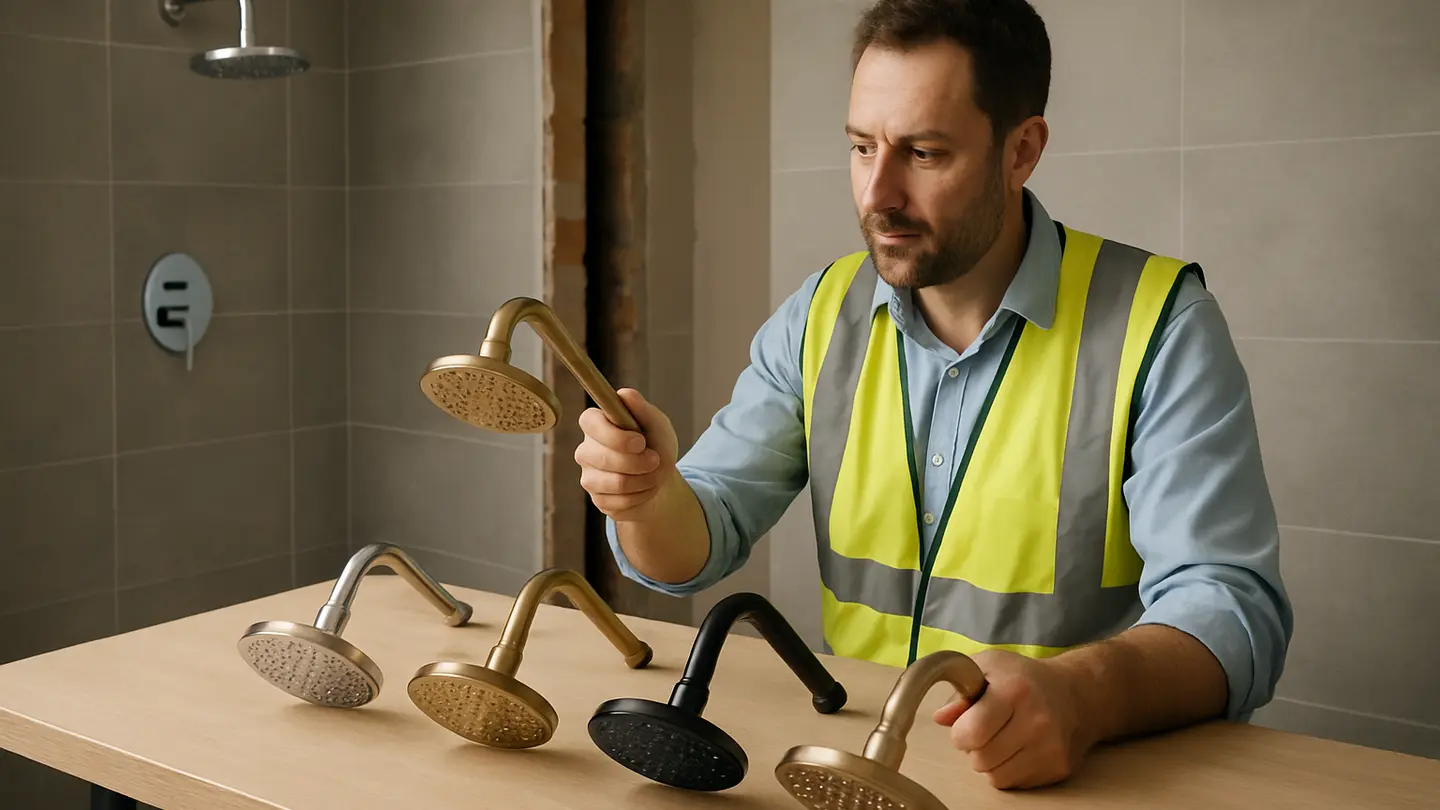
Popular Shower Head Finishes: Pros, Cons, and Buying Considerations
For B2B buyers, shower head finishes affect more than appearance. They influence handover presentation, maintenance workload, fixture matching, perceived value, and long-term visual performance in hotels, serviced apartments, residential developments, gyms, healthcare facilities, and wholesale assortments.
A glossy chrome shower head may suit a cost-conscious project with easy fixture coordination, while matte black or brass can support a boutique hotel or premium residential concept. The right choice depends on:
- Bathroom design style and market positioning
- Base material and coating method
- Resistance to corrosion, scratching, tarnishing, and water spotting
- Cleaning requirements for users or maintenance teams
- Availability of matching faucets, valves, drains, and accessories
- Price level, lead time, and replacement consistency across batches
The following guide compares common shower head finish options from a practical purchasing perspective.
Chrome Finish
Chrome is one of the most widely used shower head finishes in residential and commercial bathrooms. It has a bright, mirror-like appearance that reflects light and works with many styles, from basic rental units to contemporary hotel bathrooms.
Chrome is usually a surface coating applied over brass, zinc alloy, ABS, or another suitable substrate. For buyers, final quality depends on both the coating and the underlying material.
Its main advantage is broad availability. Chrome is common across entry-level, mid-range, and premium shower head lines, making it easier to source matching faucets, towel bars, valve trims, hose connectors, and hand shower brackets. This is useful for projects requiring consistent fixture coordination across many rooms.
Chrome is also often one of the most cost-effective finishes. For developers, wholesalers, contractors, and hospitality buyers with tight budgets, it offers a clean appearance without the premium associated with many designer finishes.
The trade-off is maintenance visibility. Chrome shows water spots, fingerprints, soap residue, and dust more readily than some brushed or matte finishes. In hard water areas, mineral deposits can appear quickly without regular wiping.
Best-fit use cases include:
- Cost-sensitive residential developments
- Hotels needing easy fixture matching
- Wholesale ranges with broad market appeal
- Bathrooms where a bright, neutral finish is preferred
The key purchasing consideration is coating consistency. Buyers should request finish samples and confirm appearance standards, especially when sourcing chrome shower heads and other chrome-plated fixtures from different suppliers.
Stainless Steel Finish
Stainless steel is a sleek option associated with contemporary bathroom design. It suits projects that need a neutral metallic appearance that is more understated than mirror chrome.
Stainless steel finishes are commonly available in polished and brushed styles. Polished stainless steel is shinier, while brushed stainless steel has fine directional lines that soften reflections and help mask minor marks. Brushed stainless steel is often preferred for modern, commercial, and hospitality bathrooms because it looks refined without appearing decorative.
A major advantage is corrosion resistance. When the material and finish system are properly specified, stainless steel shower heads can perform well in humid bathroom environments and support long service life. This makes the finish attractive where replacement costs, maintenance labor, and durability matter.
Stainless steel can also be relatively easy to clean. Brushed surfaces may show fewer fingerprints and water marks than highly reflective chrome, although cleaning practices still matter. Buyers should confirm approved cleaning methods, especially where housekeeping teams use standardized chemicals.
The primary trade-off is cost. Stainless steel shower heads often cost more than chrome versions, particularly when stainless steel is used as a structural material rather than only for surface appearance. Color options are also more limited, so buyers wanting warm, dark, or decorative tones may prefer another finish.
For B2B buyers, stainless steel is a strong candidate when durability, low visual maintenance, and contemporary styling are more important than the lowest unit price.
Matte Black Finish
Matte black has become popular in modern bathroom projects. Its deep, non-reflective surface creates strong contrast against white tiles, stone, concrete, light wood, and neutral palettes. In the right setting, it can make a simple shower head look more design-led.
This finish works well in minimalist, industrial, luxury, and boutique hospitality concepts. It is often specified with black-framed shower screens, black mixers, black towel rails, and dark accessories. For retail buyers, matte black can also support a trend-focused product range.
Matte black can hide fingerprints and water spots better than many glossy finishes because it does not reflect light like chrome. This can be useful in showrooms, guest bathrooms, and residential spaces where buyers want a cleaner appearance between routine cleanings.
However, it is not maintenance-free. Light-colored dust, dried soap residue, and limescale can be visible on dark surfaces. In hard water regions, white mineral deposits may stand out more clearly than on chrome or brushed nickel. Harsh chemicals, abrasive pads, and unsuitable descaling agents may damage some black coatings or cause uneven dulling.
Matte black is often priced higher than standard chrome because of coating process, market positioning, and lower production volume. Buyers should also check batch consistency. Differences in black tone, gloss level, or texture can be noticeable when multiple fixtures are installed together.
For large projects, approve physical samples under actual bathroom lighting before finalizing the order. Matching shower heads, faucets, valve plates, and accessories from the same finish system can reduce visible mismatch.
Polished Brass Finish
Polished brass is a bright, reflective, gold-toned finish that brings warmth and decorative character to a bathroom. Compared with chrome and stainless steel, it has a more traditional and luxurious appearance.
This finish is often used in traditional, vintage-inspired, classic hotel, and high-end residential interiors. It pairs well with marble, warm stone, dark wood, decorative tiles, and heritage-style fittings. In commercial projects, polished brass can help create a premium atmosphere in suites, boutique hotels, private clubs, and upscale apartments.
Its visual appeal is also its main specification challenge. Gold-toned finishes vary significantly between suppliers. One manufacturer’s polished brass may look yellow and bright, while another may appear warmer, deeper, or closer to brushed gold. If shower heads, mixers, waste fittings, and accessories are sourced from different vendors, matching can be difficult.
Polished brass can be more expensive and less widely available than chrome or stainless steel. Lead times may be longer, especially for large quantities or custom lines. Buyers should confirm whether the finish is stocked or made to order.
Traditional brass surfaces were often associated with tarnishing, but many modern polished brass finishes use protective coatings to improve resistance to tarnish, scratches, and routine wear. Even so, aggressive cleaners can damage protective coatings. Maintenance instructions should be included in project documentation, especially for hotels and managed properties.
Polished brass is best suited to projects where design impact justifies a higher unit cost and where the buyer can control fixture coordination across the full bathroom package.
Oil-Rubbed Bronze Finish
Oil-rubbed bronze is a warm brown finish, often with copper undertones and an aged appearance. It typically has a darker, more textured look than polished brass and is common in rustic, traditional, farmhouse, and heritage-style bathrooms.
This finish can add depth to schemes using natural stone, timber, cream tiles, or warm neutrals. It is also useful when a project needs a softer alternative to matte black but still wants a dark, distinctive finish.
Oil-rubbed bronze can vary significantly by product and manufacturer. Some versions are nearly black with subtle highlights, while others show more brown or copper tones. Texture, gloss, and the “aged” effect may also differ. This variation can be appealing in one decorative bathroom but problematic in multi-room projects.
Matching fixtures are another concern. Buyers may find fewer compatible options than with chrome, brushed nickel, or matte black. If the project requires coordinated shower heads, faucets, robe hooks, towel bars, valves, drains, and cabinet hardware, availability should be checked early.
Oil-rubbed bronze usually needs careful maintenance. Abrasive cleaning can remove or damage the surface effect, while harsh chemicals may alter the tone or create uneven wear. For hospitality or commercial environments, maintenance teams should know which cleaning products are permitted.
This finish is strongest when the design brief calls for warmth, age, and traditional character. It is less practical when buyers need the widest availability, lowest price, or easiest cross-supplier matching.
Additional Shower Head Finish Options
Beyond the most common shower head finishes, buyers may encounter white, brushed nickel, pewter, antique copper, brushed chrome, platinum, polished nickel, and champagne bronze.
These less common finishes can be valuable for a specific design brief or for wholesalers wanting to differentiate their product range. Brushed nickel offers a softer alternative to chrome, champagne bronze supports warm contemporary interiors, and white finishes may suit minimalist or sanitary-focused concepts.
The main consideration is coordination. Before selecting a less common finish, confirm whether matching fixtures and replacement parts will be available throughout the project lifecycle. For multi-unit developments and hotels, future maintenance and room-by-room consistency can matter as much as the initial design effect.
Misconceptions About Shower Head Finishes
A common misconception is that finish names describe the complete material composition of the shower head. In reality, finish names usually describe surface appearance. A “chrome” shower head may be chrome-plated over brass, zinc alloy, ABS, or another base material.
Many finishes are thin coatings applied over stronger or more cost-effective substrates. This does not automatically mean the product is low quality. A well-applied coating over a suitable substrate can perform well, while a poorly controlled coating on an expensive base material may fail prematurely.
Another misconception is that a higher price always guarantees better finish durability. Price can reflect design trend, production volume, brand positioning, coating complexity, or raw material cost. Buyers should review finish specifications, test standards, supplier quality controls, and sample performance rather than relying only on price.
Premium finishes also require routine cleaning and proper care. Matte black, polished brass, and oil-rubbed bronze can be damaged by unsuitable cleaners. Even stainless steel can show marks if exposed to harsh chemicals or neglected in aggressive environments.
All shower head finishes may show wear, tarnish, patina, discoloration, or coating damage over time depending on water quality, humidity, cleaning methods, user behavior, and installation environment. For B2B buyers, finish selection should be treated as a controlled specification, not a simple color choice.
How to Choose the Right Finish for a Project
The best finish depends on design intent, operating environment, maintenance model, and budget. A finish that works well in a premium showroom may not suit a high-turnover hotel bathroom or cost-sensitive rental development.
Start by matching the finish to the bathroom style:
| Bathroom style | Practical finish options |
|---|---|
| Modern | Chrome, stainless steel, matte black, brushed nickel |
| Traditional | Polished brass, oil-rubbed bronze, polished nickel |
| Transitional | Chrome, brushed nickel, stainless steel, champagne bronze |
| Luxury | Polished brass, matte black, champagne bronze, premium PVD finishes |
Next, consider traffic level. High-traffic bathrooms, children’s bathrooms, gyms, dormitories, and public-use facilities benefit from durable, easy-clean finishes. In these settings, buyers often prioritize resistance to visible marks and simple maintenance over highly decorative appearance.
Environmental conditions also matter. In hard water areas, white mineral deposits can be more visible on dark finishes. In coastal locations, salt air may increase corrosion risk, making base material and coating quality especially important. In humid environments, buyers should confirm corrosion resistance and cleaning compatibility before approval.
Budget positioning is another factor. Chrome is commonly used as an entry-level and mid-range option because it is affordable, familiar, and easy to match. Stainless steel typically sits higher, especially when material quality is part of the specification. Brass, bronze, and designer finishes often belong to more premium tiers.
For large orders, buyers should request production samples, define acceptable color and gloss tolerances, and confirm whether all bathroom fixtures will come from the same finish system. A small mismatch may seem minor in procurement documents but become obvious after installation.
Ultimately, the right choice balances design intent, price, maintenance workload, water quality, sourcing reliability, and expected service life.
Another Way to Build a China Supplier Shortlist
When comparing shower head suppliers or related bathroom fixture vendors, buyers may use Made-in-China.com during early sourcing. It is a B2B sourcing platform, not a manufacturer, and can help organize supplier discovery before direct negotiation.
Supplier Discovery helps buyers find and narrow supplier options, including Audited Suppliers and regional supplier channels where relevant. For buyers comparing shower head finishes, this can support an initial list of vendors offering chrome, stainless steel, matte black, brass, or other bathroom fixture finishes.
Audited Suppliers are subject to third-party verification and on-site audit, with Audit Reports available for buyer review. These reports can include general company details, export trade, manufacturing capacity, quality control, and R&D capability. They should not replace buyer due diligence, but they can support early-stage screening.
Easy Sourcing is another practical tool. Buyers can submit one sourcing request, receive multiple quotations from matched suppliers, compare quotes, and request samples. For finish-sensitive products, sample comparison remains important before any bulk purchase decision.
FAQ
Which finish is best for homes with hard water?
Brushed nickel and chrome are often practical choices in hard water areas because lighter or brushed surfaces can help disguise white mineral deposits. Darker finishes such as matte black may show limescale more clearly, especially if the shower head is not wiped down regularly.
Can I mix different metal finishes in one bathroom?
Yes. Mixed metal finishes can work well in a cohesive modern bathroom design. Use one dominant finish for major fixtures, such as the shower head, faucet, and valve trim, then use a secondary finish for smaller hardware or decorative accents.
What is the most durable shower head finish?
Stainless steel and PVD-coated finishes are commonly considered strong durability options. PVD, or physical vapor deposition, bonds finish material to the surface at a molecular level and can improve resistance to scratches, tarnishing, and corrosion. PVD is generally regarded as more durable than standard powder coating.
How often should I clean my shower head to maintain the finish?
For most finishes, weekly gentle wiping with a soft, damp cloth is a good routine. Avoid harsh chemicals, abrasive pads, and aggressive descaling methods unless the supplier confirms they are safe for the finish. Improper cleaning can damage protective coatings and may cause premature tarnishing, peeling, or visible finish wear.