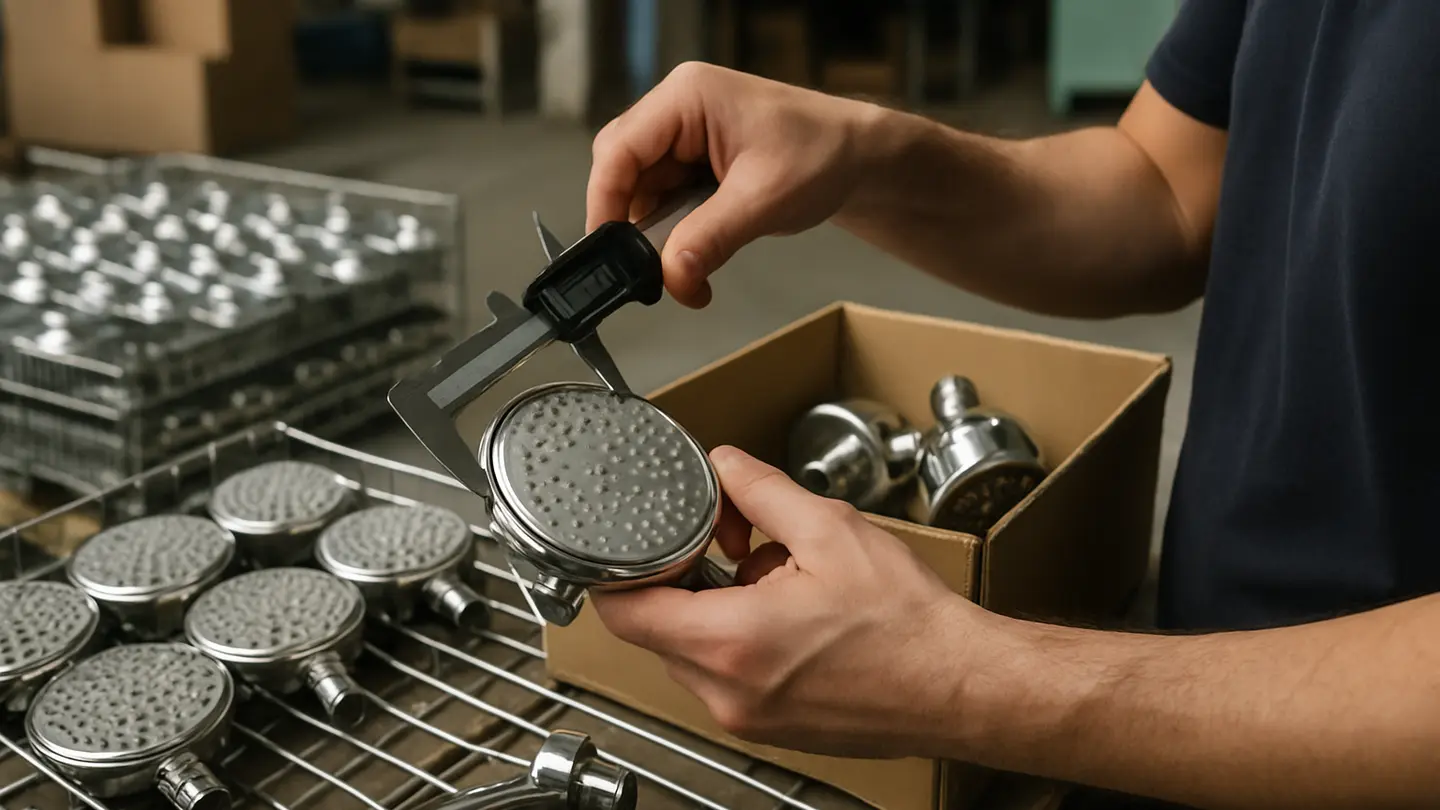
Choosing a shower head manufacturer for B2B sourcing is not the same as choosing a retail fixture for one bathroom. Importers, wholesalers, private-label brands, contractors, and distributors need products that can be produced consistently, documented properly, packed correctly, and delivered on schedule.
A low unit price or attractive catalog photo can hide risks in compliance, tooling, sealing performance, finish durability, spray consistency, and after-sales claims. Before placing a sample order, RFQ, tooling deposit, or mass-production PO, evaluate the manufacturer as a supply partner.
Start with certifications and market access requirements
Certifications should be one of the first filters when comparing shower head suppliers. They can determine whether a product can be imported, listed, distributed, or sold into a specific market.
Certification needs vary by destination country, sales channel, product type, and packaging claims. Materials, coatings, filters, hoses, connectors, and water-saving claims can also affect compliance.
Common documents or testing references buyers may encounter include:
- cUPC for plumbing product compliance in relevant North American applications
- WaterSense where water-efficiency claims and eligible product categories apply
- CE for applicable European market requirements
- REACH for chemical and material compliance in the EU
- ISO 9001 for quality management systems
- SGS or Intertek test reports, where third-party testing is used for product, material, or performance verification
Not every certificate applies to every shower head or market. Verify the correct requirement for your destination country and channel before relying on a supplier’s document. A certificate that covers one model, material, or factory site may not cover the product you plan to buy.
When reviewing a certification package, ask for:
- Current certificates
- Issuing body or testing organization
- Product scope and model numbers covered
- Factory name and address
- Expiration date or validity period
- Related test reports, if available
- Confirmation that the exact model, finish, hose, connector, or packaging claim is included
For regulated markets, a multi-certified manufacturer can reduce the risk of customs delays, failed audits, rejected listings, recalls, and reputation damage. Certification does not replace quality control, but it is a baseline for serious B2B sourcing.
Check whether production scale matches your order plan
A manufacturer’s production scale affects lead time, batch consistency, repeat-order stability, peak-season reliability, and the ability to handle changes without disrupting production.
A small workshop may suit trial orders or simple models, but it may struggle with large retail launches, multiple SKUs, custom packaging, or strict shipment windows. A larger factory may offer steadier throughput, but buyers still need to confirm whether its equipment, staffing, and process layout match the order plan.
Ask suppliers to provide practical capacity details, including:
- Factory area
- Monthly output by product category
- Number of production lines
- Key production equipment
- Injection molding machines, if plastic parts are made in-house
- Assembly, sealing, and testing capacity
- Total employees, QC staff, engineers, and R&D personnel
- Recent order examples close to your target volume
Do not evaluate capacity from one number alone. A supplier may have enough assembly workers but limited molding capacity, creating bottlenecks in handles, spray plates, internal waterways, or connector parts. Another factory may have strong output but insufficient packing capacity for complex retail packaging.
Compare claimed capacity with realistic timing for the full sourcing cycle:
- Sample preparation
- Sample testing and revision
- Packaging design and approval
- Raw-material purchasing
- Component production
- Assembly
- In-process inspection
- Water testing
- Final packing
- Pre-shipment inspection
- Booking, loading, and shipment
If your order includes custom colors, new molds, barcode labels, multi-language manuals, or channel-specific carton marks, lead time may be longer than a standard catalog order. A reliable shower head manufacturer should explain the timeline clearly.
Capacity indicators to verify during supplier review
For importers, wholesalers, retailers, e-commerce brands, and private-label buyers, stable bulk-order capacity is essential. The supplier should show evidence that it can support your volume across repeat orders.
| Area to check | Why it matters |
|---|---|
| Injection molding machines | Support repeatable production of plastic handles, spray plates, housings, buttons, and internal parts |
| Assembly lines | Indicate daily output potential and workflow organization |
| Sealing equipment | Helps control leak prevention and joint consistency |
| Water-test equipment | Supports functional inspection before shipment |
| Production records | Show whether output claims match real order history |
| QC staffing structure | Indicates whether inspection can keep pace with production |
| Engineering support | Helps solve tooling, spray, sealing, and assembly issues |
Injection molding capability is especially important for shower heads with plastic components. Consistent molds, controlled material use, and stable molding parameters affect dimensions, fit, sealing, spray plate alignment, and appearance. If the factory outsources molding, ask how it controls subcontractor quality, material traceability, and delivery timing.
A mix of automatic and manual equipment is not automatically good or bad. Automatic processes can improve repeatability and speed, while manual assembly may provide flexibility for complex SKUs. What matters is whether the process is controlled, documented, and appropriate for your product.
Ultrasonic sealing equipment can improve sealing consistency when used with controlled parameters and inspection records. But equipment alone does not guarantee leak-free products. Check whether the factory records settings, performs routine checks, and tests finished products after sealing.
Evaluate OEM and ODM support for differentiated products
Many B2B buyers need more than standard catalog shower heads. Retailers may require exclusive designs. E-commerce brands may need distinctive packaging, finishes, or value-added features. Project suppliers may need specific dimensions, flow rates, or installation accessories.
OEM support is useful when you already have a design, specification, or brand concept. ODM support is useful when you want to build on the supplier’s existing designs, molds, engineering resources, or product platforms.
Common customization areas include:
- Product color
- Grip texture
- Surface finish
- Spray panel design
- Nozzle configuration
- Handle shape
- Product size
- Logo placement
- Packaging structure
- Labels and barcode stickers
- Manuals and inserts
- Carton marks
- New or modified molds
If your goal is private-label or exclusive shower products, confirm whether the supplier has in-house mold-making capability or stable tooling partners. Tooling control affects development cost, revision speed, confidentiality, and the ability to fix design problems quickly.
Key questions to ask include:
- Can you support OEM, ODM, or both?
- What is the MOQ for custom color, finish, packaging, and mold changes?
- Do you make molds in-house or use external tooling partners?
- Who owns the tooling after payment?
- How many prototype rounds are included?
- What is the sample lead time for standard and custom models?
- How do you handle design revisions?
- Can you provide 2D drawings, 3D files, or engineering review?
- How quickly can a new SKU move from concept to pilot run?
- What approval sample will be used as the production standard?
Customization should not be treated as decoration only. A change in spray panel, internal waterway, filter system, or nozzle layout can affect water flow, spray feel, leakage risk, assembly method, and testing requirements. A capable manufacturer should identify these effects before mass production.
What a practical customization workflow should include
A structured customization workflow reduces misunderstandings and helps both sides define when a product is ready for mass production.
A practical workflow usually includes:
Concept and requirements The buyer defines the market, channel, product type, design direction, functional claims, price range, packaging needs, and compliance requirements.
Technical review The manufacturer reviews feasibility, materials, tooling needs, structure, spray performance, assembly method, and estimated cost.
Drawings or design files Dimensions, component structure, logo position, finish requirements, color references, and packaging layout are documented.
Prototype or sample development The supplier prepares samples using existing parts, modified molds, soft tooling, or production tooling.
Testing and revision Samples are checked for dimensions, finish, sealing, spray behavior, flow rate, installation fit, labeling, and packaging.
Tooling and pilot run If new tooling is required, the manufacturer produces trial parts, assembles pilot samples, and verifies manufacturability.
Approval sample confirmation The buyer signs off on a final sample that becomes the reference standard for mass production.
Mass production and inspection Production follows the approved standard, with inspection checkpoints for components, assembly, function, appearance, and packing.
For smaller sellers or new channels, lower MOQ options can help test a design before larger production volumes. However, confirm whether lower MOQs affect unit cost, packaging options, material availability, or lead time.
Before mass production, define approval standards in writing, including dimensions, finish, color tolerance, sealing performance, spray behavior, flow rate, labeling placement, barcode accuracy, carton strength, and packaging appearance.
Review quality control from raw materials to final packing
Quality control is one of the most important parts of choosing a shower head manufacturer. Defects can lead to leaks, clogging, weak spray performance, corrosion, returns, negative reviews, retailer penalties, and brand damage.
A good sample does not prove mass-production consistency. Buyers need the approved standard to be repeated across the full order and future orders. The same model should maintain consistent dimensions, finish, color, sealing, water flow, spray pattern, labeling, accessories, and packaging.
Quality control should start before production begins. Incoming inspection should cover key materials and components such as:
- Plastic resin
- Metal parts
- Rubber seals
- Silicone nozzles
- Filter media, if applicable
- Hoses and connectors
- Screws, washers, and gaskets
- Coating or plating materials
- Retail boxes, labels, manuals, and cartons
During production, inspection should cover molding, surface appearance, assembly fit, sealing, nozzle alignment, spray plate installation, button or mode-switch function, and packaging accuracy. If the product includes multiple spray modes, filters, or special internal structures, the inspection plan should reflect those risks.
Common checks include:
- Water-function testing
- Leakage testing
- Flow consistency checks
- Surface inspection
- Nozzle inspection
- Assembly fit checks
- Package and label verification
- Carton drop or handling checks where required by the buyer
- Salt-spray testing for relevant metal finishes or components
Salt-spray testing can help evaluate corrosion resistance, but it must be tied to a defined test standard, duration, and acceptance criteria. The same applies to water testing: buyers should know the pressure, duration, sample size, and pass/fail criteria.
Final random inspection before shipment helps confirm that finished goods match the approved sample and purchase order before products leave the factory. For higher-risk orders, buyers may use their own QC team or a third-party inspection company.
Quality records and tests buyers should request
A serious manufacturer should be able to show that its QC process is documented, not improvised. Buyers do not need every internal document, but they should see enough evidence to understand how quality is controlled.
Request examples of:
- Raw-material approval records
- Qualified supplier lists for key components
- Incoming inspection standards and reports
- Molding inspection records
- Assembly checklists
- Sealing test records
- Water-test logs
- Surface inspection standards
- Nonconformance handling records
- Corrective action reports
- Packing inspection reports
- Pre-shipment inspection reports
Qualified raw-material suppliers and incoming inspections help prevent upstream problems before production starts. If poor-quality seals, unstable plastic, weak plating, or inaccurate packaging enters the line, final inspection may catch some issues but cannot always prevent delays or rework.
Water testing during production is particularly important for shower heads. It can detect leakage, irregular spray, blocked nozzles, flow problems, poor sealing, and functional failures before shipment. For models with spray-mode buttons or rotating panels, function checks should be repeated enough to confirm stable performance.
For corrosion and finish validation, salt-spray and related surface tests can be useful when the product includes plated, coated, or metal components. Ask what standard is used, how long the test runs, which parts are tested, and what counts as failure.
A reliable supplier should also explain how it handles defects. Look for a clear process: identify the issue, isolate affected goods, investigate root cause, correct the problem, and prevent recurrence.
Assess R&D strength and alignment with shower product trends
The shower head market changes with consumer expectations, design trends, regulatory pressure, and channel competition. A manufacturer that only offers old catalog models may limit your ability to compete, especially in retail, e-commerce, hospitality, and project supply.
Current product demand is influenced by areas such as:
- Water-saving design
- Multi-function spray modes
- Filtered shower concepts
- Easy-clean nozzles
- Anti-clog structures
- Ergonomic handles
- Simple installation
- Modern finishes
- Minimalist bathroom aesthetics
- Lightweight but durable materials
- Smart or upgraded bathroom features where relevant
R&D strength does not always mean creating a product from zero. It can also mean improving internal waterways, refining spray patterns, updating handle shapes, improving packaging, adapting finishes, simplifying installation, or modifying existing molds for new channels.
When assessing R&D capability, ask for:
- Recent new-product examples
- Annual or seasonal product update frequency
- Engineering team structure
- Design and drawing capabilities
- Mold development experience
- Patent or tooling records, where applicable
- Test equipment used during development
- Trade-fair participation or customer feedback channels
- Examples of products adapted for different markets or sales channels
Water efficiency is a practical R&D issue, not just a marketing claim. Flow control, nozzle layout, pressure compensation, and spray comfort need to be designed and tested. Ergonomics also matter: handle weight, grip texture, mode-switch position, and installation convenience affect end-user satisfaction.
Packaging development should not be ignored. Retail buyers may need shelf-ready packaging, hang holes, window boxes, multilingual labels, compliance marks, or clear installation information. E-commerce sellers may prioritize stronger cartons, compact dimensions, barcode accuracy, and reduced parcel damage.
Signals that a manufacturer can keep your catalog current
Manufacturing experience can be valuable because shower head production involves accumulated knowledge: tooling, sealing, spray behavior, finish control, assembly methods, packaging, and export documentation. However, experience should still be verified with evidence.
Useful signals include:
- Regular new-product launches
- Updated catalogs rather than only old models
- Recent samples with modern finishes and packaging
- Ability to modify existing models for new channels
- Participation in relevant trade fairs
- Awareness of buyer requirements in different regions
- Engineering feedback during early product discussions
- Clear development timelines for new SKUs
Trade-fair participation can expose manufacturers to global buyer preferences, finish trends, retail packaging expectations, installation requirements, and regional compliance concerns. It does not prove quality by itself, but it can indicate that the supplier is active in international markets.
Seasonal or periodic catalog updates can help B2B buyers refresh listings and compete with newer consumer-facing brands. Ask how often the supplier updates its product range, which models were launched recently, and whether older models can be revised with new colors, spray panels, packaging, or accessory sets.
The best shower head manufacturer for B2B sourcing is not simply the cheapest option. It is the supplier whose compliance documents fit your market, production scale matches your order plan, OEM/ODM process supports your differentiation strategy, QC system protects your brand, and R&D capability keeps your catalog relevant. By evaluating these areas before sampling, RFQ, tooling, and mass production, buyers can reduce sourcing risk and build a more reliable supply chain.