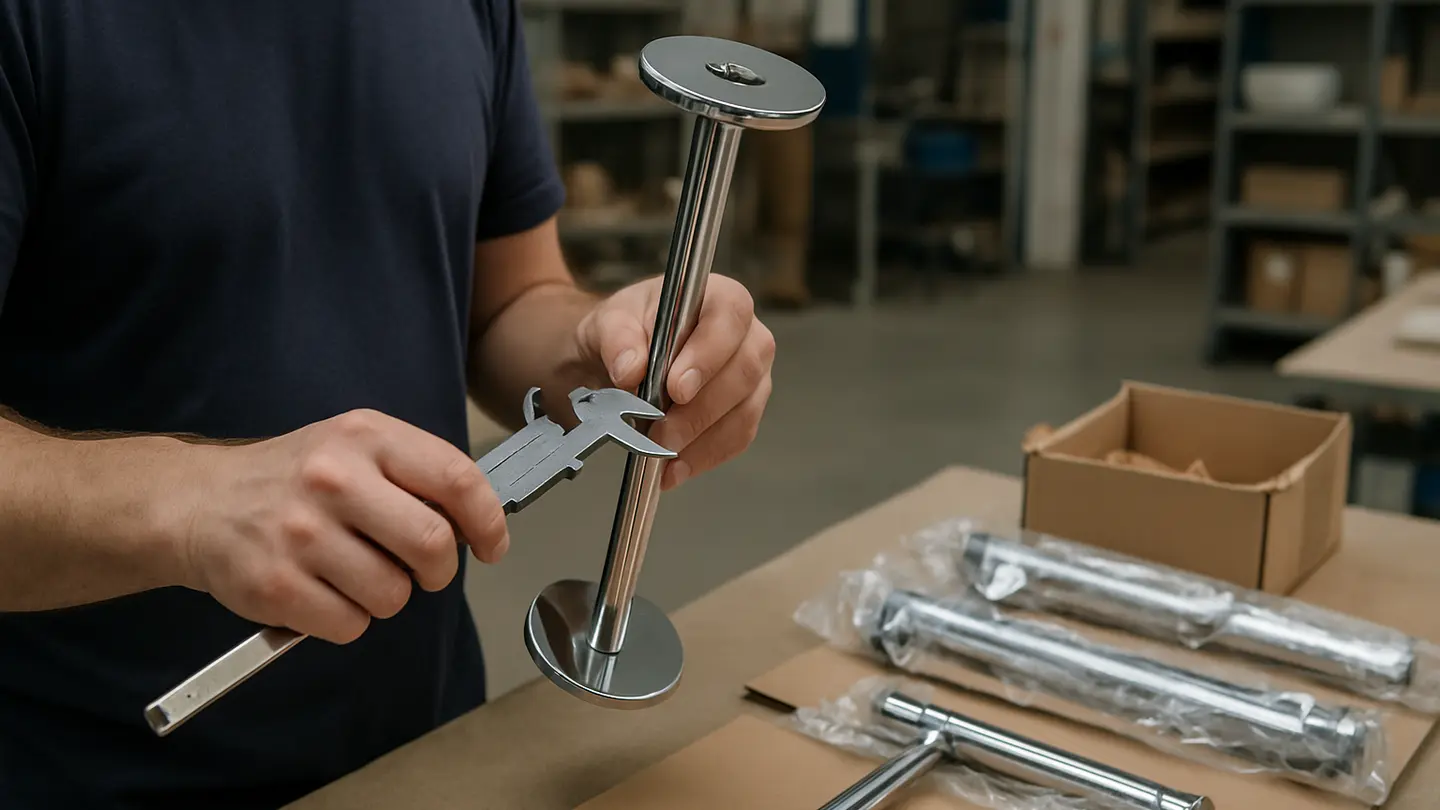
A Shower Manufacturer Audit is not only a document check. It is a sourcing risk control process that tests whether a factory can produce the right shower products, at the required quality level, within the promised delivery window, with evidence behind every claim.
Shower sourcing problems often begin quietly: an overloaded plating line, delayed glass supply, substituted thermostatic cartridges, incomplete pressure-test records, or undisclosed subcontracting. By the time these issues appear in a failed pre-shipment inspection or missed vessel date, the buyer has fewer options.
The goal is simple: compare supplier claims against factory-floor evidence before scaling purchase orders. The workflow below helps sourcing teams, importers, distributors, private-label buyers, and project procurement teams reduce avoidable risk when approving a shower manufacturer.
Prepare the Evidence Pack Before Auditing a Shower Factory
Before the audit starts, define what the supplier is being measured against. A factory cannot be evaluated properly if the buyer’s own requirements are unclear.
Build an internal evidence pack that includes:
- Target shower SKUs and product families
- Forecast order volume and ramp-up schedule
- Destination markets and import requirements
- Quality standards and inspection criteria
- Packaging specifications, labeling rules, and carton strength expectations
- Delivery windows, peak-season demand periods, and shipment lanes
- Risk thresholds for quality, compliance, capacity, and delivery
Assign one accountable sourcing or risk owner before the audit begins. Without a named owner, document gaps, site findings, corrective actions, and escalation decisions can become scattered across procurement, quality, logistics, and engineering teams.
Request evidence from the shower manufacturer before any site visit. Useful documents include legal registration, export license details where applicable, facility identity, product catalogs, process flow charts, equipment lists, capacity records, quality manuals, inspection records, raw material traceability records, test reports, social compliance evidence, and import compliance evidence.
Prioritize raw operational records over sales presentations. Production logs, incoming material records, inspection results, calibration records, rework logs, and shipment history are more useful than polished brochures. Certificates can support a review, but they should not replace evidence of daily production control.
Destination-specific compliance also needs independent checking. Shower products may involve water-contact requirements, pressure or leakage testing expectations, labeling rules, packaging obligations, and market-specific product standards. Do not assume one certificate or past customer approval is valid for every market or product configuration.
Why a Structured Shower Sourcing Risk Workflow Prevents Disruptions
A structured audit workflow helps buyers detect threats before they become expensive disruptions. It can reveal overstated monthly output, hidden subcontracting, weak incoming inspection, incomplete component traceability, or quality controls that exist on paper but not on the production floor.
Risk visibility reduces late shipment surprises, improves backup planning, clarifies when to escalate, and helps quality teams intervene before defects reach final inspection. It also gives procurement a stronger basis for deciding whether to place a full order, run a pilot order, require corrective actions, or keep a backup supplier active.
Shower manufacturing involves linked processes: casting or machining, polishing, plating or surface finishing, glass handling, component assembly, leakage testing, packing, and shipment staging. A delay or quality failure in one area can affect the entire order. Risk mapping should involve procurement, quality, engineering, compliance, and logistics, not only the buyer who negotiated the price.
Step 1: Identify the Shower SKUs, Components, and Lanes That Carry the Most Risk
Start by prioritizing the products, suppliers, components, and logistics lanes with the highest commercial impact. Not every shower SKU deserves the same audit depth. Focus first on items that would cause revenue loss, project delay, warranty exposure, or customer dissatisfaction if they failed.
Flag single-source or high-risk components, such as:
- Thermostatic cartridges
- Diverters and mixers
- Tempered glass panels
- Brass bodies and fittings
- Stainless steel hoses
- Shower trays
- Seals and gaskets
- Finish-specific parts
- Custom accessory packs
- Printed cartons and private-label packaging
Also assess long-lead items, regulated products, seasonal demand peaks, port congestion exposure, destination certification needs, and products with high after-sales risk. A simple shower head may carry less risk than a complete enclosure with tempered glass, multiple hardware finishes, private-label packaging, and strict project dates.
Use historical performance data where possible. Review late shipments, AQL failures, leakage defects, pressure-test failures, finish variation, glass breakage, missing accessories, carton damage, label errors, and warranty claims. Patterns matter more than isolated events.
Create a risk register. At minimum, include likelihood, business impact, warning triggers, named owner, review cadence, mitigation action, and current status. Assign separate owners for commercial, capacity, quality, engineering, compliance, and logistics risks so supplier risk is not treated as one vague procurement issue.
Step 2: Run a Desk Review to Challenge the Manufacturer’s Claims
The desk review tests whether the supplier’s story is internally consistent before the site visit.
First, confirm that the legal entity, export entity, producing facility, factory address, certificate holder, and quotation issuer align. If a certificate is issued to one company, the quotation comes from another, and production is said to happen at a third location, the supplier may still be suitable—but the structure requires explanation and verification.
Request details on customer mix, output history, peak loading, subcontracting policy, tooling ownership, component sourcing, capacity utilization, and sample production schedules. Ask which processes are performed in-house and which are outsourced. In shower manufacturing, subcontracting may occur for plating, glass processing, casting, hose production, printing, or packaging. The key issue is whether outsourcing is disclosed, controlled, and traceable.
Review quality and technical evidence carefully, including audit reports, corrective and preventive action records, incoming inspection procedures, traceability procedures, water pressure or leakage test capability, calibration records, and product test reports. Product claims should be checked against destination market requirements rather than assuming one test report applies to all models, sizes, materials, and finishes.
Create a discrepancy list for on-site verification. Typical items include unclear facility names, unrealistic lead times, missing calibration records, repeated late delivery, unexplained jumps in monthly capacity, incomplete test reports, and unsupported claims about in-house production.
Step 3: Verify the Shower Factory Floor, Not Just the Meeting Room
A site visit should confirm what documents cannot prove. Start on the production floor rather than spending the first hour in a conference room. Presentations are useful later, but they should not shape the audit before the auditor has seen real production conditions.
Match facility signage, visitor controls, certificate displays, registered address, and factory name against the desk-review documents. Differences should be recorded and explained.
Inspect incoming material storage for brass, stainless steel, aluminum, ABS, glass, cartridges, hoses, seals, hardware, trays, and packaging materials. Check whether materials are labeled, segregated, and traceable. Look for FIFO discipline, nonconforming material areas, lot identification, and separation between approved, pending, rejected, and rework stock.
Then follow the process flow. Depending on the product, this may include raw material intake, machining, polishing, plating or surface finishing, glass handling, assembly, leakage or pressure testing, final inspection, packing, and shipment staging. Compare the observed flow with the process flow submitted before the audit.
Pay close attention to testing equipment and calibration status. A shower manufacturer may claim 100% leakage testing, but the audit should verify test stations, operator availability, test method, pressure settings, records, and area capacity. The same logic applies to finish inspection, glass inspection, packaging checks where required, and final inspection.
Rework areas are especially revealing. Organized rework with labels, defect codes, and controlled release is very different from mixed bins of unmarked parts. Rework behavior often shows whether the quality system is active or only documented.
Step 4: Calculate Real Shower Production Capacity from Bottlenecks
Supplier capacity claims should be tested with practical production math. Do not rely on machine count alone. A factory may have enough machining equipment but still be constrained by polishing, plating, leak testing, glass handling, assembly labor, packing speed, or inspection capacity.
Use observed cycle times, operator counts, active lines, tooling constraints, and bottleneck processes to estimate realistic output for key shower SKUs. A Standard Allowed Minute-style approach can help: estimate labor or machine time per unit, compare it with available working time, and adjust for downtime, rework, attendance, changeovers, and product mix.
A complex shower enclosure with glass panels, hardware sets, seals, and custom packaging will not move at the same speed as a simple handheld shower set. Finish variations can also affect output if polishing and plating yields differ by color or surface treatment.
Account for:
- Actual attendance and shift patterns
- Machine uptime and maintenance
- Rework rates
- Finishing yield
- Glass processing or handling constraints
- Pressure-testing time
- Packing speed
- Changeover losses
- Material staging limits
- Finished goods space
- Dispatch history
Compare packaging throughput, finished goods records, and shipment history against the supplier’s quoted monthly capacity. If the packing area, testing area, and dispatch records do not support the claim, capacity should be downgraded.
Remote time-study sampling can help with early screening, but it carries lower confidence than on-site validation, especially when the product mix includes different finishes, sizes, accessory packs, or assembly structures.
Step 5: Convert Audit Findings into Approval Rules and Ongoing Controls
The audit should not end with a vague pass-or-fail judgment. Convert findings into a weighted approval framework.
Score the shower manufacturer on areas such as:
- Real production capacity
- Quality control discipline
- Product testing capability
- Compliance evidence
- Lot traceability
- Engineering and sample support
- Commercial exposure
- Backup sourcing options
- Logistics reliability
- Corrective action responsiveness
Use clear approval outcomes. A supplier may be approved, conditionally approved, limited to dual-source use, restricted to pilot orders, or rejected. These categories are more useful than a simple “acceptable” rating because they connect audit results to sourcing decisions.
For conditional approval, define exact controls. These may include first-article approval, pre-production samples, tighter incoming inspection, additional leakage or pressure testing records, capped order allocation, pre-shipment inspection, packaging validation, or verified CAPA closure before mass production.
Ongoing monitoring should include review cadence, alert thresholds, re-audit triggers, supplier scorecard updates, incident escalation rules, and contingency planning. If a SKU, component, or lane is commercially critical, maintain backup suppliers or alternate logistics routes where feasible.
Troubleshoot Common Shower Supplier Risk Failures
Even after an audit, problems can still appear. Troubleshoot based on production-floor evidence rather than verbal reassurance. The most common failures include ignored warning signs, post-PO capacity collapse, late pre-shipment inspection failures, and broken lot traceability.
Symptom: Early Supplier Warnings Do Not Trigger Action
Early warnings often go unresolved when no department owns the response. Examples include delayed sample approval, repeated component substitutions, moving delivery dates, vague capacity updates, missing inspection records, or sudden changes in subcontracting explanations.
Assign one risk owner per shower supplier. This person does not need to solve every issue personally, but they must coordinate the response and prevent delays from hiding in email chains.
Define escalation thresholds for missed production confirmations, unapproved specification changes, late production starts, repeated schedule revisions, or missing test records. Cross-functional reviews should require evidence that issues were closed, not only verbal assurances.
Symptom: Capacity Fails After the Purchase Order Is Placed
A shower manufacturer may look capable during a tour but fail once purchase orders, finish variations, and peak-season loads arrive. This often happens when the audit did not test the true bottleneck.
Retest capacity using live operator counts, actual line output, bottleneck data, material availability, test station throughput, and packing capacity. Compare the supplier’s production plan with what the factory can realistically complete.
Cap initial order allocation until the supplier proves stable quality, delivery, and documentation. A staggered pilot ramp is safer than moving full-volume sourcing to one factory immediately. For high-impact SKUs or single-source components, dual sourcing may be necessary.
Symptom: Pre-Shipment Inspection Fails Too Close to Vessel Booking
Late inspection failures create pressure to release questionable goods before booked shipment dates. Sourcing teams need disciplined release rules.
Separate cosmetic defects from functional or safety-related defects. Scratched visible parts, finish variation, or carton damage may require sorting or rework. Leakage, pressure failure, thread mismatch, incorrect assembly, missing safety-related parts, scratched glass, or missing critical accessories may require rejection or controlled reinspection after corrective action.
Set a fixed rework window and coordinate booking changes with freight partners before the release decision becomes rushed. Also check raw-material and component lead times. If replacement glass, cartridges, plated parts, or cartons cannot be obtained quickly, a short rework promise may not be realistic.
Symptom: Lot Traceability Breaks Between Materials and Finished Showers
Traceability often fails when shop-floor behavior does not match corrective-action paperwork. A supplier may describe lot control in a procedure, but the production floor may show mixed parts, unlabeled bins, or undocumented substitutions.
Require lot-level tracking for key materials and components such as brass bodies, cartridges, hoses, seals, glass panels, trays, plated parts, and packaging versions. Use version-controlled specifications so finish codes, engineering changes, accessory packs, carton artwork, and label requirements are not mixed across orders.
Verify corrective actions physically. Look for labels, records, segregated materials, controlled rework areas, and operator instructions. Treat unlabeled material, mixed lots, undocumented substitutions, and uncontrolled rework bins as configuration-control risks.
FAQ
What is a standard factory audit checklist?
A shower factory audit checklist should cover legal compliance, export capability, real capacity, quality systems, product testing, traceability, packaging, and shipment controls.
Verify business licenses, quality credentials, applicable product test evidence, calibration records, raw material logs, inspection records, and CAPA history. Then compare paperwork against physical production capacity, live orders, operator counts, material flow, and finished goods records.
Machine counts alone can overstate output if polishing, finishing, leakage testing, glass handling, or packaging is the real bottleneck.
How do you catch unauthorized subcontracting?
Unauthorized subcontracting can be detected by comparing shipment volume with the factory’s observed workforce, equipment, process flow, and available production hours.
Check whether the claimed output is realistic for the factory’s polishing, assembly, testing, packing, and dispatch capacity. Use waste bins, material remnants, work-in-process, operator instructions, tooling marks, testing records, and packaging evidence to confirm whether work occurred on-site.
Flag missing production evidence, unexplained material transfers, inconsistent lot records, or finished goods that do not match the observed process capability.
Why do most supplier audits fail?
Supplier audits often fail when buyers rely on polished presentations, sample rooms, and certificates instead of production-floor data.
Office tours can hide constraints that are visible in material storage, test areas, rework zones, and shipment staging. Production math, time studies, and line observations help test whether the manufacturer can actually meet promised output.
Unexpected line checks can expose exaggerated capacity claims, uncontrolled substitutions, missing traceability, or weak inspection discipline.
Conclusion: Build a Repeatable Risk System Before Scaling Shower Orders
A strong Shower Manufacturer Audit follows a repeatable workflow: map exposure, review supplier evidence, audit the factory floor, validate real capacity, and convert findings into approval controls.
The goal is not a one-time report. It is a practical system that identifies weak links early, assigns ownership, and gives the buyer clear rules for approval, escalation, and contingency planning.
Start with the highest-risk shower supplier, SKU, component, or logistics lane. Stronger controls reduce surprises, improve escalation, and protect delivery timelines when capacity, quality, compliance, or traceability starts to drift.