Choosing a shower manufacturer affects more than product cost. For B2B buyers, it influences design, quality, packaging, freight, inventory planning, delivery reliability, warranty handling, and customer experience. A low unit price can become expensive if shipments arrive late, glass breaks, accessories are missing, or spare parts are unavailable.
A reliable manufacturer helps control landed cost, reduce installation problems, protect margins, and scale with fewer surprises. This guide explains how to evaluate shower factories from a supply-chain perspective, not just by catalog price.
What Does a Shower Manufacturer Do for B2B Buyers?
A shower manufacturer plans, produces, stores, packs, and ships shower-related products for business buyers. This may include shower enclosures, doors, trays, columns, panels, fittings, valves, seals, hardware kits, or customized assemblies for wholesalers, retailers, contractors, hospitality projects, and private-label brands.
For B2B sourcing, the role extends beyond fabrication. A competent supplier manages the forward flow of goods from materials to shipment and supports the reverse flow when issues occur, including defect claims, replacement glass, missing accessories, spare parts, returns, or warranty support.
Your supply chain strategy defines which products to sell, which markets to serve, what service levels to promise, how much inventory to carry, and which partners to use. The manufacturer and logistics partners execute the physical movement, storage, packing, and delivery.
When evaluating a shower manufacturer, apply the “right product, right place, right time” principle:
- Correct specifications, including dimensions, glass thickness, finish, hardware, drainage, and compliance needs.
- Correct quantity, from samples to recurring orders.
- Correct condition, meaning complete, undamaged, installation-ready goods.
- Correct destination, such as warehouse, retailer, jobsite, distributor, or fulfillment center.
- Correct delivery time, aligned with forecasts, projects, and replenishment.
- Correct channel packaging and labeling.
- Correct landed cost, including all costs from factory to receiving point.
The core operating blocks include inbound materials, production scheduling, quality control, packaging, outbound transport, warehousing, inventory control, fulfillment, and reverse logistics. Weakness in one block can create delays, rework, cash-flow pressure, or customer complaints.
How Shower Manufacturing and Delivery Work Behind the Scenes
Sourcing from a shower manufacturer is a chain of planned handoffs. A typical order moves through design confirmation, material procurement, production, inspection, packing, export handling, freight, customs clearance, warehousing, and final delivery.
Each stage involves goods and data. Drawings, bills of materials, carton marks, test reports, inspection results, packing lists, customs documents, loading records, and tracking data must match. When physical flow and information flow separate, cartons may be loaded incorrectly, accessories may be missing, or receiving teams may misidentify inventory.
Supplier Planning, Capacity Mapping, and Landed Cost Design
Start with commercial requirements: target markets, expected demand, product mix, customization needs, lead times, and service levels. A hotel project may need precise delivery windows and jobsite-ready packaging. A distributor may need repeatable SKUs, mixed-container flexibility, and replenishment reliability.
Then map capacity. Ask about production lines, peak-season constraints, key material lead times, subcontracted processes, warehouse space, container loading capacity, and normal lead times. Shower products are bulky, fragile, and component-heavy, so capacity is also about inspection, packing, storage, and shipping discipline.
Design landed cost early. Include product price, tooling or customization fees, packaging, inland freight, international freight, duties, taxes, brokerage, testing, destination warehousing, final delivery, and expected damage or replacement-part cost.
A lower ex-factory price may lose value if packaging increases breakage, cartons waste container space, or the supplier cannot consolidate orders efficiently. Incoterms also matter because they define risk transfer, freight responsibility, export and import control, and visibility.
Factory Warehousing, Materials Flow, and Inventory Control
A factory’s warehouse discipline often reveals how reliable it will be at scale. Material flow usually starts with glass, profiles, hinges, handles, rollers, valves, trays, seals, screws, packaging, and accessories. These items should be checked, labeled, stored, picked, assembled or packed, counted, and prepared for dispatch.
Fast-moving parts and finished SKUs should sit near production, packing, or loading areas to reduce handling time and errors. Small accessories need tight control because one missing screw pack, seal, or bracket can make a complete enclosure impossible to install.
Inventory systems help manage item locations, batch traceability, safety stock, reorder points, picking paths, and cycle counts. The system does not need to be complex, but the process must be reliable. Buyers should review quality checks, carton marks, barcodes, packing lists, and accessory verification.
Freight, Export Handling, and Final-Mile Readiness
Shower products may move by truck, sea freight, rail where available, air freight for urgent samples or parts, parcel networks for small components, and final-mile delivery. For most international B2B orders, sea freight is common because shower products are bulky and heavy relative to value.
Freight forwarders book transport and coordinate cargo movement. A 3PL may add warehousing and fulfillment. A 4PL may coordinate manufacturers, forwarders, warehouses, and carriers across a broader network.
Documentation accuracy is critical. Inconsistent descriptions, incorrect HS codes, missing certificates, unclear origin details, or invoice and packing-list mismatches can delay customs and increase costs.
Packaging directly affects cost. Shower glass, trays, and profiles need strong cartons, corner protection, internal cushioning, pallet stability, and clear handling marks. Carton dimensions also affect container utilization.
In-House Procurement vs. Agent, 3PL, or 4PL Support
B2B buyers can manage sourcing and logistics internally or use sourcing agents, inspection firms, freight forwarders, 3PLs, or 4PLs.
In-house management gives direct control over factories, samples, inspections, documents, freight, inventory, and customer service. It works when the buyer has experienced staff, clear systems, and enough volume to justify fixed cost.
Outsourcing helps when volume is uncertain or the team lacks local supplier knowledge, inspection capability, freight expertise, or warehouse infrastructure. Agents may find suppliers and monitor production. Inspection firms check quality before shipment. Forwarders manage transport. 3PLs store, pick, pack, and ship goods. 4PLs coordinate multiple providers.
The best model is often hybrid: keep control of specifications, quality standards, supplier approval, and customer-facing service while delegating specialized tasks with clear reporting.
Digital Tools to Expect from a Modern Shower Supplier
Professional supplier management should not rely only on scattered spreadsheets and informal messages. A modern shower supplier should have standard workflows and suitable tools for planning, orders, inventory, and shipment visibility.
ERP systems may support production planning, purchasing, accounting, materials, and financial records. Order tools should capture purchase orders, sample approvals, revisions, delivery schedules, packaging requirements, and customer instructions. Warehouse tools help locate inventory, support scanning, guide picking or packing, and reduce errors.
Not every manufacturer has a fully integrated system, but buyers should expect clear records, version control, shipment status updates, and traceable quality data.
Why the Right Shower Manufacturer Can Improve Profitability
A shower manufacturer should be evaluated as a profit lever, not only as a product-cost center. Strong execution can reduce rework, damage, stockouts, replenishment delays, installer complaints, and warranty claims.
For B2B buyers, profitability depends on total landed cost, order accuracy, delivery reliability, inventory turns, claims, and the ability to scale without constant firefighting.
Improves End-Customer Delivery and Installation Experience
Manufacturer execution directly affects product availability and delivery performance. If production runs late, packing lists are inaccurate, or cartons are poorly labeled, downstream service suffers.
Barcode scanning, clear carton labeling, standardized packing, and accessory checks reduce shipment errors. For shower products, complete hardware kits and exact matching components are essential. A missing handle, seal, roller, bracket, or screw pack can delay installation and create extra labor cost.
Buyers should ask how manufacturers identify parts, track batches, respond to defect claims, and supply spares.
Protects Margins Through Packaging, MOQ, and Landed Cost Control
Packaging design, carton dimensions, pallet loading, container utilization, and freight mode selection all affect margins. Strong packaging engineering can reduce damage and improve loading efficiency. Poor packaging shifts cost to the buyer through breakage, returns, replacements, and complaints.
MOQ also affects profitability. High minimum order quantities can reduce unit cost but increase working-capital pressure for slow-moving finishes, sizes, or styles. Low MOQs may help testing but increase production cost or reduce container efficiency.
Compare suppliers by landed cost per unit, not factory price alone. Include packaging, freight, duties, inspection, warehousing, damage allowance, and final delivery.
Builds Visibility and Resilience Across Orders
Standardized production, inspection, packing, and shipping processes improve visibility. Buyers should know what is in production, awaiting inspection, packed, shipped, or delayed.
Shared dashboards or structured status reports can reveal production issues, inspection failures, customs problems, or transport disruptions earlier. Early visibility lets buyers reroute shipments, prioritize urgent SKUs, adjust sales commitments, or increase replenishment before stockouts.
Resilience matters when selling across multiple channels because one delayed shipment can affect wholesale customers, online orders, installation schedules, and projects.
Supports Scalable Domestic and Global Product Launches
A mature manufacturer helps buyers move from samples and test shipments to recurring container loads or multi-market distribution. This requires repeatable specifications, stable quality, consistent packaging, accurate documentation, and predictable logistics.
Outsourcing inspection, warehousing, prep, or fulfillment can help buyers scale without immediately hiring warehouse staff or building internal infrastructure.
If your team is constantly chasing documents, correcting labels, expediting parts, or explaining delays, it may be time to formalize supplier management and logistics planning.
Hidden Constraints When Sourcing Shower Products Internationally
International shower sourcing involves physical, compliance, quality, and operational constraints. Buyers should identify likely failure points before increasing order volume or adding sales channels.
Common risks include freight volatility, port congestion, fragile-product damage, incomplete documentation, changing certification requirements, factory execution gaps, and poor inventory data. These risks cannot be eliminated, but they can be reduced.
Freight Volatility, Port Dependence, and Breakage Risk
Global freight depends on shipping routes, port capacity, equipment availability, seasonal demand, labor conditions, and carrier schedules. Capacity shocks can raise rates, delay replenishment, and create stockouts.
Dependence on one port, shipping lane, carrier, forwarder, factory, or component supplier increases exposure. If that node fails, the buyer may have few alternatives.
Breakage risk is significant. Glass-heavy shower products need strong cartons, corner protection, cushioning, stable pallets, and careful loading plans. Weak pallets, poor stacking, insufficient edge protection, or excess empty space can cause in-transit damage.
Buyers should request packaging specifications, loading photos, pallet plans, and damage-claim history.
Customs, Certification, and Marketplace Receiving Problems
Customs authorities may delay or reject shipments when invoices, packing lists, product descriptions, origin information, or classification data do not match. Poor paperwork can lead to inspections, storage fees, demurrage, seizure risk, and missed delivery windows.
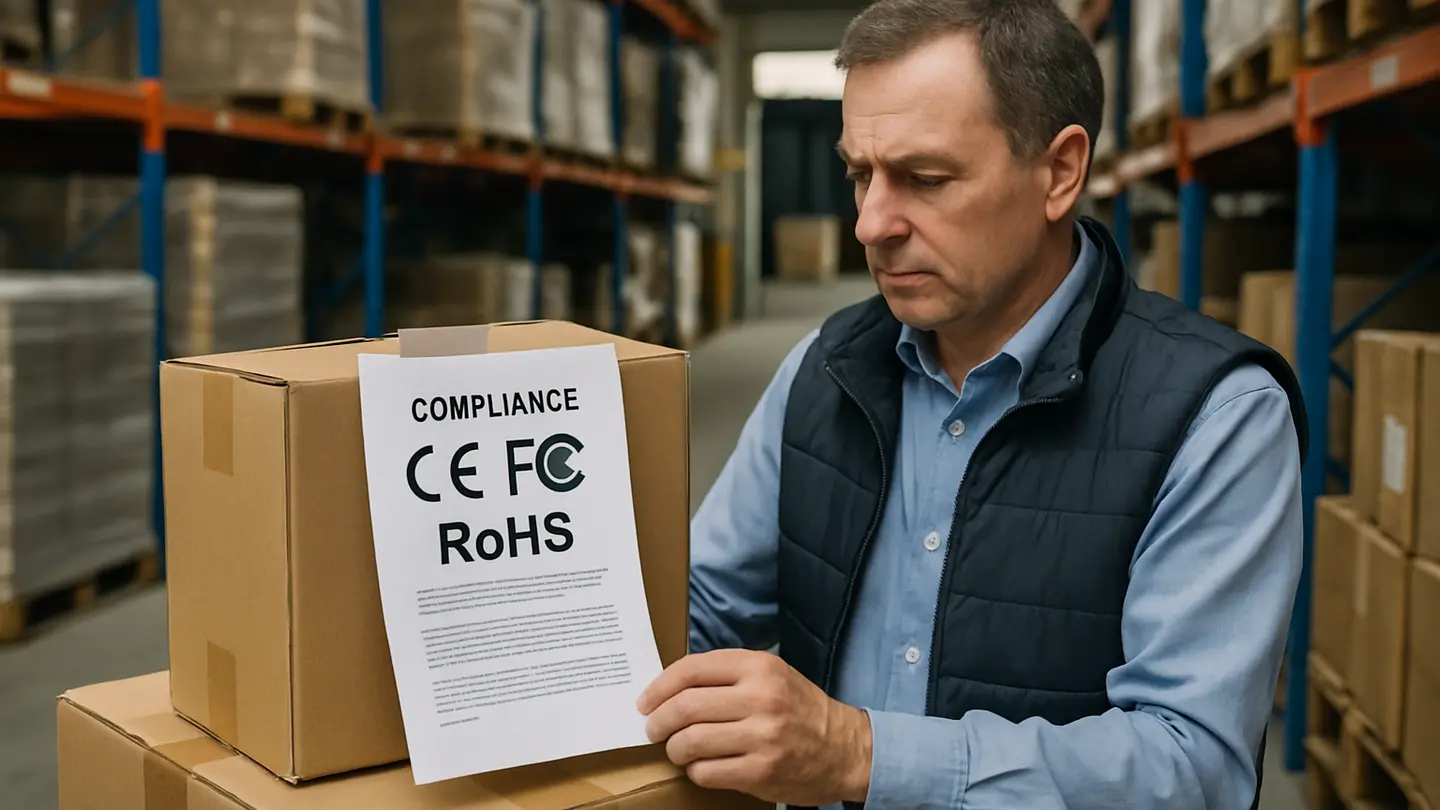
Product certifications, safety requirements, labeling, and test reports must align with the import market and product type. Requirements vary by destination and category, so buyers should confirm obligations before production.
DDP terms may seem simpler because the seller handles more of the import process. However, DDP can reduce routing visibility and limit control over customs execution, carrier selection, and cost transparency. Buyers should understand what is included and who is responsible for delays.
Retailers, marketplaces, and warehouses may also reject or hold goods because of missing barcodes, incorrect carton marks, non-compliant pallets, absent warning labels, or incomplete packing lists.
Factory Execution Gaps and Data Accuracy Issues
Software only works when people follow the process. Factory workers, warehouse teams, inspectors, and logistics partners must scan correctly, record accurately, label consistently, and escalate exceptions.
Poor data can cause stockouts, overstock, wrong accessories, picking errors, and returns costs. Skipped scans, informal substitutions, undocumented material changes, or unapproved packaging revisions may not appear until customer complaints arrive.
Outsourced manufacturing, inspection, and fulfillment relationships should include clear quality standards, process controls, audit rights, and escalation rules. Buyers should define how nonconforming goods are handled, who approves substitutions, how corrective actions are tracked, and how claims are resolved.
Risk-Reduction Plan for Shower Manufacturer Sourcing
A practical risk-reduction plan should include supplier, quality, freight, and inventory safeguards.
Dual sourcing reduces dependence on a single shower factory, component supplier, material source, or production region. This may mean qualifying a backup supplier for key SKUs, spare parts, or emergency replenishment rather than splitting every order equally.
Supplier scorecards help track defect rates, on-time delivery, communication quality, corrective actions, documentation accuracy, and claim handling.
Pre-shipment inspections help catch problems before export. For shower products, inspections should check dimensions, finish, glass condition, hardware completeness, accessory kits, labels, carton strength, and packaging method.
Local buffer inventory can protect high-demand SKUs and critical replacement parts against port delays, customs holds, strikes, or transit disruption. Buffers should support service levels without creating excessive dead stock.
Contingency plans should define backup transport modes, alternative routes, substitute suppliers, emergency contacts, and decision owners.
Final Takeaway: Build a Reliable Shower Supply Engine
Reliable shower sourcing aligns product specifications, factory execution, data accuracy, cost control, delivery performance, and returns handling. The right shower manufacturer helps protect margins, improve service quality, and support growth.
New buyers should understand sourcing terminology, inspection methods, Incoterms, freight options, landed-cost calculation, inventory metrics, and common software systems before scaling. Experienced operators should focus on resilience, visibility, supplier redundancy, and quality-control discipline.
As volume grows, weak execution becomes more expensive. A strong manufacturing partner is not just a factory that can make the product; it is part of a supply engine that keeps goods moving reliably from design to delivery.
FAQ
Should buyers work directly with a shower manufacturer or use a sourcing agent, trading company, freight forwarder, or 3PL?
It depends on internal capability. Direct sourcing gives more control over specifications, pricing, and supplier relationships if your team can manage production, inspections, documents, and freight.
A sourcing agent or trading company can support supplier discovery, local communication, negotiation, and production follow-up. A forwarder manages cargo movement. A 3PL supports warehousing and fulfillment. Many buyers use a hybrid model.
Can fulfillment outsourcing reduce fixed warehouse costs?
Yes. Fulfillment outsourcing can convert some fixed warehouse costs into variable costs based on storage, handling, and shipment activity. This helps when order volume is uncertain, seasonal, or growing.
Before outsourcing, define service levels, reporting requirements, inventory accuracy targets, packaging rules, claims procedures, and audit rights.
Does using an outside logistics partner reduce control?
Not necessarily. A transparent logistics partner can improve visibility if reporting, data access, escalation rules, and responsibilities are clear. Good partners provide shipment status, inventory records, receiving reports, exception alerts, and cost breakdowns.
Control falls when the buyer does not know who handles cargo, which route is used, what documents were filed, or how exceptions are managed.
Is it risky to rely on one factory, one shipping lane, or one component source?
Yes. Dependence on a single factory, component source, port, lane, carrier, or forwarder increases disruption risk. If one link fails, replenishment may stop.
This is especially important for shower products because glass, hardware, trays, seals, and packaging materials must all come together correctly.
How can buyers reduce disruption exposure when sourcing shower products internationally?
Buyers can reduce exposure by qualifying backup suppliers, using pre-shipment inspections, maintaining buffer inventory for high-demand SKUs and replacement parts, and planning alternative freight routes where practical.
They should also track supplier performance with scorecards, review packaging quality, confirm documentation before shipment, and define contingency plans. The goal is to respond quickly before delays become stockouts or customer service failures.