Buying from a shower manufacturer in China is a sourcing, logistics, documentation, compliance, and cost-control process. Shower heads, valves, enclosures, hoses, panels, drains, accessories, and kits may pass through factories, forwarders, brokers, ports, warehouses, truckers, 3PLs, distributors, retail facilities, or jobsites before final receipt.
Plan the import route before production is finished. Decide whether to ship DDP, FOB, air, ocean LCL, ocean FCL, express, sample batches, bulk orders, FBA-directed shipments, or 3PL-routed inventory. Prepare product specifications, commercial documents, compliance records, and customs information before freight is booked.
Information to Prepare Before Ordering and Shipping
Before placing an order with a shower manufacturer, collect the details needed for production, freight booking, customs clearance, and final delivery.
Prepare:
- Factory name, address, contact person, phone number, and export contact
- Buyer, consignee, notify-party, and Importer of Record details
- Tax ID or business identification used for customs entry
- Customs broker and freight forwarder contacts
- SKU numbers, product names, and accurate product descriptions
- Material, finish, size, flow-related specifications, and accessories
- Quantity by SKU and total order quantity
- Carton count, gross weight, net weight, CBM, and carton dimensions
- Palletization requirements, if applicable
- Cargo-ready date and required delivery date
- Final delivery address and receiving contact
- Delivery type: warehouse, jobsite, distributor, 3PL, FBA, retail DC, or limited-access location
- Required service level and preferred shipping mode
- Cargo insurance decision
- Incoterms agreed with the supplier
Avoid vague descriptions such as “shower parts,” “bathroom products,” or “hardware.” Customs documents should identify the goods accurately, such as shower heads, thermostatic shower valves, stainless steel shower hoses, glass shower enclosures, drain assemblies, or shower columns. Review the Harmonized System or U.S. HTS classification before shipment, especially for orders with multiple materials or functional components.
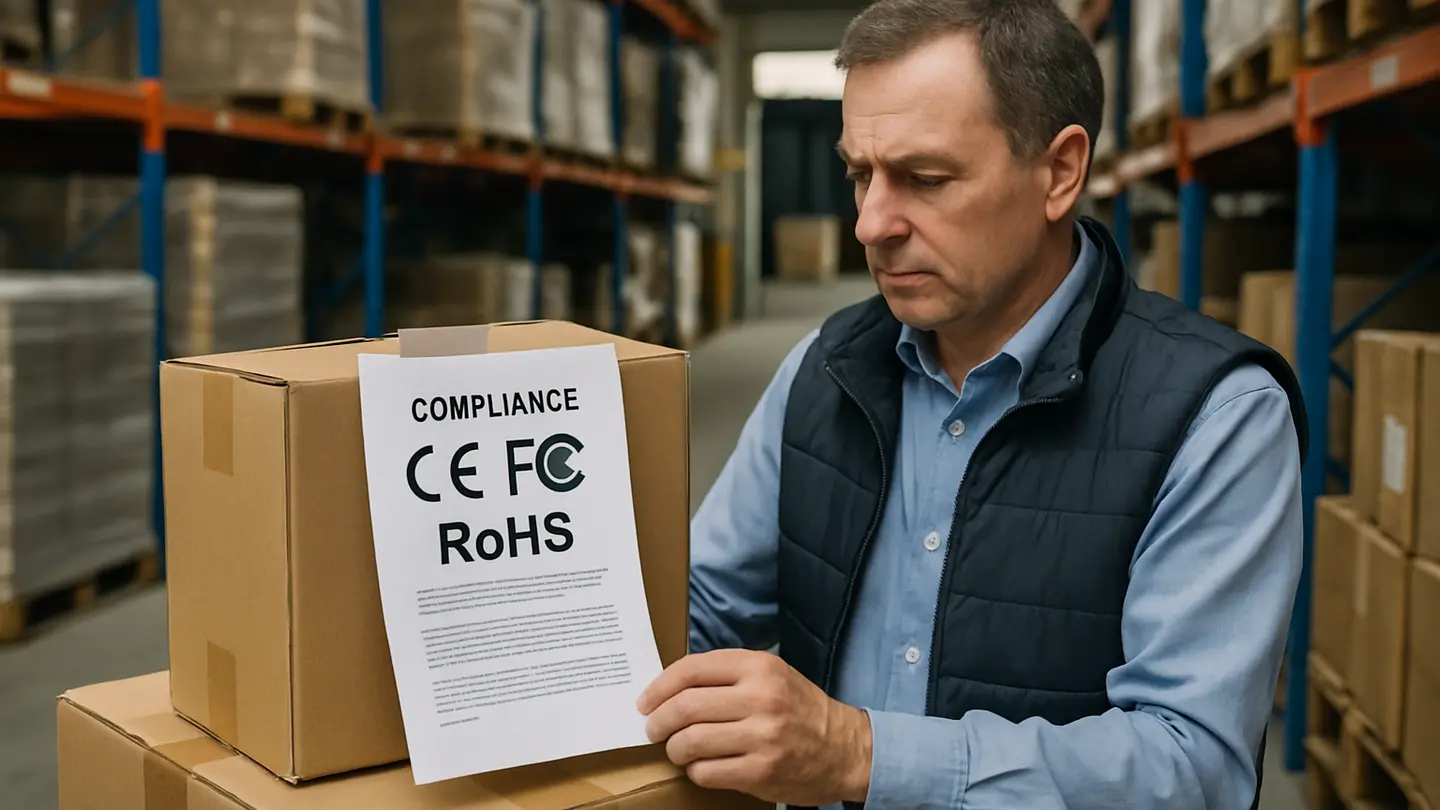
Some shower products may also require installation manuals, packaging artwork, material declarations, safety data sheets for chemical-containing products, certifications, test reports, labeling records, or compliance documents requested by a retailer or project owner.
The Full Workflow for Shipping Shower Products From China to the U.S.
A structured workflow helps reduce customs delays, surprise fees, damaged cartons, and delivery problems. Freight planning should be part of sourcing, supplier management, cost control, and risk management.
This is important for shower products because orders may combine fragile finishes, plated metal fittings, valves, hoses, glass, rubber components, plastic accessories, and retail packaging. A mistake in packaging, classification, documentation, or routing can erase the cost advantage of factory-direct sourcing.
Sourcing support may include supplier verification, production monitoring, pre-shipment inspection, quality control, consolidation, and coordination with freight forwarders. The goal is to connect the purchase order, product specifications, packing details, customs records, and delivery plan into one controlled process.
Step 1: Set the Import Structure and Incoterms
Identify the legal Importer of Record before requesting freight quotes or accepting factory-arranged shipping. The Importer of Record is responsible for import entry, classification, valuation, duties, and compliance in the destination country.
Then select Incoterms that match the purchase agreement and delivery expectations:
- FOB China port: The supplier handles export delivery to the named port; the buyer controls main freight, customs clearance, destination charges, and final delivery.
- EXW factory: The buyer handles pickup from the factory and most logistics tasks. This offers control but requires strong coordination.
- CIF or CFR: The supplier arranges ocean freight to a destination port, but the buyer may still handle import clearance and destination charges.
- DDP: The seller or logistics partner quotes a duty-paid door-delivered price, but the buyer may have less visibility into customs clearance and cost structure.
FOB often gives buyers more control over freight pricing, carrier choice, broker coordination, and destination delivery. DDP can simplify handoffs, especially for smaller buyers, but may reduce visibility into import entries, duty payments, and actual logistics costs.
Non-resident or first-time importers may need a customs bond and Power of Attorney for a customs broker to file U.S. entries. Confirm this early. Many disputes happen when sales terms, freight quotes, and delivery assumptions use different Incoterms or service scopes.
Step 2: Work Out the Real Landed Cost
The unit price from a shower manufacturer is only one part of total cost. Landed cost should include:
- Product cost
- Tooling, molds, samples, or customization charges
- Export packing
- Origin pickup and handling
- Export customs handling
- Main freight
- Cargo insurance
- U.S. customs duties and tariffs
- Customs broker fees
- Merchandise processing and other applicable import charges
- Destination terminal, warehouse, or deconsolidation fees
- Final truck delivery
- 3PL receiving, labeling, palletizing, or FBA preparation fees, if applicable
Compare express, standard air, LCL, and FCL based on urgency and delivered margin. Air express is fast but often expensive for heavy or bulky shower products. Standard air may work for urgent valves, cartridges, replacement parts, samples, or launch inventory. LCL can suit moderate volumes, but destination fees may make it unattractive for small shipments. FCL often gives the best unit economics for high-volume bulky orders.
Be careful with low freight quotes. A quote excluding customs clearance, destination handling, port charges, warehouse fees, appointment delivery, liftgate service, or final trucking can become more expensive than a quote that looked higher at first. For DDP quotes, request a written list of included and excluded charges.
Step 3: Confirm the Right HS or HTS Classification
HS or HTS classification depends on product function, material composition, and configuration. A shower head, valve, hose, glass enclosure, shower panel, drain, bracket, faucet set, and accessory kit may not share the same classification.
Do not rely only on the shower manufacturer’s suggested code. Suppliers may use codes suitable for Chinese export declarations but not precise enough for U.S. import entry. Work with official tariff resources or a licensed customs broker before booking freight.
HTS codes affect:
- Duty rate
- Additional tariff exposure
- Import admissibility
- Customs data accuracy
- Landed-cost calculations
- Possible agency review
The commercial invoice should align with the classification. Product descriptions, material details, country of origin, HTS codes, quantities, and values should be consistent across invoice line items and packing records.
Incorrect codes can trigger customs questions, entry corrections, additional duties, penalties, or release delays. For mixed shower kits, ask the broker whether components should be entered separately or as a set.
Step 4: Review the Commercial Document Set
Review commercial documents as a complete set. The main stack usually includes the commercial invoice, packing list, shipping instructions, and bill of lading or air waybill. Depending on the goods and sales channel, it may also include certificates, test records, origin statements, inspection reports, or retailer routing documents.
Check that all documents match on:
- Seller and buyer names
- Consignee and notify-party details
- Product descriptions and SKU numbers
- Quantities, unit values, total values, and currency
- Carton counts, gross and net weights, dimensions, and CBM
- Shipping marks
- Country of origin
- Port, airport, or delivery address
- Incoterms
Reconcile invoice quantities with packing list quantities, carton counts, and freight booking details. If inspection finds changed packing, added accessories, replaced cartons, or updated dimensions, revise the final documents before shipment.
Estimated weights and outdated packing details can affect freight charges, customs entry, warehouse receiving, and final delivery. Tie document review to quality-control checks so the goods inspected match the invoice and packing list.
Step 5: Improve Packaging and Compare Freight Quotes Fairly
Packaging affects damage risk and freight cost. Carriers price shipments based on actual weight, dimensional weight, and space used. Oversized cartons with empty space increase cost; weak cartons increase damage risk.
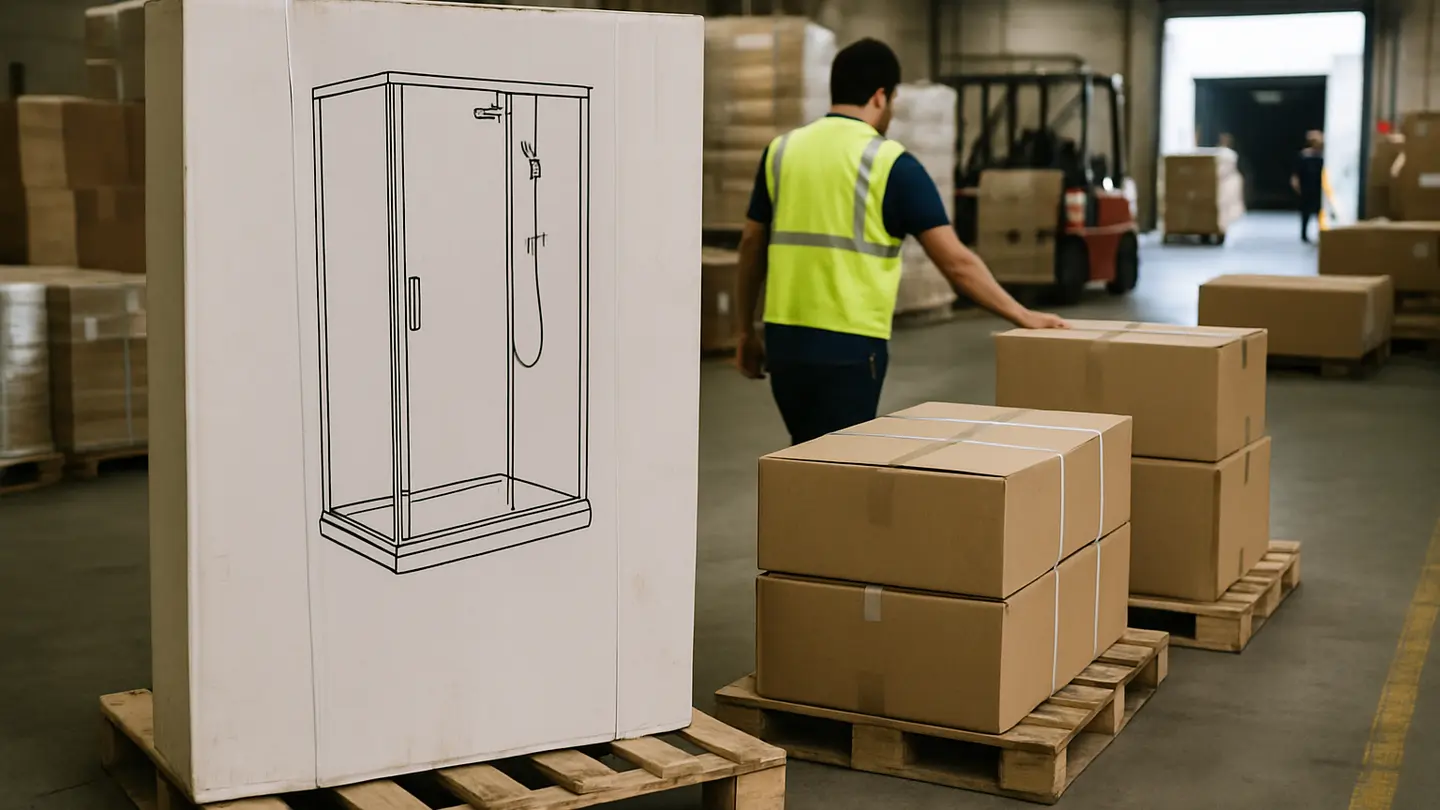
Shower products need practical packaging. Plated finishes need surface protection. Glass shower enclosure panels need strong cartons, edge protection, and handling instructions. Valves and fittings should be packed to prevent thread damage. Retail cartons may need export master cartons. Palletization may protect cargo but can increase CBM, so evaluate it against the delivery channel.
When requesting freight quotes, provide the same data to every forwarder:
- Pickup city and factory address
- Cargo-ready date
- Incoterm
- Total cartons
- Gross weight
- CBM
- Carton dimensions
- Pallet details, if any
- Product description
- Destination address
- Delivery type
- Required service speed
- Insurance requirement
Compare quotes using identical lanes, cargo specifications, dates, and scopes. Confirm whether each quote includes customs clearance, final delivery, cargo insurance, appointment handling, residential or limited-access delivery, liftgate service, FBA delivery appointments, storage, demurrage, detention, or exception fees.
Step 6: Track Freight Handoffs and Transit Milestones
After booking freight, define who owns each milestone and who responds when something changes. The factory, sourcing agent, forwarder, customs broker, trucker, 3PL, and buyer may all touch the shipment.
Track key events such as:
- Cargo picked up or received at origin warehouse
- Export documents submitted
- Chinese export clearance completed
- Container loaded or cargo tendered to airline
- Vessel or flight departed
- ETA updates
- Arrival notice issued
- Customs entry filed
- Customs release received
- Destination charges paid
- Delivery appointment scheduled
- Final delivery completed
FCL, LCL, air, and express shipments have different tracking patterns. FCL provides container-level visibility but may face port, rail, chassis, or appointment delays. LCL requires origin consolidation and destination deconsolidation. Air freight moves faster but still needs documents, customs clearance, and delivery coordination. Express offers simplified tracking but may not suit bulky or high-volume orders.
Automated tracking is useful, but direct confirmation matters when delays, document issues, routing changes, or customs questions appear.
Step 7: Complete U.S. Customs Clearance and Final Delivery
Chinese export clearance is separate from U.S. import entry. A shipment can leave China correctly and still face U.S. questions if documents, HTS codes, values, or importer details are incomplete or inconsistent.
After the arrival notice, the customs broker files entry using the commercial invoice, packing list, bill of lading or air waybill, importer details, classification, and other required records. Reconcile duties, tariffs, merchandise processing fees, harbor maintenance fees where applicable, broker charges, and destination costs against the landed-cost estimate.
Once customs release is complete, route the cargo to its final destination: distributor, 3PL, Amazon FBA facility, retail warehouse, project site, contractor warehouse, or company distribution center. Each destination may have different receiving rules, appointment requirements, labeling needs, pallet standards, and exception procedures.
At receiving, count cartons, inspect for visible damage, take photos when needed, and record shortages or exceptions on delivery documents. If there is damage, signed exceptions and timely photo evidence can support insurance claims or supplier discussions.
How to Prevent Shipping Issues From Damaging Your Margins
Shipping problems often build from several small failures: unclear supplier terms, incomplete freight quotes, weak packaging, inaccurate documents, delayed customs answers, and poorly planned delivery. By arrival, the buyer may face added fees, late inventory, damaged cartons, and lower gross margin.
Fix root causes before freight moves. Common risks include customs holds, destination fee spikes, missed replenishment deadlines, mismatched documents, and DDP arrangements with too little visibility.
Customs Holds and Classification Questions
HS or HTS mismatches can trigger customs questions or shipment holds. This risk increases when shower products include mixed materials, specialized valves, electronic features, glass, metal, rubber, plastic, or bundled accessories.
Supplier-guessed codes should be treated as a starting point, not final authority. Provide your broker with product specifications, material details, photos, catalog sheets, and intended use before booking freight. If errors are found after entry, corrections may require formal procedures and added cost.
Unexpected Destination Charges
A low freight quote may exclude terminal handling, destination charges, warehouse fees, customs clearance, delivery, appointment fees, storage, or special handling. These costs can be significant for LCL shipments or strict receiving locations.
Compare inclusions and exclusions line by line. If a charge is excluded, add it to your landed-cost model before confirming the booking. A transparent quote is often more useful than the lowest incomplete quote.
Late Shipments and Replenishment Gaps
Ocean freight can miss replenishment deadlines when buyers underestimate production completion, origin consolidation, port congestion, transit variability, customs processing, deconsolidation, and local delivery time. LCL can take longer because cargo must be grouped at origin and separated at destination.
For urgent shower product orders still at origin, standard air may be necessary to protect stock availability or project deadlines. The decision should reflect unit economics, customer commitments, seasonality, and stockout risk, not only freight cost.
Paperwork That Does Not Match the Cargo
Conflicting paperwork can delay customs clearance and create receiving problems. If the factory changes carton counts, packing methods, accessory sets, product descriptions, weights, or dimensions, update the invoice and packing list before shipment.
Reconcile quantities, dimensions, carton counts, weights, consignee names, and destination details before freight is booked. Document accuracy is easier to fix before pickup than after cargo is in transit.
DDP Shipments With Too Little Visibility
DDP can simplify importing, but it can also hide customs details if the supplier or forwarder does not share proof of clearance. Buyers should request documentation confirming that goods legally entered the destination market.
A DDP scope should define duty responsibility, delivery coverage, excluded fees, importer status, and document-sharing obligations. If the buyer needs legal visibility, compliance control, or clean import records, the factory should not control the process in a way that blocks access to entry information.
FAQ
1. How much does it cost to ship from China to the US?
Shipping cost depends on transport mode, shipment volume, weight, CBM, packaging, origin city, destination, service level, and final delivery requirements. Air express is commonly priced per kilogram. Ocean freight may look cheaper, but port, destination, customs, deconsolidation, and trucking fees can materially affect final cost. Always calculate fully landed cost before booking.
2. How long does shipping take from China to the US?
Transit time can range from several days by express to several weeks by ocean freight. Ocean estimates should include buffers for production completion, origin consolidation, port congestion, vessel schedules, customs processing, chassis availability, deconsolidation, and local delivery. Do not plan inventory or project timelines using only ideal port-to-port estimates.
3. What is the cheapest way to ship from China to the US?
For high-volume shower product orders, ocean FCL often provides the lowest delivered unit cost. LCL can work for smaller shipments, but may become uneconomical when destination fees are included. For small urgent orders, standard air may offer a better cost-speed balance than LCL. The cheapest option depends on shipment size, weight, fees, urgency, product margin, and stockout risk.
4. Do I need an import license to buy from China?
Most products do not require a general U.S. import license. Commercial shipments above applicable thresholds may require a customs bond, and many small business buyers can import using standard tax identification. Regulated or specialized shower products may require product-specific permits, agency approvals, certifications, test reports, or compliance records depending on materials, features, and destination channel.
Conclusion: Build a Repeatable Shower Product Import Process
Build an SOP covering supplier readiness, product specifications, shipping mode selection, packaging checks, document review, HTS validation, customs clearance, final delivery, and landed-cost reconciliation.
After each shipment, review transit performance, damage rates, documentation accuracy, customs issues, fee variances, and receiving exceptions. Use that scorecard to improve future orders with the same shower manufacturer or compare suppliers.
The best results come from connecting sourcing, supplier management, inspection, compliance review, and logistics coordination before purchase orders are issued. When upstream details are controlled early, shipping from China becomes more predictable, margins are easier to protect, and shower product inventory reaches the right destination with fewer surprises.