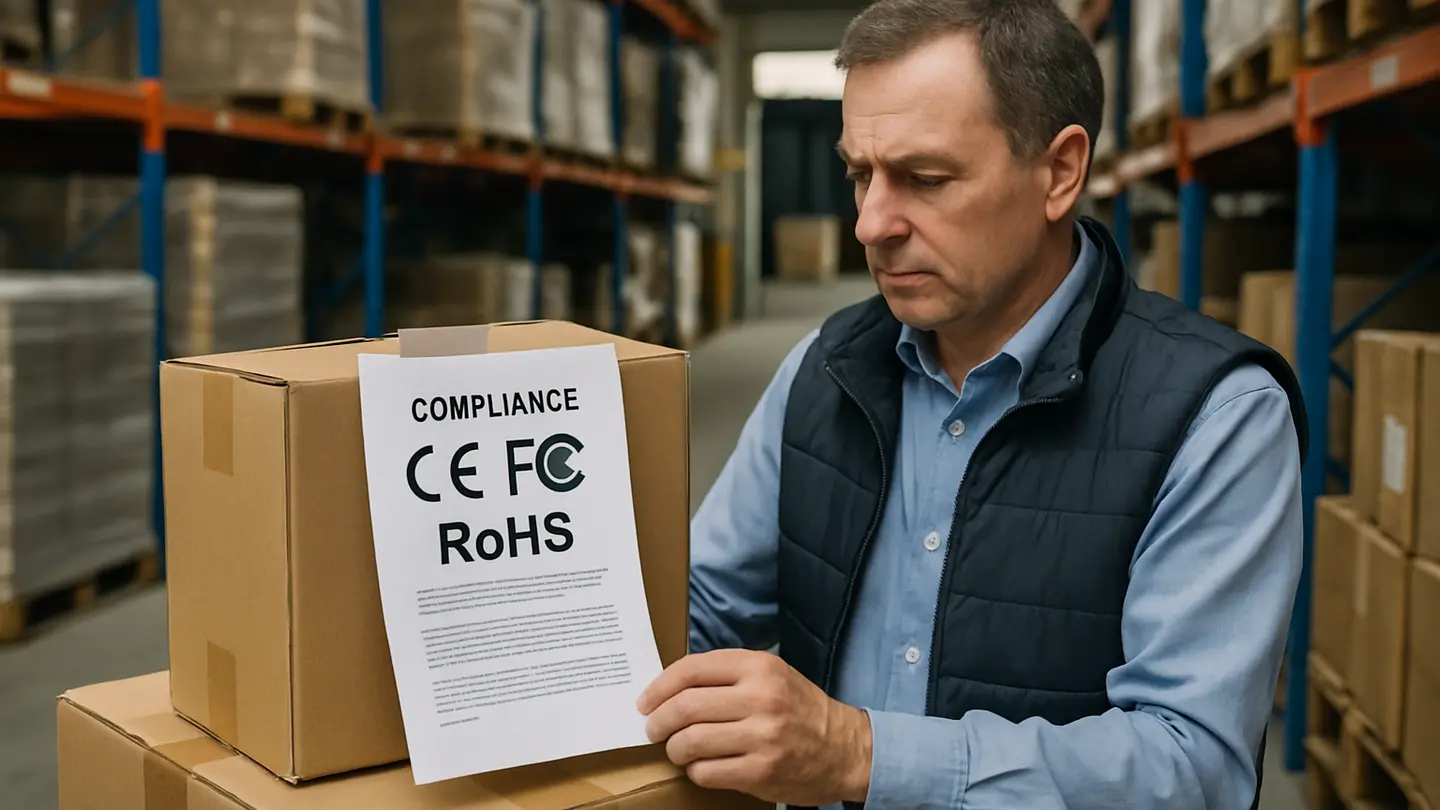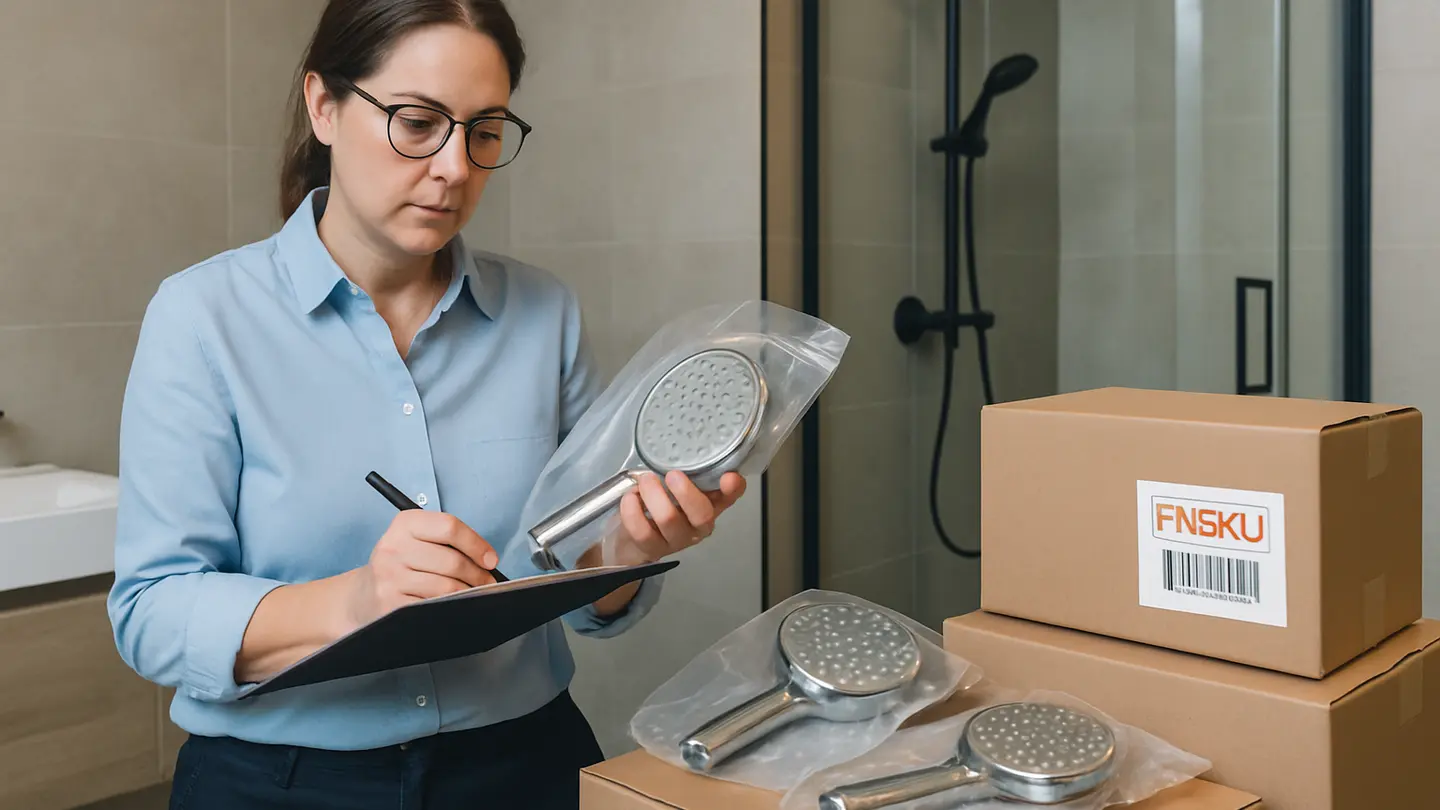
Packaging compliance for Amazon FBA should be controlled before freight pickup, not treated as a warehouse fix. For buyers sourcing from a Shower Manufacturer, bagging, labels, carton data, pallet labels, and shipment records should be managed at the purchase order, production, inspection, and loading stages.
Shower curtains, hoses, fittings, hardware sets, replacement parts, and bundled bathroom accessories can pass product QC but still create FBA receiving delays if packaging is wrong. A factory packaging audit helps prevent rework, shipment blocks, mis-scans, carton rejection, and inventory delays after cargo reaches Amazon.
7 FBA Packaging Controls to Require From a Shower Manufacturer
An FBA-ready shower shipment needs packaging controls that connect factory packing decisions with Amazon inbound requirements. These controls should be written into the purchase order, confirmed during production, and verified before cartons are sealed or loaded.
The following controls apply to many shower-related products, including curtains, handheld shower accessories, hoses, brackets, hooks, drain accessories, fittings, and multi-piece bathroom kits.
1. Define Poly Bag Rules Before Shower Products Leave the Line
Poly bag selection should not be left to the factory’s default packing team. A Shower Manufacturer may have several bag options, and the cheapest bag may not meet FBA expectations.
For FBA shipments, unit poly bags should generally be transparent or translucent, fully sealed, strong enough for handling, and suitable for the product’s shape. Amazon commonly requires poly bags to meet minimum thickness requirements, and many sellers use a minimum 1.5 mil specification unless current category guidance requires otherwise.
Your packaging specification should define:
- Exact poly bag dimensions for each SKU
- Minimum bag thickness
- Seal type, such as heat seal or adhesive closure
- Maximum allowable excess bag overhang
- Whether the barcode must scan through the bag or be applied outside
- Suffocation warning requirements for qualifying bag openings
Avoid vague instructions such as “use suitable poly bag.” Excess film can wrinkle, catch, obscure labels, and weaken retail presentation. For shower curtains, textile accessories, gasket packs, hoses, and bundled fittings, specify the finished bag size.
If the bag opening meets Amazon’s suffocation-warning threshold, the warning should be printed on the bag or applied as a clear label. Printed warnings are often more reliable than adhesive labels during hot, humid, or abrasive export transit.
2. Put FNSKU Labels Where Bagged Shower SKUs Can Be Scanned
FNSKU placement is easy to prevent and frustrating to fix after shipment. When a product is inside a poly bag, shrink wrap, protective sleeve, or inner carton, the scannable label should be on the exterior surface unless scanning through the packaging has been tested and approved.
Place FNSKU labels on smooth, flat, readable surfaces. Avoid seams, wrinkles, folded edges, corners, rounded fittings, textured packaging, or flexible areas that distort during handling. A label that scans on a production table may fail during fast warehouse receiving.
This matters for soft or irregular shower goods such as curtains, fabric liners, mesh organizers, silicone accessories, hoses, and hardware packs. Cover any visible UPC, EAN, or other retail barcode that should not be used for Amazon receiving. For kits and bundles, add clear bundle wording near the main barcode so components are not separated.
3. Control Carton Dimensions, Gross Weight, and Transit Strength
Master cartons must meet Amazon’s applicable carton weight and dimension rules before shipment release. Oversized or overweight cartons can cause delays, rejection, penalties, or inbound shipment problems.
For many standard FBA cartons, buyers should avoid exceeding 50 lb gross weight unless the carton qualifies for a specific single oversized-unit exception. Cartons requiring special handling should be labeled correctly, including heavy-package handling labels where applicable.
Do not pack too close to the 50 lb limit. A carton marked as 23 kg may exceed the limit after scale variation, tape, liners, labels, moisture, or final packing changes. Set an internal maximum below the limit and require scale photos.
Carton strength should match export handling, ocean freight, domestic trucking, and FBA receiving. Depending on the SKU, buyers may specify carton type, corrugated board grade, edge-crush performance, burst strength, drop-test expectations, or stacking resistance.
Before freight pickup, require a carton report showing:
- SKU
- Units per carton
- Carton length, width, and height
- Gross weight
- Carton count
- Carton label status
- Any heavy or oversized handling label used
4. Add Moisture, Scratch, and Shape Protection for Bathroom Goods
FBA compliance does not guarantee that shower products will arrive sellable. Bathroom goods face humidity, compression, vibration, and repeated handling before reaching Amazon.
Different products need different protection. Plated hardware can scratch if parts rub together. Flexible hoses can kink. Shower curtains and liners can lose presentation if folded or compressed poorly. Small fittings can puncture bags. Glass-like plastic parts can crack if cartons are unsupported.
The packaging specification should define protective materials, such as:
- Tissue or protective sleeves for plated surfaces
- Individual compartments or trays for hardware
- Inserts or nesting for shaped parts
- Carton liners for moisture exposure
- Desiccants where humidity risk is material
- Bubble wrap, foam sheets, paper fill, or other approved dunnage
- End caps or separators for long components
- Controlled folding and bagging methods for curtains or textiles
Balance protection with dimensional weight. The goal is not more packaging; it is packaging that keeps the SKU sellable through the actual route from factory to fulfillment center.
5. Match Case Packs to Seller Central Box-Content Data
Amazon receiving depends on a match between physical cartons and the shipment data in Seller Central. If the Shower Manufacturer changes case quantities after shipment creation, compliant products can still be delayed.
Before mass packing begins, lock the case-pack template for each SKU. Confirm:
- Units per carton
- Number of cartons
- SKU configuration
- Carton dimensions
- Carton gross weight
- Box-content information
- Shipment labels
- Pallet or small-parcel routing method
Supplier-side “minor” changes are not minor for FBA. If a factory changes from 24 units per carton to 20 units per carton to reduce weight, the buyer must update the shipment data before labels are applied and cargo is released.
The audit should compare packed cartons with the actual shipment plan, not only with the purchase order.
6. Prepare Cartons and Pallets for FBA Receiving Checks
Cartons and pallets should be prepared for fast inspection and scanning. Anything that creates uncertainty can slow receiving.
Do not allow reused cartons unless they are clean, strong, and free from old shipping labels, obsolete barcodes, unrelated product marks, or previous handling labels. Carton IDs and FBA shipment labels should be readable and placed on flat surfaces.
All seams should be securely sealed. Weak tape, open corners, crushed edges, or bulging cartons should be corrected before loading. For heavier shower accessories or hardware kits, reinforced sealing may be needed.
A simple shake test before palletizing can reveal loose contents. If cartons rattle heavily or contents shift, internal protection may be inadequate.
For palletized shipments, labels should be placed on flat, accessible sides where warehouse staff can scan them without cutting wrap or moving cartons. Confirm pickup readiness, freight instructions, routing, and shipment paperwork before the truck arrives.
7. Decide Whether Factory, 3PL, or Amazon Prep Should Handle Packaging
The best prep workflow depends on SKU complexity, volume, labeling risk, and rework cost.
Factory prep can work for simple single-SKU shower products with stable specifications, such as a consistent shower curtain SKU or standard accessory pack, if the supplier has been trained and audited.
Complex kits may need stronger controls. Shower sets with multiple components, replacement-part bundles, mixed accessories, or fragile assortments may be safer with a dedicated 3PL before export or before delivery to Amazon. A 3PL can perform scanning, kitting, relabeling, and photo documentation with more independence than the production factory.
Destination 3PL prep can solve urgent problems, but it usually adds cost, time, and extra handling. Use it as a risk-control option, not as a routine substitute for poor factory preparation.
When vetting any prep provider, ask for barcode scan records, kitting procedures, photo reports, packaging material controls, and examples of past FBA labeling work.
How to Run a Pre-Shipment FBA Packaging Inspection at the Shower Factory
A pre-shipment FBA packaging inspection should be separate from general product QC. Product quality, packaging compliance, barcode accuracy, carton data, and loading readiness all need direct verification.
The inspection should be repeatable for every production batch and major SKU variation. Inspectors should compare physical goods, packaging, labels, and shipment data before freight pickup.
Step 1: Compare Random Units With the Approved ASIN Specification
Pull random units from active production or packed inventory. Compare them with the approved ASIN specification sheet, including material, dimensions, color, finish, included accessories, packaging format, and bundle configuration.
This catches unapproved changes before export, such as a substituted bag, changed hose length, adjusted finish, or missing accessory.
Step 2: Measure Poly Bag Thickness and Check Warning Text
Use a digital micrometer to measure poly bag thickness. Do not accept a verbal statement from the packing supervisor. Check bags from different packing stations or cartons.
Inspect closures for gaps, weak seals, incomplete adhesive strips, or open corners. If suffocation warnings are required, confirm that the warning is visible, legible, and correctly applied.
Step 3: Scan Every FNSKU Placement Under Warehouse-Like Conditions
Use a handheld scanner to test FNSKU labels before releasing cartons. Scan under realistic lighting and handling conditions, not only under perfect office lighting.
Labels should scan without flattening the product, stretching the bag, or repositioning the unit several times. Cover internal UPC or EAN codes that should not be scanned. If several barcodes are visible, receiving staff may scan the wrong one.
Step 4: Verify Bundle Labels on Multi-Piece Shower Kits
Multi-piece shower kits should be clearly identified as bundles. Place the wording near the main barcode so warehouse staff see it immediately.
This applies to shower head sets, hose-and-bracket kits, curtain-and-hook packs, replacement-part sets, and accessory assortments. Clear bundle labeling helps prevent components from being separated during receiving or fulfillment.
Step 5: Recheck Master Carton Measurements and Gross Weight
Measure carton length, width, and height with a physical tape measure. Weigh sealed cartons on a scale and record gross weight.
Keep carton sides below Amazon’s applicable standard dimensional thresholds unless the contents qualify for an exception. Use a safety buffer below 50 lb rather than packing at the limit.
Step 6: Use a Shake Test to Find Loose or Under-Protected Contents
Shake selected master cartons carefully to identify internal movement. Rattling, shifting, or impact sounds can indicate loose fixtures, underfilled cartons, or insufficient dunnage.
If movement is detected, open the carton and inspect the packing method. Require repacking when protection is inadequate. The shake test is not a laboratory transit test, but it quickly finds problems that often become damage claims.
Step 7: Match Pallet Labels and Box Counts to Shipment Data
Confirm that pallet labels are clean, readable, and correctly positioned. Match the physical box count to the Seller Central shipment data before pickup.
Also verify that the correct cartons are assigned to each pallet. A clean pallet label will not solve a shipment discrepancy if the wrong cartons are loaded onto the wrong pallet or assigned to the wrong shipment.
Step 8: Create a Timestamped Photo Record Before Truck Departure
Photograph open cartons, sealed cartons, carton labels, pallet labels, wrapped pallets, and loaded pallets. Include timestamped images before the truck leaves the factory or consolidation warehouse.
This file can support supplier accountability, freight disputes, and Amazon receiving investigations, especially when a discrepancy appears weeks later.
3 Factory-Floor Lessons for FBA Shower Shipments
Several packaging lessons repeat across FBA shower shipments.
First, printed suffocation warnings are often more reliable than separate adhesive warning labels. Adhesive labels can lift, wrinkle, or fall off during hot and humid transit.
Second, exterior barcode placement improves scan reliability for bagged, flexible, or irregular products. Labels hidden inside wrinkled poly bags or applied to curved parts may fail even when the barcode is correct.
Third, carton weights need a real safety buffer. A carton packed to 23 kg may exceed 50 lb after product-weight variation, tape, liners, desiccants, labels, or scale differences. Scale-photo documentation helps enforce the approved standard.
The Production Supervisor’s Packaging Materials Checklist
The production supervisor should work from an exact materials checklist, not generic terms such as “plastic bag,” “carton,” or “tape.” The checklist should define:
- Poly bag material, thickness, dimensions, and closure type
- Suffocation warning method and placement
- Inner sleeves, tissue, trays, inserts, or separators
- Carton liner or moisture-control material
- Master carton board type and strength expectation
- Carton dimensions and approved gross-weight range
- Tape type and sealing pattern
- Dunnage type and placement
- FNSKU label size, position, and barcode coverage rule
- Bundle label wording and placement
For export cartons, corrugated fiberboard master cartons should suit both international transit and FBA receiving. Buyers may specify regular slotted cartons, B-flute corrugated board, ECT-32, 200-lb burst strength, or another appropriate standard depending on product weight and route.
For heavier or sharper bathroom goods, reinforced filament tape or another approved sealing method may be needed to keep seams closed throughout transit.
FAQ
1. Does Amazon still offer prep and item-labeling services for US FBA shipments?
Amazon has offered prep and labeling options for eligible FBA inventory, but availability, fees, eligibility, and operational rules can change. Buyers should check current Seller Central guidance before relying on Amazon-managed prep.
For a shower sourcing program, it is safer to control labeling and prep at the factory, export 3PL, or destination 3PL level unless Amazon’s current workflow clearly confirms otherwise.
2. When does a poly bag need a suffocation warning?
A suffocation warning is generally required when the poly bag opening meets Amazon’s specified size threshold, commonly referenced as 5 inches or larger when measured flat. Buyers should confirm the current Amazon requirement for their marketplace and product type.
Poly bags should also be transparent or translucent, sealed, and thick enough for FBA handling. Because factories may substitute thinner or unmarked bags to reduce cost, bag dimensions, thickness, sealing, and warning text should be locked in writing and checked during inspection.
3. What happens if a carton is over 50 lb?
Amazon may delay, reject, penalize, or flag overweight cartons. The 50 lb limit generally excludes qualifying cartons containing a single oversized unit, but buyers should verify the applicable exception before shipping.
If a carton qualifies for heavy handling, required handling labels should be applied. The safest control is to set a carton-weight buffer below 50 lb and require scale photos and carton-weight records before shipment release.
4. Where should the FNSKU label go if the item is bagged?
Place the FNSKU label on a smooth, flat, readable exterior surface of the bag or outer packaging. Do not rely on a label hidden on wrinkled fabric, curved fittings, flexible packaging, or a surface obscured by the bag.
Other visible barcodes, such as UPC or EAN codes that should not be scanned, should be covered. A factory or 3PL scan check should confirm that every bagged shower SKU can be scanned before export.