Shower Manufacturer Quality Control is not a single final inspection. It is a system that starts before the deposit is paid and continues through supplier approval, sample confirmation, material control, production monitoring, final inspection, and shipment release.
For B2B buyers sourcing shower enclosures, shower heads, shower sets, faucets, valves, trays, hoses, glass panels, and bathroom accessories from China or other manufacturing hubs, defects become expensive quickly. A leaking joint, chipped glass panel, scratched finish, wrong cartridge, missing installation kit, or crushed carton may not be found until after customs clearance.
The goal is to prevent those failures before the order leaves the factory through objective standards, measurable inspection criteria, AQL sampling, and clear commercial consequences before final payment.
What Must Be Ready Before a Shower Quality Program Starts
A shower quality program needs a clear baseline before production begins. The most important starting point is a signed golden sample: the approved physical reference for the product, finish, components, assembly, packaging, and labeling. If there are multiple models, colors, finishes, or packaging versions, each version should have its own approved reference.
The buyer should also confirm a complete bill of materials. For shower products, the BOM may include brass or stainless components, cartridges, ceramic discs, hoses, seals, gaskets, aerators, diverters, handles, glass panels, profiles, rollers, hinges, screws, wall brackets, trays, drains, installation kits, and instruction manuals. Without a locked BOM, the supplier may substitute lower-cost components.
The purchase order should define:
- Model numbers and SKU references
- Finish type, such as chrome, brushed nickel, matte black, gunmetal, or PVD coating
- Cartridge specifications and expected function
- Hose length, material, thread type, and compatibility
- Glass thickness, edge treatment, and safety requirements
- Profiles, seals, handles, hinges, rollers, and accessories
- Packaging structure, inner protection, carton strength, and pallet requirements
- Labels, barcodes, shipping marks, retail artwork, and instruction manuals
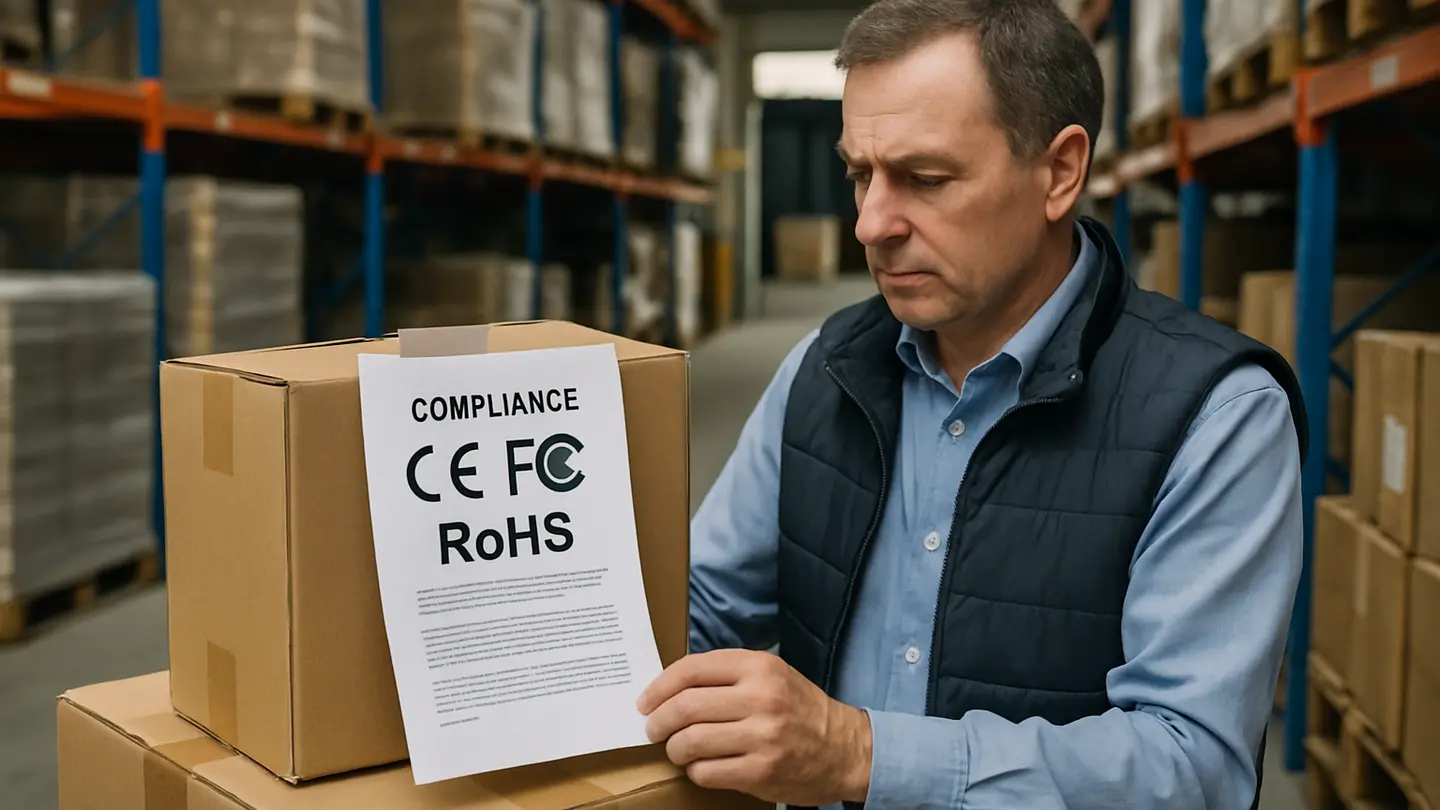
Compliance requirements must also be listed before production starts. Depending on the product and destination market, this may involve plumbing standards, water-contact material rules, glass safety standards, coating requirements, chemical restrictions, labeling laws, and technical documentation.
Inspectors need access to drawings, artwork, contracts, test criteria, approved samples, technical files, and inspection checklists. Inspection rights and payment terms should be written into the contract or purchase order, including the right to inspect before shipment, reject nonconforming goods, require rework, and withhold balance payment until the agreed standard is met.
How to Design a Reliable QC System for Shower Manufacturing
A reliable QC system covers the full supply chain, not just finished cartons. Final inspection is important, but it cannot efficiently correct every problem. If the wrong cartridge, thin profile, weak coating, or unsuitable seal enters production, the defect may already be built into many units.
A practical system normally includes:
- Clear product standards and acceptance criteria
- Factory audit before supplier approval
- Incoming material checks
- Pre-production alignment
- During-production inspection
- Functional, laboratory, or product-specific testing where needed
- Pre-shipment inspection
- Payment and shipment decisions based on inspection results
Each stage controls a different risk. A factory audit checks whether the supplier can make the product consistently. Incoming material control reduces the risk of poor brass, weak plastic, incorrect glass, or unapproved seals. In-process inspection catches defects while there is still time to correct production. Pre-shipment inspection confirms whether finished goods match the order before the buyer releases payment.
This matters because many shower defects are not only cosmetic. A leaking joint can create property damage claims. Incorrect dimensions can make installation impossible. Missing accessories can cause customer returns. Weak packaging can turn acceptable products into damaged inventory during transport.
Step 1: Approve the Golden Sample and Define Pass-Fail Rules
The golden sample should be signed, dated, photographed, and referenced in the purchase order. For each shower model, the approved sample should reflect the correct finish, components, assembly, packaging, labels, and accessories.
Vague language such as “good finish,” “standard quality,” or “same as before” is not enough. Convert expectations into measurable rules, such as:
- Finish color tolerance compared with the approved sample
- No visible scratches, dents, peeling, stains, or coating gaps beyond the agreed limit
- Thread compatibility with specified fittings
- Flow rate range under defined test conditions
- Leak-free performance under specified pressure or functional tests
- Dimensional tolerances for profiles, trays, glass panels, and fittings
- Glass edge quality with no sharp edges or unacceptable chips
- Seal fit and water barrier performance
- Packaging structure able to protect goods during normal handling and transport
Defect categories should be defined before production. A critical defect may involve safety risk, severe leakage, broken glass, hazardous sharp edges, or noncompliant materials. A major defect may include wrong components, failed function, visible finish damage, missing accessories, wrong dimensions, or incorrect labeling that affects sale or installation. A minor defect may involve small cosmetic issues or packaging imperfections that do not affect function or saleability.
AQL limits should also be agreed before mass production. The purchase order should state the inspection level, defect classifications, and acceptable quality limits.
Step 2: Audit the Shower Factory Before Supplier Approval
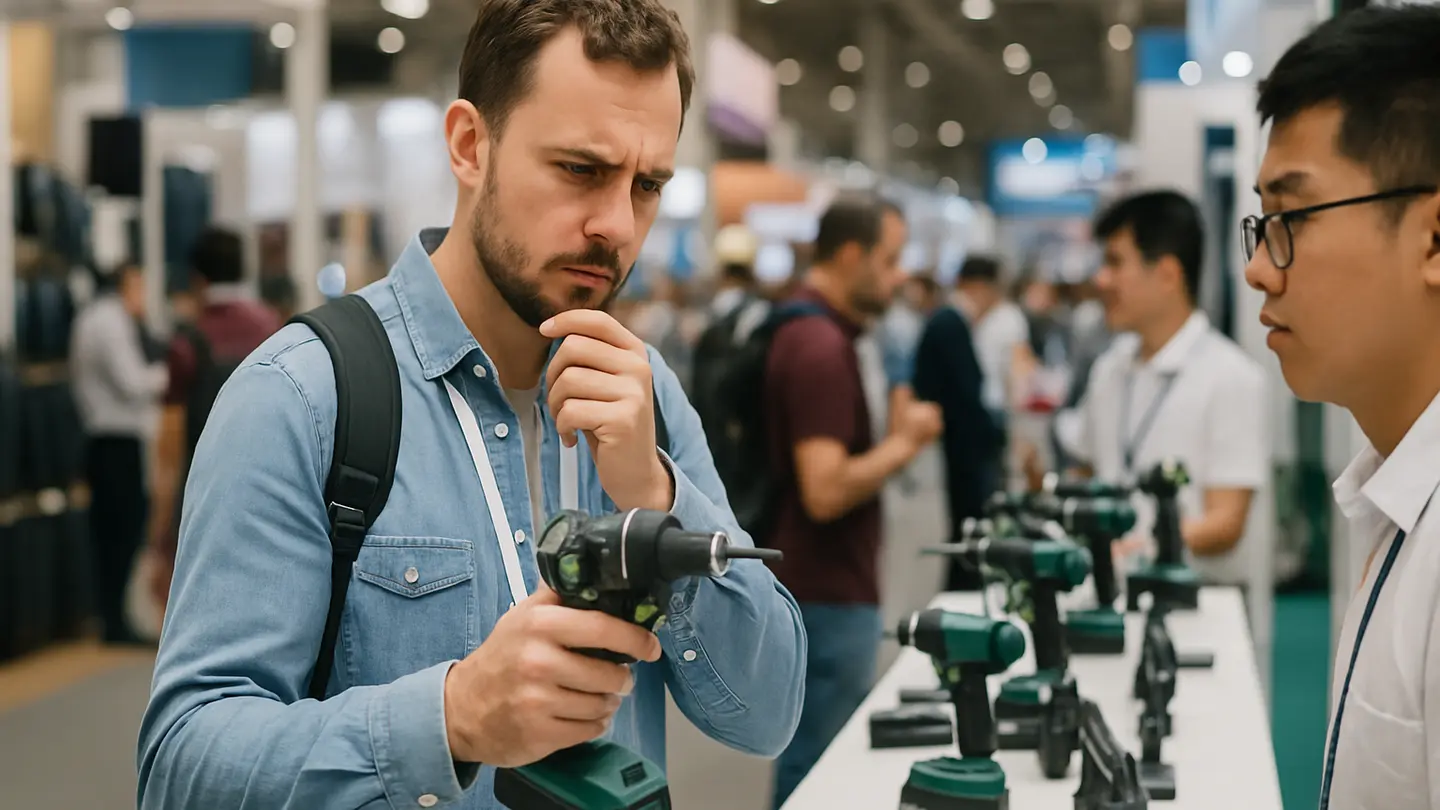
A factory audit should be a supplier approval gate, not a paperwork exercise. A supplier may have attractive pricing and good samples but still lack the systems needed for consistent production.
The audit should verify the supplier’s business license, export experience, ownership identity, certifications, and production scope. A trader, assembler, plating subcontractor, glass processor, and full manufacturer may all present themselves differently, so the buyer needs to know who controls critical production steps.
The on-site review should cover production layout, housekeeping, safety practices, machine maintenance, calibration records, assembly lines, finishing areas, glass handling zones, and packing areas. For shower products, auditors should pay close attention to plated or coated parts, because scratches and finish contamination can occur easily if the line is poorly organized.
Material control is another key area. The audit should check how the factory receives, identifies, stores, and inspects brass, stainless steel, plastic parts, glass panels, seals, hoses, cartridges, coatings, and packaging materials. Rejected parts should not be able to return to production.
The audit should also review in-process QC, final QC, complaint handling, and corrective action records. Remote document screening can help shortlist suppliers, but it cannot fully replace an on-site audit because many quality risks are visible only on the production floor.
Step 3: Hold a Pre-Production Meeting and Seal the Approved Sample
Before mass production starts, hold a pre-production meeting with the buyer, shower manufacturer, and inspector or QC representative. The purpose is to remove ambiguity before materials are ordered and workers begin production.
The meeting should confirm the order quantity, delivery window, sample revision, BOM, finish, technical drawings, accessories, labels, cartons, inner protection, barcodes, shipping marks, and instruction manuals. Any change from the approved sample should be documented in writing.
This is also the time to set the inspection calendar. A buyer may schedule a pre-production check, during-production inspection, pre-shipment inspection, and container loading supervision depending on risk level and order value.
Inspectors should be briefed on likely failure modes, including leakage, finish scratches, wrong thread sizes, poor seal fit, missing fittings, mixed SKUs, incorrect cartons, glass chips, weak packaging, and damaged retail boxes.
The approved sample should be sealed and photographed, including the full product, key components, finish, labels, accessories, carton markings, and packaging method.
Step 4: Inspect Shower Products During Production
During-production inspection is useful when roughly 20% to 50% of the order is completed. At this stage, there is enough output to evaluate real production quality, but still enough time to correct problems before the order is finished.
Inspectors should pull work-in-progress units from active production stations, semi-finished areas, packing lines, and storage zones, not only from samples placed on a table by the factory.
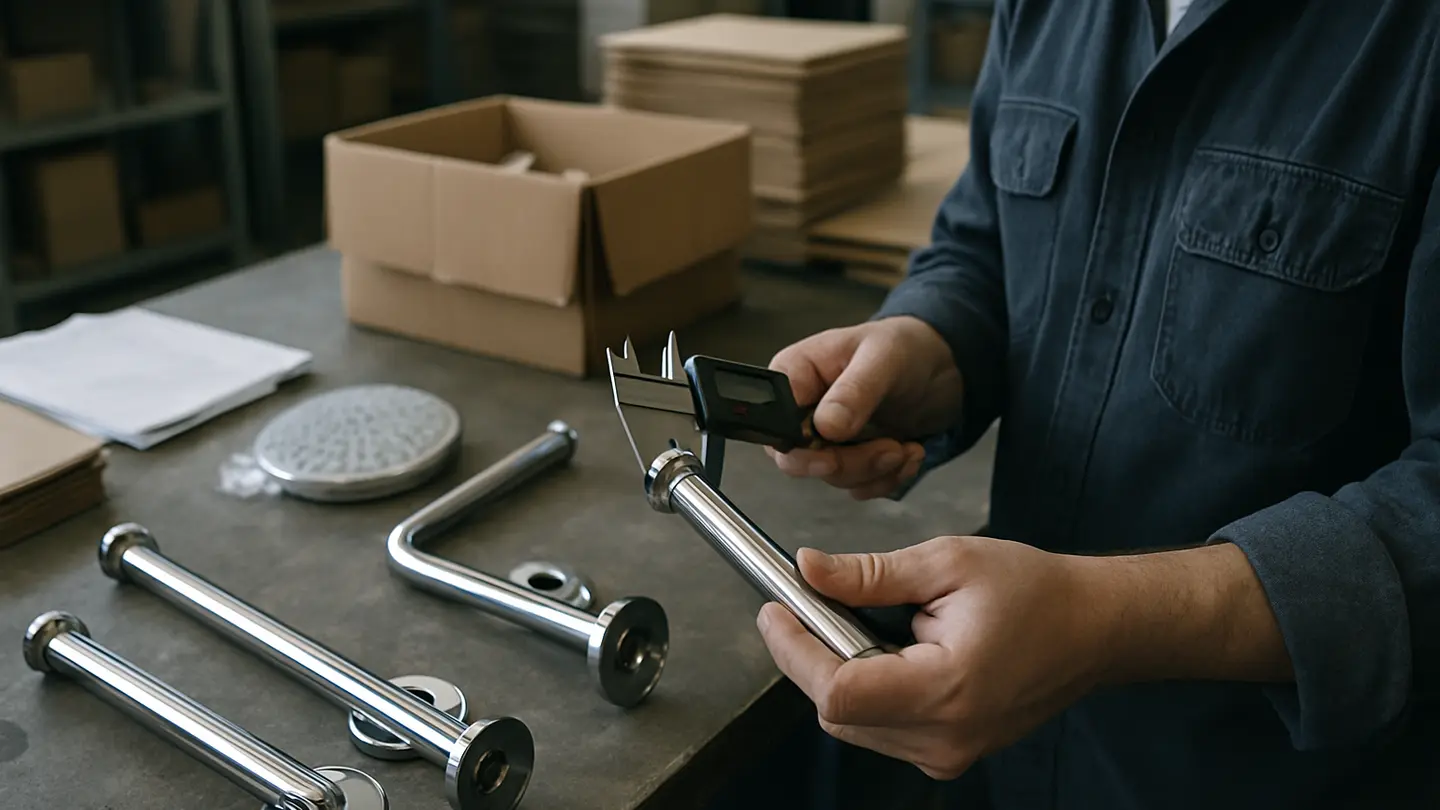
The inspection should compare workmanship, components, finish quality, assembly, packaging materials, and labels against the approved sample and written specifications. For shower sets and faucets, this may include checking handles, cartridges, hoses, threads, diverters, seals, and visible surfaces. For shower enclosures, it may include glass dimensions, edge quality, profiles, rollers, hinges, handles, seals, and installation hardware.
The inspector should document whether defects are isolated or systemic. A single scratched part may be a handling issue. Repeated scratches may indicate poor line protection, inadequate training, or unsuitable packaging. Several units with the same leak point may suggest a design, component, or assembly problem.
Corrective action should identify the root cause, responsible person, deadline, and verification method. “Factory will improve” is not enough.
Step 5: Run a Pre-Shipment Inspection Before Releasing the Order
Pre-shipment inspection should begin only after the shower goods are finished and mostly packed. If too much of the order is unfinished, the inspection result may not represent the actual shipment.
The inspector should first confirm readiness by comparing carton counts with the purchase order, packing list, SKU list, and shipping marks. Mixed models, short quantities, wrong labels, and incorrect carton markings are common preventable problems.
Cartons should be selected randomly from different pallet zones or warehouse areas. If the inspector only checks cartons chosen by the supplier, the sample may not reflect the full lot.
AQL tables are then used to determine sample size and pass-fail thresholds. The inspector checks selected units against the approved sample, specifications, and checklist. The report should record:
- Quantity checked
- Cartons opened
- Defects found and severity classification
- Measurements and tolerances
- Assembly checks
- Finish and workmanship findings
- Leak or functional test results where applicable
- Packaging and labeling condition
- Photo evidence
- Overall pass, fail, or pending recommendation
A PSI is not just a visual exercise. For shower products, functional checks may be needed for threads, seals, cartridges, handles, flow, leakage, assembly fit, moving parts, and installation hardware.
Step 6: Use the Inspection Report to Control Payment and Shipment
The inspection report should lead to a commercial decision. If the order passes, the buyer can release the balance payment and proceed with logistics booking, subject to the agreed terms.
If the order conditionally passes, the buyer may hold part of the payment, require sorting, accept a discount, release only conforming goods, or obtain a written supplier commitment. Conditional release should be used carefully because the buyer may lose leverage once the goods ship.
If the order fails, shipment should be held. The supplier should rework, replace, sort, or remake the defective goods. A reinspection should verify corrective action before payment and release.
Corrective actions should define responsibility, deadlines, costs, and verification. If the supplier caused the defect, the buyer should avoid absorbing unnecessary reinspection, delay, or rework costs unless the contract says otherwise.
How to Fix Common Shower Quality Control Breakdowns
Common shower manufacturing defects include finish scratches, coating inconsistency, leaks, weak assembly, dimensional mismatch, glass chips, missing accessories, wrong labels, mixed SKUs, and inadequate packaging.
Workmanship defects often come from excessive production speed, weak operator training, poor tooling, or inadequate line supervision. Plated parts may be scratched when workers place components directly on metal benches or stack them without protection. Glass panels may chip if handling areas are crowded or edge protection is missing.
Material substitution is another serious risk. A supplier may use lower-grade brass, thinner stainless steel, cheaper plastic, non-approved seals, weak hoses, or an inferior coating process. These substitutions may not be obvious during a quick visual check, but they can affect durability, leakage resistance, installation quality, and brand reputation.
Packing is also a frequent source of failure. Rushed packing can create missing installation kits, wrong manuals, mixed models, incorrect barcodes, weak inner protection, crushed cartons, and higher return rates. For shower enclosures and glass products, packaging quality is especially important.
Problem: The Shower Order Is Not Ready for Inspection
A pre-shipment inspection should not proceed if production or packing is incomplete. Inspecting too early can produce a misleading report and may require another inspection later.
The purchase order should define inspection readiness thresholds before booking. For example, it may require that 100% of goods are produced and a high percentage are packed before PSI begins. The exact threshold should be agreed in advance.
Inspectors should verify readiness by walking the warehouse, counting cartons, and checking whether packed goods match the order quantity and SKU list. If the threshold is not met, the inspection can be aborted, rescheduled, and charged according to the agreed terms.
Problem: The Supplier Disputes Whether a Defect Is Serious
Defect disputes are common when standards are vague. The supplier may argue that scratches are normal, a color difference is acceptable, leakage is minor, or packaging damage does not matter.
The best way to resolve these arguments is to refer to the approved sample, technical specifications, photo standards, written tolerances, and predefined defect classifications. If the defect exceeds the agreed limit, it should be classified according to the inspection checklist rather than negotiated subjectively on the factory floor.
Payment and shipment should be paused when defects exceed AQL limits or involve critical issues. A CAPA document should define the root cause, corrective action, responsible owner, deadline, and verification step. Failed lots should normally be reinspected after corrective action.
Problem: Customers Complain After a Passed Inspection
A passed inspection does not guarantee that every unit is perfect. Random sampling reduces risk, but it does not inspect 100% of the order. A visual inspection also may not detect hidden technical failures.
For shower products, laboratory or functional testing may be needed for water pressure, leakage, coating adhesion, corrosion resistance, glass safety, chemical compliance, durability, and mechanical performance. High-value or high-risk items may justify 100% sorting, extended functional testing, or special inspection procedures.
Container loading supervision can also reduce damage after a passed PSI. Goods may pass in the warehouse but suffer damage if cartons are mishandled, stacked poorly, loaded into a wet container, or mixed incorrectly.
Inspection checklists should be explicit. Inspectors need to know which defects they are authorized to reject and which tests must be performed.
FAQ
1. What is a good AQL standard for importing from China?
General Inspection Level II is commonly used for many consumer goods inspections, including bathroom products, unless the buyer has a reason to use a tighter or looser level.
AQL settings should distinguish between critical, major, and minor defects. For shower products, critical defects may include safety risks, severe leakage, broken glass, or hazardous sharp edges. Major defects may include failed function, wrong parts, visible finish damage, missing accessories, or incorrect dimensions. Minor defects may include small cosmetic or packaging issues that do not affect use or saleability.
Tighter AQL limits can increase inspection complexity, production pressure, sorting time, and cost. If the buyer expects zero defects for certain items, that expectation must be negotiated before production and written into the purchase order.
2. How much does a third-party quality inspection cost in China?
Third-party inspections in China are commonly priced per man-day, with cost depending on location, product complexity, inspection scope, reporting requirements, travel, testing, and whether reinspection is needed.
Buyers should be cautious with extremely low inspection fees. Very low pricing can create risks around inspector competence, time on site, reporting quality, or independence. Shower products may require inspectors who understand fittings, finishes, seals, glass, packaging, and functional checks.
A realistic budget should include qualified inspectors, travel where applicable, product-specific tests, possible laboratory testing, and reinspections after failed lots. Anti-bribery controls, independent reporting, photo evidence, and clear inspector rotation policies can help protect inspection integrity.
3. Should I tell my Chinese supplier about the inspection in advance?
Yes. Inspection rights should be included in the initial contract or purchase order before the deposit is paid. If the factory has not agreed to inspection access, an unannounced inspector may be denied entry or delayed.
Advance inspection terms do not mean the supplier controls the inspection. They define the buyer’s right to inspect, readiness conditions, access requirements, and consequences if the factory blocks or delays the process.
This reduces gatekeeping, scheduling disputes, and failed readiness situations. The buyer should define inspection access, timing, documentation, and payment linkage before production starts.
Conclusion: Control Shower Defects Before Final Payment
Shower Manufacturer Quality Control should move buyers from reacting to defects after delivery to controlling quality before shipment. The strongest leverage usually exists before final payment and container release.
A practical system starts with approved samples, complete specifications, factory audits, clear AQL rules, pre-production alignment, during-production checks, final inspection, and documented corrective action. For shower products, the system must address visible defects and functional risks such as leakage, weak fittings, coating failure, glass damage, and missing installation parts.
Written standards and inspection reports give buyers a clear basis for accepting, rejecting, reworking, or holding a shipment before the goods leave the factory.