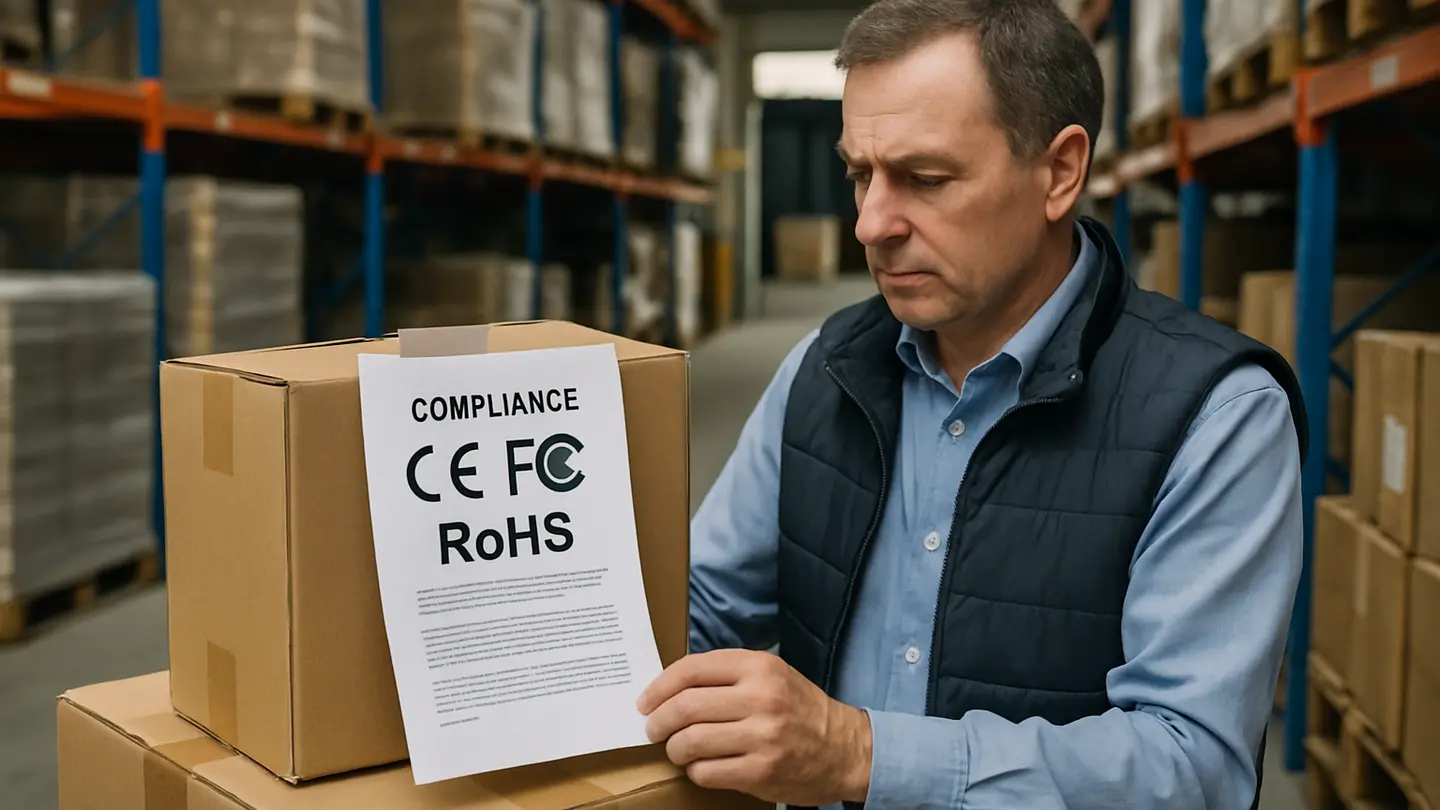
Choosing a Shower Manufacturer is not just a unit-price exercise. For importers, distributors, contractors, bathroom brands, and procurement teams, the goal is repeatable production from sample approval through ongoing supply.
A weak supplier can create leaking valves, unsafe glass, inconsistent finishes, wrong installation dimensions, missing compliance documents, delayed shipments, and urgent reorders. Reliable sourcing depends on specification control, supplier verification, sample approval, compliance review, landed-cost modeling, and lifecycle planning.
Set the Shower Sourcing Control Gate Before Supplier Outreach
Before contacting factories, prepare a sourcing readiness packet so every supplier quotes against the same assumptions.
Include:
- Product drawings and technical dimensions
- Materials and material grades
- Surface finish requirements, including color, texture, gloss, and coating expectations
- Installation method and tolerance requirements
- Packaging structure, carton strength, labeling, and palletization rules
- Warranty and spare-parts requirements
- Target countries or regions where the product will be sold
- Required compliance documents, markings, and test reports
- Inspection standards and acceptance criteria
For shower programs, specifications may cover valves, cartridges, hoses, shower heads, glass, seals, profiles, drains, trays, coatings, rollers, handles, screws, anchors, and accessories. For shower enclosures, glass thickness, tempering documentation, hardware material, profile finish, seal design, and installation adjustment range are critical. For shower columns or faucet sets, cartridge type, pressure rating, flow rate, plating quality, hose length, and leakage testing become central.
Protect custom designs before files are shared. Molds, packaging artwork, brand files, manuals, CAD drawings, and private-label designs should be covered by localized confidentiality and intellectual property agreements. Define compliance before RFQs are issued, including water-saving rules, plumbing standards, safety glass requirements, labeling rules, packaging marks, or destination-market documentation.
How to Source a Shower Manufacturer: The Procurement SOP
Professional shower sourcing should follow a structured procurement SOP, not ad hoc quote collection. The key question is whether the supplier can make the product correctly, repeatedly, legally, and on time.
The process applies to shower enclosures, shower columns, shower heads, faucets, shower panels, trays, and customized bathroom programs, especially when moving from showroom sample to repeat production.
A good SOP checks:
- Supplier identity and export experience
- Product specialization
- Production capacity and process control
- Material and component traceability
- Compliance documentation
- Sample approval discipline
- Inspection checkpoints
- Packaging and logistics readiness
- Spare-parts and after-sales support
- Commercial terms that support quality
Verification should happen before tooling deposits, large purchase orders, or container loading create lock-in. Once molds are made, deposits are paid, or launch dates are committed, the buyer has less leverage.
Step 1: Normalize the Product Specification and Map Sourcing Risk
Many shower sourcing problems begin with vague specifications. A photo, catalog link, or request for “same quality” leaves room for interpretation. The factory may match the appearance while changing the cartridge, glass, coating, hose, seal, or packaging.
Normalize the specification by separating technical requirements from catalog descriptions. “Matte black shower set” is not enough. The technical file should define:
- Overall dimensions and installation tolerances
- Material grades for metal, plastic, rubber, glass, and profiles
- Surface finish color, coating type, and appearance standard
- Coating durability expectations where applicable
- Cartridge type and source approval requirements
- Hose length, connector type, and pressure requirements
- Glass thickness, edge treatment, and safety documentation
- Hardware material and fastener quality
- Seal profile, drainage design, and water containment expectations
- Packaging method and accessory list
Flag compliance-sensitive details early, including lead content restrictions, flow-rate requirements, pressure rating, anti-scald performance, tempered glass standards, and market-specific markings or labels. A supplier that can make a domestic-market shower product may not have the documents or testing discipline needed for export.
Create a sourcing risk matrix for each product line. Rate leakage, glass breakage, corrosion, finish drift, spare-parts shortages, sole-source components, certification gaps, packaging damage, and logistics constraints. A frameless glass enclosure has different risks from a handheld shower head, and a thermostatic shower column has different risks from a simple mixer.
Step 2: Define the Supplier Channel and Issue a Controlled RFQ
Channel strategy affects quality, traceability, and cost transparency. A direct Shower Manufacturer may provide better process visibility, but only if it controls the relevant production steps. Some suppliers are assemblers that outsource key components. Others are trading companies coordinating multiple factories. These models can work, but roles must be clear.
Prioritize suppliers with:
- Relevant product specialization
- Export experience in your target markets
- In-house quality control
- Documented compliance support
- Stable component sourcing
- Clear communication on engineering changes
- Ability to support inspection and corrective action
Use trading companies, assemblers, or open-market component sourcing only when responsibilities are documented. Buyers should know who controls component purchasing, who issues compliance documents, and who is responsible for defects.
A controlled RFQ should state:
- Product model and drawing revision
- Volume bands and expected reorder pattern
- Packaging and labeling requirements
- Inspection standards and allowed defect limits
- Required certifications or test reports
- Delivery windows and lead-time expectations
- No-substitution terms for critical parts
- Required disclosure of key component sources
- Tooling or mold ownership expectations
- Export document requirements
Ask suppliers to confirm production lead times, sample lead times, tooling costs, available test reports, and export documentation readiness. If a supplier refuses to disclose key component sources or gives unclear compliance answers, treat that as a risk signal.
Step 3: Audit the Shower Factory in Phases
Begin the factory audit with document review. This reduces the chance of committing to a supplier that cannot support the required controls.
Review:
- Business licenses and company registration details
- Quality-system records, where available
- Relevant test reports and certificates
- Calibration logs for testing equipment
- Incoming inspection procedures
- Approved supplier lists for key components
- Nonconformance and corrective-action records
- Export history and shipment documentation
- Production flow charts and inspection plans
If the document review is acceptable, move to factory-floor checks. For shower products, inspect machining, polishing, plating, assembly, water-pressure testing, glass handling, seal installation, packaging lines, and quarantine areas. The goal is to see whether the factory can prevent defects, not just repair them after inspection.
For shower enclosures, assess glass sourcing, tempering documentation, hardware fit, roller function, frame alignment, seal installation, and packaging strength. For shower heads, valves, faucets, and columns, review cartridge sourcing, pressure testing, flow testing, plating control, leakage testing, and spare-parts management.
Commercial terms should align with audit findings. The agreement should confirm approved materials, inspection rights, no-substitution obligations, defect responsibility, and corrective-action expectations. If the Shower Manufacturer will not accept quality-linked terms, it may not be suitable for repeat production.
Step 4: Approve Golden Samples and Build the Verification Protocol
A golden sample is the approved benchmark for production. It should define dimensions, appearance, finish, components, packaging, labeling, installation fit, and performance. Both buyer and supplier should formally approve the sample and matching specification documents.
The golden sample is a production control tool, not a showroom item. Bulk production must match it unless the buyer approves a written deviation.
Incoming and pre-shipment validation should check:
- Material and component consistency
- Product markings and labels
- Compliance documents
- Carton structure and packaging method
- Accessory packs and installation hardware
- Manuals and warranty inserts
- Barcodes and item labels
- Dimensions and installation fit
- Functional performance
- Finish color and surface defects
Higher-risk products may require pressure testing, flow testing, leakage checks, plating inspection, corrosion-resistance review, glass safety documentation, alignment checks, roller movement checks, hardware fit review, seal installation review, and packaging evaluation.
The first bulk production units should be compared against the golden sample before shipment release. Any deviation from the frozen sample, approved component list, finish standard, packaging specification, or labeling file should require written buyer approval.
Step 5: Model Landed Cost and Negotiate Quality-Protected Terms
The lowest ex-factory price is not always the lowest total cost. A cheaper Shower Manufacturer can become expensive if the product requires rework, causes warranty claims, misses delivery windows, or arrives damaged.
A landed-cost model should include:
- Unit price
- Tooling, molds, and maintenance
- Sample rounds and engineering time
- Product testing and certification
- Third-party inspection
- Packaging upgrades
- Inland freight
- Ocean or air freight
- Duties, tariffs, and customs costs
- Damage and replacement risk
- Spare parts and warranty exposure
- Rework, sorting, or repacking costs
- Cost of delayed customer delivery
Contracts should protect quality as well as price. Include approved material requirements, no-substitution clauses, engineering change notice rules, defect liability, replacement-part obligations, return or RMA procedures, tooling ownership, mold maintenance, and warranty support. For private-label or custom programs, also address ownership of artwork, manuals, molds, and design files.
Payment milestones can support control. Deposits may be tied to sample approval, balance payments to passed inspection, and shipment release to required test results or document completion. For critical product lines, consider dual sourcing or approved backup component suppliers.
Step 6: Lock the Purchase Order and Monitor Production Execution
A purchase order should be a specification-control document, not only a commercial order. If the PO lists only item name, quantity, and price, key details remain open.
A strong PO should state:
- Product model and revision
- Drawing number and approved specification
- Finish code and appearance standard
- Approved components and no-substitution terms
- Packaging and labeling rules
- Required documents and test reports
- Inspection rights and inspection timing
- Delivery date and shipment terms
- Spare-parts or accessory requirements
- Consequences for unapproved deviations
After PO release, track deposit confirmation, raw material purchasing, component availability, production schedule, inspection bookings, carton readiness, container loading, and logistics disruptions. Waiting until the shipment date to ask for status increases the risk of surprise delays.
Lifecycle management should continue after the first order. Shower products can change when cartridges are discontinued, finish suppliers change, molds wear, glass sources shift, or packaging materials are replaced. Buyers should require notice before changes and reapprove alternates before production.
Troubleshoot Common Shower Manufacturer Sourcing Failures
Even well-managed sourcing programs can face failures. Strong buyers respond with documented controls, inspections, and escalation paths rather than supplier reassurance.
Common problems include weak traceability, suspicious lots, discontinued components, unauthorized substitutions, inconsistent finishes, and missing compliance documents. The response should follow four priorities: contain the risk, verify the facts, require corrective action, and use commercial leverage where needed.
Problem: The Supplier Cannot Prove Material or Compliance Traceability
If paperwork is incomplete, inconsistent, or delayed, pause supplier approval or PO release. Do not accept general claims such as “same as before” or “export quality” when compliance documents are required.
Request exact material records, component sources, certificates of conformity, test reports, lot references, and destination-market documentation. For shower enclosures, this may include glass safety documentation and hardware material records. For shower fittings, it may include cartridge information, plating records, pressure-test results, flow-rate data, or material declarations.
Export competence should be verified separately from domestic manufacturing capability. If the Shower Manufacturer cannot provide clear traceability, assign conditional status, increase inspection requirements, or remove the supplier from the approved list.
Problem: The Production Lot Does Not Match the Approved Shower Sample
If bulk production differs from the approved sample, hold or quarantine the shipment. Differences in finish, dimensions, components, packaging, accessories, labels, or performance can create customer complaints and compliance exposure.
Compare production units against the signed golden sample, approved drawings, and inspection checklist. If inconsistencies appear across cartons, batches, accessory packs, or finishes, expand the inspection scope.
Escalation may include pressure testing, flow testing, coating checks, material verification, glass documentation review, installation-fit checks, or full reinspection. If the lot does not meet the approved standard, require rework, replacement, sorting, or rejection before shipment.
Problem: A Critical Shower Component or Finish Is Discontinued
Discontinued components should be treated as lifecycle risks, not routine purchasing issues. Cartridges, hoses, seals, rollers, coatings, glass types, handles, profiles, and finish colors can affect installation compatibility, warranty service, and customer expectations.
Use last-time-buy analysis to decide whether buffer stock is needed, especially for products with long warranty obligations or installed bases that require replacement parts.
At the same time, qualify alternates or begin redesign work. Do not wait until the supplier is out of stock to search for substitutes. Communicate customer-facing risks early, including delivery delays, finish mismatches, warranty limitations, or replacement-part changes.
Problem: The Factory Substitutes Materials or Parts Without Approval
Factories may substitute lookalike parts to reduce cost, solve shortages, use available stock, or simplify assembly. In shower products, a similar-looking cartridge, hose, seal, roller, fastener, glass panel, or coating may behave differently under water pressure, temperature change, cleaning chemicals, corrosion, or repeated use.
Contracts and POs should include strict no-substitution language for all critical components. Incoming and pre-shipment inspections should detect unauthorized changes in materials, components, colors, finishes, packaging, and branded accessories.
Every deviation should require engineering or quality approval before production continues. If substitutions violate agreed terms, buyers can use payment holds, rework requirements, shipment rejection, or supplier status changes as leverage.
FAQ
1. How do you verify the authenticity of electronic components?
For shower sourcing, the equivalent question is how to verify that the product and its critical components are genuine, approved, and production-ready. Visual sample checks are not enough for high-risk products.
Use factory audits, document review, golden samples, material checks, performance testing, packaging review, and pre-shipment inspection. For shower enclosures, verify glass safety documentation, hardware fit, frame alignment, roller function, seal installation, and packaging strength. For shower fittings, check leakage testing, pressure testing, plating quality, cartridge validation, flow-rate performance, and corrosion-resistance expectations.
The verification method should match product risk. A simple accessory may need basic dimensional and packaging checks. A thermostatic shower system or frameless glass enclosure requires stronger control.
2. What is the best way to handle electronic component obsolescence?
In shower procurement, obsolescence means discontinued or changed components such as cartridges, seals, rollers, handles, coatings, profiles, hoses, drains, glass types, or packaging parts. The best approach is active lifecycle tracking.
Ask suppliers to notify you before approved components change. Monitor lead-time increases, repeated substitution requests, rising defect rates, and finish availability issues. These can signal instability.
For critical parts, plan last-time buys before shortages become severe. Maintain approved alternates where possible, and create redesign paths for product lines with long warranty or replacement-part obligations.
3. Why do factories substitute electronic components without permission?
In shower manufacturing, factories may substitute parts to improve margins, bypass shortages, use available inventory, or simplify production. The replacement may look similar, but performance can differ. Hoses, cartridges, seals, rollers, fasteners, coatings, and glass hardware can all fail if the substitute does not meet the original specification.
A frozen specification pack helps prevent this problem. It should define approved components, materials, finishes, packaging, and performance requirements. Any proposed alternate should be reviewed by quality or engineering teams and tested before approval.
Buyers should resist pressure to skip testing or accept changes after production has started. A late substitution may protect the supplier’s schedule, but it can create leakage, corrosion, installation, warranty, or compliance problems for the buyer.
Conclusion: The Next Procurement Move for Shower Buyers
Reliable shower sourcing starts with specification control and ends with ongoing supplier and lifecycle governance. A Shower Manufacturer should be approved because it can document materials, control production, pass inspections, support compliance, and maintain repeatable quality—not because it offers the lowest first quote.
For your next supplier shortlist or high-risk shower product line, identify the parts most likely to cause leakage, safety exposure, certification problems, long lead times, or unauthorized substitution. Standardize approval paths for alternates, tooling, finish changes, component changes, and new supplier onboarding.
The strongest procurement teams treat shower sourcing as risk control. They lock specifications early, verify factories before commitment, approve golden samples, inspect production, protect landed cost, and manage component lifecycle before problems reach customers.