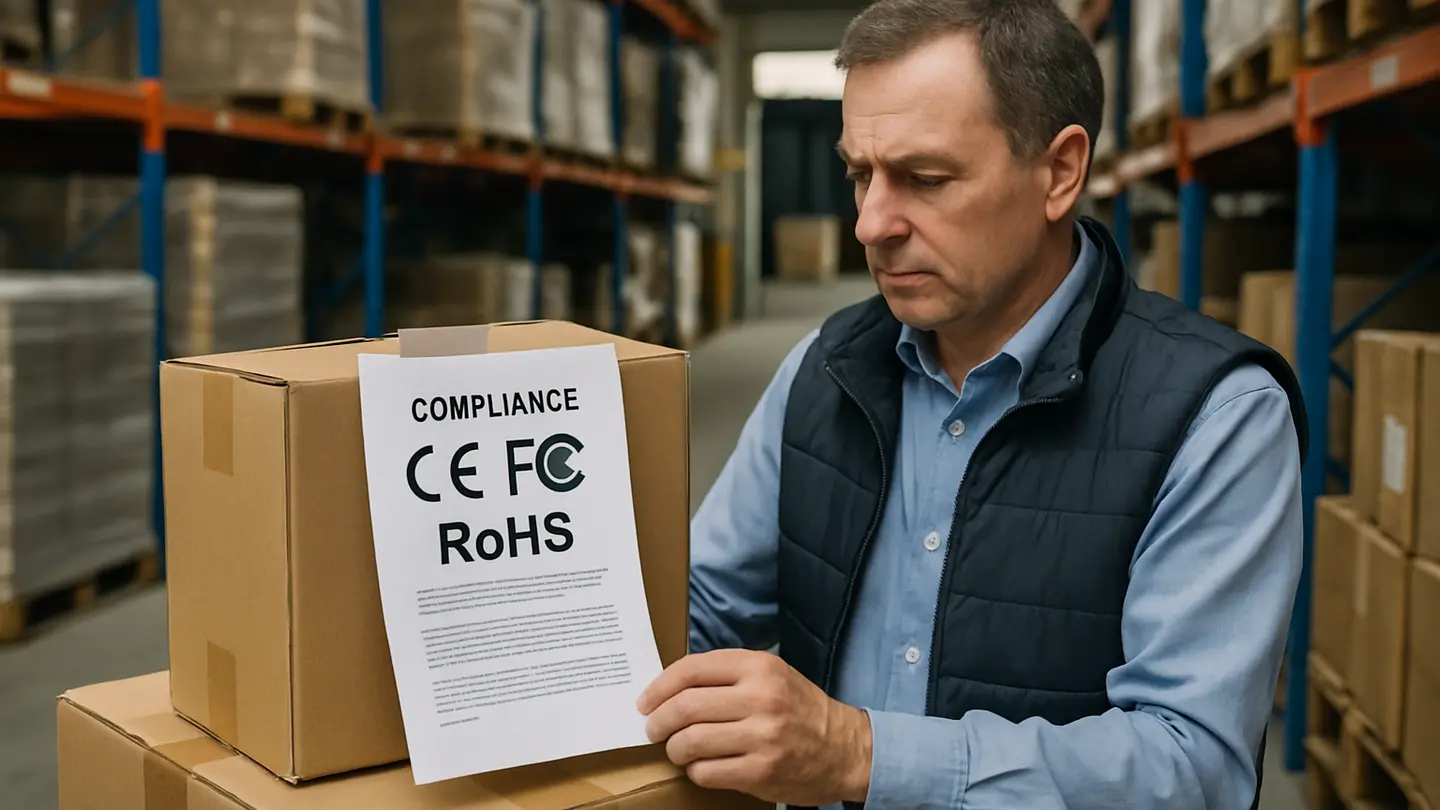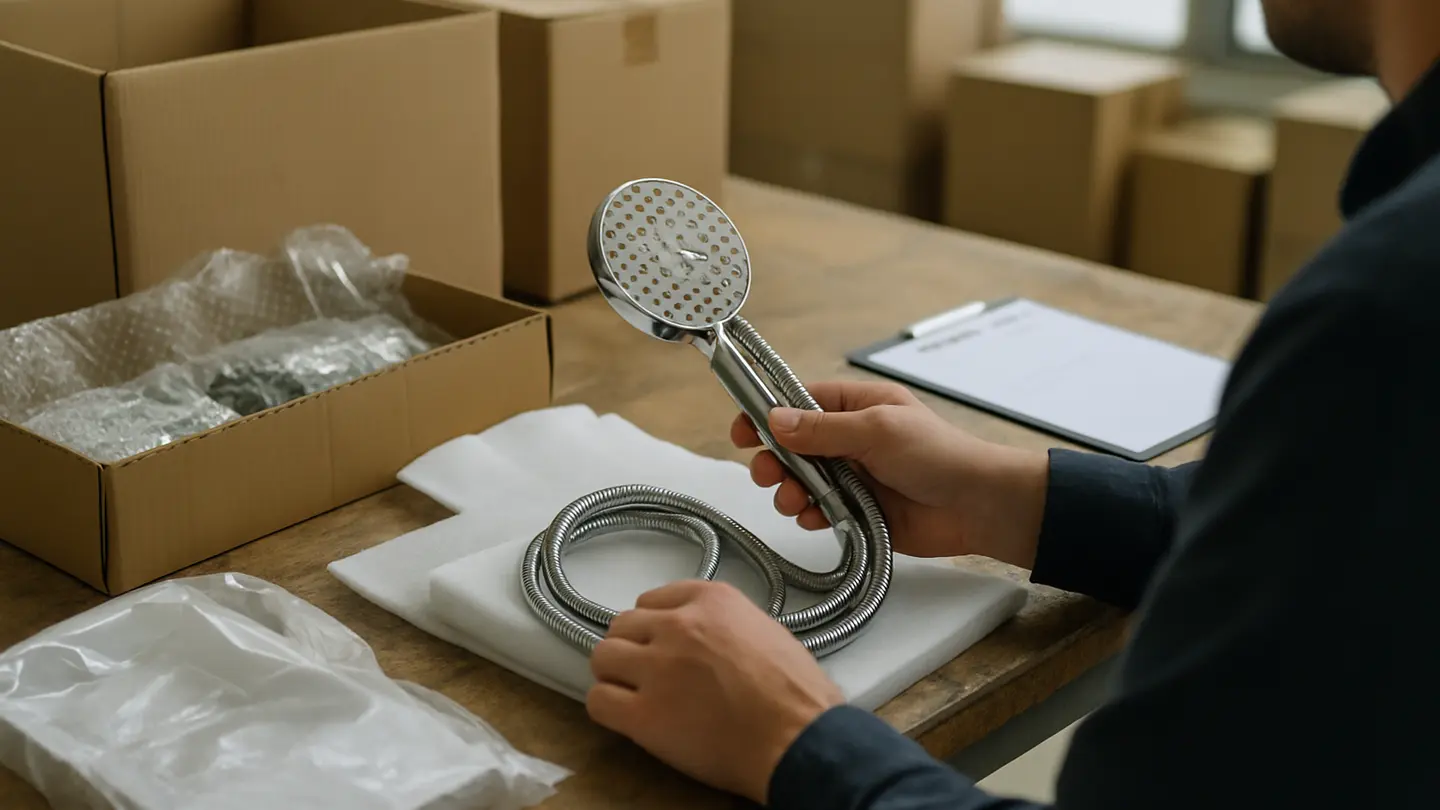
A Shower Pre-Shipment Inspection is the buyer’s final quality gate before cargo release and often before final payment. It is performed on completed shower goods—such as shower heads, shower sets, thermostatic valves, mixer valves, shower panels, hoses, riser rails, accessories, and shower enclosures—after production is finished and the order is ready for export.
Unlike a factory audit, which evaluates the manufacturer’s systems, a PSI answers a narrower question: does this finished order conform to the buyer’s requirements and can it ship?
For importers, procurement teams, ecommerce sellers, project buyers, and QA teams, PSI should follow agreed sampling rules, such as ISO 2859-1 and AQL acceptance levels. Done properly, it catches visible defects, functional problems, packaging errors, labeling issues, and shipment-readiness risks before goods enter logistics or customer channels.
What Must Be Prepared Before the Shower Inspector Visits the Factory
A shower PSI should normally be scheduled when production is complete and most export cartons are packed. Many buyers require 100% production completion and at least around 80% packed cartons before inspection, though the exact rule should be agreed in the purchase order or quality agreement. The lot must represent what will actually ship.
Before the inspector arrives, the buyer should provide a complete inspection file, including:
- Purchase order and order confirmation
- SKU list, model numbers, quantities, colors, and finishes
- Bill of materials
- Technical drawings, dimensions, and tolerances
- Surface finish requirements, such as chrome, brushed nickel, matte black, gunmetal, or PVD finish
- Flow-rate or performance requirements where applicable
- Assembly instructions and installation manuals
- Packaging artwork, label files, carton marks, barcode files, and warning labels
- Approved accessory list, such as hoses, washers, brackets, screws, escutcheons, adapters, or tools
- Defect classification rules and AQL levels
- Inspection schedule, factory contact, and warehouse location
The inspector also needs an approved golden sample or signed reference sample. For shower products, this matters because finish shade, plating appearance, spray pattern, handle movement, and assembly feel can be hard to judge from documents alone.
Buyers should also define what PSI does not cover. It does not replace accredited laboratory testing, pressure certification, water-efficiency certification, safety compliance testing, chemical compliance, or mandatory market approvals.
A Six-Step SOP for Inspecting Finished Shower Orders
A reliable shower PSI should follow a repeatable procedure. The goal is to create a documented release decision based on quantity, random sampling, physical inspection, functional checks, packaging review, and defect classification.
The following six-step SOP gives buyers a practical framework for controlling finished shower orders before international shipment.
Step 1: Lock the Inspection Brief, Samples, and Acceptance Criteria
The inspection brief should be finalized before the inspector reaches the shower manufacturer’s site. If it is vague, the inspection can become a subjective argument between the factory, inspector, and buyer.
The PSI brief should define:
- Products, SKUs, and quantities to inspect
- Approved golden sample or signed reference sample
- Latest drawings and technical specifications
- Required dimensions and measurement points
- Surface finish and color standards
- Workmanship expectations
- Functional checks, such as valve movement, spray modes, hose connection, diverter action, or leakage risk
- Packaging and accessory requirements
- Inner box, master carton, pallet, and label artwork
- Barcode data and scan requirements
- Critical, major, and minor defect definitions
- AQL levels and sample sizes
All parties must use the same document revision. A common PSI failure occurs when the factory follows old artwork, the buyer uses a revised specification, and the inspector receives another version. Before inspection, freeze the inspection pack and require written supplier confirmation.
Remote video inspection may be used as a fallback for limited checks, but it is weaker than on-site random sampling. For high-value orders, new suppliers, project deliveries, or regulated products, on-site inspection is stronger.
Step 2: Confirm Production Readiness Before Booking the Inspection Date
Inspecting too early can produce unreliable results and reduce buyer leverage. If the inspector arrives while the factory is still assembling valves, waiting for plated components, repacking cartons, or sorting defects, the sample pool may not represent the final shipment.
A ready shower lot should have:
- Finished units available for inspection
- Export cartons packed according to the approved method
- Pallets or carton stacks arranged by SKU and order
- Little or no active rework
- Clear carton marks and shipping labels
- A packing list that matches the physical goods
- Access to warehouse storage areas for random sampling
Before booking, ask the supplier for a production schedule, packed quantity report, and SKU-level completion status. For mixed orders, confirm that each SKU is sufficiently completed.
Build in a buffer before the vessel cutoff. Several days before the shipping deadline allows time for sorting, rework, replacement, repacking, or re-inspection. Do not rely only on verbal readiness claims. Request timestamped photos or short videos showing packed cartons, pallet labels, SKU separation, and warehouse status.
Step 3: Check Order Quantity and Pull Random Shower Samples
The inspection should begin with quantity verification. The inspector compares the physical goods against the purchase order, packing list, SKU list, and carton marks, including total carton count and breakdown by model, finish, configuration, and accessory set.
The shower manufacturer should not pre-select samples. If the factory has prepared a “sample area” with polished, cleaned, or specially selected units, the inspector should reject that pool and pull samples independently.
Random sampling should cover:
- Different pallets or carton stacks
- Different carton positions, including top, middle, and lower layers where accessible
- Different production lots or assembly dates if identifiable
- Different SKUs, sizes, finishes, colors, or configurations
- Different cartons within each SKU
- Both inner boxes and master cartons
The agreed AQL plan determines sample size and accept-reject thresholds. Critical defects are usually not accepted. Major and minor defects may have different tolerance levels depending on product risk and commercial requirements.
The report should record lot size, quantity inspected, selected carton IDs or carton marks, sample size by SKU, defect categories, defect counts, and the accept-reject result.
Step 4: Inspect Shower Workmanship, Dimensions, Function, and Safety Risks
The physical inspection is the core of the Shower Pre-Shipment Inspection. Each selected unit should be compared with the approved golden sample and signed specifications.
For shower products, workmanship checks usually include:
- Surface scratches, dents, pits, stains, and polishing marks
- Plating or coating consistency
- Color shade differences between components
- Burrs, sharp edges, or rough cut areas
- Loose parts or poor assembly
- Incorrect logo position or branding
- Misaligned handles, brackets, rails, or panels
- Missing washers, filters, screws, adapters, or installation accessories
- Poorly fitted hoses, connectors, or threads
- Damage to glass, seals, rollers, profiles, or hardware for enclosures
Dimensional checks should focus on installation and fit points, such as thread size, hose length, rail length, valve body dimensions, hole spacing, enclosure width and height, glass thickness, mounting bracket positions, and tolerance-sensitive connections.
Functional checks depend on product type. For shower heads and sets, the inspector may check spray pattern, spray-mode switching, hose connection, and visible leakage risk under basic conditions. For valves, checks may include handle movement, diverter operation, cartridge fit, and assembly stability. For shower enclosures, checks may include door sliding, hinge movement, magnetic seal alignment, handle installation, and hardware fit.
Defects should be classified clearly:
- Critical defects affect safety, compliance, or severe usability. Examples may include sharp edges that can injure users, serious leakage or burst risk, wrong regulated component, or a safety-related labeling issue.
- Major defects are likely to impair use, cause installation failure, or trigger customer returns. Examples include wrong finish, unstable valve function, poor thread fit, missing key accessories, serious coating defects, or incorrect dimensions.
- Minor defects are usually cosmetic and do not materially affect function, such as small non-prominent marks within the agreed tolerance.
Every recorded defect should include photos, sample IDs, measurements where relevant, carton references, and severity classification. Avoid vague comments such as “finish not good.” A useful report states what is wrong, where it appears, how many samples are affected, and which requirement it violates.
Step 5: Review Packaging, Labels, Barcodes, and Export Readiness
Packaging problems can be as damaging as product defects. A shower set may pass functional inspection but still arrive damaged, rejected, or delayed because packaging, labels, or shipping marks are wrong.
The inspector should check:
- Master carton strength and condition
- Inner box print quality and structure
- Foam, paper, cardboard inserts, bags, and dunnage
- Moisture protection where required
- Separation of plated or coated components to prevent rubbing
- Accessory placement and bagging
- Seals, tapes, straps, and pallet condition
- Installation manuals and warranty cards
- Warning labels and destination-market instructions
For visible finishes, internal protection is critical. Chrome, matte black, brushed, and PVD-coated surfaces can be damaged by movement inside the box. Hoses, brackets, handles, and metal accessories should not rub directly against finished surfaces during transit.
Labels should be checked against approved artwork and destination requirements. This includes SKU, model number, PO number, product description, quantity, country of origin where applicable, carton number, marketplace identifiers, retailer routing labels, installation warnings, and handling marks.
Barcodes should be scanned, not only viewed. The inspector should verify readability, print quality, data accuracy, and placement. Incorrect or unreadable barcodes can cause rejection by ecommerce warehouses, retailers, distributors, or project receiving teams.
The inspector should also compare carton weights, carton dimensions, unit counts, and carton counts against the packing list and invoice. Mismatches can create customs, warehouse, or delivery problems even if product quality is acceptable.
Step 6: Turn Inspection Results Into a Ship, Hold, or Fail Decision
The PSI report must lead to a clear commercial decision: pass, hold, or fail.
A pass means the inspected lot meets the agreed acceptance criteria and can be released for shipment, subject to any remaining commercial or compliance checks.
A hold means the goods should not ship yet because an issue requires clarification, minor correction, document update, repacking, or buyer review.
A fail means the lot does not meet the agreed AQL, contains critical defects, has serious functional problems, or has unacceptable packaging or labeling errors.
The evidence package should include defect photos, measurement records, functional test results, sample numbers, carton IDs, lot size, sample size, defect count by severity, inspection conclusion, and supplier comments, if any.
If the inspection fails, the buyer can require sorting, rework, replacement, repacking, or negotiated partial acceptance of conforming units. Final payment and cargo release should remain blocked until corrective actions are verified. In many cases, re-inspection is necessary after rework.
Repeated PSI failures may point to deeper issues in material control, plating, assembly, packaging, production management, or final quality inspection at the shower manufacturer.
Common Shower PSI Problems and How Buyers Should Respond
Even with a clear plan, shower inspections can break down. The most common problems involve readiness, sample control, late defects, subjective defect disputes, or repeated supplier failure.
The best protection is to inspect after the lot is genuinely ready but still several days before vessel cutoff. This gives the buyer time to approve, correct, re-inspect, split shipment, or delay release without rushing.
1. The Inspector Finds the Shower Lot Is Not Actually Finished
An unfinished lot may reveal delays in components, plating, assembly, glass processing, accessory packing, or carton printing. The inspector should document the actual finished and packed quantity by SKU.
Do not accept inspection based only on cherry-picked units from an incomplete batch. If the shipment is not representative, the correct response is usually to abort the inspection, record the readiness failure, and reschedule after the supplier proves the lot is complete and packed.
2. The Factory Prepares a Staged Sample Area
Some factories prepare selected units that look cleaner, better assembled, or more complete than the real shipment. This defeats random inspection.
Inspectors should reject pre-pulled samples and select cartons independently from the warehouse or packed lot. Carton IDs should be recorded. If the supplier blocks access to stored cartons, pallet areas, or specific SKU locations, the buyer should treat this as a serious inspection-control issue and consider holding shipment approval.
3. Serious Shower Defects Appear Close to the Sailing Deadline
Major defects near vessel cutoff create a difficult commercial choice. The buyer may need to delay shipment, sort and rework goods, ship only passing units, or hold the entire order.
If shower valves show unstable function, shower heads leak at connections, or enclosures have incorrect hardware, rushing the order into export channels can create larger losses later. Protecting capital, customer trust, and project timelines should take priority over meeting a sailing date with defective goods.
4. Buyer and Supplier Disagree on Defect Severity
Disputes often happen when tolerances are unclear. Scratches, plating shade, coating marks, leakage, fit, thread smoothness, and branding issues can be interpreted differently by each side.
Signed specifications, approved samples, and written AQL definitions reduce these arguments. Buyers should define critical, major, and minor defects before production. Branding errors, wrong certification marks, incorrect model numbers, and regulated label mistakes may require stricter classification than ordinary cosmetic defects.
5. The Same Shower Manufacturer Keeps Failing Inspection
Repeated PSI failures may indicate systemic problems, such as poor incoming material control, unstable plating quality, weak assembly training, inadequate in-line inspection, careless packaging, or poor production planning.
When failures repeat, the buyer should consider a deeper supplier audit or factory systems review. Supplier-management rules may also need adjustment, including earlier during-production inspections, stricter payment controls, revised AQL levels, or mandatory corrective action reports. If the supplier cannot stabilize quality, replacing the shower manufacturer may be necessary.
FAQ
Who usually pays for the initial shower PSI?
The buyer often pays for the initial Shower Pre-Shipment Inspection because it protects the buyer’s interests and provides independent evidence before cargo release. Payment responsibility should be defined in the purchase order or manufacturing agreement.
Can the supplier be required to pay for re-inspection after a failed PSI?
Yes. Many buyers state that if the first inspection fails because of supplier-related defects, incomplete production, wrong packaging, or nonconforming goods, the supplier must pay for rework and re-inspection. This should be agreed in writing before production starts.
Should inspection access be written into the purchase order?
Yes. The buyer should include inspection access, timing, sampling rights, document requirements, and shipment-hold rights in the purchase order or manufacturing agreement. If access is not agreed early, the supplier may resist random sampling, warehouse access, or shipment delays later.
What should buyers do if the shower PSI fails?
If PSI fails, the buyer should block final payment and cargo release until the issue is resolved. Depending on the defect, the supplier may need to sort, rework, replace, relabel, repack, or reproduce affected units. Re-inspection should verify corrective action before shipment approval.
Can non-compliant shower goods still be shipped if the buyer accepts the risk?
Non-compliant shower goods should not be shipped across borders, especially where regulated labeling, safety, water-efficiency, or certification requirements apply. Commercial acceptance does not remove legal or regulatory obligations in the destination market.
Final Takeaways for Releasing Shower Orders Safely
A repeatable Shower Pre-Shipment Inspection process protects capital, shipment reliability, and brand reputation. The buyer should prepare clear specifications, confirm production readiness, control random sampling, inspect workmanship and function, verify packaging and labels, and turn findings into a documented ship, hold, or fail decision.
After a pass result, approve release and archive the final inspection report with the PO, packing list, photos, and shipment documents. Use inspection data in supplier scorecards, future AQL planning, and sourcing decisions.
PSI is not the only quality-control tool. Depending on product risk, buyers may still need laboratory testing, during-production inspection, container loading supervision, or a deeper supplier audit. Keep lot traceability records so post-delivery defects can be connected to specific cartons, SKUs, inspection results, and production batches.