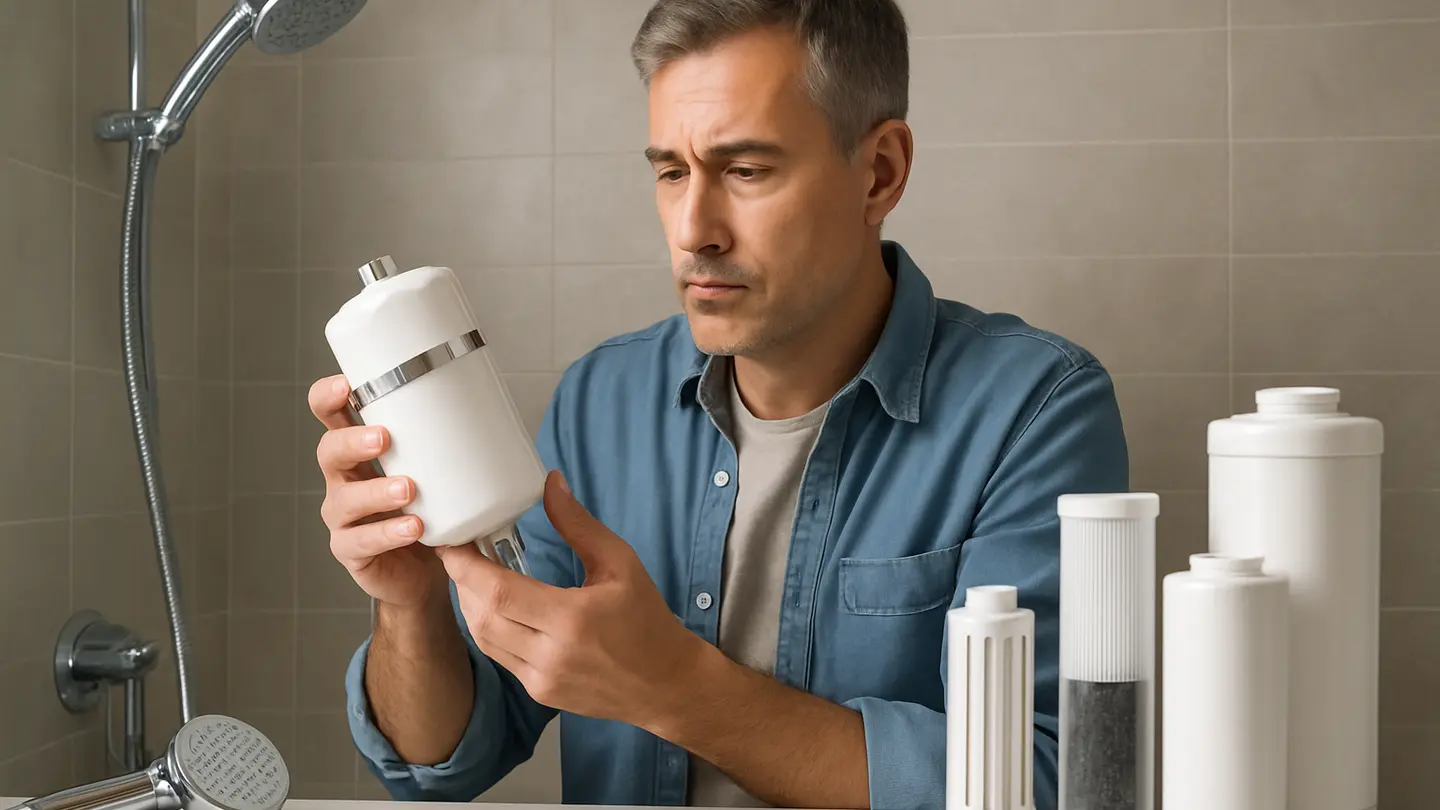
Shower water filters are point-of-use products that treat water immediately before it exits the showerhead. For B2B buyers sourcing for retail, hospitality, multifamily housing, wellness facilities, or private-label programs, the category combines plumbing hardware, consumable cartridges, water-quality performance, and user comfort.
Common buyer concerns include chlorine odor, hard-water residue, sediment, metals, and other impurities that affect how shower water smells, feels, or leaves deposits on fixtures. Many users also associate filtered shower water with gentler skin and hair comfort, but results depend on local water chemistry, filter media, flow rate, and timely cartridge replacement.
This guide explains how shower filters work, how to compare media options, what installation and maintenance require, and how to match products to customer needs and budgets.
How Shower Filters Work
Shower filters treat water at the final point of use, after it has passed through building plumbing and before it reaches the showerhead outlet. They are not whole-house treatment systems and should not be presented as solving every water-quality issue. Their role is to reduce selected substances based on cartridge media and verified product claims.
For buyers, the key question is not “Which filter removes the most things?” but “Which filter targets the water issues my customers actually have?” A chlorine-focused filter may not address hardness scale. A sediment pre-filter may capture rust particles but do little for chemical odor. Understanding this distinction helps align product claims, user expectations, and real-world performance.
What Is a Shower Filter?
A shower filter is usually a compact device installed at the shower outlet. The most common format is an inline filter that screws onto the shower arm, with the existing showerhead attached to the other side. This lets users keep their preferred showerhead while adding filtration.
Another format is the filtered showerhead, where filtration media is built into the showerhead body or handle. These products appeal to consumers who prefer a single replacement fixture instead of a separate inline housing.
Typical purchase motivations include:
- Noticeable chlorine or chemical odor in hot shower water
- Dry-feeling skin or hair after bathing
- Soap scum, mineral residue, or hard-water deposits
- Visible particles from older plumbing or well-water systems
- A more comfortable shower experience without whole-house treatment
Many residential shower filters are designed for DIY installation using standard shower connections. For commercial or multifamily applications, buyers should still check thread compatibility, housing durability, installation consistency, and ease of cartridge replacement across many units.
Common Shower-Water Contaminants and Irritants
The most common target is chlorine. Municipal water systems often use chlorine for disinfection, and residual chlorine may remain at the tap. In hot showers, chlorine odor can become more noticeable, especially in enclosed bathrooms.
Some shower filters are also marketed for reducing heavy metals such as lead or mercury. These claims depend on media, contact time, flow rate, and credible testing or certification. B2B buyers should review documentation carefully before making heavy-metal reduction a major selling point.
Microbial concerns may arise in certain well-water or building plumbing contexts. Some filter types are promoted for bacteria or microbial reduction, but this is a sensitive claim area. Buyers should distinguish between general filtration, bacteriostatic media, and products tested for specific microbiological reduction.
Sediment is another practical issue. Rust, dirt, sand, and pipe debris can appear in older plumbing, after municipal main work, or in some well-water applications. Sediment filtration can improve perceived cleanliness and protect downstream media, but it does not necessarily address dissolved chemicals or minerals.
Main Filter Media and Technologies
Different shower filters use different media, and many combine several materials in one cartridge.
| Media or technology | Common purpose | Practical buying note |
|---|---|---|
| KDF media | Targets chlorine and some metals through copper-zinc redox reactions | Often used in shower filters because it can perform in warm water conditions |
| Activated carbon | Adsorbs chlorine and odor-causing substances | Common for chlorine taste and odor applications, though performance varies by design and water temperature |
| Catalytic carbon | Often used where chloramine reduction is a concern | Relevant if local water utilities use chloramine rather than free chlorine |
| Vitamin C media | Neutralizes chlorine | Frequently marketed for chlorine-sensitive users and spa-style shower products |
| Sediment screens or ceramic elements | Capture particles such as rust, dirt, and debris | Useful where visible particles are a primary complaint |
| Multi-stage cartridges | Combine several media types | Can broaden the target range, but stage count alone does not prove performance |
KDF, commonly made from high-purity copper-zinc granules, works through oxidation-reduction reactions and is widely used for chlorine and certain metal-reduction applications under typical shower conditions.
Activated carbon adsorbs chlorine and odor-causing compounds. In shower applications, buyers should pay attention to cartridge size, contact time, and temperature suitability.
Vitamin C filtration is often positioned as a chlorine-neutralizing option for wellness, beauty, or sensitive-skin markets, but replacement cost and cartridge capacity should be evaluated.
Multi-stage cartridges can address several concerns at once, such as chlorine odor, sediment, and some metal reduction. However, “more stages” is not automatically better. Media selection, quantity, flow design, and tested performance matter more than stage count.
Potential Comfort, Skin and Hair Benefits
Filtered shower water may reduce exposure to chlorine and selected irritants at the shower outlet. For users who dislike chemical odor or feel that ordinary shower water leaves skin and hair dry, this can improve perceived comfort.
Some users report less dryness, itching, or irritation after switching to a shower filter. Others notice smoother, less brittle, or less frizzy hair when harsh chemical odor is reduced. These experiences are subjective, but they help explain demand in retail, hospitality, and wellness channels.
Hot shower steam is another consideration. People sensitive to chemical odors may find chlorinated shower water unpleasant in small bathrooms. A filter that reduces chlorine odor can make the shower environment feel fresher.
B2B buyers should avoid overpromising health outcomes. Effects vary by individual, local water chemistry, product design, and maintenance. Responsible product listings should focus on the substances the filter is designed to reduce, the evidence behind those claims, and comfort benefits customers can reasonably expect.
How to Choose the Right Shower Filter
The best purchasing decision starts with water information. Buyers should review local water-quality reports, ask utilities whether chlorine or chloramine is used, and consider third-party testing when selecting products for a specific property, region, or customer segment.
Key water conditions to identify include:
- Free chlorine or chloramine
- Hardness minerals such as calcium and magnesium
- Iron, manganese, or other metals
- Lead or other hazardous metals where plumbing risk exists
- Sediment, rust, sand, or visible particles
- Odor complaints from users
- Existing water pressure and flow rate
Activated carbon is commonly used for chlorine reduction. Where chloramine is present, catalytic carbon may be more relevant, depending on product design and tested claims. Buyers should not assume all chlorine-related media perform the same way.
Hard-water problems require separate attention. Basic chlorine filters do not remove significant hardness minerals. If the main complaint is scale, soap scum, or white residue, buyers may need conditioning media, ion-exchange elements, or a broader building-level softening strategy. For hospitality or multifamily operators, whole-building treatment may be more cost-effective than relying only on individual shower cartridges.
KDF media is often selected where chlorine reduction and certain heavy-metal reduction claims are part of the buying criteria. Buyers should look for credible testing rather than broad marketing language.
Commercial buyers should also compare total cost of ownership. A low-priced housing may become expensive if cartridges have short life, are difficult to source, or require frequent service calls. Important criteria include cartridge capacity, replacement interval, packaging, warranty terms, thread compatibility, spare-part availability, and private-label flexibility.
Installation and Routine Maintenance
Installation quality and upkeep affect performance. A well-chosen filter can disappoint users if it leaks, reduces flow excessively, or continues operating after the cartridge is exhausted.
Many shower filters can be installed with simple tools, making them suitable for residential retail and small property upgrades. Larger B2B programs should standardize installation instructions and provide clear cartridge replacement guidance to reduce returns and service complaints.
Basic Shower Filter Installation Steps
A typical inline shower filter installation follows a simple sequence:
- Turn off the shower water at the fixture.
- Remove the existing showerhead from the shower arm.
- Clean the shower arm threads to remove old plumber’s tape, mineral deposits, or debris.
- Apply plumber’s tape where appropriate, following the filter manufacturer’s instructions.
- Screw the inline filter onto the shower arm.
- Attach the showerhead to the outlet side of the filter.
- Run water briefly to flush loose carbon fines or cartridge dust if instructed.
- Check all threaded connections for leaks.
- Tighten gently if needed, avoiding over-tightening plastic housings.
Filtered showerheads follow a similar process, except the entire showerhead is replaced rather than adding a separate inline body. For handheld models, buyers should also check hose quality, bracket fit, and whether cartridge weight affects usability.
Cartridge Replacement and Cleaning
Most shower filter cartridges need replacement every few months, although the interval depends on cartridge capacity, usage, incoming water quality, and manufacturer specifications. In high-use environments such as hotels, gyms, student housing, and rentals, replacement intervals may be shorter than in a single-family bathroom.
Cartridge replacement should be treated as part of product cost. Buyers should evaluate:
- Rated gallon capacity or month-based replacement guidance
- Availability of replacement cartridges
- Tool-free or easy-change design
- Packaging for retail or maintenance teams
- Clear date labeling or filter-change reminders
- Whether spent cartridges can be handled cleanly during service
When cartridges are changed, the housing should be cleaned according to manufacturer instructions. This helps remove trapped sediment, residue, and buildup around seals. Some reusable components may be soaked to reduce mineral deposits in hard-water regions. Exterior cleaning also matters: soap scum and spotting can make even a functioning filter appear neglected.
Improving the Overall Shower Experience
End users often judge shower filtration by daily experience: Does the water smell cleaner? Does the showerhead maintain satisfying flow? Is there less residue? Does the product look appropriate in the bathroom?
For buyers, product evaluation should include both performance and usability. A filter with strong reduction claims but poor flow, difficult cartridge changes, or an awkward form factor may not succeed. Conversely, a well-designed filtered showerhead that is easy to install and maintain can generate better satisfaction when it addresses the local water problem accurately.
Water Pressure and Flow-Rate Considerations
Filtration can affect shower flow because water must pass through media, screens, and internal channels. Pressure loss depends on household pressure, cartridge condition, filter size, and showerhead design.
Some products minimize pressure loss through larger media beds, optimized internal pathways, or flow-control designs. Low-pressure homes and older buildings should prioritize filters designed to maintain adequate flow.
Buyers should evaluate flow rate alongside contaminant-reduction claims. A product with impressive filtration language but unacceptable pressure loss may lead to returns, complaints, or discontinued use. For commercial sourcing, sample testing in representative bathrooms is advisable before large orders.
Matching Filters to Common Water Problems
Different water complaints point to different solutions:
| Customer complaint | Likely issue | Filter consideration |
|---|---|---|
| Chemical smell in hot showers | Chlorine or chloramine | Activated carbon, catalytic carbon, KDF, or vitamin C depending on disinfectant type |
| White residue and soap scum | Hardness minerals | Softening, conditioning, or ion-exchange approaches; basic chlorine filters may not solve it |
| Rust-colored particles | Sediment or pipe corrosion | Sediment filtration or pre-screening |
| Metallic concerns | Plumbing or source-water metals | Media with credible metal-reduction claims and supporting test data |
| Dry-feeling hair or skin | May relate to chlorine, hardness, or individual sensitivity | Match filtration to water test results and avoid broad health claims |
Chlorine reduction can reduce chemical odor and improve perceived comfort. Hard-water treatment is more complex: shower cartridges may help condition water or reduce some effects, but they are not always equivalent to a true water softener. Sediment filtration is useful for particles but should not be confused with dissolved contaminant reduction.
The best shower water filters are chosen from the water profile outward, not from packaging claims inward.
Useful Filtered Showerhead Features
Filtered showerheads may include comfort and convenience features that help differentiate products. Multiple spray settings are common, allowing users to switch between rainfall, massage, mist, or concentrated rinse patterns.
Some models combine filtration with softening media, conditioning beads, or vitamin C cartridges. These can appeal to beauty, wellness, or lifestyle retail channels, but buyers should verify what each medium does and how often it must be replaced.
Easy-change cartridges are especially important for B2B programs. If replacement is messy, confusing, or tool-dependent, users may delay maintenance and reduce effectiveness. Filter-change indicators, date wheels, transparent housings, or reminder stickers can support timely replacement.
Design also matters. Chrome, brushed nickel, matte black, and white finishes may be needed to match bathroom hardware trends. For hospitality and multifamily properties, durable housings, tamper resistance, and consistent replacement cartridge availability may matter more than decorative features.
Another Way to Build a China Supplier Shortlist
For buyers comparing shower filter housings, cartridges, filtered showerheads, or related bathroom fixtures, supplier discovery can be as important as product specification. Made-in-China.com is a B2B sourcing platform that can help buyers identify and narrow supplier options; it is not a shower filter manufacturer.
Supplier Discovery provides additional ways to find suppliers, including Audited Suppliers and regional supplier channels. This can help buyers build an initial shortlist before direct contact, sampling, and commercial negotiation.
Audited Suppliers are subject to third-party verification and on-site audit, with Audit Reports available for buyer review. These reports can cover general information, export trade, manufacturing capacity, quality control, and R&D capability. For early-stage due diligence, that structured information supports more consistent supplier comparison.
Easy Sourcing is another practical option: buyers can submit one sourcing request, receive multiple quotations from matched suppliers, compare quotes, and request samples. For teams managing several product types or price tiers, this may reduce the manual work of contacting suppliers one by one.
Recent Buying Guide Articles
For further purchasing research, B2B buyers may also want to compare related bathroom and water-treatment topics, such as:
- How to evaluate showerhead flow rate, spray performance, and compliance requirements
- Buying considerations for bathroom fixture finishes and corrosion resistance
- Private-label sourcing criteria for plumbing accessories
- Cartridge lifecycle planning for point-of-use filtration products
- Water softening versus filtration for residential and commercial bathrooms