Sourcing Energy and Electrical Products from China
Sourcing energy and electrical products from China can offer broad product choice, flexible configurations, and competitive manufacturing costs. However, these categories carry risks that are not always visible in product photos, catalog specifications, or low initial quotations.
The main concerns are often hidden inside the product: battery cells, LED drivers, circuit boards, insulation materials, protection electronics, cable quality, plug construction, and firmware. A solar light may look identical to another model while using a lower-grade battery cell or a driver with a shorter operating life. A power bank may show an attractive capacity rating but deliver substantially less usable output in real conditions. A charger may carry a printed output claim that its internal components cannot reliably support.
For B2B buyers, the lowest unit price is rarely the most useful starting point. Technical specifications, compliance evidence, component control, and production consistency should determine whether a supplier is suitable. A product that fails during inspection, generates returns, cannot be shipped by air, or lacks documentation for the destination market can become far more expensive than a higher-priced alternative.
Start With Compliance Requirements
Before selecting a supplier or approving a product design, identify the legal and commercial requirements for the destination market. These requirements may differ by product type, voltage range, battery chemistry, intended use, installation method, and sales channel.
A portable battery product, for example, may require different documentation and transport preparation from a mains-powered charger. A consumer marketplace may also request evidence beyond the minimum legal requirements, particularly for lithium batteries, charging products, electrical adapters, and products intended for outdoor use.
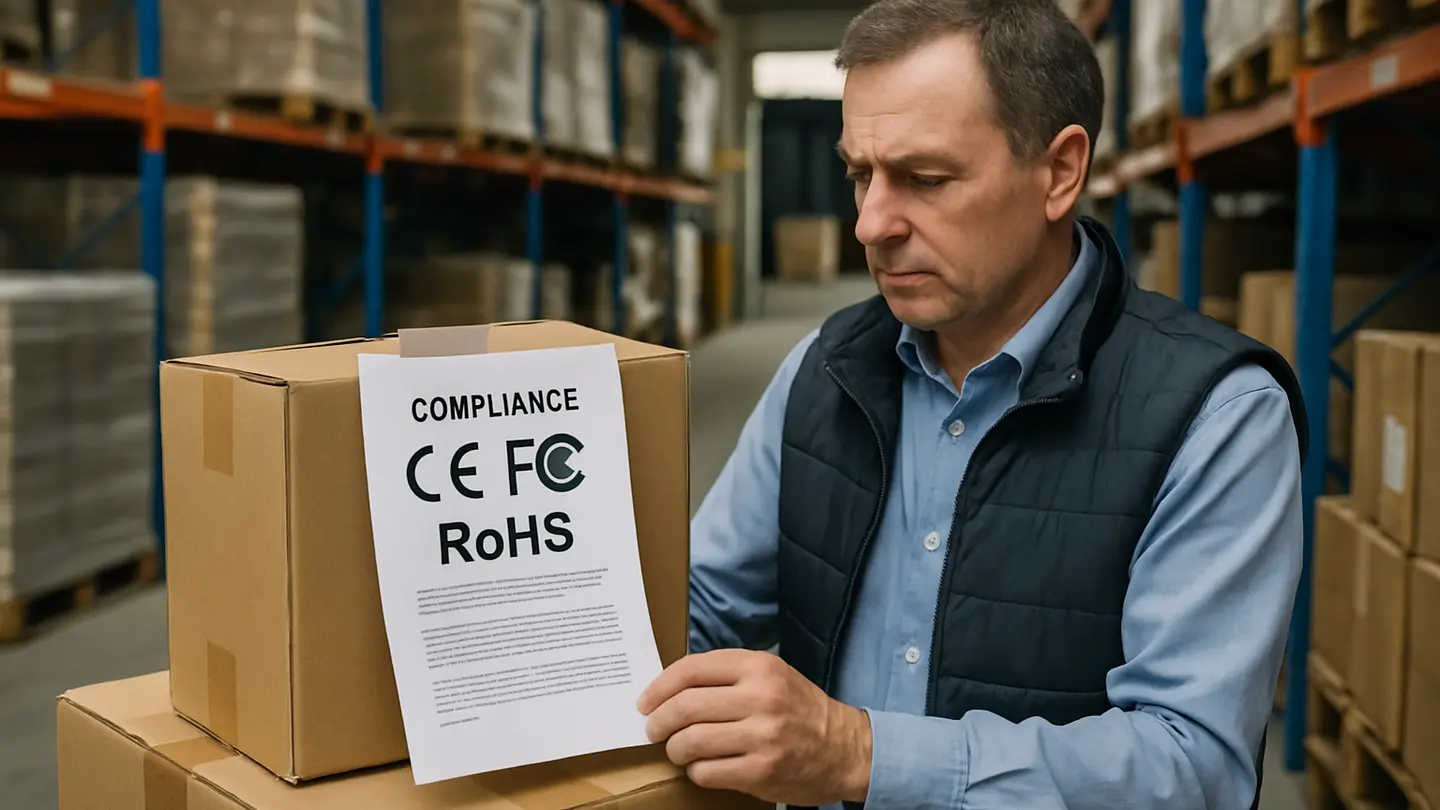
Do not assume that a supplier’s declaration, certificate image, or report title applies to the product you intend to order. Confirm that the documentation covers the exact model, electrical configuration, rated input and output, plug type, battery type, driver, and other relevant components. A report for one voltage version, battery capacity, or LED driver may not automatically cover another version with a similar appearance.
Importers generally retain responsibility for placing compliant products on their market. Supplier paperwork can support the process, but it does not remove the buyer’s responsibility to verify scope, maintain appropriate records, and ensure that production remains consistent with the approved configuration.
Sourcing Solar Panels and Lighting Products
Solar panels, solar lighting, LED fixtures, and portable solar products require careful verification because performance claims can be difficult to assess visually.
For solar products, buyers should review claimed output, operating conditions, panel construction, connectors, cable length, and charging compatibility. The output of a solar panel can vary according to product format, cell construction, testing conditions, and environmental factors. A stated wattage should therefore be supported by suitable evidence rather than accepted solely from a listing or quotation.
Different solar products may also require different manufacturing capabilities. Rigid panels, folding panels, balcony systems, solar camping products, and integrated solar lights can involve separate production lines and supply chains. A supplier that is suitable for small decorative solar lights may not necessarily have the process control needed for larger portable panels or products with more demanding electrical connections.
For lighting products, verify claims related to lumen output, LED lifespan, input voltage, operating temperature, and ingress protection. IP-related claims are especially important for outdoor lighting, bathroom-adjacent use, garden products, and products exposed to dust or moisture. The practical durability of an outdoor light depends not only on its housing but also on seals, cable entry points, battery compartments, connectors, and internal electronic protection.
LED drivers deserve particular attention. The driver affects safety, electromagnetic compatibility, flicker performance, output stability, and long-term service life. A supplier may substitute a driver to reduce cost or respond to component shortages, even when the external product looks unchanged. Such a substitution can affect performance and may invalidate the scope of existing test evidence.
For this reason, buyers should identify the approved driver and its key ratings in the purchase order or technical specification. If the driver changes, the supplier should obtain written approval before production continues.
Batteries, Power Banks, and Portable Power Stations
Battery products require a higher level of sourcing control because their risks extend beyond product performance. Buyers must evaluate battery quality, protection electronics, compliance documentation, and dangerous-goods transport arrangements.
Cell quality is central to product safety and service life. Battery cells that appear similar may differ in grade, capacity consistency, cycle performance, and reliability. The battery management system or protection circuitry is equally important, particularly in power banks and portable power stations. These components help manage charging, discharging, temperature-related conditions, overloads, and other operating risks.
Request battery test summaries through the supply chain where required for lithium products. These summaries are not the same as shipment-specific dangerous-goods documentation. The former relates to battery testing and product information, while the latter may be needed for a particular shipment method, carrier, route, or freight forwarder.
Portable power stations should be evaluated for both stated capacity and output performance. Buyers should check whether the product can support its claimed AC, DC, USB, or USB-C outputs under realistic use. It is also important to verify charging time, compatible charging inputs, cable requirements, display functions, and any output restrictions.
Power banks present recurring risks because capacity claims can be overstated. A buyer should distinguish between a nominal cell capacity and usable output capacity, particularly where conversion losses and voltage changes affect actual delivered energy. Products with lithium batteries may also face air-shipping limitations, additional freight charges, and special packing or documentation requirements.
Chargers, Travel Adapters, and EV Charging Equipment
Low-cost charging products can create disproportionate warranty and return costs. A charger that does not deliver stable output, overheats, fails early, or does not support claimed protocols can damage customer confidence even if its unit price was attractive.
For USB and USB-C chargers, confirm rated output, port configuration, charging-protocol claims, input voltage range, and power-sharing behavior when multiple ports are used. A charger marketed with a high maximum wattage may reduce output when more than one device is connected. Buyers should test the relevant use cases rather than relying only on the maximum figure printed on the housing.
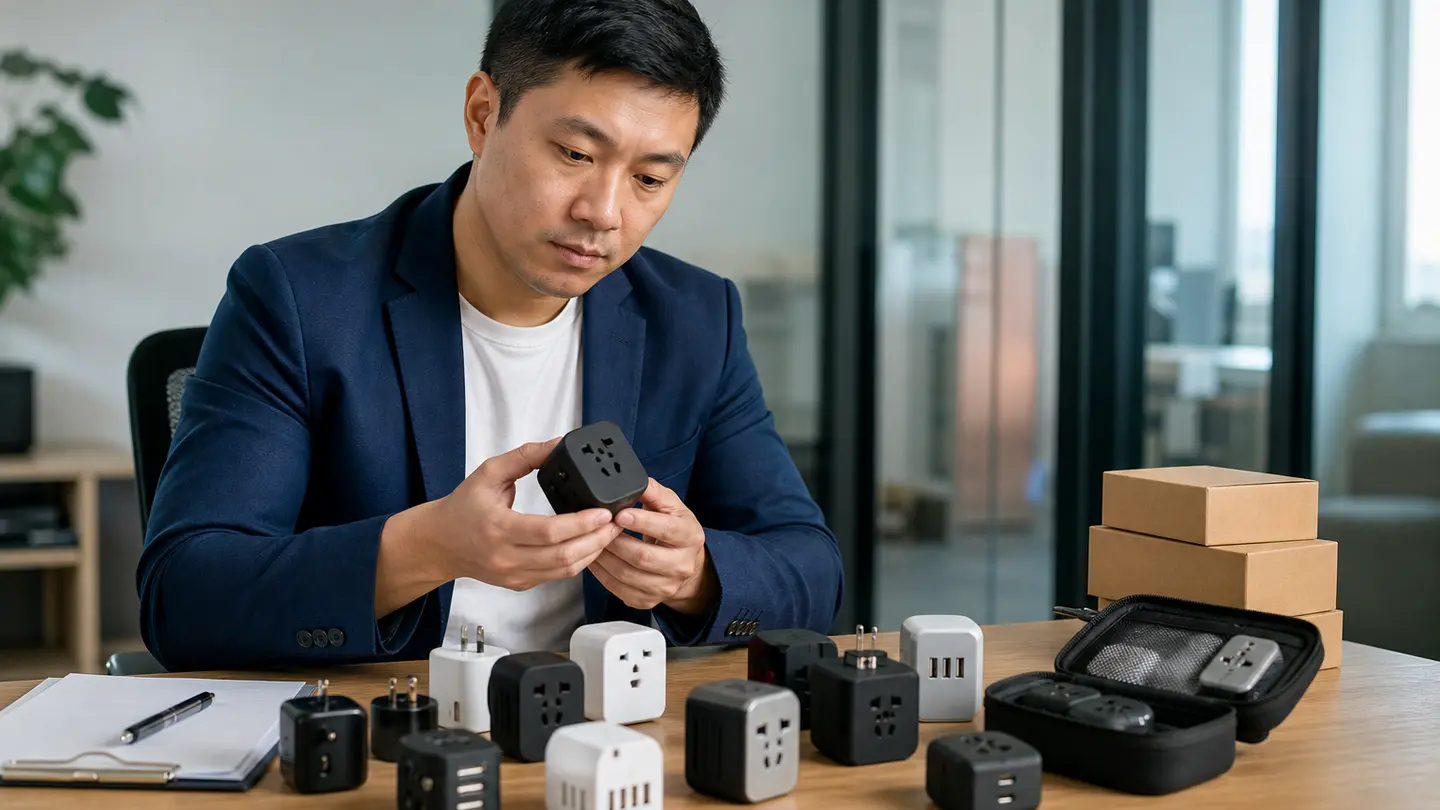
Travel adapters require separate review of plug geometry, grounding arrangements, fuse design where applicable, socket construction, and supported voltage range. A travel adapter changes the physical plug connection; it is not necessarily a voltage converter. Buyers should not market a basic plug adapter as suitable for appliances that require voltage conversion unless the product genuinely includes that function and the relevant claims are supported.
EV charging equipment requires particular caution because local approval, installation, and electrical safety requirements can be more demanding than those for small portable electronics. Buyers should verify the intended installation environment, electrical rating, connector format, cable specification, operating controls, and required local approvals before committing to stock. Installation-related products may also require clear instructions, warnings, and compatibility information.
Four Essential Checks for Every Electrical Product
The following controls apply across most energy and electrical product categories:
Confirm market requirements before production begins. Identify legal obligations, marketplace rules, labeling needs, document requirements, and destination-specific variations before approving the final configuration. Discovering these requirements after production can leave buyers with inventory that cannot be sold or shipped.
Specify hidden critical components. List approved battery cells, drivers, protection boards, chargers, cables, plugs, connectors, and other safety-critical parts. Do not rely on general wording such as “same quality as sample.” Unauthorized substitutions can alter safety, output, durability, and documentation coverage.
Use samples and batch inspections for different purposes. A sample allows buyers to assess fit, finish, capacity, output, usability, and basic construction. It does not prove that a full production run will remain consistent. Batch inspections help identify deviations in materials, assembly, packaging, markings, functions, and performance.
Define approval conditions in the purchase order. The purchase order should state the approved model, standards, components, tolerances, test expectations, labeling, packaging, and change-control process. It should also clarify that component or configuration changes require written buyer approval.
Documents and Evidence to Obtain Before Paying a Deposit
Before paying a deposit, collect and review the underlying evidence supporting the supplier’s claims. A declaration alone may not provide enough detail to confirm whether the product is suitable for the intended market.
Useful documents and records may include:
- Underlying test reports rather than certificate images alone.
- The standards and standard versions referenced in the reports.
- Model numbers, product photographs, and electrical ratings covered by the evidence.
- Technical specifications for approved cells, drivers, power supplies, protection boards, plugs, and cables.
- Battery test summaries where applicable.
- Shipment-specific dangerous-goods documentation requirements confirmed with the freight provider.
- Packaging, labeling, instruction, and warning artwork where these affect market compliance.
- A written process requiring approval before any component, firmware, material, or configuration change.
The objective is to create a clear link between the ordered product and the evidence provided. If the supplier changes the cell supplier, driver, cable, plug, output rating, or enclosure design, the buyer should assess whether the existing documentation still applies.
Calculate the Cost Beyond the Unit Price
A realistic landed-cost calculation should include more than the product quotation. Electrical products can involve additional spending on sample iterations, laboratory testing, inspections, specialized freight, dangerous-goods handling, packaging changes, replacement stock, and customer support.
Compliance costs can vary significantly depending on the destination market, product configuration, electrical rating, battery content, and marketing claims. A simple stock item may require limited adjustment, while a customized battery product or mains-powered device may need more extensive evaluation.
Buyers should also plan for practical after-sales costs. Consider whether spare units, replacement parts, adapters, cables, batteries, or chargers will be needed. Agree in advance who will bear the cost of defects discovered during inspection, transit damage, early-life failures, or approved warranty claims.
For new products, several sample rounds may be necessary before the final production version is ready. This is normal when packaging, output performance, labeling, components, and user instructions need refinement. Building this work into the budget is safer than assuming the first sample will be ready for launch.
Choosing Between a Factory and a Trading Company
Externally similar electrical products can conceal major differences in internal construction and supply sources. This makes supplier type relevant, though neither factories nor trading companies are automatically the better choice in every case.
A factory may offer more direct control over assembly, production scheduling, component purchasing, and change management. This can be valuable when the buyer needs stable specifications, custom packaging, controlled components, or repeat orders over time.
A trading company may provide a wider product selection, support smaller mixed orders, or coordinate products from multiple specialized manufacturers. This can be useful for buyers developing a broader range, especially when no single factory produces every required category.
However, a broad catalog should prompt further investigation. Some suppliers may manufacture only part of their range and source the remainder from third parties. Ask which products are produced in-house, which components are controlled directly, and whether the supplier can trace the source of critical cells, drivers, boards, and chargers.
The key issue is not the supplier label. It is whether the supplier can provide reliable evidence, control changes, maintain consistent specifications, and communicate clearly about the production chain.
How Can Buyers Identify the Simplest Product for a First Order?
The simplest first order is not always the smallest or lowest-priced item. Assess the product’s lithium content, mains connection, installation requirements, electrical output, and availability of documentation for the exact model.
Products without lithium batteries, complex installation needs, or mains-power connection may involve fewer transport and safety considerations. Likewise, a product with current evidence for the exact configuration is generally easier to assess than a visually simple product with unclear documentation.
These factors provide a more useful estimate of sourcing workload than broad category labels such as “lighting” or “solar.”
What Minimum Order Quantities Should Buyers Expect?
Minimum order quantities depend heavily on the requested configuration. Stock products may be available at lower quantities, while customization can increase the minimum substantially.
Packaging changes, logo application, custom labels, plug changes, component purchases, line adjustments, new molds, special colors, and custom electronics can all affect MOQ. A buyer should ask the supplier to price each modification separately rather than treating “customization” as one general request.
This approach makes it easier to decide which changes are commercially necessary for the first order and which can wait until demand is proven.
How Should Sample Testing and Laboratory Testing Be Sequenced?
Start by evaluating commercial samples for fit, finish, usability, capacity, output, charging behavior, and packaging. This stage helps prevent spending on formal testing before the product specification is stable.
Once the commercial sample is approved, submit the final intended production configuration for laboratory testing where required. The tested version should match the planned production build, including critical components and electrical ratings.
Testing scope should reflect legal requirements, marketplace rules, and the product claims used in sales materials. If the supplier changes the configuration after testing, reassessment or additional testing may be necessary.
Can Multiple SKUs Be Covered by One Test Report?
Coverage depends primarily on electrical construction rather than catalog appearance. Cosmetic variants may be able to share evidence when their cells, drivers, output ratings, housings, protection electronics, and electrical design remain unchanged.
However, a change in battery cell, charger, LED driver, output power, plug, cable, or internal circuit can require reassessment. Buyers should confirm report coverage before adding color variants, capacity options, plug versions, or performance upgrades to a product range.
Conclusion: Control Specifications Before Committing to Production
The most costly failures in electrical sourcing often result from unverified claims, incomplete documentation, and uncontrolled component changes rather than from the quoted purchase price.
Before committing to production, verify that certificates and reports apply to the exact product configuration. Record critical components in writing, including battery cells, LED drivers, protection electronics, plugs, and cables. Approve samples based on practical performance, not appearance alone, and use batch inspections to confirm that production matches the approved version.
A disciplined approach to sourcing energy and electrical products from China helps buyers reduce safety, compliance, freight, and warranty risks while building a product range that is more reliable over repeated orders.
About the Author
The author is a B2B sourcing and product-compliance writer focused on international procurement, supplier evaluation, quality control, and import planning. Their work covers practical buying considerations for consumer products, electrical goods, packaging, manufacturing documentation, and cross-border trade.