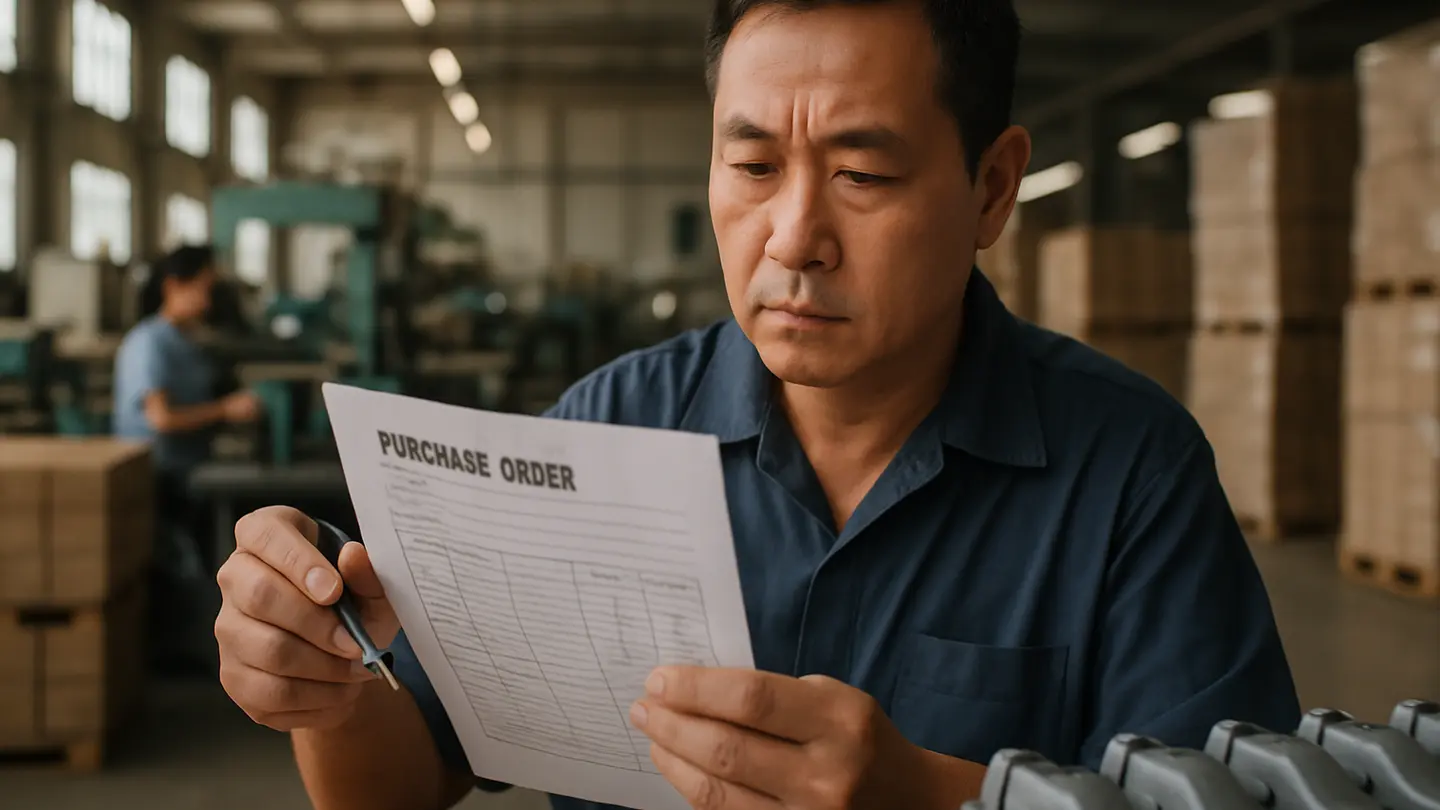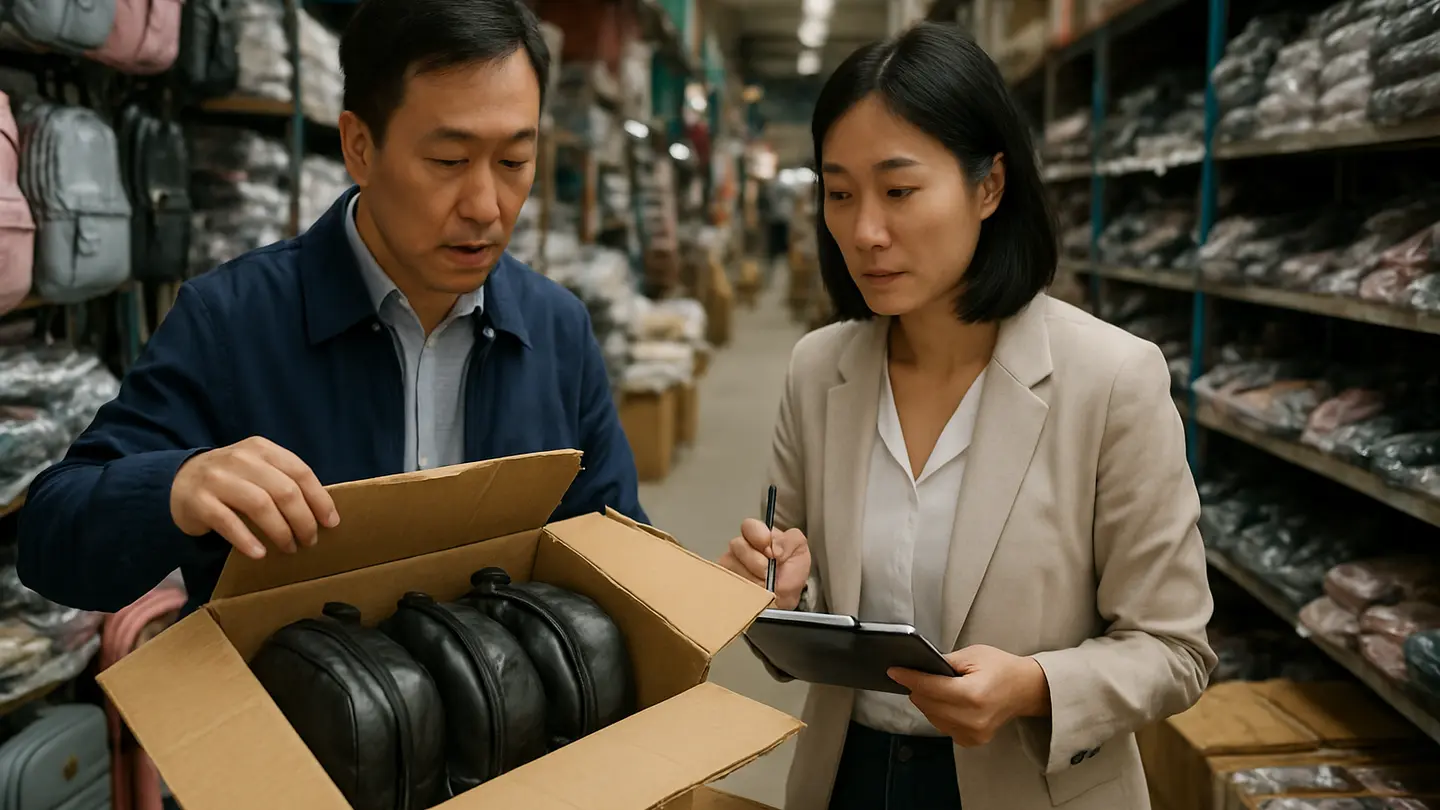
A good product sample proves that a supplier can make one acceptable unit under controlled conditions. It does not prove the same supplier can manufacture 5,000, 50,000, or 500,000 units consistently when schedules tighten, materials vary, or operators change.
That is why a supplier quality audit in China is often the decision point between a promising quotation and a reliable sourcing relationship. For B2B buyers purchasing engineered, assembled, or appearance-sensitive products such as shower systems, valves, enclosures, fittings, hoses, and bathroom accessories, the audit shows whether quality is built into daily operations or depends on last-minute sorting.
A useful audit checks management behavior, quality systems, material controls, process discipline, inspection practices, documentation, equipment condition, traceability, and improvement habits. Serious weaknesses can justify delaying approval, requiring corrective action, reducing order size, or rejecting the supplier.
What a Factory Audit Checks—and What It Does Not
A factory audit is an on-site review of actual operations. It covers production systems, key processes, machinery, inspection equipment, documentation, warehouse practices, personnel competence, and quality control routines. The goal is to confirm whether the factory can meet requirements repeatedly, not just produce an attractive sample.
Audits are usually most effective after the buyer has narrowed the supplier list by product fit, communication, business license information, references, sample capability, and commercial terms. Once two or three candidates remain, an audit provides deeper evidence before a purchase order becomes financially binding.
Company verification is important. In China sourcing, the company issuing the quotation may be a trading company, sales office, group company, or factory that outsources major steps. Buyers should confirm which legal entity owns the factory, where production will occur, which processes are in-house, and which are subcontracted.
A supplier quality audit is different from a pre-shipment inspection. An audit checks production capability before commitment. A pre-shipment inspection checks finished or nearly finished goods before shipment. The audit asks, “Can this supplier control production?” The inspection asks, “Does this batch meet the agreed requirements?”
Capacity evaluation can overlap with auditing but should be treated separately. A factory may have a decent quality system but insufficient capacity during peak season. Buyers should review machine availability, staffing, production planning, bottleneck processes, subcontracting risks, and competing customer orders.
Start by Assessing Management Commitment
Quality culture usually starts with management. Senior managers decide whether supervisors are rewarded for output alone or for stable quality and delivery performance. They decide whether defects are investigated or quietly reworked, and whether urgent orders justify skipping inspection steps.
This matters under cost or time pressure. If raw material prices rise or lead times shrink, a supplier with weak management commitment may substitute materials, reduce testing, use untrained operators, or accept higher defect levels.
A written quality policy is not enough. Many factories can show framed statements about customer satisfaction or “quality first.” The auditor should ask supervisors and operators what those policies mean in their own work. If operators cannot explain the main defect risks at their stations, the policy has not reached the floor.
For a shower valve or faucet assembly process, operators should understand risks such as leakage, thread damage, plating scratches, incorrect cartridge installation, torque variation, and missing sealing components. In a shower enclosure plant, risks include glass dimensions, hardware alignment, edge protection, packaging, and surface defects.
Quality targets should be measurable and current. Useful indicators include internal defect rate, first-pass yield, customer complaint rate, rework percentage, leakage test failure rate, or on-time corrective action closure. These targets should show missed performance, not only success.
Recent defect-rate records are valuable evidence. If the factory tracks defects by product, line, shift, process, and cause, management is more likely to control quality systematically. If records are missing, outdated, or suspiciously perfect, the buyer should ask how problems are identified and escalated.
Compare the Quality System on Paper With Reality on the Floor
Quality certificates can be useful, but they do not prove current shop-floor compliance. A certificate may be expired, limited to another site, or unrelated to the product being sourced. Even a valid certificate only shows that the factory met certain requirements at the time of assessment.
Buyers should check the certificate scope carefully. Does it cover the exact factory address? Does it include the relevant product category? Does it cover important processes such as machining, casting, injection molding, plating coordination, assembly, pressure testing, or packaging?
Document control is another key area. Factories need a reliable method for distributing current drawings, specifications, approved samples, testing requirements, packaging instructions, and customer standards to production and quality staff. Outdated information on the line can create defects even when operators are careful.
During an audit, compare controlled documents with what workers actually use. Are work instructions current? Are drawings revised when the buyer approves a design change? Are obsolete samples removed? Are customer-specific requirements clearly marked, or hidden in email attachments known only to sales staff?
Past quality issues reveal supplier maturity. Weak factories often sort or repair defective goods and continue production unchanged. Stronger factories investigate why the defect happened and change the process to prevent recurrence.
Effective corrective action should include:
| Corrective action element | What buyers should look for |
|---|---|
| Problem definition | Clear description of the defect, affected products, and quantity |
| Root cause analysis | Evidence-based cause, not a vague statement such as “worker carelessness” |
| Process correction | Changes to tooling, training, inspection, settings, materials, or workflow |
| Responsibility | Named owner responsible for implementation |
| Deadline | Realistic completion date and follow-up plan |
| Verification | Evidence that the solution worked over time |
The best evidence is not a completed form; it is proof that the process changed and the defect did not return.
Walk the Product Through Each Production Step
Documents can make a factory look organized. Walking the production line shows how work is actually done. A line walk connects the buyer’s requirements to real production steps, operator behavior, equipment condition, material handling, and inspection discipline.
The auditor should follow the product from incoming material storage through processing, assembly, testing, finishing, packaging, and finished goods storage. At each step, ask: what could go wrong here, and how does the factory prevent or detect it?
Work instructions should be visible, current, and relevant at key stations. For critical operations, they should include parameters such as temperature, pressure, curing time, torque, adhesive quantity, test duration, or machine settings. Operators should be able to explain the important points.
Critical process settings should be recorded and monitored. In bathroom product manufacturing, examples include water pressure testing parameters, plating thickness requirements, glass tempering controls, injection molding conditions, torque values, sealing test conditions, and packaging drop-test standards. Without records, defects are harder to investigate later.
In-process checkpoints are more effective than relying only on final inspection. Final inspection can reject defective goods, but it does not prevent waste if defects were created much earlier. Controls should be placed where problems can be caught before more labor and materials are added.
Defective units must also be controlled. Nonconforming products should be clearly identified, segregated, and prevented from mixing with acceptable goods. A warning sign is a pile of rejected parts beside the line with no labels, records, or clear disposition.
Measuring tools and test equipment must be calibrated. Calipers, gauges, pressure test equipment, torque tools, scales, and other devices should have calibration labels and records. If approval tools are inaccurate, inspection results cannot be trusted.
Audit Incoming Materials and Traceability
Finished-product quality depends heavily on incoming materials and components. A well-managed assembly line cannot compensate for inconsistent brass, poor rubber seals, defective cartridges, weak fasteners, low-grade packaging, or nonconforming glass.
Incoming materials should be inspected against written criteria before release to production. The audit should check whether the factory has standards for critical inputs, such as dimensions, appearance, material certificates, hardness, coating quality, thread fit, chemical restrictions, pressure resistance, color consistency, and packaging strength.
The factory should maintain an approved supplier list for critical materials and components. Buyers should ask how new suppliers are approved, how poor-performing suppliers are removed, and whether substitutions require customer approval.
Traceability is another major audit area. A reliable system should connect finished goods to material batches, production dates, production lines, inspection records, and relevant operators or shifts where appropriate. The level of traceability should match the product risk. A simple accessory may need basic batch tracking, while pressure-bearing or safety-related components may need more detailed records.
Batch traceability helps contain defects faster. If a sealing component from one lot fails, the factory should identify which finished products used that lot. Without traceability, the buyer may need to quarantine or rework a much larger quantity. In severe cases, weak traceability can turn a limited defect into a broad recall risk.
Look for Evidence of Continuous Improvement
Reliable suppliers do more than collect quality data. They use it. A factory that records defects but never changes its process is not improving; it is documenting failure.
Useful performance metrics include internal defect rates, first-pass yield, customer complaints, returns, rework levels, scrap, supplier defect rates, on-time delivery, corrective action closure time, and test failure rates for functional products.
The audit should check whether management reviews these metrics and uses them to trigger action. If internal defects rise, does the factory investigate? If complaints repeat, does it change the inspection plan or process controls? If rework is high, does management treat it as a quality problem or as normal production?
Recurring defects are a warning sign. Every factory has problems occasionally. The concern is the inability or unwillingness to prevent the same defect from returning. Repeated leakage failures, surface scratches, dimensional variation, or packaging damage suggest superficial corrective action.
Quality trends should show whether problems are decreasing over time. A factory with honest data and visible improvement may be a better long-term partner than a factory that claims to have no problems but cannot produce records.
Score the Audit and Decide How to Use the Result
Professional audits often score multiple areas and summarize the supplier with an overall rating. Typical categories include management commitment, quality system, document control, production process control, incoming material inspection, equipment maintenance, testing capability, calibration, traceability, warehouse management, corrective action, and continuous improvement.
Common outcomes include:
| Audit result | Meaning for the buyer |
|---|---|
| Approved | Supplier appears suitable, subject to normal commercial controls and inspections |
| Conditionally approved | Supplier may be used only after specified corrective actions are completed |
| Not approved | Supplier presents unacceptable risk for the intended order |
Conditional approval should not be treated as automatic approval. If critical gaps are found, the buyer should require corrective actions before paying a deposit or authorizing mass production. Examples include creating missing work instructions, calibrating key test equipment, improving defective-material segregation, implementing incoming inspection criteria, or proving that a leakage test process is reliable.
The supplier’s response after the audit is part of the evaluation. A strong supplier accepts valid findings, assigns responsible staff, provides practical corrective action plans, and submits evidence such as photos, revised documents, training records, calibration certificates, or production records. A weak supplier argues without evidence, delays responses, provides generic promises, or sends staged photos that do not prove process change.
Audit results should be one decision input, not the only one. Buyers should also consider sample quality, quotation realism, communication, engineering support, financial exposure, lead time, capacity, order complexity, and the inspection plan for future shipments.
FAQ
Q1: How much does a factory audit cost?
A standard one-day factory audit in China often costs several hundred dollars, depending on the audit firm, location, scope, and reporting requirements. Remote locations, larger factories, multiple production buildings, technical products, or combined quality and capacity assessments can require more time.
The cost should be compared with the value and risk of the purchase order. For a small trial order, a full audit may not be economical. For a larger order, long-term supplier relationship, or product with safety, leakage, appearance, or warranty risk, auditing before commitment is usually cheaper than discovering major problems after paying a deposit.
Q2: Should I audit before or after ordering samples?
In most cases, sampling comes first. If a supplier cannot produce an acceptable sample, it may not deserve the audit budget. A sample confirms whether the supplier can meet basic design, finish, function, packaging, and communication requirements.
Sample approval does not prove repeatable production capability. The better sequence is usually: screen suppliers, request samples from shortlisted candidates, approve or reject samples, then audit the most promising supplier before deposit payment or mass production commitment.
Q3: What is the difference between a quality audit and a social compliance audit?
A quality audit focuses on production capability and defect prevention. It reviews process control, equipment, inspection systems, material management, testing, calibration, traceability, and corrective action.
A social compliance audit focuses on labor practices, workplace safety, working hours, wages, worker welfare, and ethical requirements. BSCI and SMETA are examples of social compliance audit frameworks used by many buyers and retailers.
Passing one type of audit does not guarantee passing the other. A factory may have strong production controls but weak social compliance documentation. Another may pass a social audit but lack the technical controls needed for consistent product quality. Depending on the buyer’s customers, market, and risk profile, both audits may be necessary.
Q4: Can I rely on an audit report the factory already has from another buyer?
An existing audit report can be useful background information, but it should not be treated as final proof. The report may be old, limited in scope, commissioned for a different product line, or focused on risks that do not match the current order.
The factory is unlikely to volunteer reports that show serious weaknesses. Even when the report is genuine, it may not cover the exact production site, subcontracted processes, testing requirements, or material controls relevant to your product.
A buyer should either commission a new audit or verify the existing report against its own product, process, and risk profile.
Conclusion: Audit Before Commitment, Then Verify the Fixes
A supplier audit is most valuable before the buyer becomes financially or emotionally committed to a factory. Once a deposit is paid, tooling is started, deadlines are promised, or internal teams have invested weeks in a supplier, objective decisions become harder.
A well-planned audit gives buyers evidence before approving production. It can show whether quality performance is supported by management discipline, controlled processes, material verification, inspection systems, traceability, and improvement habits.
Corrective actions should be checked after implementation, not simply accepted by email. Some issues are easy to confirm through documents and photos, while others require someone to observe the process, speak with operators, and verify that changes are actually used during production.
For B2B buyers, the goal is not to create paperwork. The goal is to reduce sourcing risk before routine production begins.