Supplier sourcing is one of the highest-leverage decisions in procurement. It shapes total landed cost, quality, lead time, compliance exposure, supply continuity, and customer trust. A weak supplier base can create rework, missed delivery windows, customs problems, stockouts, and brand damage.
Modern sourcing must balance cost pressure with resilience, ESG expectations, capacity volatility, and geopolitical disruption. That requires clear requirements, structured vetting, audits, quality controls, and early detection of red flags.
What Supplier Sourcing Means in Modern Procurement
Supplier sourcing is the process of identifying, evaluating, selecting, and managing factories or suppliers that can deliver the best overall value for a business need. “Best value” is not just the lowest quoted price. It includes product quality, reliability, lead time, compliance readiness, communication, scalability, financial stability, and repeat-order support.
Sourcing is often confused with procurement. Procurement is the broader purchase-to-pay function: requisitions, purchase orders, approvals, contracts, receiving, invoicing, and payment. Sourcing sits earlier. It determines which supplier should be trusted, under what terms, and with what controls.
Strategic sourcing turns this into a repeatable system. Typical activities include supplier discovery, RFQs, quotation comparison, commercial negotiation, vetting, factory audits, sampling, contracting, onboarding, and performance management.
Common models include factory-direct sourcing, sourcing agents, outsourced sourcing services, wholesale sourcing, and low-cost country sourcing. Each has trade-offs in control, speed, cost, and execution risk.
A Seven-Step Supplier Sourcing Workflow
A structured workflow reduces uncertainty before a purchase order is issued. It should move from requirements to discovery, vetting, audits, cost comparison, quality controls, and ongoing monitoring.
Each step should answer a practical risk question: Can this supplier make the product correctly, repeatedly, on time, and with the documents required for the destination market?
Step 1: Convert Product Requirements into a Clear Sourcing Brief
Weak sourcing often begins with vague requirements. If a buyer provides only a product name, target price, and rough quantity, suppliers must guess about materials, dimensions, tolerances, packaging, tooling, testing, and final price.
A professional sourcing brief should include, where applicable:
- Technical drawings, CAD files, or reference images
- Materials, grades, finishes, colors, and surface treatments
- Dimensions, tolerances, weights, and performance standards
- Labeling, barcodes, country-of-origin marking, and instructions
- Packaging format, carton specifications, and pallet requirements
- Order targets, expected MOQ range, and replenishment assumptions
- Destination markets and regulatory requirements
- Testing, certification, or documentation needs
- Logistics constraints, such as container loading or delivery windows
The brief should also define sample approval. A golden sample is the approved physical reference for mass production and future inspections.
Step 2: Create a Focused Longlist and Shortlist
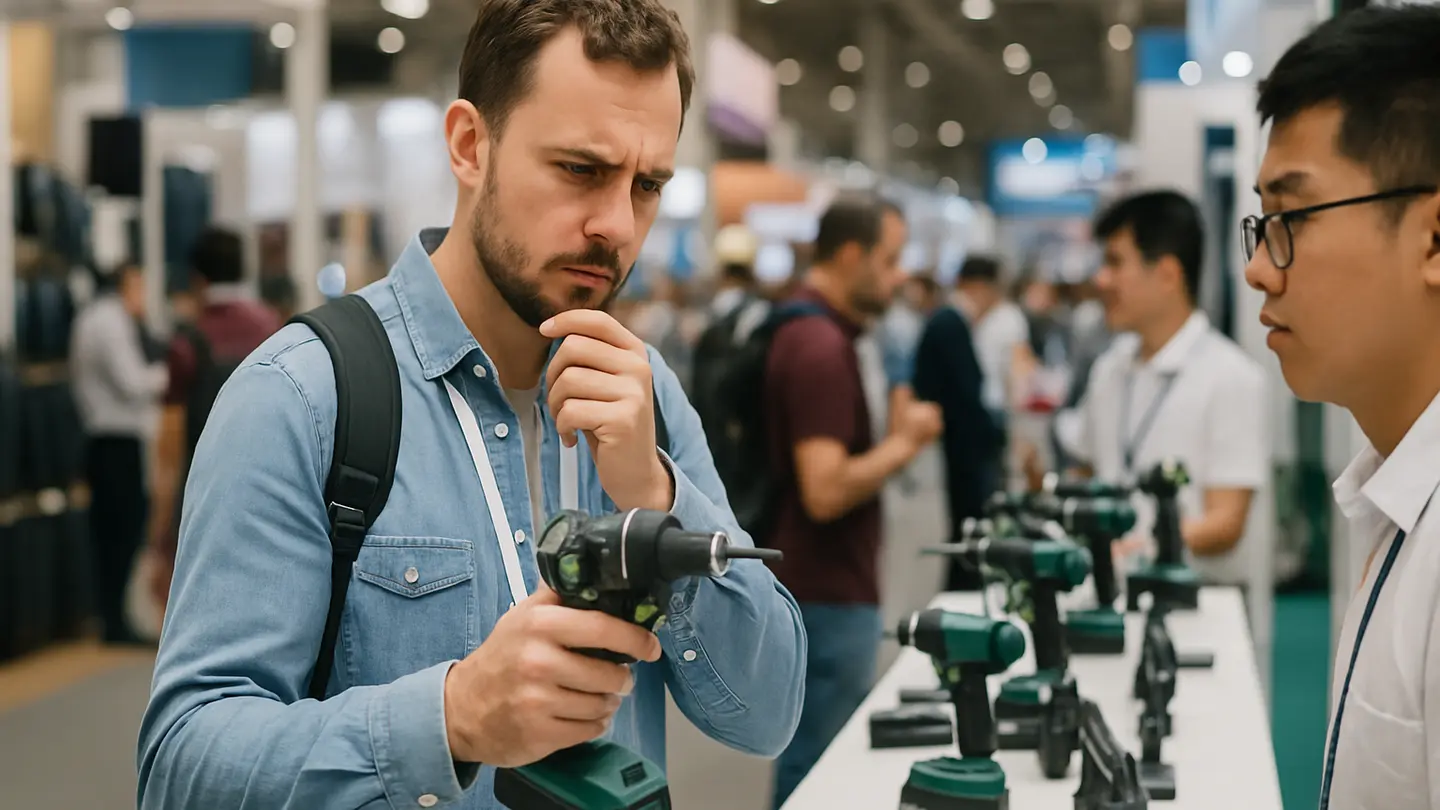
Supplier leads can come from trade shows, directories, sourcing databases, referrals, chambers of commerce, B2B marketplaces, and existing networks. A longlist helps with market mapping, but more names do not automatically improve outcomes.
The shortlist should focus on relevant suppliers: manufacturers with experience in the right product category, materials, production process, export market, and quality standard.
Targeted outreach is usually better than mass messaging. A clear sourcing brief sent to 10 well-matched suppliers is more useful than a generic inquiry sent to 100 weak fits.
Step 3: Screen Suppliers Before Negotiating Price
Supplier vetting should happen before price negotiation. If buyers start with the lowest quote, they may anchor the decision around a supplier that lacks capability, capacity, or compliance readiness.
Desktop vetting may include business licenses, product catalogs, export records where available, website claims, customer references, company history, sample documentation, and communication quality. Physical or third-party audits go further by verifying conditions on site.
Screening criteria should include:
- Production capability and relevant equipment
- Experience with the product, material, or process
- Export history and destination-market familiarity
- Capacity, lead times, and peak-season constraints
- Financial stability and continuity risk
- MOQ fit and realistic order-volume support
- Responsiveness and technical clarity
- Certifications, test reports, or compliance documents
Certification claims should be verified against issuing bodies or authoritative databases where possible. Expired, mismatched, or unverifiable documents are early warning signs.
Step 4: Use Factory Audits to Verify Claims and Spot Red Flags
Factory audits test whether desktop claims match reality. A supplier may present itself as a manufacturer, but an audit can show whether it owns production equipment, has active lines, maintains quality records, and controls the required processes.
A practical audit may examine:
- Production areas, machinery, tooling, and maintenance records
- Warehouse conditions and raw material storage
- Workforce levels and line organization
- In-process quality controls and inspection records
- Production documentation and traceability systems
- Subcontractor use and process outsourcing
- Finished goods storage and packaging practices
- Health, safety, labor, and environmental controls where relevant
Auditors should look for consistency between claims, documents, and factory behavior. Hesitation around material sources, test reports, inspection records, or subcontracted processes may indicate risk.
Hidden subcontracting is especially important. If production moves to an unapproved facility, the buyer may face quality drift, IP leakage, traceability gaps, and compliance failures. Contracts and audit rights should prohibit production transfer without written approval.
Step 5: Compare Samples, Terms, and Total Landed Cost
Supplier selection should be based on total landed cost, not unit price alone. A low quote can become expensive after tooling, sample fees, packaging changes, defect losses, rework, inspection failures, freight, customs duties, taxes, and delays.
Buyers should compare suppliers across:
- Sample quality versus the sourcing brief
- Tooling fees and ownership terms
- Packaging costs and carton efficiency
- Lead times for samples, tooling, and mass production
- Defect allowances and acceptable quality limits
- Sample charges and credit policies
- Incoterms and freight responsibility
- Payment terms, deposits, and balance timing
- Warranty, rework, and after-sales obligations
Incoterms matter because they determine where responsibility and cost transfer between seller and buyer. A quote under one Incoterm may look cheaper because it excludes costs included in another.
This is also where buyers decide whether factory-direct sourcing or intermediary support is appropriate. Direct sourcing may improve technical visibility and cost control. Agents or sourcing partners may improve local coordination, supplier follow-up, and inspection execution.
Step 6: Set Compliance, Quality, and Logistics Controls Before Production
Production controls should be agreed before the mass-production deposit is paid. Once materials are purchased or production is scheduled, the buyer’s leverage may decline.
Quality checkpoints may include:
- Pre-production inspection to confirm materials, components, and setup
- In-line inspection to detect problems during production
- Pre-shipment inspection before final payment or release
- Packaging inspection to verify labeling, cartons, protection, and loading readiness
The purchase contract should define inspection standards, acceptance criteria, rework obligations, and consequences for nonconformance. This may include defect classifications, AQL levels, retesting requirements, replacement obligations, or payment holds until corrective action is complete.
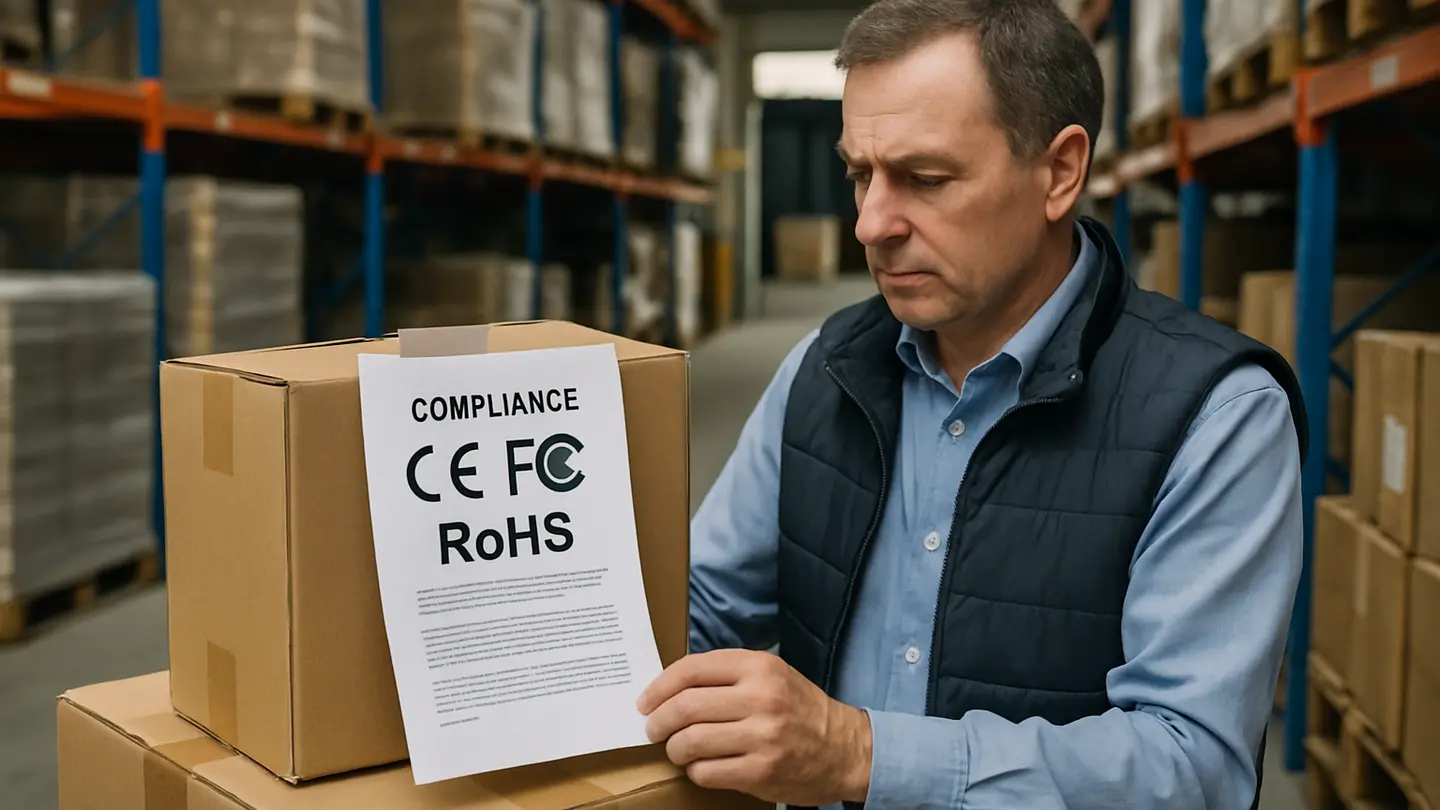
Compliance controls should also be addressed early. Depending on the product and market, documentation may need to cover product safety, chemical restrictions, labor practices, environmental controls, traceability, material origin, labeling, or ESG reporting.
Logistics planning matters too. Packaging dimensions, carton strength, palletization, container loading, freight booking, and delivery deadlines all affect cost and service performance.
Step 7: Onboard, Monitor, and Improve Supplier Performance
Supplier sourcing does not end when the purchase order is issued. The first order begins supplier relationship management.
Buyers should onboard approved suppliers with clear expectations for communication, production updates, documentation, inspection access, corrective action, and escalation. Performance should be monitored with scorecards covering:
- Quality performance and defect rates
- On-time delivery and schedule adherence
- Responsiveness and communication clarity
- Compliance documentation accuracy
- Corrective action speed and effectiveness
- Cost stability and change management
- Continuous improvement initiatives
Monitoring helps buyers detect problems early. Late material purchasing may signal a production delay; repeated minor defects may indicate process drift; slower communication may suggest capacity pressure.
Supplier monitoring should connect production schedules with freight booking, replenishment planning, and inventory targets. Backup suppliers and buffer stock can improve resilience against demand spikes, port disruption, raw material shortages, or capacity shortages.
Business Benefits of Strong Supplier Sourcing
Disciplined supplier sourcing improves more than supplier discovery. Its value comes from clearer specifications, better supplier fit, stronger quality systems, and realistic cost comparison. Results should be measured through total landed cost and operational risk, not the number of suppliers contacted.
Lower Total Landed Cost
Total landed cost includes product cost plus packaging, freight, customs duties, taxes, insurance, handling, testing, inspection, warehousing, rework, and other expenses needed to get usable goods into the buyer’s supply chain.
Strong sourcing lowers total landed cost before production begins. Clear specifications reduce quotation ambiguity. Better packaging can improve freight efficiency and reduce damage. Payment-term negotiation can improve cash flow. Freight planning can avoid emergency shipments. Quality controls can reduce returns, replacements, and customer credits.
The goal is not always the lowest-cost supplier. It is the supplier that delivers the required outcome at the lowest sustainable total cost.
Reduce Quality Fade Across Repeat Orders
Quality fade is the gradual decline in production quality after approval or across repeat orders. It may appear as thinner materials, weaker components, looser tolerances, lower-grade finishes, inconsistent packaging, or weaker inspection discipline.
Supplier sourcing reduces this risk through golden samples, written specifications, inspection criteria, and monitoring. When repeat orders are checked against agreed standards, there is less room for silent substitution or shortcuts.
Stable quality reduces returns, rework, customer complaints, warranty claims, and damage to marketplace or distributor ratings.
Speed Up Private-Label Product Scaling
Private-label programs often stall when suppliers and buyers are not aligned on specifications, branding, packaging, testing, or production feasibility. Complete sourcing documentation reduces clarification loops during prototyping, sampling, and quotation.
Design-for-manufacturing reviews can also accelerate scaling. A supplier may identify a feature that is expensive to produce, difficult to inspect, or likely to fail in mass production. Early adjustment can reduce tooling revisions, sample rejections, and delays.
When specifications, samples, packaging files, barcodes, compliance documents, and approval workflows are ready, buyers can launch new SKUs faster.
Strengthen Supply Chain Resilience
Resilience depends on having options before disruption occurs. Dual sourcing and supplier diversification reduce dependence on a single factory, region, or production process. Every order does not need to be split equally, but backup suppliers should be vetted, sampled, and commercially prepared before emergencies.
Qualified alternatives reduce stockout exposure during demand spikes, raw material shortages, port congestion, regional interruptions, or peak-season capacity constraints. They also improve negotiation leverage because the incumbent supplier knows the buyer has credible alternatives.
Gain Better Manufacturing Leverage
Supplier relationship management can improve access to capacity, faster issue resolution, and technical support. A supplier that trusts the buyer’s forecasts, payment reliability, and communication may prioritize orders during busy periods or offer more flexible terms over time.
Long-term partnerships can also support better change management. When problems arise, established communication channels make it easier to agree on corrective action, revised schedules, or engineering changes.
However, leverage should still be measured through total landed cost and service performance. A friendly relationship is not enough if quality declines, lead times slip, or documentation remains unreliable.
Risks and Limits Buyers Should Not Ignore
Supplier sourcing reduces risk, but it does not eliminate operational friction. Even approved suppliers need monitoring, documentation checks, corrective action follow-up, and periodic reassessment.
The strongest sourcing systems assume conditions can change. Capacity may tighten, material prices may move, management teams may change, or suppliers may take on too much work.
Quality Loss from Undisclosed Subcontracting
Some suppliers outsource production after winning a quote or receiving a purchase order. This may happen because they lack capacity, want to protect margin, or never intended to manufacture the order themselves.
Unapproved subcontracting can bypass agreed process controls, inspection standards, material requirements, and compliance checks. The buyer may believe production is happening in an audited factory while actual work is performed elsewhere.
The result can be inconsistent output, traceability failures, IP exposure, and difficulty assigning responsibility when defects appear. Contracts should prohibit unauthorized subcontracting, require disclosure of critical processes, and preserve inspection rights across the production chain.
Customs and Shipment Risk from ESG Compliance Gaps
International sourcing increasingly requires documentation beyond commercial invoices and packing lists. Depending on the product, market, and buyer obligations, documentation may relate to labor practices, material safety, legal sourcing, restricted substances, carbon reporting, environmental controls, or traceability.
Compliance failures can lead to customs delays, shipment holds, rejected entries, penalties, or seizures. Even when goods are released, delays can create missed delivery windows and expensive storage or demurrage charges.
Supplier vetting should include legal, ethical, and documentation checks before production begins. Buyers should confirm whether the supplier can provide required test reports, declarations, traceability records, certificates, and supporting documents in the required format.
Delays Caused by MOQ, Specification, and Approval Mismatches
Factories often prefer high-volume orders because they reduce setup time, improve material purchasing efficiency, and make capacity planning easier. Buyers may need lower MOQs to test demand or manage cash flow.
MOQ mismatches can affect pricing, scheduling, material availability, and production priority. A factory may accept a low-volume order but price it higher, delay it behind larger customers, or require changes to materials or packaging.
Unclear specifications also cause delays. Missing drawings, finishes, labels, testing needs, or packaging details can lead to paused production or repeated sample revisions. Buyer-side delays, such as slow sample approval, late artwork, delayed deposits, or unclear inspection decisions, can also push production into a later schedule window.
Stockout Exposure from Relying on One Supplier
Single-supplier dependence creates vulnerability. If the only qualified factory faces capacity shortages, labor disruption, raw material delays, quality problems, power restrictions, port congestion, or regional interruptions, the buyer has few immediate options.
Backup suppliers should be qualified before peak-season or high-volume orders. The backup should understand specifications, produce approved samples, agree on terms, and be capable of scaling within a realistic timeframe.
Second sourcing can reduce stockout risk and improve benchmarking for price, quality, lead time, and innovation. The trade-off is that multiple suppliers require stronger documentation and disciplined quality control to keep output consistent.
Conflict-of-Interest Controls for Sourcing Agents
Sourcing agents can add value through supplier identification, local communication, negotiation support, production follow-up, and inspection coordination. But buyers should manage conflicts of interest carefully.
Hidden factory commissions can bias recommendations and obscure true pricing. If an agent is paid by both the buyer and supplier without disclosure, the buyer may not know whether the recommended factory is the best fit or the one offering the highest commission.
Transparent compensation protects trust and price clarity. Ethical intermediaries should separate buyer-paid service fees from supplier payments or disclose supplier-side compensation clearly. Buyers should also define inspection rights, defect penalties, rework responsibilities, and payment conditions before deposits are paid.
Final Takeaway: Treat Supplier Sourcing as a Management System
Supplier sourcing is a disciplined system for finding, selecting, verifying, and managing suppliers. It is not a one-time price comparison exercise.
A strong process starts with clear specifications, then filters suppliers through focused shortlisting, desktop vetting, factory audits, sample comparison, total landed cost analysis, compliance planning, and performance monitoring. Factory audits and inspection controls help reduce quality fade, hidden subcontracting, traceability failures, and customs or compliance problems.
The core pillars are cost control, quality systems, compliance readiness, logistics planning, and supplier relationship management. Factory-direct sourcing can work well for buyers with strong in-house technical, language, negotiation, and supplier-management capability. External sourcing support may help buyers that need local verification, supplier communication, production follow-up, or quality control.
In volatile markets, resilient supply chains are built before disruption occurs. Supplier sourcing gives procurement teams the structure to make better choices early, manage risk continuously, and keep supply moving when conditions change.