Why Are So Many Toothbrushes Made in China?
China remains an important sourcing location for manual and electric toothbrushes because it combines high production capacity with dense supplier networks. For B2B buyers, the main advantage is not simply access to low-cost labor. It is the ability to source handles, bristles, tooling, printing, packaging, export cartons, and assembly services within connected manufacturing regions.
Toothbrushes are relatively lightweight, compact products. This means international freight often has a smaller effect on landed cost than it would for larger household goods. A buyer can ship substantial quantities in cartons without the freight burden becoming the dominant cost factor. This makes China practical for distributors, retailers, private-label brands, hospitality suppliers, and promotional-product buyers serving multiple markets.
The country’s supplier concentration can also support shorter development and replenishment cycles. When factories work with nearby component providers, they may be able to coordinate materials, sampling, production changes, and packaging more efficiently than suppliers dependent on cross-border component imports.
However, buyers should not treat China as a single, uniform manufacturing market. Toothbrush manufacturers in China vary widely in their product focus, machinery, quality controls, development capability, and export experience. The right sourcing decision depends on product specifications, target market requirements, order volume, expected quality level, and the buyer’s ability to manage inspections and approvals.
Production Scale Matters More Than Low Wages
Toothbrushes are generally high-volume, low-margin products. A basic manual toothbrush may appear simple, but its final cost is affected by several small elements: resin for the handle, bristle material, molding, tufting, trimming, tip finishing, printing, packaging, labor, quality control, and logistics.
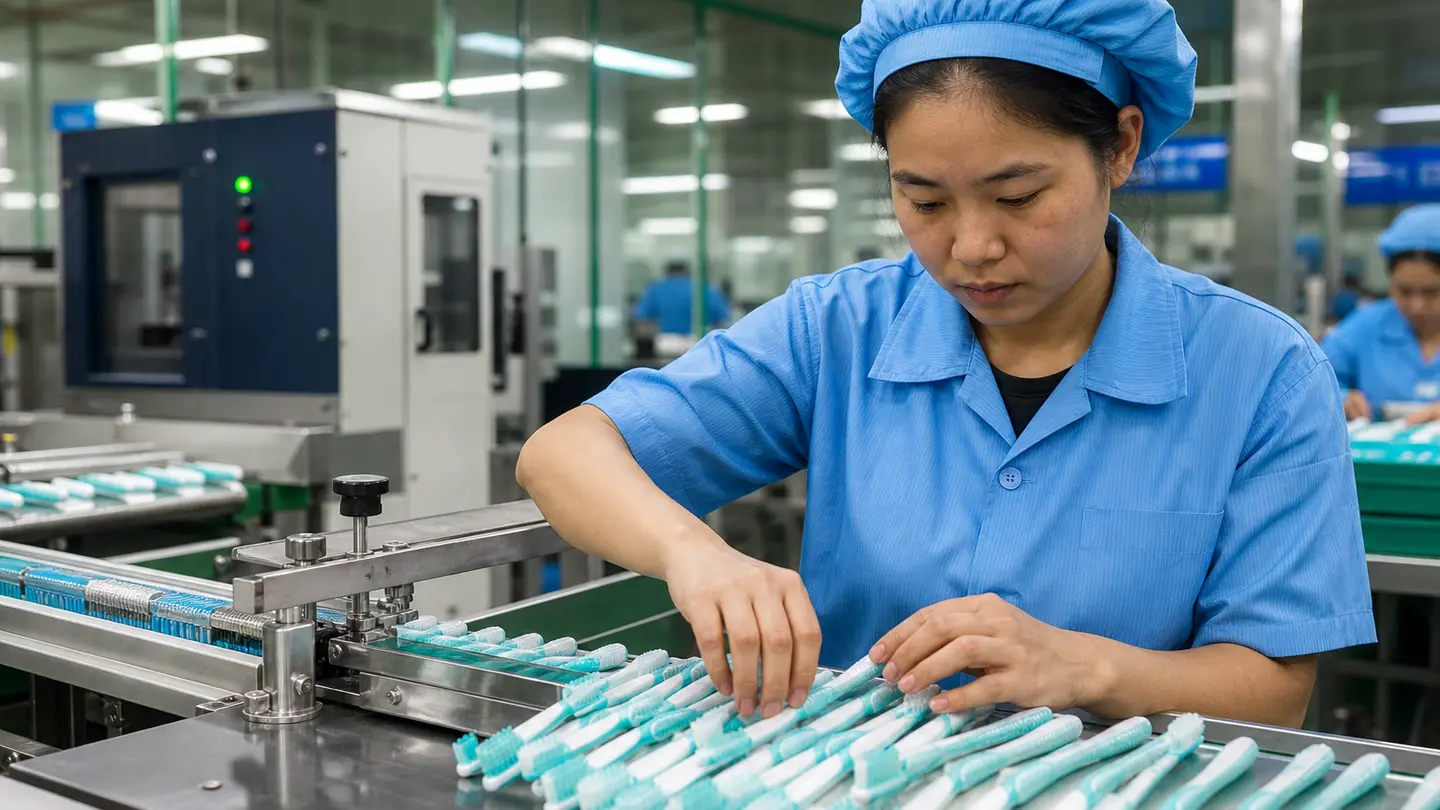
Large-scale production matters because factories can spread fixed costs across high output. Established lines may use automated or semi-automated processes for handle molding, bristle tufting, trimming, and packaging. Higher volumes can also improve material purchasing power for common inputs such as plastic resins, nylon bristles, paperboard, and cartons.
For a buyer, the key lesson is that a low quote does not necessarily mean a factory is more efficient—or that the product is comparable. Two suppliers may quote different prices because they are offering different specifications.
When comparing factory quotations, align the following points before selecting a supplier:
- Handle material, weight, dimensions, and finish
- Bristle material, color, diameter, height, and softness
- Tuft pattern and number of bristle holes
- Bristle-tip finishing requirements
- Printing method and number of logo colors
- Packaging format, inserts, labeling, and carton specifications
- Tooling charges and ownership arrangements
- Order quantity and price-break levels
- Inspection requirements and acceptable defect criteria
- Incoterms, freight assumptions, import duties, and local delivery costs
A quote for a lightweight economy brush in a simple polybag is not directly comparable with a quote for a branded brush using a heavier handle, soft bristles, rounded tips, blister packaging, and retail-ready cartons.
Buyers should calculate landed cost rather than focusing only on ex-factory pricing. The lowest unit price can become less attractive if it creates higher defect rates, expensive packaging failures, long rework cycles, or customs and logistics surprises.
A Local Supply Chain Covers Every Major Component
A toothbrush requires more than a molded handle and bristle filaments. Manufacturing involves a chain of suppliers and processes that must work together consistently.
Common requirements include:
- Plastic handles and grip components
- Nylon or other bristle filaments
- Injection-molding tools and replacement inserts
- Metal staples or staple-free tufting systems, depending on the design
- Pad printing, in-mold decoration, or other branding processes
- Blister cards, boxes, sleeves, labels, and inserts
- Outer cartons and protective export packaging
Industrial clusters can make coordination easier because many of these services are located within the same region. A toothbrush producer may be able to obtain tooling adjustments, replacement bristles, revised packaging artwork, or additional cartons without waiting for international component shipments.
This proximity can reduce lead-time risk, particularly for repeat orders. If a packaging supplier identifies a printing issue or a bristle supplier needs to confirm a color match, local communication and transport may be faster than cross-border coordination.
By contrast, a factory that depends on distant or imported components may face more points of delay. The risks can include shipping interruptions, inconsistent incoming materials, unclear responsibility for defects, and longer approval cycles. If the handle supplier, bristle supplier, printer, and final assembler operate in different countries, resolving a problem can become more difficult.
That does not mean every local supply chain is automatically reliable. Buyers should still confirm how the supplier controls incoming materials, tracks production batches, manages nonconforming components, and handles changes to approved materials. Supply-chain density is an advantage, but it does not replace quality management.
Why Hangji Is a Major Toothbrush Manufacturing Cluster
Hangji, in Yangzhou, Jiangsu, is widely known as a major toothbrush manufacturing cluster. For buyers sourcing manual toothbrushes, the area can offer a broad selection of factories and related service providers.
The value of a cluster is choice. Buyers may find manufacturers focused on basic promotional brushes, family-pack retail products, travel toothbrushes, hotel amenities, children’s designs, or private-label packaging. Nearby tooling providers, bristle suppliers, packaging firms, and export businesses can also support product development and order fulfillment.
This concentration can help buyers compare product capabilities without searching across many unrelated regions. It may also make it easier to identify alternative suppliers if an existing manufacturer has capacity constraints, cannot meet a new packaging requirement, or is not suitable for a particular price or quality target.
Still, changing factories is not always as simple as sending an existing sample to a new supplier. Even when a toothbrush design looks similar, the new factory may use different molds, bristle materials, tufting equipment, handle resin, or finishing methods. Buyers should expect to validate:
- Handle dimensions and weight
- Bristle material and softness
- Tuft retention and trimming quality
- Bristle-tip rounding or polishing results
- Color consistency and logo printing
- Packaging fit and artwork placement
- Carton strength and shipment configuration
If dedicated tooling is involved, the buyer should clarify whether the mold can be transferred, whether a replacement tool is required, and who is responsible for tool maintenance. A supplier cluster expands options, but proper sampling and material confirmation are still required before moving production.
Low Cost Does Not Automatically Mean Low Quality
Low pricing alone is not a reliable measure of toothbrush quality. A competitively priced toothbrush can be suitable for its intended market if its materials, finish, packaging, and quality controls match the written specification. Conversely, a higher-priced product can still underperform if the factory does not control key production variables.
Several quality points deserve close attention:
- Bristle-tip rounding: Poorly finished bristle ends may feel rougher and can weaken the perceived quality of the brush.
- Tuft retention: Bristles should remain securely anchored during normal use. Weak tufting can lead to bristle shedding.
- Bristle consistency: Softness, height, color, and density should match the approved sample and product specification.
- Handle finish: Buyers should check for sharp edges, visible flow marks, inconsistent color, warping, or weak decorative printing.
- Wash durability: The brush should retain its basic form and finish after exposure to water and ordinary handling.
- Packaging quality: Retail packaging should protect the product without crushing, opening unintentionally, or damaging the bristles.
Product photographs rarely show these details. Images can indicate general shape and appearance, but they cannot reliably confirm bristle finishing, handle strength, tufting quality, or how a package performs in transit.
A more dependable approach is to provide a written product specification and evaluate all candidate suppliers against it. The specification should distinguish between visual requirements, dimensional requirements, material requirements, functional expectations, and packaging requirements. This gives the buyer a consistent basis for comparing samples and production batches.
What Buyers Should Consider Before Selling Toothbrushes
The right sourcing path depends on whether the buyer needs a fast private-label launch or a differentiated proprietary product.
For many new toothbrush sellers, using an existing factory design is the lower-risk option. The buyer can often customize the product through handle colors, printed branding, packaging, labels, or multipack configuration. This route generally reduces development time and avoids the upfront cost of dedicated handle tooling.
A custom handle design offers more differentiation, but it adds complexity. New tooling may be required, along with design review, prototype sampling, mold trials, material validation, and revised packaging development. The buyer should also allow for the possibility that early samples may need adjustment before the product is ready for production.
Testing demand with a standard or lightly customized toothbrush can be useful before committing to a dedicated mold. It allows a buyer to assess market response, retail pricing, packaging preferences, and reorder potential with less upfront exposure.
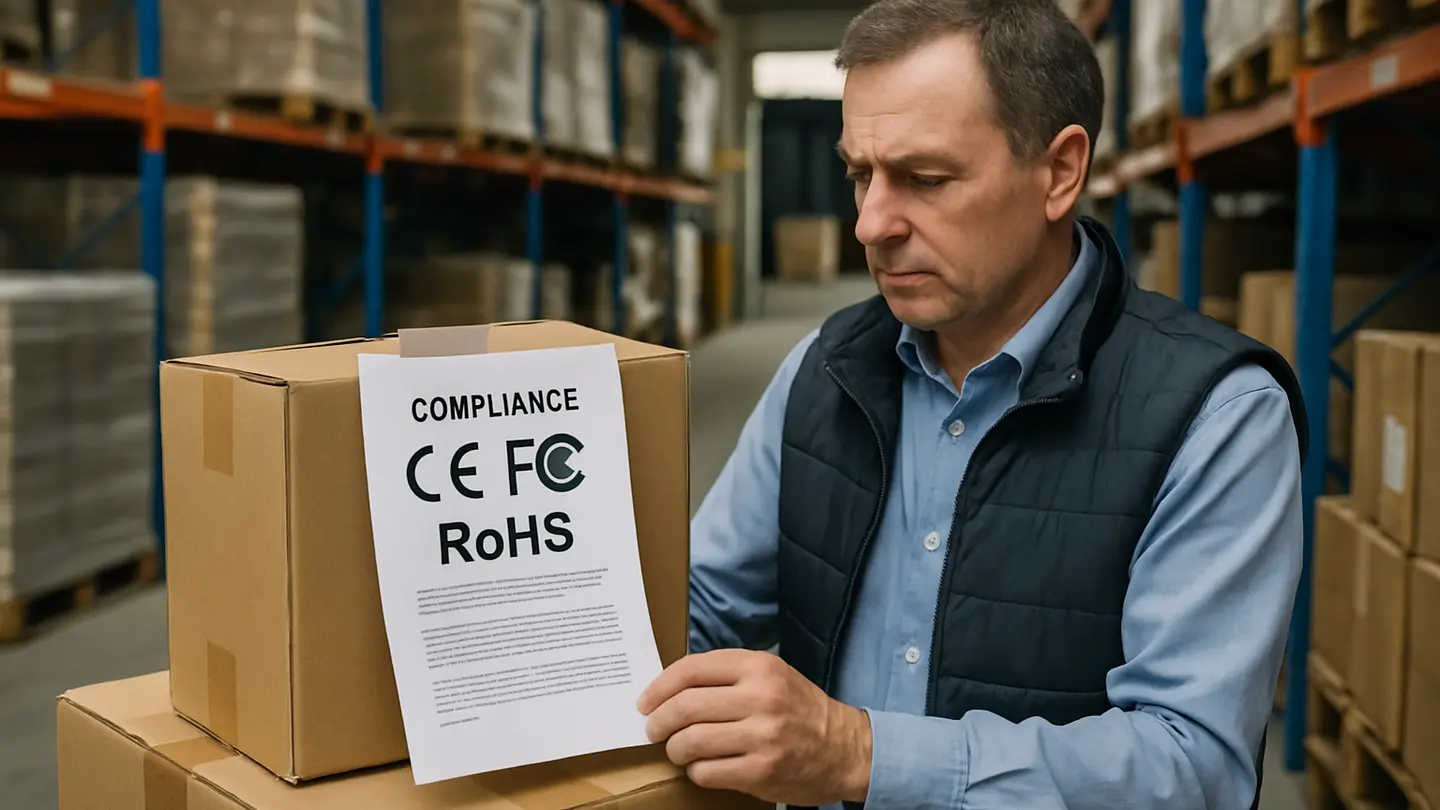
Electric toothbrush sourcing requires a separate level of evaluation. In addition to brush-head design and packaging, buyers must consider the motor, battery, charging system, switching mechanism, durability, charging accessories, instructions, and applicable product-compliance obligations in the destination market. A supplier experienced in manual toothbrushes may not necessarily be the right partner for a battery-powered product.
Before placing an order, buyers should also determine who owns the artwork, molds, packaging files, and product specification. Clear documentation helps reduce disputes when reordering, changing factories, or modifying the product range.
Common Quality-Control Mistakes Toothbrush Importers Make
One common mistake is assuming that a low unit value makes formal quality control unnecessary. In reality, inexpensive products can create costly problems when defects affect a large shipment. A small per-unit issue can become significant when thousands of toothbrushes arrive with poor bristle quality, incorrect packaging, or inconsistent branding.
Importers should avoid relying only on an approved pre-production sample. A sample shows what the supplier can make under controlled conditions; it does not prove that every carton in a production run meets the same standard.
Typical production risks include:
- Bristle tips that are insufficiently rounded
- Weak or uneven tufting
- Bristle softness that differs from the approved sample
- Inconsistent handle color or surface finish
- Misaligned printing or logo omissions
- Cracked, warped, or poorly trimmed handles
- Packaging that is too tight, too loose, or unable to protect the toothbrush
- Mixed products, colors, or pack counts within export cartons
Packaging should be tested with the finished toothbrush inside it. A package that looks acceptable when empty may bend bristles, damage printed surfaces, fail to close correctly, or provide insufficient protection during transportation.
Pre-shipment inspection should sample cartons across the batch rather than focus only on a small group of cartons near the factory’s finished-goods area. This approach is more likely to identify variation between production periods, lines, shifts, or carton locations.
Buyers should define inspection criteria before mass production starts. These criteria may include visual acceptance standards, dimensions, bristle appearance, pull or retention expectations where applicable, packaging accuracy, barcode readability, carton markings, and quantity checks. Clear criteria help the supplier understand what must be controlled and make inspection findings easier to resolve.
FAQ
Q1: Are toothbrushes made anywhere other than China?
Yes. Toothbrushes are also made in countries including India, Vietnam, Germany, and the United States. These locations may serve domestic or regional markets, support established local brands, or operate with different labor, material, and logistics cost structures.
China’s importance in the category is closely related to supply-chain density. Buyers can often access handle molding, bristle processing, tooling, printing, packaging, and export support within connected manufacturing regions. Other countries may be suitable alternatives, but buyers should compare total landed cost, development capability, lead time, and product consistency rather than assuming one country is universally better.
Q2: Do the big global brands manufacture in China too?
Some global oral-care brands may source certain toothbrush ranges from China, either through owned facilities or contract manufacturers. Manufacturing location can vary by product line, market, product type, and supply-chain strategy.
A brand name alone does not confirm where a specific toothbrush was made. Buyers should check product labeling, import documentation where available, or supplier disclosures when manufacturing origin is relevant to their purchasing decision.
Q3: Could toothbrush production move out of China the way clothing did?
It could move gradually for some products, but toothbrush manufacturing decisions involve more than direct labor costs. A producer also needs access to suitable bristle materials, molding capability, tooling support, printing, packaging, and reliable logistics.
Replicating these connected supplier networks in another location can take time. For that reason, relocation decisions are likely to depend on the product category, order volume, target market, customs conditions, and the availability of a complete local supply chain—not only wage levels.
Q4: Do I have to buy from Hangji?
No. Buyers can source toothbrushes from regions beyond Hangji. Guangdong and other manufacturing areas may be appropriate for certain projects, especially electric toothbrushes or products requiring broader electronics and battery supply chains.
Hangji remains useful for buyers seeking a wide supplier base for manual toothbrushes. The practical choice should depend on the product type, desired customization, required quality level, order size, and the supplier’s ability to meet technical and packaging requirements.
Key Takeaways for Toothbrush Buyers
China’s position in toothbrush sourcing is supported by regional manufacturing networks, large production volumes, established production lines, and access to closely located component suppliers. For buyers, this can mean lower entry costs, a wide range of supplier options, and manageable freight for a lightweight product category.
However, price should not be the sole buying criterion. A toothbrush quote is meaningful only when the handle material, bristle specification, tufting method, tip finishing, printing, packaging, inspection requirements, and logistics terms are clearly matched.
Buyers can reduce risk by starting with proven designs where appropriate, validating samples carefully, documenting material and packaging requirements, and confirming tooling arrangements before production. For custom products, allow time for mold development and sample revisions. For electric models, expand the evaluation to include the motor, battery, charging system, and market-specific compliance needs.
Finally, batch-level checks offer stronger assurance than pre-production samples alone. Inspecting cartons from across the production run, with the finished toothbrush packed inside its retail packaging, helps identify the variation that product photos and approved samples may miss.
About the Author
The author is a B2B sourcing and product-development writer covering supplier evaluation, private-label manufacturing, packaging, quality control, and import purchasing decisions. Their work focuses on practical procurement considerations that help buyers compare suppliers, define product requirements, and manage production risk.