Toy manufacturing is not just finding a low-cost factory and placing an order. For importers, licensors, retailers, and product developers, it is a controlled scale-up process linking concept validation, child safety, materials, tooling, supplier capability, inspection, documentation, and landed-cost planning.
This matters for custom plastic, plush, and mixed-material toys, where early design choices affect compliance testing, mold cost, packaging, freight, and retail viability.
What to Prepare Before Starting Toy Manufacturing
Before contacting factories, prepare enough information for suppliers to quote responsibly and flag compliance risks. Vague requests lead to inconsistent pricing and missed safety issues.
At minimum, buyers should prepare:
- A product brief describing the concept, play pattern, target user, functions, and sales channel.
- Target age grade, such as 0–3 years, 3+, 6+, or another defined range.
- Sketches, renderings, CAD files, or reference samples.
- Preliminary dimensions, materials, colors, finishes, and assembly expectations.
- Intellectual property documents, including trademarks, design rights, licenses, or invention records where relevant.
- Packaging assumptions, such as retail box, blister card, polybag, display carton, or e-commerce-ready packaging.
- Sales-channel requirements from retailers, marketplaces, distributors, or licensors.
- Target market, such as the United States, European Union, United Kingdom, Canada, Australia, or another regulated destination.
Commercial assumptions matter too. Define expected retail price, wholesale price, margin target, order volume, and acceptable MOQ before supplier outreach. A toy may look viable at retail but fail once tooling, lab testing, inspections, freight, duties, warehousing, fulfillment, and contingency costs are included.
Early budgets should include design and engineering, prototypes, tooling, material and finished-product testing, packaging design, inspection, freight, insurance, duties, taxes, customs brokerage, warehousing, labeling, fulfillment, rework, and contingency stock.
Safety requirements vary by market. A toy for the U.S. may require testing to applicable ASTM and federal requirements, while an EU launch may require EN71 compliance and CE-related documentation where applicable. Address these questions before production, not after inventory is packed.
The goal is to validate three things early: play appeal, safety feasibility, and margin feasibility.
A Practical Workflow for Manufacturing Toys
Toy manufacturing should be managed as a risk-control workflow, not a simple purchasing exercise. Each stage should reduce uncertainty before the buyer commits more capital.
A practical sequence runs from concept validation to design development, material selection, factory shortlisting, sample approval, tooling, production, inspection, shipping, and fulfillment. Skipping steps may save time at first but often creates larger costs through failed testing, mold disputes, shipment delays, or rejected goods.
Step 1: Validate the Toy Concept and Market Fit
Start by confirming that the toy has a clear reason to exist. Buyers should test demand before investing heavily in CAD development, prototypes, or production tooling.
Useful validation work includes researching:
- Age groups and developmental suitability
- Current toy trends and evergreen categories
- Competing products and retail prices
- Customer reviews of similar toys
- Gaps in function, quality, packaging, or positioning
- Distributor or retailer expectations
- Channel fit, such as specialty retail, mass retail, e-commerce, education, promotional goods, or licensing
Define the play value. Does the toy support pretend play, construction, learning, sensory engagement, movement, collecting, or social play? A weak play pattern may not justify custom tooling or compliance costs.
The concept should also define target users, major features, size, durability expectations, and unique selling points. For B2B buyers, these details help suppliers judge whether the project requires injection molding, sewing, electronics assembly, painting, printing, packaging customization, or combined processes.
Early feedback from parents, children, educators, retailers, distributors, and category buyers can reveal confusing features, poor price-value perception, weak packaging communication, or unnecessary small-part risk.
The output should be a refined concept with basic market support, not just an idea.
Step 2: Turn the Design Into CAD Files and Prototypes
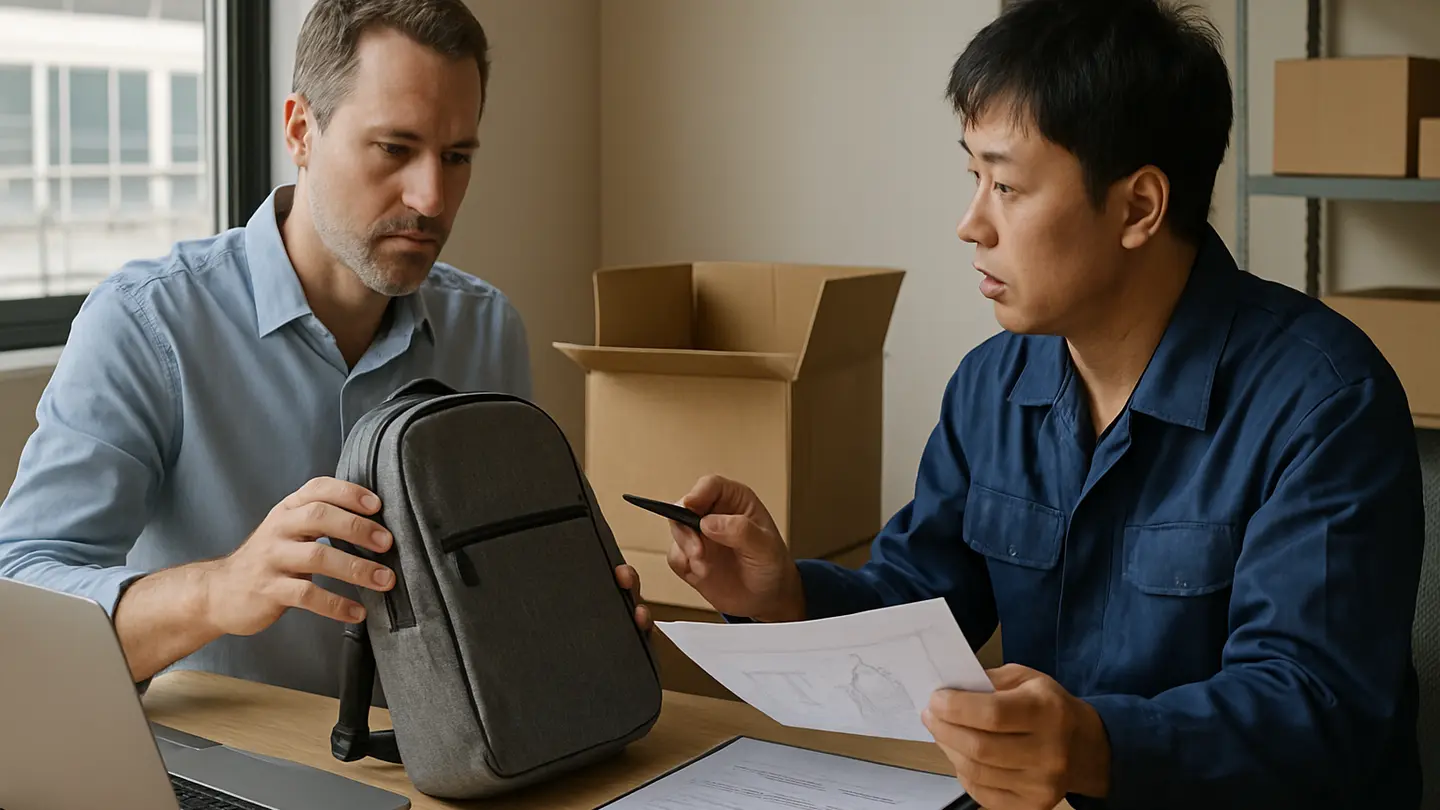
Once the concept is validated, convert it into manufacturing information. Sketches and mood boards are not enough for accurate quotes. Suppliers need CAD files, technical drawings, specifications, color references, component details, and a preliminary bill of materials.
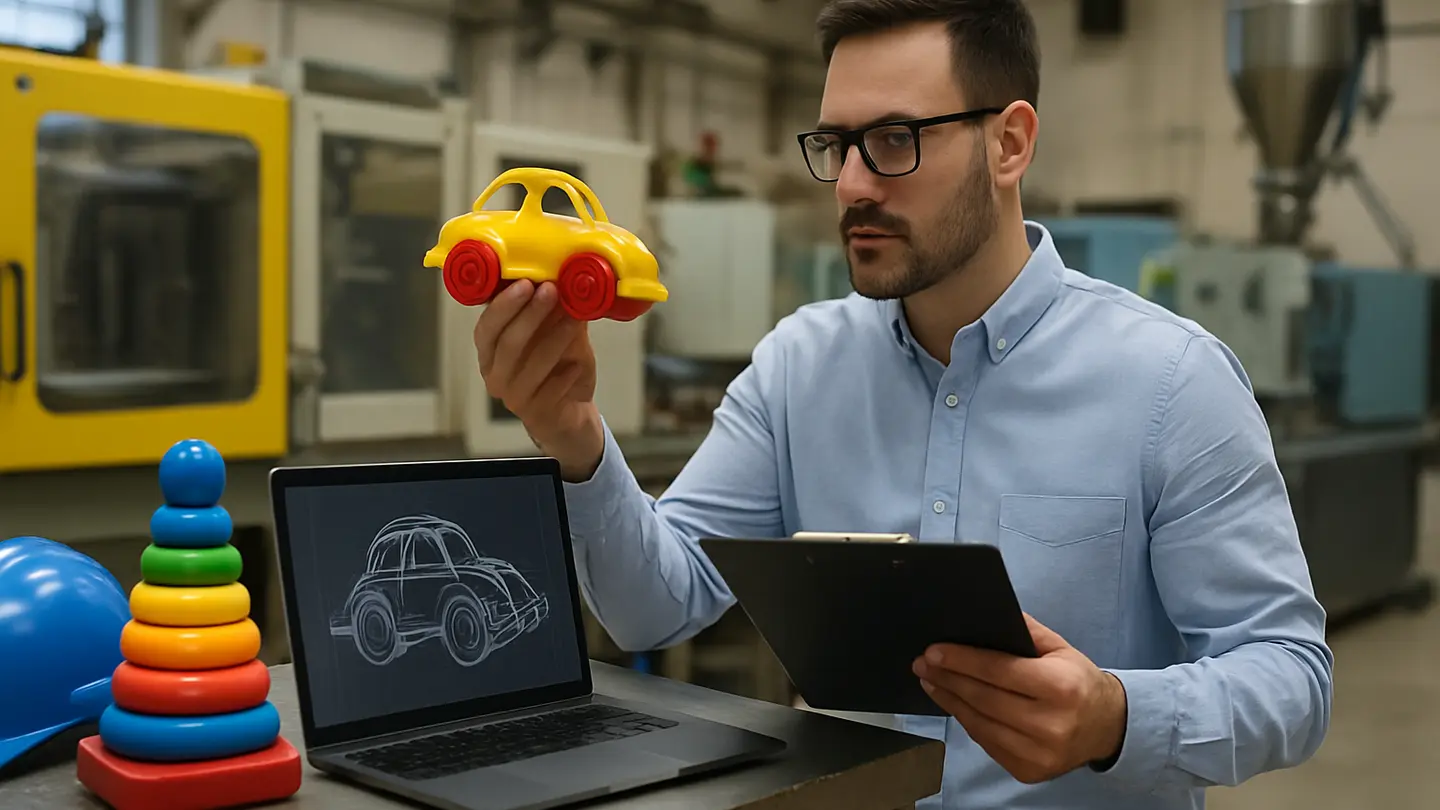
For plastic toys, design-for-manufacturing review should evaluate:
- Moldability of each part
- Wall thickness and sink-mark risk
- Draft angles for mold release
- Parting lines and gate locations
- Assembly methods such as snap fits, screws, or ultrasonic welding
- Structural strength and drop resistance
- Sharp edges, pinch points, and small-part risks
- Paint masks, printing areas, surface texture, and tolerances
For plush toys, the design file should include patterns, fabric specifications, fill type, embroidery details, seam construction, labels, trims, and attachment methods. Plastic eyes, buttons, bows, sound modules, tags, or suction cups need special attention because they may create pull-strength or small-part risks.
Physical prototypes should be handled before formal lab testing. Review balance, hand feel, softness, seams, movement, assembly fit, odor, surface finish, and likely user behavior, including pulling, bending, dropping, and mouthing.
A prototype does not need to be perfect, but it should be accurate enough to guide quoting, DFM feedback, and safety review.
Step 3: Choose Safe Materials and Prepare Compliance Records
Material selection affects safety testing, durability, tooling, lead time, appearance, and unit cost.
Common toy plastics include ABS, PP, TPR, PVC, and silicone, depending on flexibility, impact strength, surface feel, color, and processing method. Plush toys may use polyester fabrics, recycled filling, embroidery, woven labels, ribbons, trims, and plastic or metal attachments.
Each material should be reviewed for chemical safety, physical safety, durability, and age-grade suitability. Higher-risk components deserve special review, including magnets, button batteries or rechargeable batteries, long cords or loops, small detachable parts, coatings, paints, inks, scented materials, loose accessories, sound modules, expandable materials, and projectile or spring-loaded features.
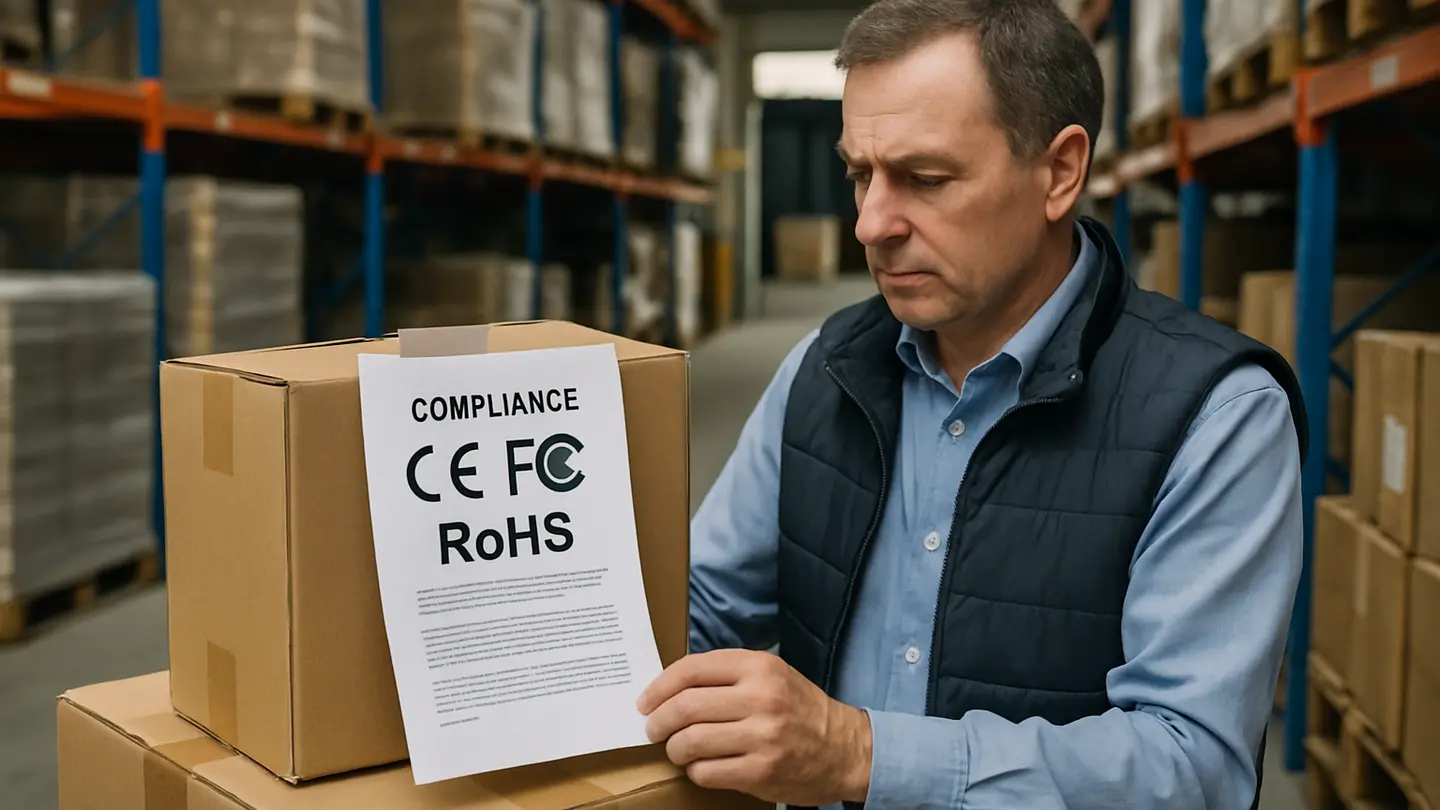
Before mass production, collect compliance records such as material safety data sheets, supplier declarations, previous third-party test reports, coating reports, battery specifications, transport documents, and component certificates where applicable.
Factory documents can help, but buyers should not rely on internal statements alone for regulated markets. Independent lab testing of representative samples is usually safer.
Step 4: Shortlist Factories With the Right Toy Category Capability
Factory selection should match the product’s process and risk profile. China remains a major toy manufacturing base across plastic toys, plush toys, electronic toys, puzzles, educational toys, and mixed-material products, but supply availability does not replace verification, quality control, communication, and logistics planning.
Separate suppliers by real capability:
- Plastic injection suppliers: molded figures, vehicles, construction parts, cases, and rigid components.
- Plush toy factories: stuffed animals, soft dolls, cushions, fabric play items, and sewn character products.
- Mixed-material assembly factories: toys combining plastic, fabric, electronics, sound modules, magnets, accessories, or complex packaging.
Sourcing channels may include trade shows, sourcing agents, referrals, B2B platforms, factory directories, and direct outreach. Screen every candidate for toy-category experience, similar products, tooling management, QC systems, compliance testing history, packaging capability, capacity, subcontractor controls, IP protection, communication quality, and engineering support.
For custom molds, confirm ownership in writing before payment. Agreements should also restrict unauthorized subcontracting and require buyer approval before production moves to another site.
A reliable shortlist should include several verified factories so buyers can compare cost, tooling approach, lead time, and risk.
Step 5: Approve the Golden Sample Before Full Tooling and Production
The golden sample is the approved benchmark for bulk production. It should represent the agreed product as closely as possible, including materials, colors, surface finish, function, assembly, packaging, and labeling.
Before moving from CAD to production tooling, review all design-for-manufacturing changes. Factory suggestions may reduce mold complexity, strengthen parts, improve assembly, or control cost, but each change must be checked for safety, appearance, play value, and compliance impact.
For plastic toys, inspect prototypes and test shots for texture, finish, component fit, color accuracy, flash or sharp edges, odor, moving parts, structural strength, paint quality, print quality, and loose components.
For plush toys, inspect fabric hand feel, fill consistency, seam shape, embroidery, accessory placement, stitching, labels, and pull strength of attachments.
Tooling terms should be agreed before commitment. Clarify payment milestones, revision responsibility, maintenance, storage, access rights, transfer rights, and mold ownership. If the buyer pays for custom tooling, the contract should state whether the supplier can use the mold for another customer; in most private-label or proprietary projects, the answer should be no.
Packaging proofs should be approved at the same time. Check required warnings, age grading, choking hazard statements where applicable, country of origin, importer details, barcode placement, recycling marks, CE marking where applicable, and retailer-specific requirements.
Once signed and retained by both parties, the golden sample becomes the production and inspection reference.
Step 6: Control Production Quality, Packaging, and Landed Cost
Toy quality control should cover raw materials, pilot production, in-process checks, and final random inspection. Independent QC providers or buyer-side inspectors can help verify that the factory follows the approved specification.
For plastic toys, inspection should check flash, burrs, sink marks, warping, weak joints, loose or detachable parts, sharp points or edges, poor assembly, paint defects, printing errors, color variance, odor, and function failure.
For plush toys, inspection should check fabric color consistency, stitching quality, seam strength, filling weight and distribution, embroidery quality, loose threads, accessory attachment, label accuracy, shape consistency, and pull strength of parts.
Packaging protects the toy, communicates compliance information, supports retail presentation, and affects freight cost. Review labels, warnings, artwork, carton marks, barcode accuracy, inner packing, master carton strength, drop resistance, and channel-specific packaging rules.
Calculate landed cost before finalizing the purchase order. Unit price alone is not enough. Include freight, fuel surcharges, insurance, customs brokerage, duties, taxes, port charges, destination handling, testing, inspections, labeling, prep, warehousing, and fulfillment.
Common Toy Manufacturing Problems and How to Prevent Them
Recurring problems usually come from weak specifications, late compliance review, unclear contracts, or poor production monitoring. The following issues can be reduced with disciplined sourcing and documentation.
Problem: Bulk Production No Longer Matches the Golden Sample
Bulk output can drift when factories change materials, substitute components, adjust processes, use different operators, or rush production. Small changes can affect color, feel, strength, odor, or safety.
Prevention starts with a signed and sealed golden sample retained by both buyer and factory. Purchase documents should define materials, colors, tolerances, packaging, workmanship standards, and acceptable quality limits. Do not rely only on email descriptions.
Early production inspection is especially useful because it catches drift before the full order is complete. Final payment should be linked to acceptable inspection results, not only production completion.
Problem: ASTM or EN71 Failures Are Found Too Late
Late safety failures are expensive because the buyer may already have paid for tooling, packaging, production, and freight. Causes include unsafe design features, unsuitable materials, small detachable parts, long cords, weak attachments, noncompliant coatings, or risky magnets and batteries.
Compliance review should start during CAD development and material selection. If a feature creates unnecessary risk, redesign it early by increasing part size, removing detachable accessories, shortening cords, changing paint systems, replacing materials, or redesigning magnetic and battery compartments.
Early sample testing is cheaper than failure after mass production. For regulated markets, build testing timelines into the production schedule and avoid shipping goods before required documentation is complete.
Problem: The Supplier Uses Undisclosed Subcontractors or Contests Mold Rights
Unauthorized subcontracting can introduce unverified workers, unknown materials, weaker QC systems, compliance risk, and exposure of proprietary designs.
Whenever practical, verify the actual production site. A supplier’s sales office or trading company may not be the factory making the goods. Factory audits, video walkthroughs, business-license checks, production-line photos, and third-party verification can clarify who is producing the order.
Contracts should define mold custody, ownership, maintenance, access, transfer rights, and restrictions on use. They should also require written buyer approval before subcontracting or moving production. For proprietary toys, IP protection and tooling control are central to commercial risk management.
Problem: Battery-Powered Toys Are Delayed or Seized at Customs
Battery-powered toys require more documentation than simple mechanical toys. Battery type, capacity, chemistry, installation method, and shipping configuration must be accurately declared. Safety reports and transport documents should match the commercial invoice, packing list, product description, labels, and shipment paperwork.
Problems often arise when product descriptions are vague, battery specifications are inconsistent, or documents do not align. This can delay customs clearance, create inspection holds, or lead to seizure.
Buyers should maintain a document checklist for electronic and battery-powered toys. Returns, defects, customs questions, and logistics delays should feed into corrective action. If the same paperwork issue repeats, update the factory checklist before the next shipment.
FAQ
1. How much does it cost to manufacture a custom toy in China?
Cost depends on product type, size, materials, complexity, tooling, safety testing, packaging, and order volume. A custom plastic toy launch may include 3D modeling, engineering, prototypes, steel molds, test shots, lab testing, packaging design, inspection, and first-order production.
Steel molds are often one of the largest upfront expenses for custom plastic toys. Multi-part toys, tight tolerances, moving mechanisms, or multiple colors can increase tooling cost. Plush toys may avoid hard tooling but still require pattern development, sample revisions, fabric sourcing, embroidery setup, and attachment testing.
Using an existing factory mold, modifying a standard design, or choosing semi-custom packaging can reduce launch cost compared with fully custom tooling.
2. What is the minimum order quantity (MOQ) for toys?
MOQ varies by toy type, material, tooling requirement, customization level, packaging, and supplier policy. Plastic toys often require higher MOQs than some plush products because injection molding involves tooling, setup time, color matching, and production-line efficiency.
Plush toy MOQs may be more flexible when standard fabrics and simple embroidery are used. Custom fabrics, licensed characters, special trims, or complex accessories can raise the MOQ.
Smaller pilot runs may be negotiable, but buyers should expect a higher unit price, limited customization, or shared materials. A pilot run can still validate demand before a larger order.
3. Do I need a safety certificate to sell toys?
In regulated markets, toys generally require testing and documentation before sale. Exact requirements depend on the product, age grade, materials, and destination market.
For the United States, importers and sellers generally need documentation supported by applicable toy safety testing, including relevant ASTM and federal requirements. For the European Union, toys generally need EN71 compliance and CE-related documentation where applicable.
Independent third-party lab testing is safer than relying only on factory internal reports. Factory documents may support the file, but the buyer or importer is usually responsible for ensuring the product placed on the market is compliant.
Conclusion: Sequence Design, Compliance, Sourcing, and QC Before Scaling
Successful toy manufacturing depends on doing decisions in the right order. Concept validation should come before engineering spend. Safety review should happen before tooling. Factory selection should be tied to category capability, documentation, QC systems, and logistics planning.
For custom plastic, plush, and mixed-material toys, early design choices affect compliance, cost, durability, packaging, and landed margin. Buyers who validate play appeal, define specifications, confirm safety requirements, verify factories, control golden samples, and inspect production reduce the risk of failed tests, poor quality, shipment delays, and margin loss.
The practical next steps are to prepare a detailed product brief, build a realistic launch budget, define compliance requirements for each target market, and create a verified shortlist of factories with the right toy manufacturing capability.