Best Toys to Import From China: Safety Rules and Profit Margins
Choosing profitable toys to import from China involves more than comparing factory quotations. The best category for a buyer depends on the target age group, retail channel, product size, expected order volume, intellectual-property exposure, testing needs, and total landed cost.
A low unit price can become less attractive once testing, packaging changes, freight, duties, licensing, inspection, returns, and seasonal markdowns are included. This is especially important in toys because the product is often used by children, and a quality or compliance failure can lead to delayed shipments, rejected inventory, customer complaints, or recalls.
Common categories of toys to import from China include collectibles, outdoor toys, STEM products, plush toys, craft kits, and interactive electronic toys. Each category can support a viable business model, but each carries different sourcing risks and margin drivers.
Collectible Toys: Repeat Sales Opportunities and IP Risks
Collectible toys can encourage repeat purchases because buyers often want to complete a series, obtain rare variants, or follow new releases. Mini figures, blind-box formats, themed sets, trading accessories, and displayable character products may create recurring demand when the assortment is regularly refreshed.
However, collectibles also create substantial intellectual-property risk. A product may appear generic while still infringing rights connected to a character, likeness, logo, artwork, product shape, packaging design, or franchise concept. Buyers should not assume that a factory offering a product has the right to produce or export it.
Before placing an order, review the design and packaging for possible protected elements. Ask the supplier to provide written information about the origin of the design and ownership of any artwork, characters, or molds involved. If the supplier cannot clearly explain where a design came from, the product may create unnecessary commercial risk.
Product classification also matters. A collectible marketed mainly to adults is not automatically outside toy safety requirements. Design, intended use, packaging, display presentation, price point, and foreseeable use can all influence whether authorities or retailers treat the item as a children’s product.
China has several specialized toy manufacturing regions. Chenghai, for example, is widely associated with toy molding, assembly, decoration, and finishing capabilities. Buyers sourcing from a manufacturing cluster may find a wide selection of existing products, but they should still confirm who owns the mold, who produces each component, and whether subcontracting is involved.
Seasonal Outdoor Toys Depend on Accurate Timing
Outdoor toys can sell strongly during warm-weather and holiday periods, but seasonal demand leaves little room for late delivery. Water toys, garden play products, ride-on items, sports toys, and larger activity sets may appear profitable based on factory pricing, yet their commercial outcome often depends on whether they reach stores before the selling window.
Plan backward from the intended retail availability date. The schedule should account for:
- Product development and sample approval
- Safety testing and document preparation
- Production lead time
- Pre-shipment inspection
- Freight booking and transit
- Customs clearance
- Warehouse receiving
- Retailer intake deadlines or marketplace fulfillment requirements
A missed season can turn a high-demand item into discounted inventory. If the product is tied to summer, a holiday period, or a specific promotion, late stock may need to be carried into the next season, tying up working capital and storage space.
Freight is another major consideration. Many outdoor toys are bulky but lightweight, meaning shipping charges may be driven more by package volume than by product weight. Large inflatable items, ride-on toys, tents, playsets, and oversized plastic products can consume significant container or airfreight capacity. Buyers should calculate shipping based on final carton dimensions, not only individual product cost.
Year-Round Demand: STEM, Plush, and Craft Toys
STEM, plush, and craft toys can support year-round demand because they are not limited to one weather season. They are often used as gifts, educational products, subscription items, classroom supplies, or everyday play products. Still, the compliance considerations differ significantly by category.
Building and STEM toys may involve small parts, moving pieces, magnets, batteries, or tools. Products intended for younger children require particular attention because loose components and detachable pieces can create hazards. Magnetic components require additional scrutiny because ingestion can be dangerous if magnets separate from the product.
Plush toys require buyers to evaluate fabrics, stitching, fillings, accessories, and decorative attachments. Eyes, buttons, ribbons, labels, and sewn-on features should be securely attached. Material consistency also matters: a change in fabric, filling, dye, or accessory may affect the scope of existing safety documentation.
Craft kits can introduce chemical concerns. Paints, glues, clays, inks, adhesives, and similar components may require assessments beyond ordinary physical toy risks. A kit also needs clear control of its contents. If a supplier substitutes a material or changes a chemical component without approval, the finished set may no longer match the tested product.
Lower age grades generally bring stricter safety expectations and documentation demands. A toy designed for older children may not be suitable for preschool-age users without major design and testing changes.
Refill packs and subscription concepts can create repeat revenue, but they depend on stable long-term supplier capacity. Buyers should confirm whether the supplier can consistently provide the same materials, colors, accessories, and packaging over multiple production cycles. A subscription model becomes difficult to manage when the factory frequently changes inputs or discontinues components.
Interactive and AI Toys Add Electronics, Wireless, and Privacy Requirements
Interactive toys can stand out in a crowded market, particularly when they include lights, sound, sensors, apps, voice functions, cameras, or connected features. At the same time, these products add layers of risk that do not apply to simple mechanical toys.
Electronic toys may require electrical safety evaluation in addition to general toy safety testing. Battery-powered products also need appropriate battery documentation and transport-compliant packaging. Lithium batteries and other battery types can affect shipping options, freight pricing, and carrier acceptance.
Wireless functions may trigger radio-equipment approval requirements in the country where the product will be sold. Bluetooth, Wi-Fi, remote controls, cellular connectivity, and app-based features should be reviewed before production begins, not after goods have been completed.
Privacy is another critical issue. A toy with a microphone, camera, location feature, connected app, or cloud service may collect information from children or households. Buyers should assess what data is captured, where it is stored, who can access it, and whether the product’s data practices create children’s privacy obligations in the target market.
If the product relies on software, buyers should also clarify responsibility for updates, bug fixes, app availability, language support, and cybersecurity maintenance. A toy that functions correctly at shipment may become difficult to support if its app is removed, its server is discontinued, or its software is not maintained.
Calculate the Margin Before Choosing a Toy Category
Two toys with the same retail price can produce very different margins. A simple plush item may have lower development costs than a connected electronic toy, while a custom collectible may require mold investment and licensing fees that are not visible in the unit quotation.
A practical landed-margin calculation should include more than factory price:
| Cost area | Questions for buyers |
|---|---|
| Product cost | Does the quote include all accessories, inserts, and final packaging? |
| Testing and documentation | Which product, material, color, and age-grade variants are covered? |
| Tooling | Who owns the mold, and how is its cost recovered? |
| Licensing | Are character, artwork, or brand rights required? |
| Freight | Are charges driven by weight, volume, batteries, or special handling? |
| Inspection | Will goods be inspected before final payment? |
| Returns and defects | What return rate or replacement cost is realistic for the category? |
| Markdown risk | Could seasonal or trend-driven inventory require discounting? |
| Inventory cost | How long may stock remain in storage before sale? |
Testing and certification expenses are often fixed or semi-fixed costs. They may be manageable across a high-volume order but expensive when spread over a small run. Multiple colors, packaging formats, batteries, material substitutions, or product variants can also expand the scope of testing and documentation.
Bulky toys can carry disproportionate freight costs, while battery-powered products may require more complex shipping arrangements. Buyers should build these costs into margin planning before choosing a category, rather than trying to recover them through retail pricing after the order is placed.
Choosing Between Stock, Private-Label, and Custom Toys
Stock toys are usually the fastest way to enter a category. They may already use existing molds and established production processes, which can reduce development time and initial investment. The trade-off is limited differentiation: other buyers may be sourcing very similar products.
Private-label products use an existing product platform but add changes such as a logo, color combination, packaging design, instruction leaflet, or product assortment. This can offer a stronger brand position without the full cost of developing a new mold. However, buyers should confirm whether the revised product and packaging remain within the scope of available test reports.
Custom toys offer the greatest opportunity for differentiation, but they require a more disciplined process. Costs may include industrial design, mold development, prototype samples, packaging development, artwork, testing, intellectual-property protection, and minimum-order commitments. Customization should be supported by credible sales forecasts, especially when unique molds or components cannot easily be used for another product.
Even seemingly minor changes can matter. A new pigment, softer material, different filling, added accessory, or revised packaging insert may affect compliance coverage. The buyer should obtain written confirmation about what is unchanged, what has changed, and whether additional testing is needed.
Set the Age Grade Before Product Development and Quotation
The stated age range should be decided before product development, quotation, and packaging design. Age grading influences product dimensions, component design, warning statements, test requirements, instructions, and marketing presentation.
Products intended for children under three face particularly strict small-parts considerations. Features that may be acceptable for an older child can be unsuitable for a younger age group, including detachable accessories, small wheels, buttons, magnets, stuffing materials, or loose decorative components.
US and EU markets use different compliance systems, documentation expectations, and marking requirements. Buyers selling in more than one market should not assume that a report prepared for one destination automatically satisfies the requirements of another. Review target-market obligations early, ideally before approving production tooling.
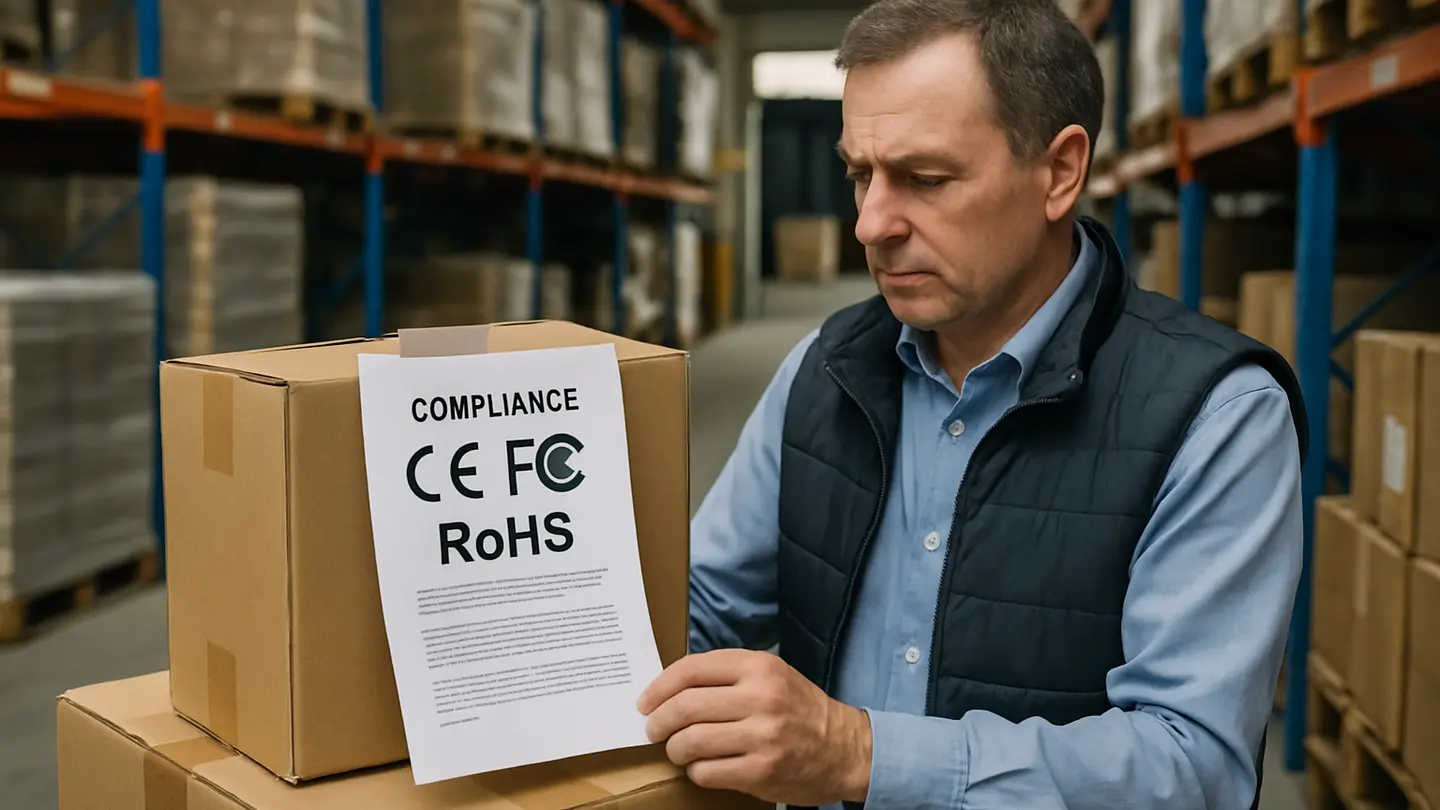
A test report applies only to the products, materials, variants, and conditions described in its scope. It should not be treated as a blanket approval for every similar product in a supplier’s catalog. A different colorant, material grade, battery type, packaging component, or accessory may fall outside the tested configuration.
For this reason, quotations should specify the intended age grade, materials, key components, packaging format, and destination market. A vague quotation may hide compliance costs that emerge only after production has started.
Inspect the Actual Production Batch Before Final Payment
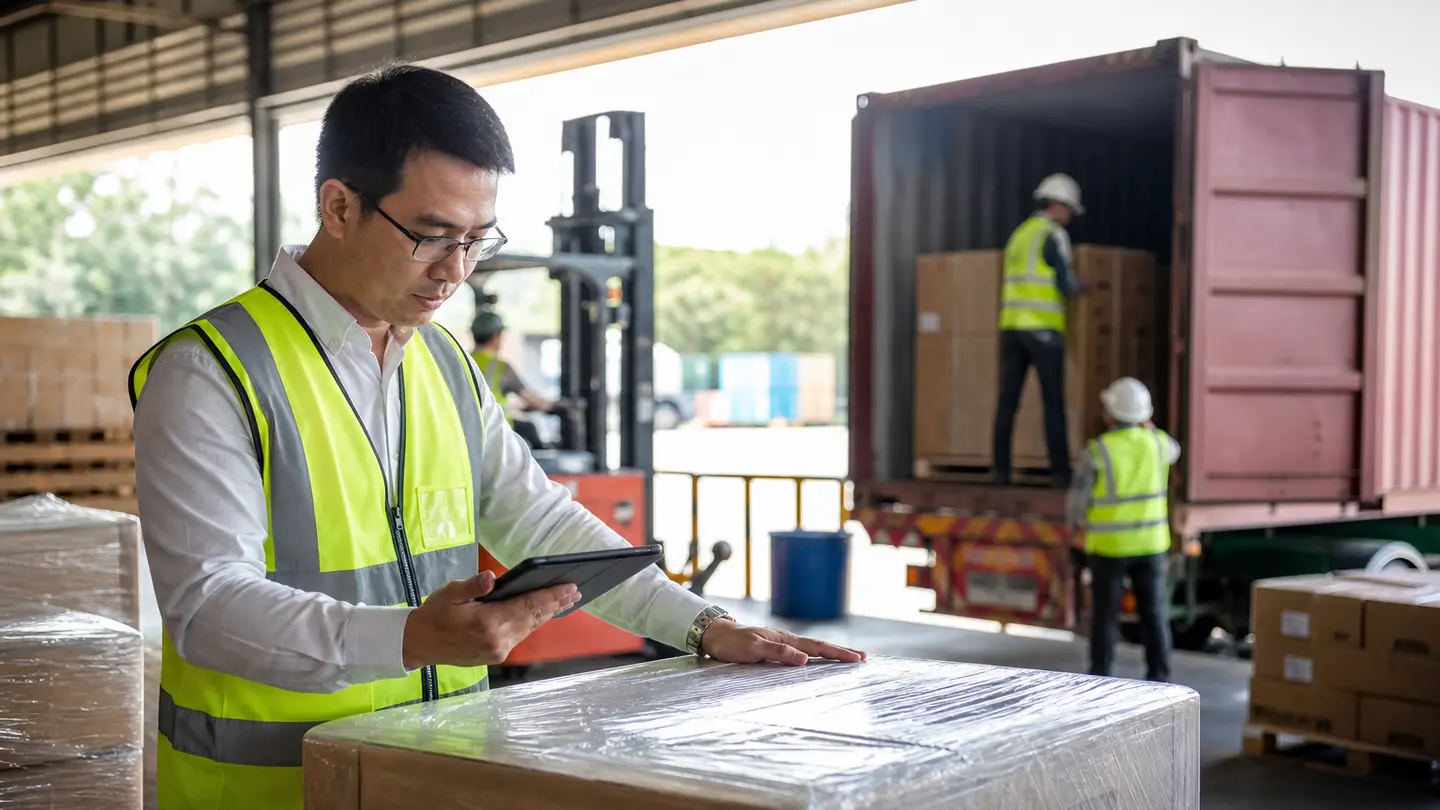
Approved samples are useful, but they do not guarantee that mass-produced goods match the sample. A pre-shipment inspection helps buyers compare finished goods against approved specifications before final payment and shipment.
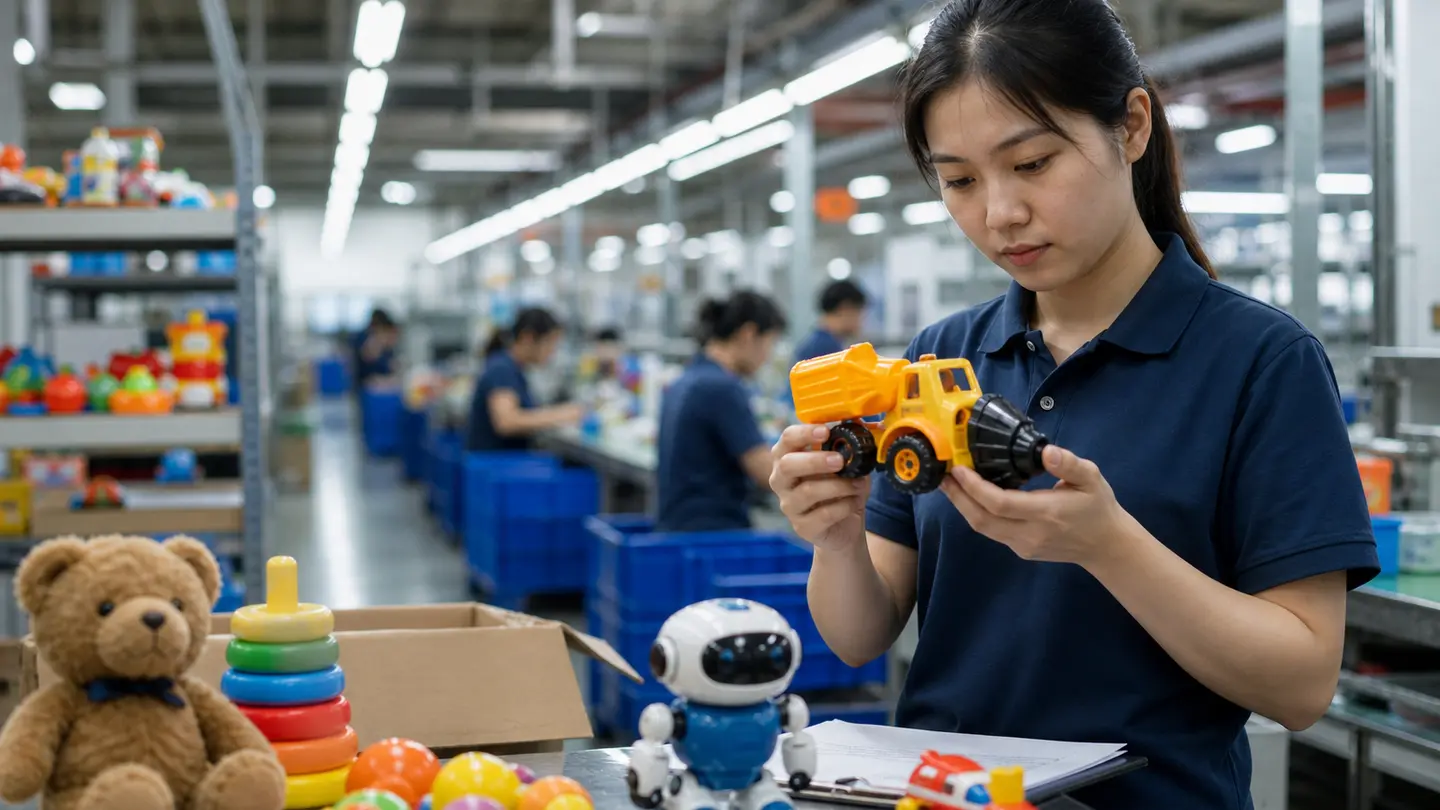
The inspection scope should reflect the product’s risks. Depending on the toy, checks may include:
- Product dimensions, colors, materials, and workmanship
- Attachment strength of eyes, wheels, accessories, and decorative parts
- Small-parts and loose-component risks
- Function of lights, sounds, switches, moving mechanisms, or remote controls
- Battery compartment security and labeling
- Carton count, barcode accuracy, instructions, warnings, and retail packaging
- Comparison with approved samples and production specifications
Samples should be selected across the production run rather than handpicked by the factory. This provides better visibility into whether quality is consistent throughout the batch.
Supplier audits can also be useful when the supply chain involves multiple facilities. Molding, printing, electronics assembly, sewing, packaging, and final assembly may be completed by different parties. Understanding where these steps occur can help buyers identify subcontracting, traceability gaps, and inconsistent quality controls.
FAQ
Q1: How do I know a design is not copied from someone else?
Research the product shape, characters, graphics, packaging artwork, and visible design features before committing to an order. Ask the supplier in writing to identify the design origin, mold ownership, and rights associated with any artwork or characters. If the supplier cannot provide a clear explanation, treat the design as higher risk and seek legal advice where appropriate.
Q2: What do I do if someone copies my toy?
Protect eligible intellectual property before launch where possible. Depending on the product and market, this may involve registered design, trademark, copyright, or other rights. Registered rights can strengthen enforcement options with marketplaces, customs authorities, or commercial counterparties. Documentation should be organized before the product is widely released.
Q3: Can I sell the same toy to adults and to children?
Possibly, but classification is not determined by the label alone. Authorities and retailers may consider the product’s design, packaging, marketing, display location, foreseeable use, price, fragility, and stated intended user. A collectible aimed at adults may still be treated as a children’s product if its presentation and likely use suggest it is a toy.
Q4: My toy has magnets. Does that change anything?
Yes. Magnets create ingestion risks beyond ordinary small-parts concerns. Buyers should assess magnet strength, size, accessibility, and the security of the enclosure or attachment method. Products containing magnets may require specialized safety assessment, so the magnet specification should be established before production and reflected in the testing scope.
Conclusion: Build Compliance Into the Sourcing Decision
The strongest toys to import from China are not necessarily those with the lowest factory price. They are the products whose age grade, intended market, safety requirements, freight profile, intellectual-property position, and realistic sales volume have been considered before the order is placed.
Buyers should establish compliance needs before accepting a quotation, especially for products with magnets, batteries, chemicals, wireless functions, small components, or young intended users. They should also calculate total landed margin with testing, tooling, licensing, inspection, returns, and markdown exposure included.
Early planning reduces the chance of delayed shipments, unexpected costs, border issues, customer complaints, and inventory that cannot be sold at the expected margin.
About the Author
The author is a B2B trade and sourcing writer covering product development, supplier management, quality control, import planning, and compliance considerations for international buyers.