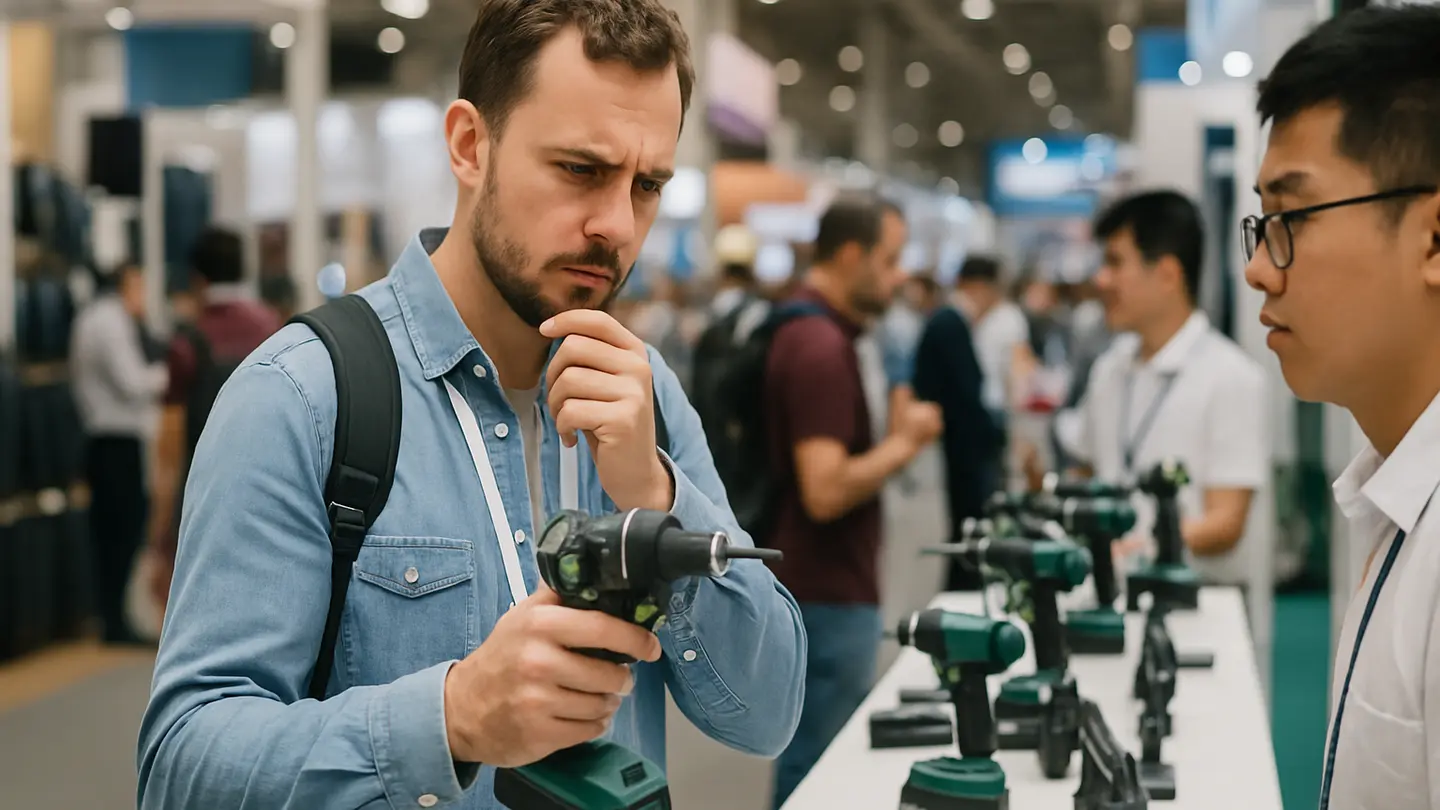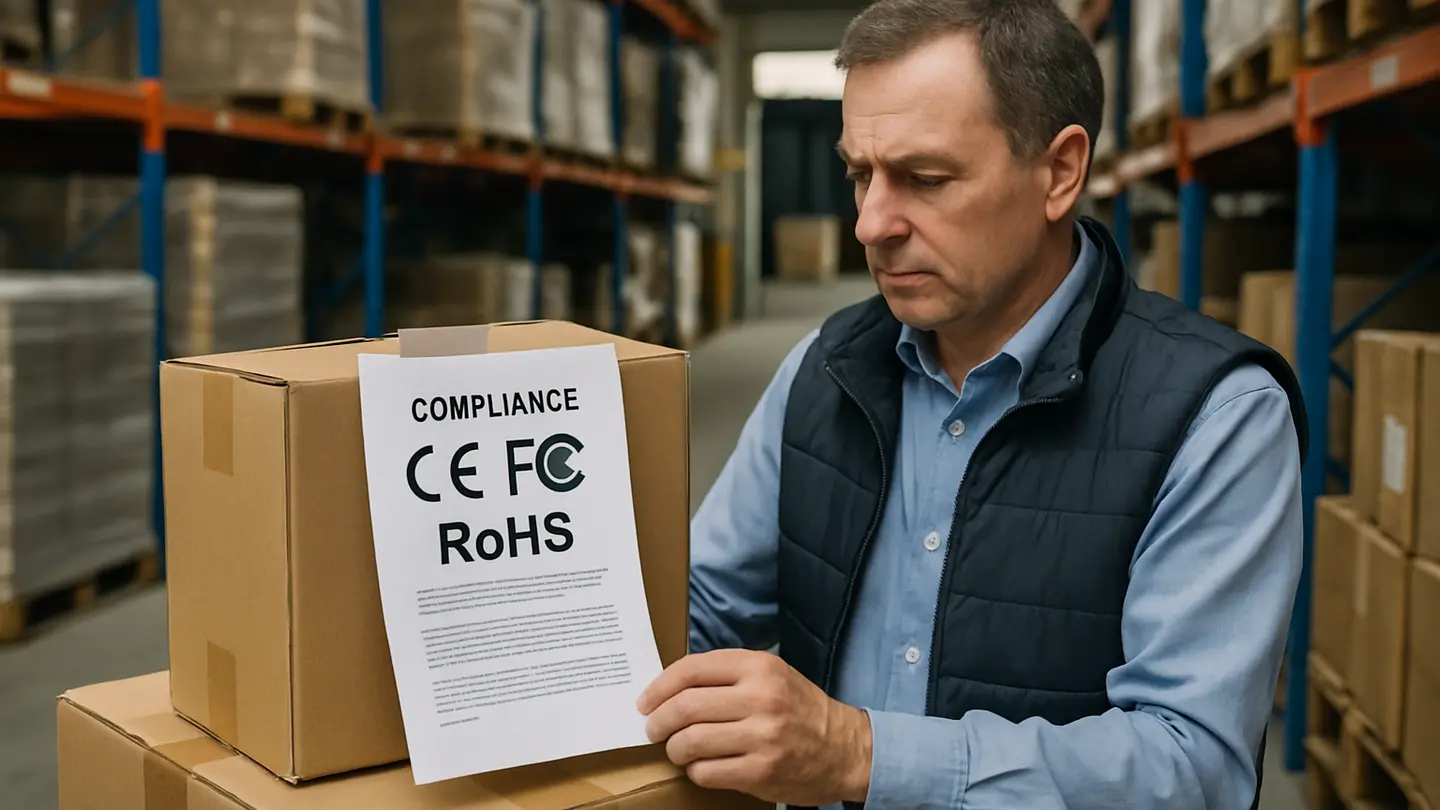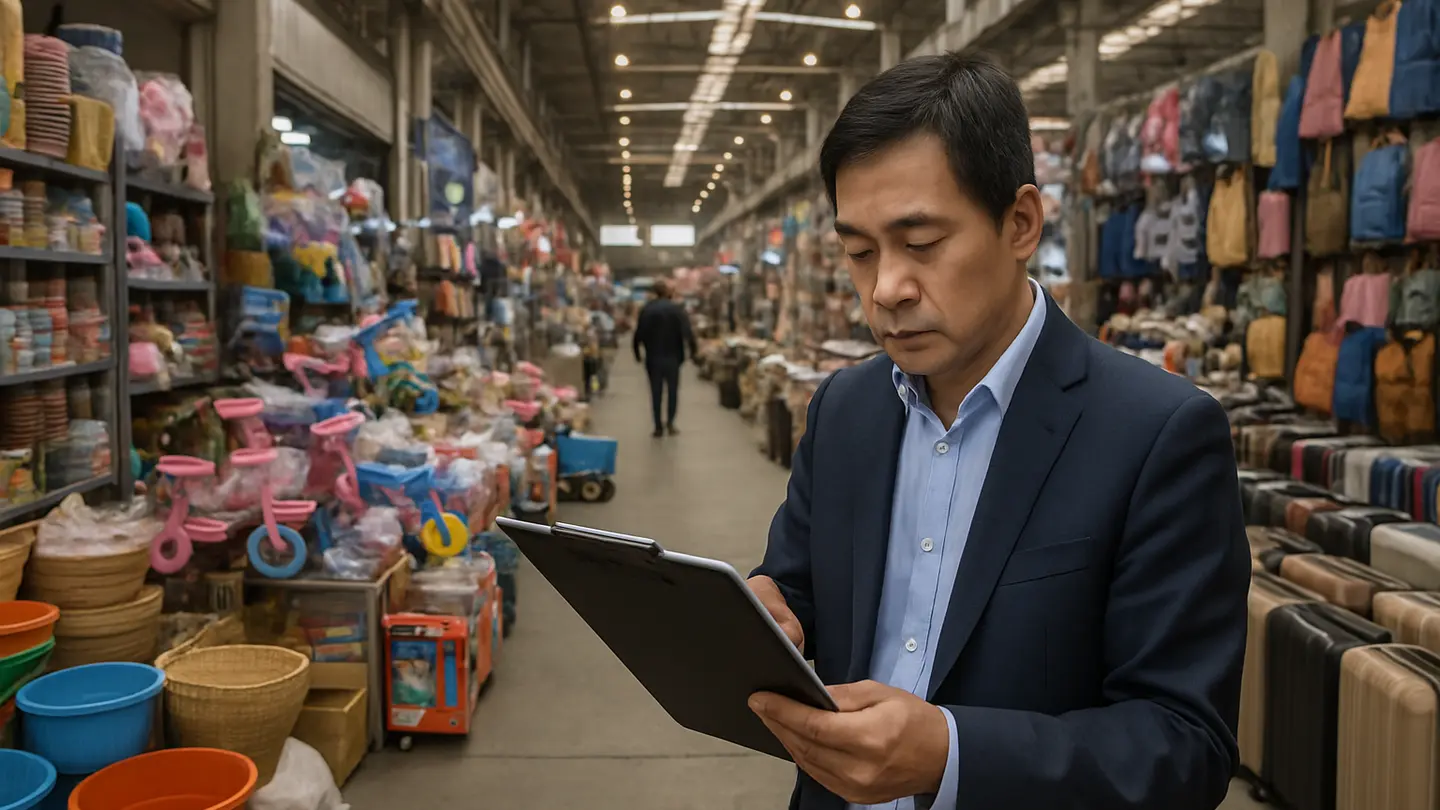
Product sourcing is the strategic work of choosing where, how, and from whom products are supplied. Procurement execution comes later and includes purchase orders, shipment tracking, documentation, and payment coordination.
For B2B buyers, ecommerce operators, and import teams, the sourcing model affects ROI as much as product choice. Unit price matters, but so do landed cost, lead time, quality control, supplier visibility, inventory cash, and internal management capacity.
How the Main Product Sourcing Models Compare on Cost, Control, and Risk
The main Types of Product Sourcing should be evaluated as business models, not just buying channels. A low quote can become expensive if it causes defects, delays, excess inventory, or returns. A higher unit price may produce better ROI if it improves reliability, sell-through, or replenishment speed.
| Sourcing model | Typical cost structure | Control level | Main advantage | Main risk |
|---|---|---|---|---|
| Direct factory sourcing | Lower unit cost at volume; higher management cost | High | Better margins and customization | Quality drift, supplier vetting burden |
| Procurement agency or sourcing partner | Factory cost plus fee or markup | Medium | Local execution support | Reduced supplier visibility or hidden markups |
| Wholesale sourcing | Higher unit price; lower setup cost | Low to medium | Fast launch and small tests | Weak exclusivity and margin compression |
| Dropshipping sourcing | No upfront inventory; higher per-unit cost | Low | Demand testing with low cash exposure | Delivery, stock, and customer experience risk |
| Private label manufacturing | Moderate setup cost; better margin potential | Medium to high | Differentiation and brand equity | Specification and compliance responsibility |
| White label sourcing | Low setup cost; fast launch | Low | Quick market entry | Many sellers may offer the same product |
| Global vs nearshore sourcing | Varies by landed cost and lead time | Varies | Cost or speed optimization | Freight, disruption, or capacity exposure |
| Insourcing or owned production | High fixed cost; lower variable cost at scale | Very high | Maximum control | Capital intensity and utilization risk |
The best model depends on order volume, SKU complexity, margin target, compliance exposure, inventory strategy, and the buyer’s ability to supervise suppliers.
1. Direct Factory Sourcing
Direct factory sourcing means buying from the manufacturer without a trading company, distributor, or other intermediary. For companies with proven demand, this can improve unit economics because fewer parties sit between production cost and purchase price.
The model suits buyers that want customization, cost transparency, and stronger supplier relationships. Direct communication makes it easier to discuss materials, tooling, packaging, capacity, test reports, and process improvements.
The challenge is workload. The buyer must prepare precise RFQs, compare suppliers, evaluate capability, approve samples, monitor production, arrange inspections, and manage shipping documentation. Weak specifications often lead to disputes because the factory may produce what it believes was requested, not what the buyer assumed.
Common risks include intellectual property exposure, inconsistent quality, delayed production priority, material substitution, and suppliers presenting themselves as factories when they are actually traders. Direct factory sourcing fits brands with repeat orders, meaningful SKU revenue, and enough oversight to manage supplier performance.
2. Using a Procurement Agency or Sourcing Partner
A procurement agency or sourcing partner supports supplier discovery, negotiation, sample coordination, quality control, documentation, and logistics communication. In cross-border sourcing, this can reduce language barriers, time-zone delays, and execution workload.
A good partner can clarify requirements, identify realistic suppliers, compare quotes, follow production schedules, coordinate inspections, and communicate defect issues before goods ship. This is useful for teams without local staff.
The trade-off is cost and visibility. Agencies may charge a service fee, percentage commission, or margin embedded in the unit price. The least transparent arrangements make it hard to understand true factory cost, freight cost, inspection cost, and agency compensation.
A better structure separates:
- factory quotation;
- tooling or mold charges;
- sample costs;
- packaging costs;
- inspection fees;
- freight and customs-related charges;
- agency service fee or commission.
This model fits ecommerce brands, importers, and lean procurement teams that need local execution support but are not ready to build their own sourcing office. It can also be a bridge to direct supplier relationships as volume and expertise grow.
3. Wholesale Sourcing
Wholesale sourcing means buying ready-made goods from distributors, traders, stock suppliers, or wholesale marketplaces. Instead of developing a product from scratch, the buyer purchases existing inventory or standard products.
The main advantage is speed. Wholesale allows sellers to test products quickly, place smaller orders, and avoid the setup complexity of custom manufacturing. It can work for new ecommerce stores, seasonal campaigns, B2B resellers, and catalog gap-filling.
Limitations appear as volume grows. Wholesale buyers often have limited exclusivity, limited control over the original factory, and weaker pricing power. If competitors can access the same supplier, differentiation may depend mainly on marketing, bundling, service, or speed.
Quality consistency can also vary. Some wholesalers source from multiple factories, so repeat batches may differ in materials, finish, packaging, or performance. Buyers should inspect samples and clarify whether future orders will come from the same source.
Wholesale is often a stepping stone. Once demand is proven, sellers may move to direct factory sourcing, private label manufacturing, or controlled inventory to improve margins and reliability.
4. Dropshipping Sourcing
Dropshipping is a low-inventory model in which suppliers hold stock and ship orders directly to end customers. The seller markets and sells the product but does not purchase inventory upfront.
Its strongest use case is demand testing. A seller can validate advertising angles, product-market fit, and customer interest without committing capital to a large purchase order.
The weakness is control. The seller often has limited visibility into inventory, packaging quality, product condition, dispatch speed, and delivery timelines. If the supplier runs out of stock, changes packaging, ships late, or sends inconsistent goods, the customer usually blames the seller.
These issues can lead to returns, disputes, poor reviews, chargebacks, and marketplace account risk. Dropshipping is usually better as a validation tool than a long-term model for high-volume products. Once demand is consistent, sellers should consider stocked inventory, wholesale purchasing, private label production, or direct factory sourcing.
5. Private Label Manufacturing
Private label manufacturing means adapting an existing product platform with brand-specific specifications. The buyer may change materials, finish, dimensions, features, packaging, labeling, accessories, bundles, or compliance documentation.
This model creates stronger differentiation than wholesale or white label sourcing. It allows a brand to improve packaging, address customer pain points, raise perceived value, and build a product line that is harder to copy exactly.
The buyer’s responsibility also increases. Specifications should document materials, tolerances, colors, packaging, labeling, barcode placement, manuals, safety warnings, and test standards where applicable. Compliance cannot be treated as the supplier’s problem alone; the importer or brand owner may carry responsibility in the destination market.
Quality control becomes more important after the first run. A common risk is production drift, where later batches use cheaper materials, different components, or less careful finishing than the approved sample. Buyers should retain golden samples, define acceptance standards, and inspect production regularly.
Private label works best after demand, margin, and product-market fit are proven. It is usually not the safest first step for an untested product unless the buyer has strong category knowledge and enough budget for development, testing, and inventory.
6. White Label Sourcing
White label sourcing means applying light branding to a standard factory-made product. Customization is usually limited to a logo, label, packaging sleeve, insert card, or simple brand presentation.
The advantage is launch speed. White label products usually do not require custom tooling or major product development, so buyers can enter a market quickly and avoid heavy upfront engineering costs.
The drawback is weak differentiation. If several sellers use the same factory product, customers may compare offers mostly on price, reviews, delivery speed, or advertising. When product features and supplier bases overlap, margins can compress quickly.
White label sourcing is most useful as a market test. It can help buyers learn whether a category has demand before investing in private label specifications, custom packaging, exclusive molds, or direct factory development. Sellers may improve white label offers with better content, bundles, support, warranties, or positioning, but the product itself remains easy to replicate.
7. Global Sourcing vs Nearshore Sourcing
Global sourcing gives buyers access to broader manufacturing capabilities, larger supplier ecosystems, and potentially lower unit costs. It can be useful when a product requires specialized production clusters, export experience, or economies of scale that are difficult to find locally.
Nearshore sourcing prioritizes proximity. Producing closer to the end market can shorten lead times, reduce communication friction, simplify factory visits, and lower exposure to long-distance freight disruption. The unit price may be higher, but the operating model may be more resilient.
The comparison should be based on landed cost, not factory price alone. Buyers should consider freight, duties, taxes, packaging efficiency, inventory carrying cost, cash conversion cycle, defect resolution, production lead time, and stockout risk.
Nearshore sourcing can be attractive for heavy, bulky, seasonal, customized, or time-sensitive products. Many companies use dual sourcing: a global supplier handles main volume at lower cost, while a nearshore supplier provides backup capacity or faster replenishment. This improves resilience but requires careful specification control across suppliers.
8. Insourcing or Owned Production
Insourcing means producing goods through owned, captive, or vertically integrated manufacturing capacity. Instead of relying mainly on external suppliers, the company controls production assets, labor, equipment, processes, and quality systems directly.
The benefits are maximum control over production priorities, process improvement, confidentiality, and quality standards. Insourcing can support fast iteration, stronger intellectual property protection, and tighter alignment between product development and manufacturing.
The trade-offs are significant. Owned production requires capital investment, facility management, technical staff, equipment maintenance, compliance systems, and steady utilization. If demand drops, fixed costs remain. If demand grows faster than capacity, the company may still need external suppliers.
Insourcing generally suits enterprises with stable, high-volume, predictable demand and strong operational management. It is rarely the most efficient model for early-stage brands or highly variable SKU portfolios.
| Business condition | Better-fit sourcing model |
|---|---|
| Low budget, unproven demand | Dropshipping, wholesale, or white label |
| Moderate volume, need faster launch | Wholesale or white label |
| Proven demand, need differentiation | Private label manufacturing |
| Strong volume, margin pressure | Direct factory sourcing |
| Limited internal sourcing capacity | Procurement agency or sourcing partner |
| Heavy or time-sensitive products | Nearshore or dual sourcing |
| High-volume predictable demand | Insourcing or owned production |
| Complex SKU with IP sensitivity | Direct factory with controls, private label, or insourcing |
The right answer may change over time. Many brands begin with wholesale or white label, move to private label after demand is proven, and later negotiate direct factory relationships or dual-source production for resilience.
A Practical Direct Factory Sourcing Workflow
Direct factory sourcing requires structure. Start with detailed product requirements rather than supplier searching. Define the product, target cost, order volume, quality standard, packaging, labeling, compliance requirements, and delivery deadline before requesting quotes.
A practical workflow includes:
- Define the product specification. Include materials, dimensions, finish, tolerances, performance requirements, accessories, packaging, labeling, manuals, and compliance needs.
- Identify potential suppliers. Use supplier databases, trade shows, referrals, sourcing partners, or industry networks.
- Screen supplier capability. Check whether the supplier makes the product type, has export experience, can meet target volume, and understands required standards.
- Send structured RFQs. Use the same RFQ format so pricing, MOQ, tooling, sample costs, lead time, packaging, payment terms, and incoterms can be compared.
- Calculate landed cost. Include product cost, packaging, inland freight, export charges, international freight, insurance, duties, taxes, inspection, warehousing, and final delivery.
- Request and review samples. Bulk production should not begin until physical samples and written specifications are approved.
- Confirm a golden sample. Keep an approved reference sample for future quality comparisons.
- Agree on production terms. Confirm payment schedule, delivery timeline, inspection rights, defect resolution, packaging files, and documentation requirements.
- Verify materials before production. Check critical materials, components, colors, labels, and packaging before mass production begins.
- Monitor production progress. Use pre-production checks, in-process inspections, schedule updates, and issue logs.
- Inspect before shipment release. Conduct quantity checks, AQL sampling where appropriate, packaging review, functional checks, and carton marking verification.
- Control final payment and shipment. Review compliance documents, resolve defects, confirm booking details, and avoid releasing final payment before agreed conditions are met.
This workflow reduces the risk of discovering problems only after goods arrive. The earlier defects are found, the cheaper they usually are to fix.
Execution Checklist for Choosing and Managing a Sourcing Model
Before scaling any sourcing model, buyers should confirm:
- The model matches budget, order volume, and cash-flow limits.
- Internal staff can manage supplier communication and escalation.
- Product specifications are documented in writing.
- Materials, tolerances, packaging, labeling, compliance needs, and acceptance standards are clear.
- Samples are approved before bulk production.
- Agreements define payment terms, lead times, inspection rights, and defect remedies.
- Inspection routines are in place before shipment.
- Landed cost has been calculated, not just factory price.
- Backup suppliers or contingency plans exist for important SKUs.
- Communication systems support version control for specifications and packaging files.
Scaling weak sourcing systems magnifies problems. Strengthening supplier management, inspection routines, and documentation before volume grows is usually cheaper than correcting failures later.
FAQ
1. What is the difference between sourcing and procurement?
Sourcing focuses on identifying, evaluating, and selecting suppliers and sourcing models. It answers where to buy, which supplier to use, what commercial model fits, and how much control the buyer needs.
Procurement covers purchasing execution after those decisions are made, including purchase orders, order confirmation, shipment tracking, documentation, invoice handling, and supplier payment coordination.
Both functions must work together. Good sourcing without disciplined procurement can still lead to late shipments and poor documentation. Efficient procurement with weak sourcing can lock a company into unreliable suppliers or uncompetitive costs.
2. Direct factory sourcing vs a sourcing agent: which is better?
Direct factory sourcing can offer better control, stronger margins, and closer supplier relationships, but it requires more buyer capability. The buyer must handle supplier vetting, specifications, negotiations, sample approval, inspections, and production follow-up.
A sourcing agent or procurement partner can be better for smaller importers, new buyers, or teams without local supplier-management capacity. Agents can help with supplier search, communication, negotiation, inspection coordination, and logistics follow-up.
The better option depends on internal resources. If the buyer has strong sourcing expertise and enough volume, direct factory sourcing may be more efficient. If the buyer lacks local oversight or category knowledge, a transparent sourcing partner can reduce execution risk.
3. Dropshipping vs wholesale: which scales better?
Wholesale usually scales better because the seller holds or controls inventory. That gives the business more influence over delivery speed, stock planning, packaging, product condition, and customer experience.
Dropshipping is useful for testing demand, but it can break down when sales volume exceeds the supplier’s inventory or fulfillment capacity. The seller may also face delays, inconsistent packaging, weak tracking, or quality issues that are hard to correct quickly.
Wholesale requires upfront cash and inventory planning, but it provides stronger operational control. For validated products, many sellers move from dropshipping to wholesale, stocked inventory, private label, or direct factory sourcing.
4. Private label vs white label: What is the real difference?
White label usually means adding branding to a standard generic product. The product itself remains largely the same as what other sellers can buy from the same or similar suppliers.
Private label involves deeper changes, such as materials, dimensions, features, accessories, packaging, labeling, compliance documentation, or other product attributes. The goal is to create a product that better fits the brand’s market and is less directly comparable with generic alternatives.
Private label can build stronger brand equity and reduce competitor overlap, but it requires more specification control, quality management, and compliance responsibility than simple white labeling.