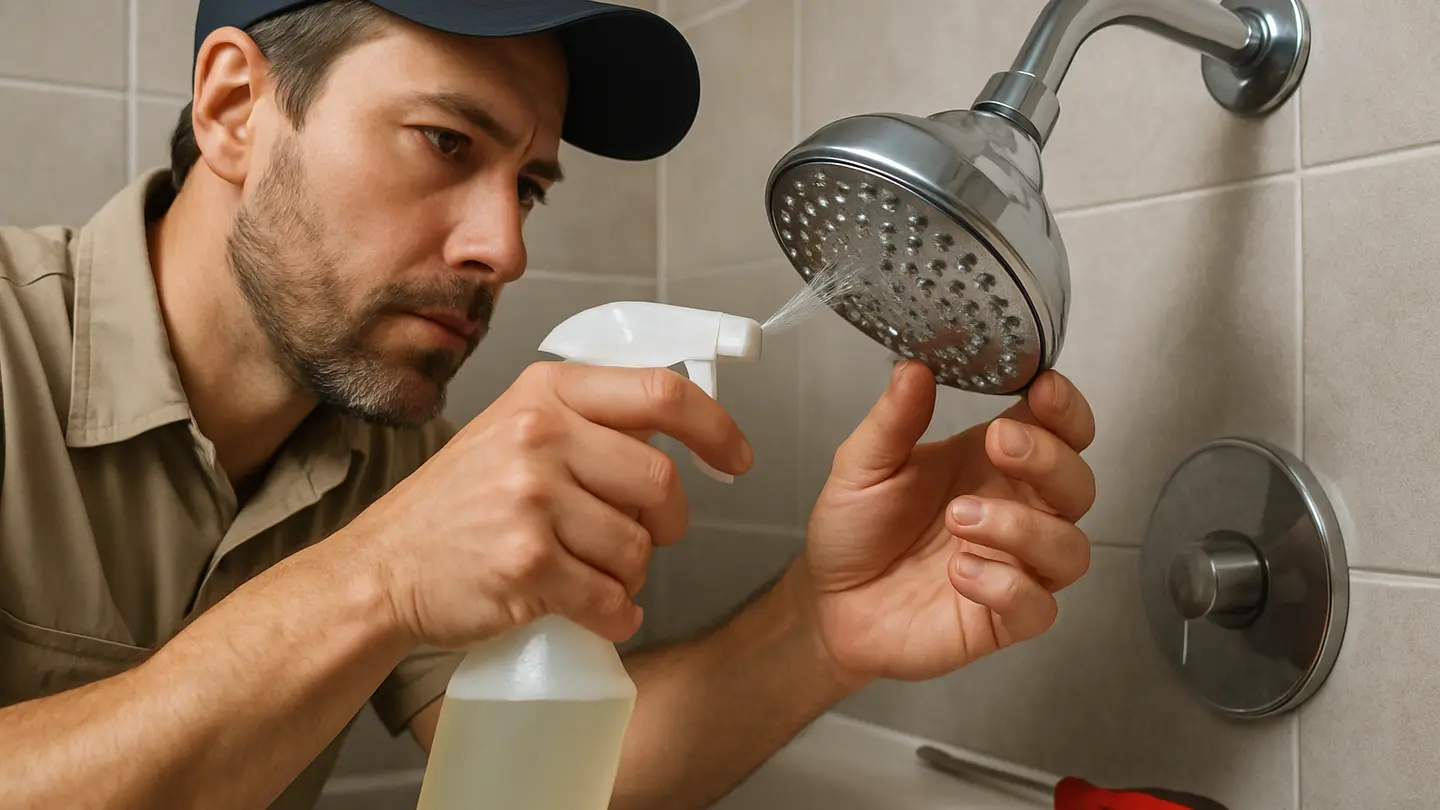
Weak, sputtering, or uneven shower flow is often blamed on poor water pressure, but the shower head itself is frequently the first place to check. Over time, hard-water minerals, pipe sediment, and soap-related residue can collect around the spray nozzles or inside the fixture. The result is a spray pattern that feels weak, sprays sideways, pulses, or leaves some nozzles blocked entirely.
For facility managers, hospitality operators, contractors, and other B2B buyers, this is more than a minor comfort issue. Restricted shower flow can affect guest satisfaction, maintenance workload, water-use performance, and the perceived quality of the bathroom installation. Before replacing fixtures across a property, it is usually worth taking a structured approach to unclog shower head assemblies and identify whether the issue is local, system-wide, or related to worn components.
The three practical fixes below move from the simplest maintenance step to broader troubleshooting: cleaning the nozzles and filter, checking whether water pressure is the real issue, and inspecting inlet and outlet connections deeper in the shower assembly.
Tools and Supplies to Prepare
Most shower head clogs can be addressed with basic maintenance supplies. For commercial or multi-unit properties, keeping a small shower maintenance kit can help standardize cleaning between rooms, apartments, or project sites.
Useful tools and supplies include:
| Item | Purpose |
|---|---|
| White vinegar | Mild descaling for mineral buildup on nozzles |
| Warm water | Dilutes vinegar and helps loosen residue |
| Plastic bag | Holds cleaning solution around a fixed shower head |
| Rubber band or zip tie | Secures the bag in place during soaking |
| Old toothbrush | Scrubs loosened deposits from the spray face |
| Toothpick or other non-metal pick | Clears individual nozzles without scratching |
| Soft cloth | Protects finishes and wipes residue away |
| Bucket or basin | Soaks a removed shower head |
| Citric acid | Stronger descaling option for heavier mineral buildup |
| Adjustable wrench | Removes the shower head when deeper cleaning is needed |
If a wrench is required, protect the shower arm and fixture finish with a cloth before applying pressure. This is especially important on chrome, brushed nickel, matte black, and other decorative finishes that can scratch or mark easily. In managed properties, it is also good practice to confirm whether the shower head is under warranty or part of a standardized specification before using aggressive cleaning methods.
Fix 1: Clean the Spray Nozzles and Filter Screen
The visible spray nozzles are the most common starting point when trying to unclog shower head flow problems. Mineral scale often forms around the nozzle openings first, especially in hard-water regions. Sediment can also settle behind the faceplate or collect in the filter screen where the shower head connects to the shower arm.
Start with the mildest cleaning method. If the spray improves after a surface soak and scrub, there may be no need to remove the fixture. If the water still feels restricted, the filter screen or internal passage may need attention.
Method A: Use a Vinegar Soak for Light Mineral Buildup
A vinegar soak is a simple first step for mild mineral deposits. It works best when the shower head still produces some water flow but the pattern is uneven, weak, or partially blocked.
To clean a fixed shower head without removing it:
- Mix white vinegar with warm water in a plastic bag. A half-and-half mixture is usually sufficient for light buildup.
- Raise the bag over the shower head so the spray nozzles are fully submerged.
- Secure the bag tightly around the neck of the shower head with a rubber band or zip tie.
- Let the nozzles soak for at least two hours. For visible hard-water staining, a longer soak may be needed.
- Remove the bag and discard the solution.
- Scrub the spray face gently with an old toothbrush.
- Use a toothpick or other non-metal tool to clear stubborn nozzle openings if needed.
- Run the shower for several minutes to flush loosened scale and sediment.
Lemon juice can be used as an alternative when vinegar is not available, though it may be less economical for larger maintenance programs. A suitable descaling cleaner may also be used, provided it is compatible with the shower head material, finish, and rubber components. Always follow the cleaner manufacturer’s instructions and avoid mixing cleaning products.
For properties with silicone nozzles, routine maintenance may be even simpler. Many silicone nozzle designs allow light scale to be loosened by rubbing the nozzle face with a finger or soft brush before flushing with water. Even so, periodic soaking may still be useful in hard-water environments.
Method B: Remove the Shower Head for a Deeper Descale
If the vinegar bag method does not restore flow, remove the shower head for a deeper clean. This allows the entire fixture to be soaked and gives access to the inlet, washer, and filter screen.
Follow these steps:
- Turn off the shower controls and make sure water is not running.
- Wrap a soft cloth around the shower head connection or shower arm fitting.
- Use an adjustable wrench carefully if the shower head cannot be loosened by hand.
- Once removed, inspect the threaded connection, washer, and filter screen.
- Place the shower head in a bucket or basin with hot water and citric acid.
- Let it soak until mineral deposits soften.
- Scrub the spray face with a toothbrush and clear nozzles with a non-metal tool.
- Rinse the shower head thoroughly.
- Clear visible sediment from the filter screen, taking care not to puncture or deform it.
- Reattach the shower head and flush it with hot water.
Citric acid is often useful for heavier limescale because it dissolves mineral deposits effectively while remaining manageable for routine maintenance when properly diluted. However, it should still be used carefully. Prolonged exposure or overly strong solutions may affect certain finishes, seals, or internal parts. If the shower head has special finishes or manufacturer-specific care instructions, follow those instructions first.
When reattaching the shower head, avoid overtightening. A snug connection is usually enough, especially if the washer is in good condition. Excessive force can damage threads, crack plastic components, or make future maintenance harder.
Fix 2: Rule Out a Wider Water Pressure Problem
Low shower flow is not always caused by a clogged shower head. In some cases, the shower head is only where the problem is noticed. A broader water supply or plumbing issue may be reducing pressure before water ever reaches the fixture.
A simple comparison test can help narrow the cause:
- Run the bathroom sink faucet and check whether pressure is normal.
- Test the tub spout, if the bathroom has one.
- Compare hot and cold water performance.
- Check other showers or faucets on the same floor.
- Ask whether multiple rooms, units, or fixtures are reporting similar issues.
If weak flow is present throughout the property, the problem may involve the water supply, pressure regulator, water heater, building riser, valves, or pipe conditions. In that situation, cleaning one shower head may produce little or no improvement.
If nearby sinks and other fixtures have normal pressure, the issue is more likely isolated to the shower assembly. That may mean the shower head is clogged, the filter screen is blocked, the diverter is malfunctioning, or the valve cartridge is restricting flow.
For B2B buyers and maintenance teams, this distinction matters. Replacing shower heads in bulk will not solve a building-level pressure issue. Conversely, calling in plumbing support for every weak shower may be unnecessary if routine shower head descaling can restore performance. A consistent diagnostic checklist helps reduce unnecessary replacements and service calls.
Fix 3: Inspect the Water Inlet and Outlet Connections
If nozzle cleaning does not restore the spray pattern, the blockage may be deeper in the shower assembly. Mineral scale, pipe debris, and fragments from aging plumbing can collect at intake points, outlet ports, screens, or connection areas.
Start with the accessible areas:
- The shower head inlet where it attaches to the shower arm
- The filter screen or flow-control insert, if present
- The washer and threaded connection
- The shower arm outlet
- The diverter outlet on tub-and-shower combinations, where accessible
Remove visible sediment carefully. A soft brush, cloth, or non-metal pick is usually safer than metal tools, which can scratch surfaces or damage screens. If the shower head includes a filter screen, do not simply discard it to increase flow. Screens and flow-control components may be part of the fixture’s design, local code compliance, or water-efficiency specification.
If accessible ports are clean but flow remains weak, the problem may be inside the valve, diverter, or supply piping. At that point, maintenance teams may need a plumber or qualified technician to inspect the assembly further.
Also look for physical damage. Cracked housings, worn washers, distorted threads, corroded fittings, and loose internal parts can all affect performance. Cleaning is not the right solution for compromised components. If a part is cracked, warped, leaking, or repeatedly clogging because it no longer seats properly, replacement is usually the more reliable option.
How to Prevent Future Shower Head Clogs
Preventive maintenance is especially valuable in hotels, multifamily properties, gyms, healthcare facilities, student housing, and other environments with repeated shower use. A few low-cost practices can extend service life and reduce complaints about weak flow.
Consider these measures:
- Install a mesh filter where appropriate. A small inline or inlet filter can help trap sediment before it reaches the shower head. This is useful where older pipes, well water, or supply interruptions introduce debris.
- Address hard water at the system level. In hard-water regions, water softeners or other water-treatment systems can reduce limescale formation throughout the property. This may benefit not only shower heads but also valves, water heaters, faucets, and appliances.
- Schedule light monthly cleaning. Wiping the spray face and brushing nozzles regularly helps prevent small deposits from becoming stubborn clogs.
- Remove standing water from the shower head. After use or cleaning, draining or shaking out retained water can reduce mineral residue as droplets evaporate.
- Keep a dedicated cleaning brush. A soft brush reserved for fixture maintenance helps teams clean nozzles without reaching for abrasive pads or unsuitable tools.
Product selection can also affect maintenance needs. Shower heads with accessible nozzles, removable screens, and simple threaded connections are easier to service in high-volume environments. Silicone nozzles may reduce routine scale problems, while removable or serviceable faceplates can simplify deeper cleaning. For procurement teams, ease of maintenance should be considered alongside price, finish, spray pattern, and water-efficiency requirements.
Cleaning Mistakes That Can Damage a Shower Head
A clogged fixture can often be cleaned, but the wrong cleaning method may shorten its service life or damage the finish. This is particularly important in commercial or hospitality settings where visible fixture condition affects the perceived quality of the bathroom.
Avoid these common mistakes:
- Using harsh chemicals without checking compatibility. Strong cleaners may damage finishes, seals, gaskets, and rubber nozzles. They can also discolor certain coatings.
- Using steel wool or abrasive pads. Chrome, nickel, bronze, matte black, and other finishes can scratch. Once scratched, the surface may become harder to clean and more vulnerable to corrosion or staining.
- Forcing metal tools into nozzles. Metal picks can enlarge or deform spray openings, changing the spray pattern permanently.
- Applying excessive heat. Very hot water may affect some plastic parts, rubber seals, adhesives, or coatings. Heat can also accelerate some scale-related issues if mineral-rich water is allowed to evaporate on the surface.
- Overtightening during reinstallation. Too much torque can damage threads or crack components.
- Ignoring internal parts. Cleaning only the exterior may not solve the problem if sediment is trapped behind the screen or inside the inlet.
The goal is to protect both the visible finish and the internal components. A clean shower head should not only look better; it should also maintain its designed spray pattern, flow performance, and sealing integrity.
When Cleaning Is Not Enough: Consider Replacement
Cleaning and troubleshooting should usually come before replacement, but not every shower head can be restored. Internal parts wear over time, especially in high-use bathrooms. Seals can degrade, plastic components can crack, metal parts can corrode, and spray mechanisms can lose consistency.
Replacement may be the better option when:
- Flow remains weak after cleaning the nozzles and filter screen.
- The shower head repeatedly clogs soon after descaling.
- The spray pattern is permanently distorted.
- The fixture leaks from seams or joints.
- Threads are damaged or difficult to seal.
- The finish is worn, scratched, or corroded.
- Internal components rattle, loosen, or fail to switch spray modes.
For B2B procurement, replacement decisions should include maintenance history as well as unit price. A low-cost shower head that requires frequent service may not be the most economical choice over time. Consider durability, cleanability, finish performance, spare-part availability, and compatibility with existing shower arms, valves, and water-efficiency targets.
When the existing unit is beyond practical maintenance, a new shower head can improve user experience, reduce complaints, and simplify future cleaning routines.
FAQ
1. Why is my shower not working if my sink is fine?
If the sink has normal flow but the shower does not, the issue is likely isolated to the shower rather than the whole bathroom water supply. Common causes include a clogged shower head, sediment in the filter screen, or a faulty diverter valve.
In a tub-and-shower setup, the diverter controls whether water flows to the tub spout or up to the shower head. If the diverter is not working properly, the shower may receive weak or inconsistent flow even when the sink performs normally.
2. Can a clog completely stop shower water flow?
Yes, in severe cases. Mineral deposits, sediment, or debris can block not only the exterior spray nozzles but also internal passages and filter screens. Most clogs cause weak or uneven flow before they stop water entirely, but a complete or near-complete blockage is possible when buildup is heavy or left untreated.
3. What is the main cause of a clogged shower head?
Hard-water mineral deposits are one of the most common causes. As water evaporates, minerals such as calcium and magnesium can remain behind as limescale. Over time, this buildup can narrow or block spray nozzles and reduce perceived water pressure.
Sediment, pipe debris, and general residue can also contribute, especially in older plumbing systems or buildings where water supply interruptions disturb material inside the pipes.
4. How often should I clean my shower head?
A light monthly cleaning is a practical baseline for preventing buildup. In hard-water homes, hotels, multifamily properties, and other high-use settings, deeper descaling every three to six months may be appropriate.
Clean sooner if the spray becomes weak, uneven, sputtering, or visibly blocked. Early maintenance is usually faster and less disruptive than waiting until mineral buildup hardens or internal screens become packed with sediment.