How to Verify a Chinese Company: Six Remote Checks for B2B Buyers
Before paying a deposit to a new supplier, B2B buyers should complete a basic remote verification process. This is especially important when the supplier is overseas, communication is handled through sales staff, and payment is requested before any visit or third-party audit.
The goal is not to prove that a supplier is perfect. The goal is to identify obvious risk before your money leaves your account. Low-cost desk checks can show whether the company is legally registered, whether its history appears consistent, whether it has serious dispute records, whether its payment instructions make sense, and whether its production claims are realistic.
To verify a Chinese company remotely, buyers should focus on six checks:
- Compare the company’s claimed history with its online footprint.
- Confirm the Chinese legal entity in official records.
- Search for buyer disputes and litigation patterns.
- Check court enforcement and blacklist records.
- Verify the bank account beneficiary before payment.
- Test whether the supplier can actually produce the order.
These checks should come before large deposits, tooling payments, container-volume orders, exclusive supply arrangements, factory audits, compliance testing, or in-person visits.
Legal existence is only the starting line. A company can be registered and still be a trader, undercapitalized middleman, poorly managed factory, or supplier with limited export experience.
Check 1: Compare Their Claimed History With Their Online Footprint
Many suppliers describe themselves as having “15 years of manufacturing experience” or “over 20 years in export business.” Those claims may be true, but they should be tested against the company’s visible history.
Start with the supplier’s website domain. Use ICANN Lookup or another domain lookup tool to see when the domain was registered. If a company claims to have served international buyers since 2008 but its domain was registered three months ago, that mismatch deserves attention.
Next, check older versions of the website using Archive.org’s Wayback Machine. This can show whether the website existed in previous years, what products it promoted, what company name appeared, and whether the business has changed direction.
A young website is not automatic proof of fraud. The company may have sold offline, used marketplace storefronts, rebranded, changed ownership, or launched a new English-language site while keeping a Chinese website for domestic business.
The issue is whether the supplier can explain the gap between its claims and digital footprint. Ask direct questions:
- What was the previous company name, if any?
- Did the business operate domestically before exporting?
- Can they provide older catalogs, export records, customer references, or dated factory photos?
- Does the Chinese registered entity show a formation date consistent with their claims?
This check helps separate normal business evolution from exaggerated credibility claims. If the supplier’s story changes when challenged, treat that as a warning sign.
Check 2: Confirm the Company Exists in China’s Official Records
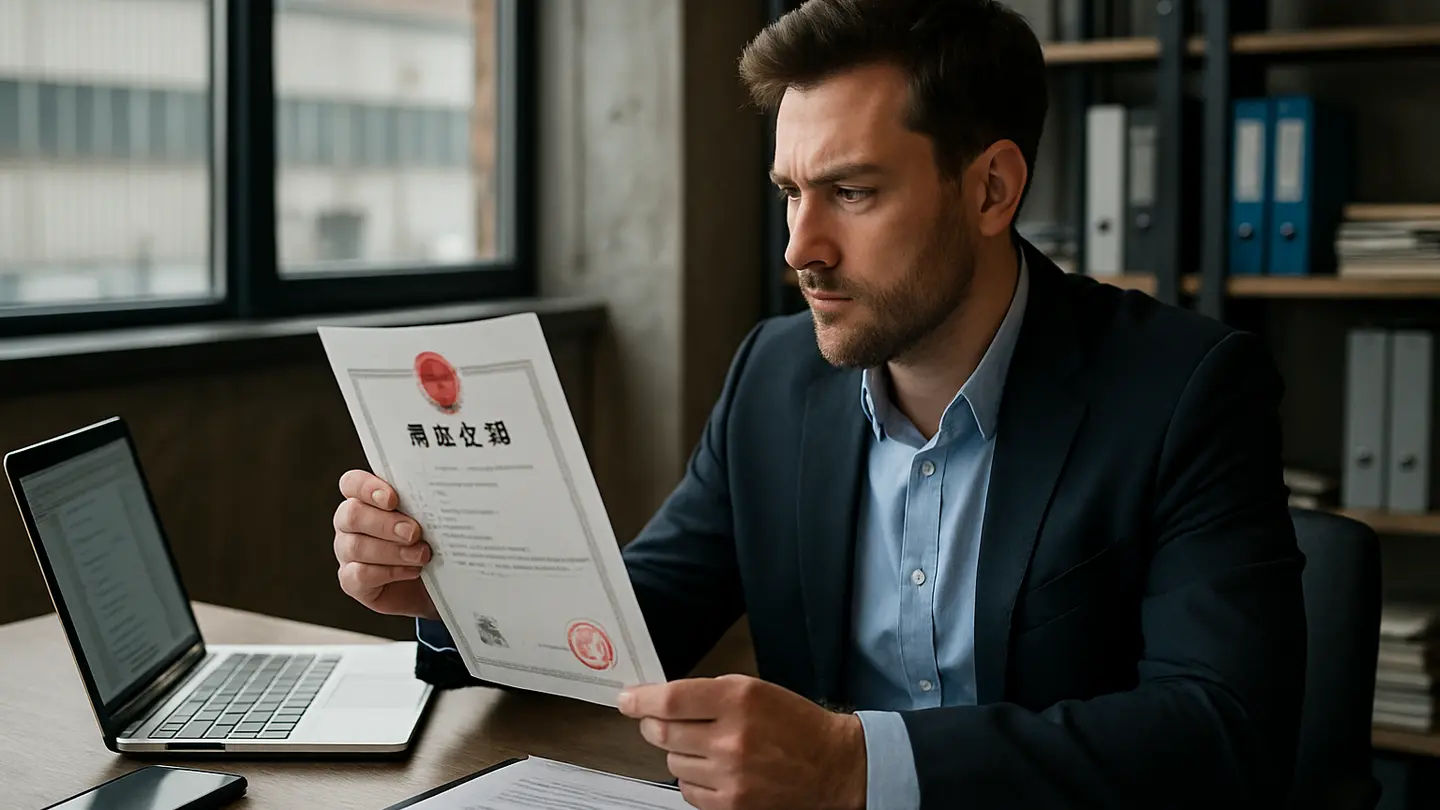
A scanned business license is useful, but it should not be the end of your verification. Scans can be outdated, incomplete, mistranslated, or borrowed from another entity. Buyers should verify the supplier’s Chinese registered name in China’s official company records.
The most important identifier is usually the Chinese legal name, not the English name used in emails, catalogs, or marketplace profiles. English trading names are often informal and may not be registered. Several unrelated companies can use similar English names, and one Chinese company may use different English names for different export channels.
Ask the supplier for:
- The full Chinese registered company name.
- The Unified Social Credit Code.
- A copy of the current business license.
- The registered address.
- The name of the legal representative.
- The official company seal name, if a contract will be signed.
Then compare that information with official registry data. China’s company registry records may show details such as:
| Registry item | Why it matters |
|---|---|
| Chinese legal name | Confirms the actual contracting entity |
| Unified Social Credit Code | Helps distinguish companies with similar names |
| Formation date | Tests claims about company age |
| Legal representative | Identifies the person legally associated with the entity |
| Registered capital | Gives context, though it does not prove financial strength |
| Business scope | Shows whether the company is registered for relevant business activities |
| Registration status | Indicates whether the entity is active, cancelled, revoked, or abnormal |
Read the business scope carefully. If the supplier claims to be a manufacturer but its scope appears limited to trading, consulting, or domestic wholesale, that does not automatically disqualify it, but it raises questions. Some exporters work through trading entities connected to factories, but you should understand the relationship before paying.
Legal registration does not prove factory ownership. A registered company may be a trading company, export agent, sales office, or shell entity. The registry check confirms that the company exists; it does not confirm that it can manufacture your product.
Check 3: Look for Buyer Disputes and Litigation Patterns
A company can be legally real and still be a poor supplier. Disputes with buyers, creditors, logistics providers, employees, or business partners can reveal operational and financial risk.
Search court records and legal databases for cases involving the supplier’s Chinese name, Unified Social Credit Code, legal representative, and related entities. Relevant disputes may include:
- Failure to deliver goods after payment.
- Contract performance disputes.
- Product quality claims.
- Unpaid debts.
- Labor disputes that suggest instability.
- Intellectual property disputes.
- Repeated claims involving refunds, deposits, or compensation.
Do not overreact to one isolated case without context. In any active business, some litigation may occur. A single commercial dispute that was resolved years ago may not be material to your order.
Instead, look for patterns:
- Multiple disputes involving similar complaints.
- Recent cases connected to unpaid obligations.
- Repeated contract performance issues.
- Cases involving the same related parties.
- Judgments showing failure to refund deposits or deliver goods.
- A sudden rise in disputes during the past year.
The absence of published litigation does not guarantee a clean history. Some disputes are settled privately, some records may be hard to access, and some cases may sit under related entities. Chinese-language legal records may require local support, translation help, or paid database access.
If you find concerning records, ask for an explanation. A credible supplier should explain the background, outcome, and relevance. Vague answers such as “our competitor made trouble” or “this is not important” are not enough when your deposit is at risk.
Check 4: Search for Court Enforcement or Blacklist Records
Being involved in a lawsuit is not the same as being subject to court enforcement. Enforcement records are more serious because they may indicate that a court judgment or obligation was not complied with.
China maintains public records for parties that fail to meet certain court enforcement obligations. These may include companies or individuals that have not paid judgments, failed to perform required actions, or been listed as dishonest judgment debtors.
When checking enforcement status, search not only the supplier company but also, where possible:
- The legal representative.
- Major shareholders.
- Controlling individuals.
- Related operating companies.
- The factory entity, if different from the export entity.
A current enforcement or blacklist listing should trigger a pause. It does not always mean the supplier is fraudulent, but it means there is a legal or financial issue to understand before you transfer funds.
Ask for:
- A written explanation of the case.
- Evidence that the obligation has been resolved, if they claim it has.
- The relationship between the listed entity and the supplier you are contracting with.
- Confirmation that your payment will not be affected by frozen accounts or creditor claims.
If the supplier refuses to discuss the record or pressures you to pay quickly despite the listing, treat that as a major risk signal.
Check 5: Verify the Payment Beneficiary Before Wiring Money
Payment instructions are one of the most important fraud checkpoints. Before sending any deposit, confirm that the bank account beneficiary matches the supplier entity named in your purchase contract, pro forma invoice, and business license.
In a normal transaction, the beneficiary should be:
- The contracted Chinese supplier; or
- A clearly authorized related entity, such as an export company within the same group.
Be cautious if the supplier asks you to pay:
- A personal bank account.
- An offshore company with a different name.
- A Hong Kong entity that has not been disclosed.
- A third-party trading company unrelated to the contract.
- A bank account changed at the last minute.
- An account provided only through a new email thread or messaging app.
There are legitimate reasons why payment names sometimes differ. A factory may export through an affiliated trading company, or a group may centralize export payments through a Hong Kong company. But those arrangements must be documented before payment.
If the beneficiary name differs, require:
- Written authorization from the contracted supplier.
- Company records showing the relationship between the entities.
- A revised contract or payment clause naming the correct beneficiary.
- Confirmation by a known contact through a verified communication channel.
- Bank details on official company letterhead with the company seal, where appropriate.
Never rely only on an email saying, “Please pay this account instead.” Business email compromise and supplier impersonation are common risks in international trade. If bank details change after negotiation, verify the change by phone or video call with a known contact, and confirm through another channel.
If the company you verified is not the company receiving your money, your desk checks may no longer protect you.
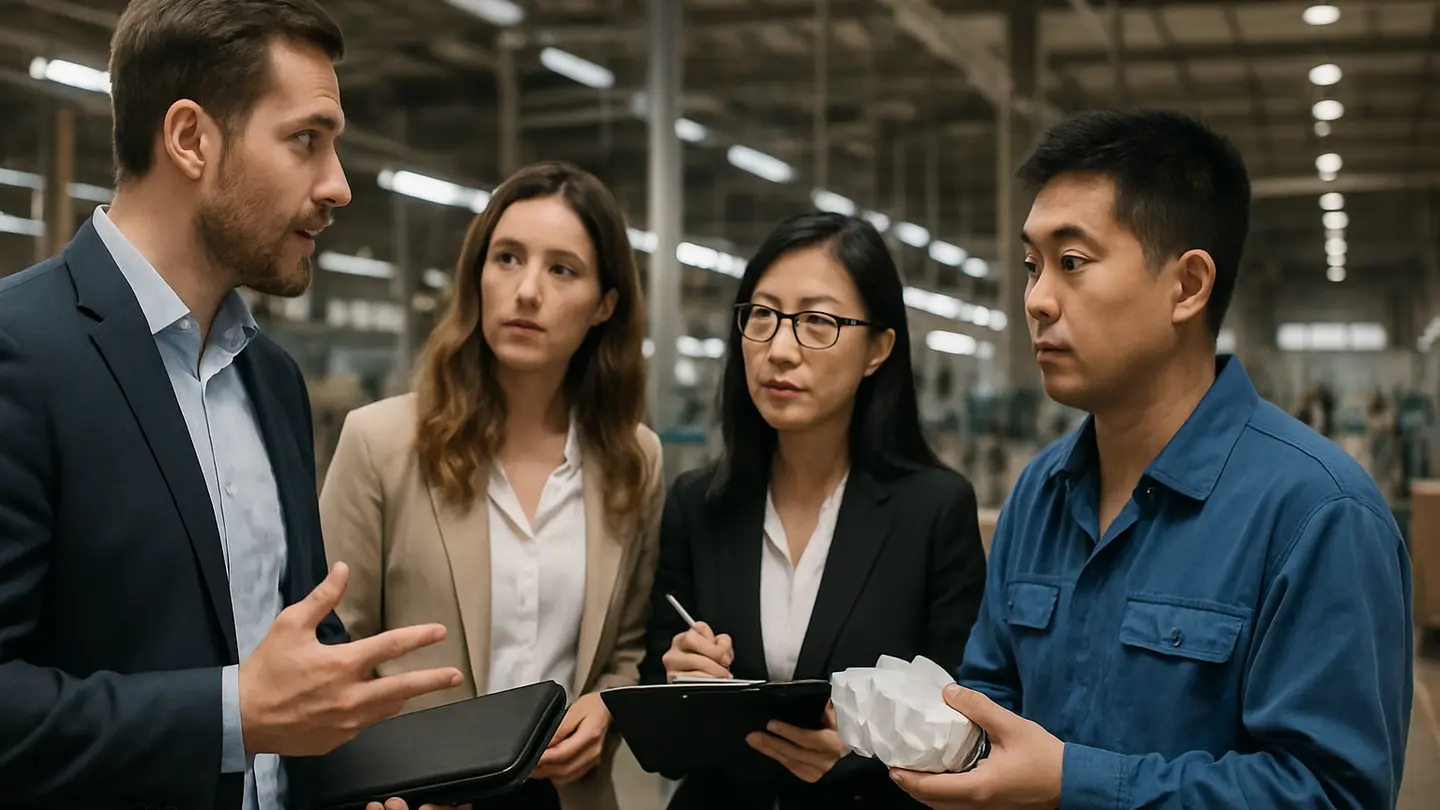
Check 6: Test Whether They Can Actually Produce the Order
After verifying identity and legal status, you still need to test production capability. A registered supplier may not own the factory, may lack capacity, or may be unable to meet your specifications.
Start with practical production questions:
- What is the current monthly capacity for this exact product category?
- How many production lines are available?
- What equipment is used for key processes?
- Which processes are in-house and which are outsourced?
- What is the current order backlog?
- What lead time is realistic for your order volume?
- Who are the main material or component suppliers?
For shower and bathroom products, capability checks may involve materials, finishing, cartridges, hoses, plating, pressure performance, packaging durability, and compliance with the buyer’s market requirements. A supplier that can make a low-cost domestic product may not meet overseas expectations for finish, labeling, documentation, or testing.
Sample management is the next step. Do not treat a sample as a casual demonstration. The approved sample should define what production must match. Confirm:
- Materials and component grades.
- Dimensions and tolerances.
- Surface finish and color.
- Water pressure or functional performance requirements.
- Packaging structure and labeling.
- Workmanship standards.
- Accessories and installation parts.
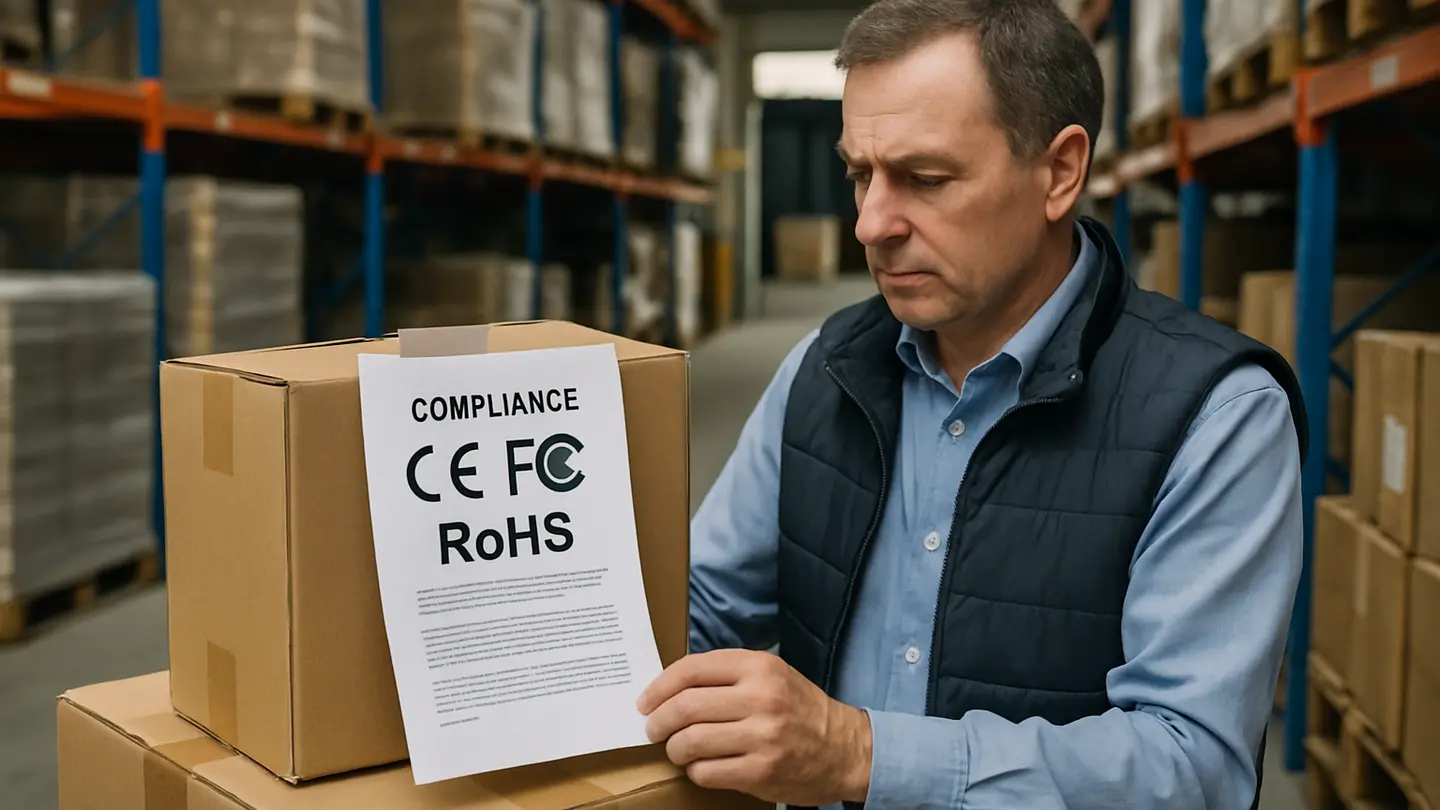
- Test reports or certificates, if required for the target market.
Keep a signed or clearly documented golden sample when possible. If changes are agreed after sampling, record them in writing and update the purchase documents. Many quality disputes happen because the buyer and supplier had different assumptions about what “same as sample” meant.
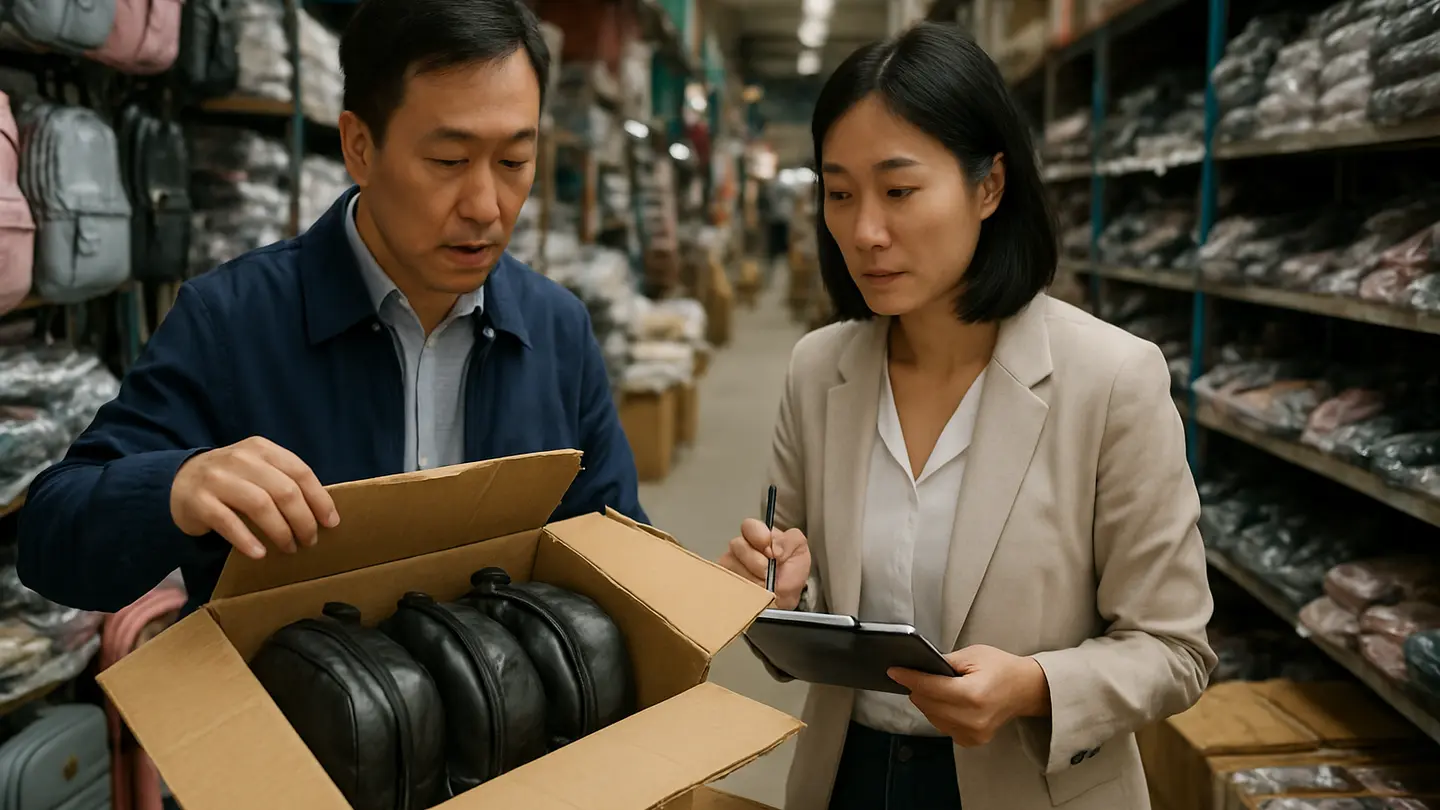
A factory audit is useful when order value, technical risk, or brand exposure justifies it. An audit can check whether the supplier has the equipment, workforce, quality systems, storage conditions, and production controls claimed during sales discussions.
Finally, arrange pre-shipment inspection before paying the balance. Inspection cannot fix a bad supplier relationship, but it can catch visible defects, quantity shortages, packaging errors, labeling problems, and workmanship issues before the goods leave China. Once the goods are shipped and the balance is paid, your leverage is much lower.
FAQ
Q1: The supplier has a Gold Supplier badge. Do I still need to verify?
Yes. Marketplace badges can be useful starting signals, but they should not replace independent verification. A badge may show that some platform-level checks were completed, but it may not prove factory ownership, production capacity, legal history, financial stability, or product performance.
Before sending money, verify the Chinese legal entity, check dispute and enforcement records, confirm payment details, and test production capability for your specific order.
Q2: Is a signed contract enough to protect me without verifying?
No. A contract is only useful if the counterparty is real, correctly identified, and enforceable. If the contract uses an informal English name, the wrong legal entity, or a company unrelated to the payment beneficiary, enforcement becomes much harder.
Verification helps ensure that the agreement is signed with the correct Chinese company and that the payment is going to the proper entity. If the supplier is a shell company, unrelated trader, or disappears after receiving a deposit, recovery may be difficult even with signed paperwork.
Q3: How much does it cost to verify a supplier properly?
Basic desk checks can often be done with limited direct cost, especially if someone on your team can read Chinese and access relevant databases. Domain checks, website history checks, document comparisons, and payment beneficiary reviews are usually inexpensive.
Professional verification reports, legal record searches, factory visits, or audits cost more, but they may still be far cheaper than a lost deposit, failed launch, delayed project, or container of unsellable goods. A small sample order may justify lighter checks; a large OEM order or tooling payment requires deeper due diligence.
Q4: How long do these six checks take?
Basic desk checks can often be completed quickly by someone familiar with Chinese company records and legal databases. A local partner, bilingual sourcing professional, or due diligence provider can shorten the process and reduce translation errors.
Production-related checks take longer. Samples depend on material availability and factory scheduling. Audits require coordination with the site. Pre-shipment inspections depend on production completion dates. Start verification early rather than waiting until the supplier is asking for immediate payment.
Conclusion: Verify Before You Commit Funds
Supplier verification is usually cheaper than recovering from a bad first order. Remote checks cannot remove every risk, but they can help you avoid obvious mistakes: paying the wrong entity, trusting an unverified company name, ignoring serious enforcement records, or assuming that legal registration proves manufacturing capability.
The six checks in this guide help answer the key questions every B2B buyer should ask before payment:
- Who am I really dealing with?
- Is the company legally registered?
- Does its claimed history make sense?
- Are there serious dispute or enforcement warning signs?
- Is the payment beneficiary correct?
- Can the supplier realistically produce what I need?
Complete these checks before sending a deposit, approving tooling, or committing to a large order. If the supplier resists basic questions, changes payment details without explanation, or cannot prove production capability, pause before your funds are at risk.