Marketplace badges, polished catalogs, and sample photos can help you find candidates, but they do not prove that a supplier is legally valid, financially safe, or capable of producing consistent shower products at scale. Before paying any deposit, compare the supplier’s claims with legal records, certificates, bank details, and factory evidence.
For buyers sourcing shower enclosures, shower doors, shower columns, shower trays, faucets, or related bathroom products, verification should be treated as a risk-control process: desk checks first, then live video, audits, pilot orders, and inspections before scaling.
Build a Buyer Verification File Before You Shortlist Suppliers
Build a verification file before you shortlist suppliers, request samples, pay tooling fees, or discuss a production deposit.
Your file should collect the supplier’s legal identity, banking information, export structure, certificates, production details, and product documentation. The most important starting point is the supplier’s Chinese legal name. English company names, brand names, and showroom names may not be the official name used in mainland China registry records.
Create a spreadsheet and compare the following fields for every candidate:
| Verification Item | What to Compare |
|---|---|
| Chinese legal name | Business license, registry record, certificates, contracts, invoices |
| English trading name | Website, catalog, email signature, quotation |
| Unified Social Credit Code | Business license and official registry |
| Registered address | License, registry, certificates |
| Factory address | Audit report, video walkthrough, shipping documents, inspection booking |
| Certificate holder | Product certificates, test reports, factory name |
| Bank beneficiary | Proforma invoice, bank account, verified legal entity |
| Export entity | Export documents, relationship to the factory |
| Product category | Business scope, catalog, quoted products, production evidence |
A pre-audit questionnaire can help gather early information: business licenses, ISO claims, client references, production capabilities, QC procedures, equipment, subcontracting, lead times, and typical order volumes.
Desk verification should happen before live calls, sample payments, deposits, or third-party audits. If the bank beneficiary does not match the verified legal entity, or a clearly documented linked export company, pause until the supplier explains the structure in writing.
Verify the Shower Supplier Before Any Deposit Leaves Your Account
Complete verification before sending any deposit, tooling fee, mold fee, sample fee, or production advance. Once money has left your account, your leverage drops.
Use this six-step workflow when buying from a new Chinese shower manufacturer:
- Legal identity: Does the company exist?
- Registry record: Does the official record match the documents?
- Certificates and payment trail: Are product and payment identities connected?
- Factory reality: Is there a real manufacturing site behind the quotation?
- Capacity and quality systems: Can the supplier perform at order scale?
- Pilot order and inspection: Can the supplier deliver acceptable goods before scaling?
No single check is enough. A real company can still be a trader. A factory can use another export company. A certificate can belong to a different entity. The goal is to make the whole supplier trail consistent before you commit significant funds.
Step 1: Request the Full Legal and Factory Identity Package
Ask for the complete identity package in one consolidated message. Collecting documents piece by piece makes mismatches harder to spot.
Request the following:
- Color copy of the business license
- Chinese legal company name
- English trading name, if used
- Unified Social Credit Code
- Registered address
- Actual factory address
- Legal representative name
- Bank account details and beneficiary name
- Export entity details, if a separate company handles export or foreign-currency collection
- Product certificates and test reports relevant to the quoted shower products
- Current shower product catalog
- Photos or videos of production areas, if available
- Quality-control flow or inspection checklist, if available
Documents received through B2B marketplaces, supplier directories, or online profiles still need independent verification. A profile on Made-in-China.com or another sourcing platform may help you discover suppliers, but it should not replace registry checks, payment verification, and factory confirmation.
Treat refusal to provide a readable color business license, Chinese legal name, or registry-identifiable company record as a serious warning sign.
Inspect document scans carefully. Look for readable seals, consistent company names, correct codes, complete addresses, and clean formatting. Be cautious if a license image has heavy cropping, blurred fields, unusual font changes, mismatched seals, or edited-looking areas. These signs require follow-up before payment.
Step 2: Confirm the Company in the Mainland China Registry
After receiving the business license, confirm the company in the official mainland China company registry. Search by the Unified Social Credit Code or the exact Chinese legal name shown on the license. Do not rely on the English name alone.
Check the following details:
- Active or valid operating status
- Exact Chinese legal name
- Unified Social Credit Code
- Registered address
- Legal representative
- Establishment date
- Business scope
Business scope helps you understand what the company is legally registered to do. A shower manufacturer should have wording consistent with manufacturing, processing, sales, import/export, sanitary ware, bathroom products, hardware, glass products, plumbing products, or related activity. This does not prove capacity, but it can help distinguish a likely manufacturer from a pure trader or unrelated entity.
If the registry shows a different name, address, legal representative, or status from the documents provided, record the mismatch. Ask for written clarification and updated documents. If the explanation is vague or unsupported, keep the supplier in high-risk status.
Step 3: Check Certificates, Export Rights, and Payment Ownership
A valid company record is not enough if payment is routed to another party. Before paying any deposit, confirm that certificates, export documents, and bank details connect to the same verified supplier trail.
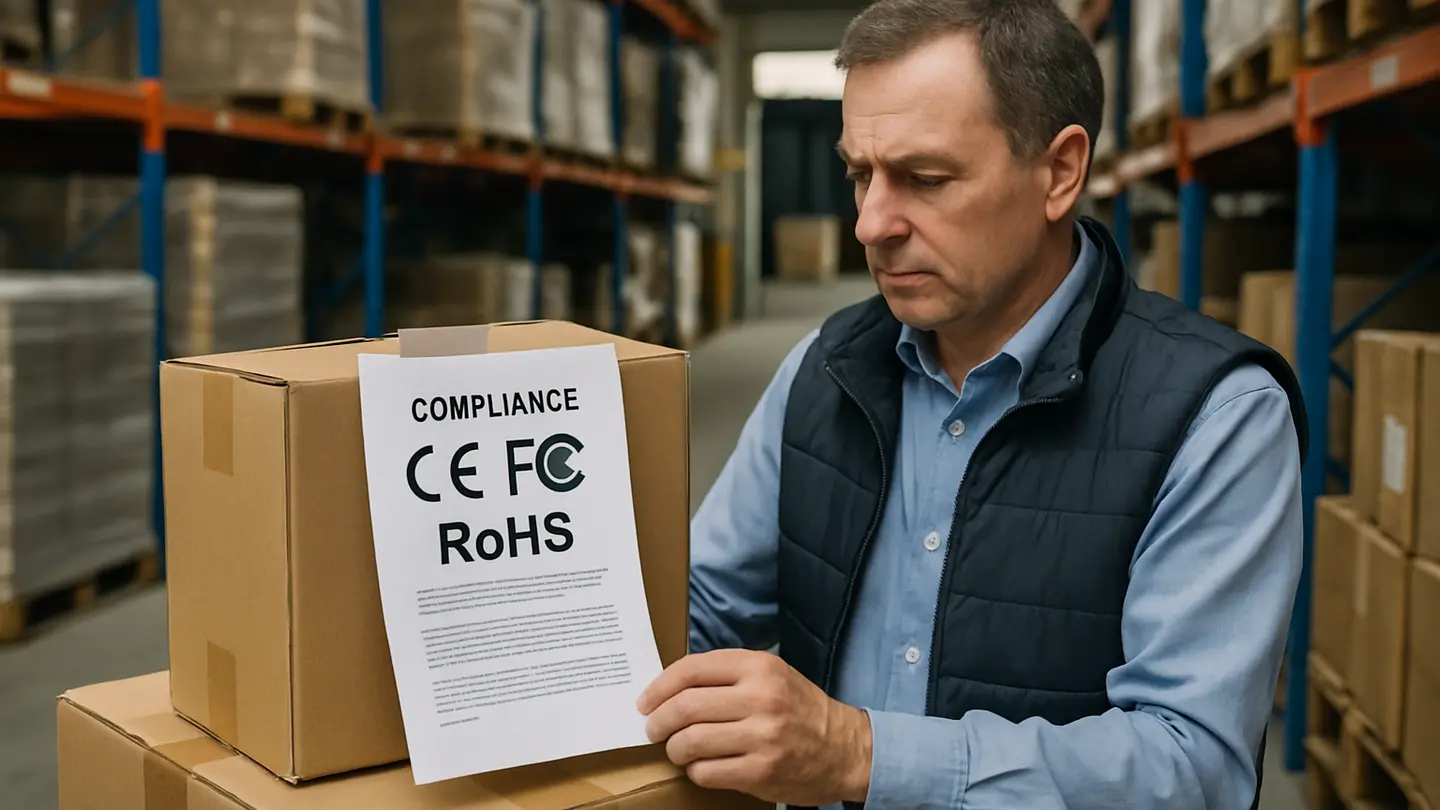
For product certificates and test reports, check the certificate number through the appropriate issuer or official database when possible. Requirements depend on the product and destination market. Shower doors and enclosures may involve glass, hardware, and safety requirements. Shower columns, faucets, and plumbing-related products may involve water-contact, performance, or market-entry compliance. Do not assume one certificate covers every model, material, thickness, finish, or configuration.
Review these fields:
- Certificate holder
- Manufacturer name
- Factory address
- Product scope
- Model numbers or product descriptions
- Validity period
- Applicable test standard or market requirement
- Issuing body or laboratory
If the certificate holder is different from the supplier quoting you, ask for the company relationship. A trader may quote goods made by a certified factory. A factory may use an affiliated export company. These structures can be legitimate, but they must be documented.
If a separate exporter handles customs or foreign-currency collection, request proof of the relationship, such as authorization letters, commercial agreements, group-company evidence, or written confirmation from the verified factory.
Do not pay personal accounts, unexplained offshore accounts, unrelated Hong Kong entities, or bank beneficiaries that do not match the verified supplier trail.
Step 4: Use a Live Video Walkthrough to Separate Factory from Trader
Registry verification proves that a company exists. It does not prove that the supplier owns or controls shower manufacturing capacity.
Use an unscripted live video walkthrough to test whether the supplier is physically present at a real production site. Ask the contact to start outside the factory gate, show the company nameplate if available, and continue without cuts through reception, production areas, materials storage, assembly, QC, packing, and finished-goods warehouse zones.
For shower products, look for evidence relevant to the exact items being quoted:
- Glass-processing or glass-handling areas for shower doors and enclosures
- Aluminum or stainless-steel profile storage
- Hinges, rollers, handles, seals, brackets, and hardware assembly
- Shower column or faucet assembly benches
- Water-testing or leak-testing equipment where relevant
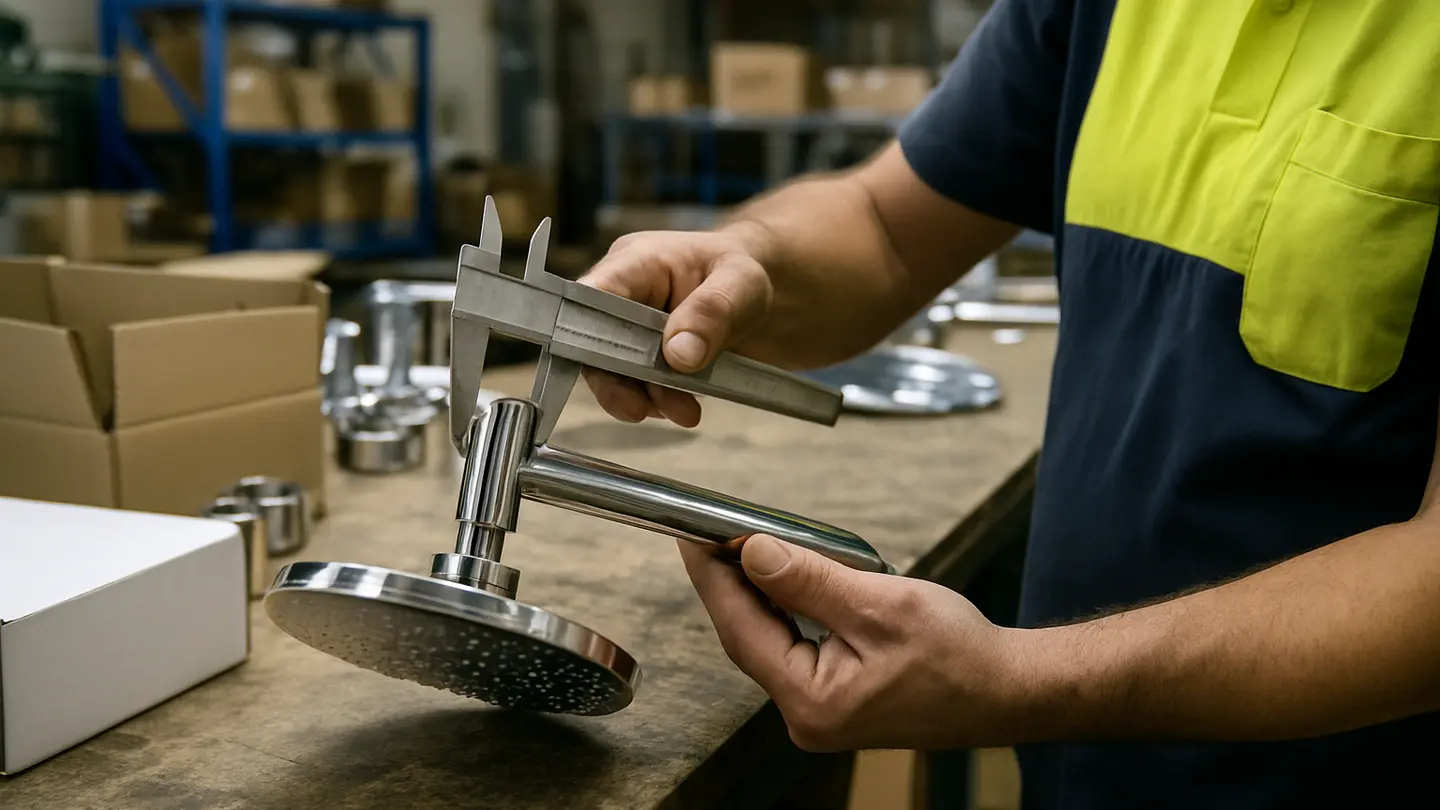
- QC benches with measuring tools or inspection records
- Packaging areas with cartons, foam, labels, and accessories
- Finished shower enclosure, shower door, shower tray, or shower set inventory
- Machine nameplates or line labels where appropriate
Ask spontaneous questions during the call. Request to see the quoted model, hardware storage area, packaging label, or current production order board if the supplier is willing to show it. A genuine factory contact should usually navigate the site naturally. A trader may coordinate with another party, avoid certain areas, or provide only staged clips.
After the walkthrough, classify the supplier clearly:
- Direct factory
- Factory using a linked exporter
- Trading company representing another manufacturer
All three models can be workable, but the risk profile and required documentation are different.
Step 5: Audit Real Capacity and Quality-Control Systems
Approved paperwork and a convincing video call still do not prove that the supplier can perform at order scale. A factory may be real but too small, overbooked, poorly managed, or dependent on subcontractors.
A factory audit reviews production capacity, quality procedures, equipment, and compliance gaps before final negotiation or large-volume purchasing. You can visit yourself, use a trusted sourcing partner, or hire a third-party audit company.
During the audit, review:
- Machines and tooling relevant to the quoted products
- Worker count by area
- Shift patterns and overtime reliance
- Current line utilization
- Raw material storage
- Work-in-progress
- Assembly flow
- QC stations and inspection records
- Testing areas
- Packaging process
- Finished-goods storage
- Subcontracted processes, if any
Do not judge only by whether the factory looks tidy. Evaluate material flow, defect handling, written standards, and whether QC records match the goods on the floor.
Ask floor managers practical questions:
- What is the daily output for the quoted shower product?
- How many active lines are running today?
- What capacity is already booked?
- What happens during peak season?
- Which process is the main bottleneck?
- Are glass, coating, machining, plating, or packaging steps subcontracted?
- What production problems occurred recently?
- How are nonconforming goods separated and corrected?
If the factory cannot support its claimed capacity with machines, workers, materials, and production records, reduce the order size or continue searching.
Step 6: Place a Controlled Pilot Order with Pre-Shipment Inspection
Before moving to large-volume shower product purchasing, place a controlled pilot order. The pilot order tests whether the supplier can follow specifications, manage production, communicate problems, pack correctly, and pass inspection.
Document all requirements in writing before production starts, including:
- Product drawings or confirmed photos
- Materials
- Dimensions
- Glass thickness, if applicable
- Hardware requirements
- Surface finishes
- Color and coating requirements
- Tolerances
- Accessories and installation parts
- Packaging method
- Carton markings and labeling
- Instruction manuals
- Test requirements
- Spare parts or after-sales requirements
Use sample confirmation before mass production. Check appearance, fit, finish, accessories, installation parts, packaging, and function. Keep a signed golden sample, approved sample photos, or sample report so both sides know what mass production must match.
Book an independent pre-shipment inspection before paying the balance. The inspection should compare finished goods against the order specifications, approved sample, packaging instructions, labeling requirements, and agreed quality limits. Many buyers use AQL-based inspection for batch acceptance, but the exact plan should match the product type and buyer risk tolerance.
Use inspection results to approve shipment, require rework, negotiate corrections, or reject the batch. Refusal of independent AQL inspection or reasonable pre-shipment checks is a major risk signal, especially for a new supplier.
Only scale after the supplier performs reliably through verification, sample confirmation, production follow-up, final inspection, shipping, and after-sales tracking.
When Verification Fails: How to Escalate Red Flags
Verification is useful only if you act on the results. If checks uncover inconsistencies, use escalation rules instead of relying on reassurance from the salesperson.
Common failures include mismatched bank beneficiaries, certificates held by another entity, weak company trails, resistance to inspections, expired certificates, and unsupported production claims. Each issue should be recorded, assigned a risk level, and resolved before payment.
Red Flag: The Bank Beneficiary Does Not Match the Supplier
A mismatched bank beneficiary can indicate payment diversion, an offshore shell, or a trader using an undisclosed collection company. It may also be a legitimate exporter arrangement, but do not assume that without proof.
Freeze payment when invoice details do not match the verified legal supplier or documented export entity. Request exporter authorization, proof of the commercial relationship, and written confirmation from the verified company before proceeding.
If the supplier cannot provide a clear explanation, escalate the issue to finance, legal, or compliance review. For a new shower manufacturer, unresolved payment mismatches should stop the deal.
Red Flag: Product Certificates Belong to Another Entity
Certificate mismatches can occur when a trader borrows a shower factory’s documents or when one entity quotes products made by another. The mismatch does not always mean the offer is invalid, but it means the certificate is unverified until the full company and product chain is proven.
Do not rely on certificates unless the certificate holder, manufacturer, exporter, product scope, and quoted models are clearly connected. If the certificate covers a different product, expired period, different factory, or unrelated company, require updated evidence.
Document all certificate issues in your supplier-selection file so the same supplier is not approved later without resolving the risk.
Red Flag: The Supplier Blocks Audits or Independent Inspections
Move suppliers that resist factory visits, live video walkthroughs, or third-party inspections into high-risk status. A legitimate manufacturer should understand that professional buyers need evidence before transferring significant funds.
If inspection access is blocked, reduce the order size, delay payment, or replace the supplier. Unexplained entity mismatches, expired certificates, impossible capacity claims, and refusal to show production areas are valid reasons to walk away.
For a new shower supplier, refusal of independent inspection before balance payment can be a dealbreaker.
FAQ
1. Can I verify a Chinese supplier using only an Alibaba badge?
No. An Alibaba badge alone should not be treated as proof of manufacturing capability, legal reliability, or payment safety. Marketplace status can help during discovery, but it should be cross-checked against official Chinese registry data and independent factory evidence.
Ask for the supplier’s Chinese legal name and 18-digit Unified Social Credit Code. Use those details to check the company record, then verify the factory address, certificates, production evidence, and bank beneficiary before paying.
2. How do I check if a Chinese business license is fake?
Verify the 18-digit Unified Social Credit Code against the official Chinese registry. The company name, status, registered address, legal representative, establishment date, and business scope should match the license provided by the supplier.
Also inspect the license image for blurred fields, inconsistent fonts, mismatched seals, suspicious cropping, or unusual compression marks. If anything looks inconsistent, request clarification and updated documents before continuing.
3. What is a safe deposit amount for a new Chinese supplier?
Limit upfront exposure when working with an untested shower manufacturer. A 30 percent deposit is a common upper limit in many new supplier relationships, depending on product type, tooling needs, customization level, and negotiation context.
Avoid paying the full amount before production or shipment. The balance should be paid only after successful third-party inspection and document review. If a new supplier demands an unusually high upfront payment without strong verification, treat it as a reason for caution, renegotiation, or rejection.
Conclusion: Verify the Entity, the Factory, and the Payment Trail
A supplier that passes all six steps has stronger legal, operational, certificate, inspection, and payment validation. That does not eliminate every sourcing risk, but it gives you a better basis for deciding whether to proceed.
Make supplier onboarding include payment controls, approved samples, inspection cadence, production monitoring, and clear escalation rules. Finalize logistics planning before scaling from a pilot order to larger production runs.
Before you commit significant funds, the shower manufacturer should be legally registered, physically real, operationally capable, and financially credible.