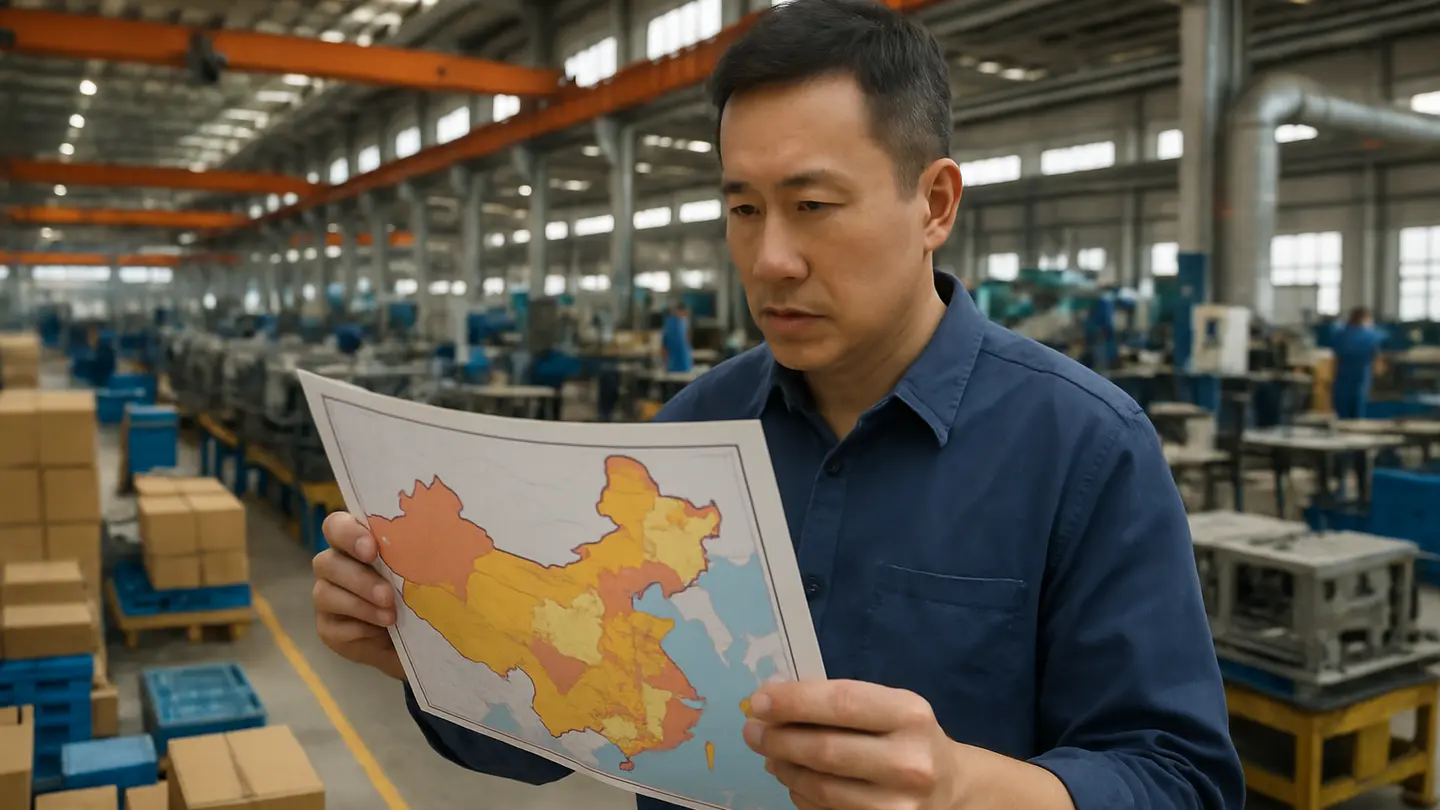
For importers, deciding when to ship from China is not simply a question of when the factory says production will be finished. A purchase order may be packed and labeled, yet still be days—or weeks—away from actually leaving China.
Between factory completion and export departure, several moving parts must line up: inland trucking, container loading, freight booking, document preparation, customs declaration, terminal cutoffs, and vessel availability. During normal periods, these steps can usually be managed with predictable lead times. During peak season or around major Chinese holidays, the same steps become much less forgiving.
The biggest recurring risk periods are Chinese New Year, Golden Week, and the late-summer to autumn export peak. These windows are not surprises. They appear on the calendar every year. Yet newer importers often underestimate how early the disruption begins and how long the effects continue after the official holiday ends.
Why Finished Goods Are Not Yet Shipped Goods
A supplier’s message that “the goods are ready” can mean several different things. It may mean production is complete, cartons are packed, or the shipment is waiting in the factory warehouse. None of those necessarily mean the cargo has been loaded into a container, delivered to port, cleared for export, or accepted for a confirmed sailing.
After goods are packed, several steps still need to happen:
| Step | Why it matters |
|---|---|
| Final inspection | Defects found at this point may require rework before shipment. |
| Export packaging and labeling | Carton marks, pallets, barcodes, and compliance labels must match buyer requirements. |
| Inland transport | Cargo must move from the factory to a warehouse, consolidation facility, rail terminal, or port. |
| Container loading | Full-container shipments need equipment availability and loading coordination. |
| Freight booking | Space must be confirmed with a carrier or forwarder. |
| Export documents | Commercial invoice, packing list, booking details, customs declaration, and other documents must be accurate. |
| Terminal processing | Cargo must arrive before port and document cutoffs. |
A common mistake is to look only at the vessel sailing date. In practice, cutoffs often fall several days earlier. A carrier may require shipping instructions by one date, customs documents by another, and physical cargo delivery before a terminal cutoff. If any of those deadlines are missed, the cargo may not load even if the vessel has not yet sailed.
Missing a cutoff can mean waiting for the next weekly sailing. During tight capacity periods, it may mean waiting longer because the next vessel is already full. This is why a two-day delay at the factory can become a one- or two-week delay at destination.
Holiday periods add another layer of friction. Truck drivers may leave early. Warehouse labor can be reduced. Freight forwarder staff may be handling a surge of urgent bookings. Ports may continue operating, but coordination across factories, warehouses, customs brokers, and carriers becomes slower.
Buyers should therefore monitor actual production progress, not only broad supplier statements. “Almost ready” is not a logistics milestone. More useful checkpoints include: materials received, production started, percentage completed, packing date, inspection date, booking confirmation, container loading date, and estimated port arrival.
Chinese New Year: The Real Disruption Starts Before the Holiday
Chinese New Year is the most important holiday period for China-based manufacturing and one of the most disruptive events in global sourcing calendars. The official holiday may last about a week, but the practical impact is much longer.
Many workers travel long distances to return home. Some leave the factory before the official holiday begins, especially if train or bus tickets are limited. Production lines may slow down in stages as departments lose staff. After the holiday, employees return gradually. Some may not return at all, creating labor gaps that must be filled and trained.
For importers, Chinese New Year should be treated as a four-to-six-week planning event, not a one-week closure. In some categories and regions, the impact can be even longer if factories rely on upstream suppliers that restart late.
The weeks before the holiday carry specific risks. Factories are under pressure to finish as many orders as possible before closing. Buyers may hear confident promises that goods will be completed “before the holiday,” but the remaining capacity may already be committed to larger or earlier orders. Rushed production can also increase quality risks: skipped checks, uneven finishing, incomplete accessories, labeling errors, or cartons packed before goods are fully verified.
For B2B buyers importing shower enclosures, fittings, bathroom accessories, valves, hardware, or other project-based goods, these issues can be costly. A missing component may delay installation. A packaging error can slow warehouse receiving. A defect discovered after arrival may be difficult to resolve quickly because the factory is still restarting.
After the holiday, the restart is rarely immediate. Production staff may return before subcontractors do. Packaging suppliers, metal parts vendors, glass processors, plating factories, mold shops, and trucking companies may all have different reopening schedules. Even if the main factory opens on a certain date, it may not have the materials, labor, or logistics support needed for full output.
The safest approach is to finish mass production, complete inspection, resolve rework, and prepare export documents several weeks before the factory closure. If that is not possible, buyers should be realistic about whether the shipment will depart before the holiday or fall into the post-holiday backlog.
Golden Week and the Late-Year Export Crunch
Golden Week, China’s National Day holiday, begins on October 1 and usually runs for about a week. While it is shorter than the Chinese New Year disruption, its timing creates a different problem: it overlaps with the late-year export rush for many Western markets.
By late summer and autumn, many importers are moving goods for Christmas retail, year-end promotions, seasonal inventory, construction project deadlines, and annual purchasing cycles. This demand can tighten ocean freight space and push rates higher. In some years, the pressure begins in August and continues through October or beyond, depending on trade lane, inventory levels, and carrier capacity.
The pre-Golden Week rush can be intense because many buyers want cargo to leave China before factories and logistics offices slow down. September becomes a critical shipping month. If too many exporters are trying to move cargo at once, forwarders may struggle to secure containers, trucking slots, warehouse space, or vessel allocations.
Even a confirmed booking is not always absolute protection. During constrained periods, carriers may overbook, adjust vessel schedules, or roll containers to later sailings. A rolled container has been accepted for shipment but not loaded on the intended vessel. The result can be a delay of several days to more than a week, depending on service frequency and port congestion.
Less-than-container-load shipments can be especially exposed. LCL cargo depends on consolidation: goods from multiple shippers are grouped into one container. If one shipment is late, documents are delayed, or the consolidator cannot fill or close the container as planned, departure may slip. During peak periods, consolidation warehouses can become crowded, and cutoff discipline becomes stricter.
Buyers shipping during this window should book earlier than they would in slower months. Stable relationships with freight forwarders can also help. A forwarder that understands a buyer’s lane, product type, seasonal volume, and documentation needs is better positioned to flag capacity issues early and propose alternatives before the situation becomes urgent.
Plan Backward from the Selling Date, Not Forward from the Factory Date
Import planning should begin with the date the goods must be usable, not the date the factory hopes to finish them. For different buyers, that target date may be a retail shelf date, distributor launch, installation schedule, hotel renovation deadline, contractor handover, trade show, or promotional campaign.
From that date, work backward through the full chain:
- Required arrival at the buyer’s warehouse or project site
- Warehouse receiving, counting, labeling, and internal distribution
- Import customs clearance and final delivery
- Ocean transit and possible transshipment time
- Origin port processing and vessel departure
- Freight booking and container allocation
- Inland trucking from factory to port or consolidation warehouse
- Final inspection and corrective action time
- Packing, labeling, and export documentation
- Mass production
- Material procurement and component lead times
- Sample development, testing, and approval
The last point is often underestimated. Sample rounds can consume meaningful calendar time before mass production starts. A buyer may need to review finish quality, dimensions, color consistency, water-flow performance, installation hardware, packaging strength, or compliance labeling. Each revision round adds days or weeks. If a sample is rejected in September, the production and shipping plan may suddenly collide with Golden Week. If it is rejected in December, Chinese New Year may become the controlling risk.
Planning backward also forces buyers to use realistic buffers. Best-case transit times are useful for quotations, but they are not a reliable basis for launch planning. A vessel may depart late, customs may request clarification, a container may be selected for inspection, or a warehouse may take longer to receive a large shipment.
A practical planning method is to create three timelines:
| Timeline | Purpose |
|---|---|
| Best case | Shows what is possible if everything runs smoothly. |
| Working plan | Uses realistic lead times and normal buffers. |
| Risk plan | Shows the impact of inspection failure, missed sailing, holiday closure, or rolled cargo. |
If the working plan overlaps Chinese New Year, Golden Week, or the autumn peak, the buyer should make an early decision. Options may include accelerating material approval, splitting the order, booking freight earlier, shipping critical items by air, moving part of the order through another port, or changing the launch schedule. These choices are much easier before the cargo is already late.
Dates and Commitments to Secure Before Capacity Tightens
Before major holidays or peak shipping months, buyers should ask every supplier for a written schedule. Public holiday dates are not enough. Individual factories may close earlier, reopen later, or run different schedules by department.
Key dates to confirm include:
| Date to confirm | Why it matters |
|---|---|
| Last date to place or amend orders | Changes after this date may not be accepted before the holiday. |
| Material purchasing cutoff | Components ordered late may not arrive before closure. |
| Last production-line date | Finished goods promised after this date may be unrealistic. |
| Final inspection availability | Inspectors may have limited slots before holiday shutdowns. |
| Warehouse closure date | Goods completed late may sit until reopening. |
| Last trucking date | Inland transport may stop before the factory officially closes. |
| Last feasible port delivery date | Cargo must arrive before terminal and document cutoffs. |
| Realistic shipment restart date | Reopening does not always mean immediate shipping capacity. |
Consolidated shipments require special attention. If a buyer is combining goods from several suppliers into one container, the schedule is only as reliable as the slowest supplier. One late component supplier can hold the entire container. This is particularly relevant for bathroom and construction-related orders where a complete shipment may include glass, aluminum profiles, trays, valves, handles, seals, fasteners, printed manuals, and spare parts from different sources.
Peak-season freight should be discussed before urgency develops. Waiting until the cargo is packed may be acceptable in quiet periods, but it is risky when vessel space is tight. Buyers should provide forwarders with expected cargo volume, ready date, origin city, destination, Incoterms, and any delivery deadline as early as possible.
Contingency options should also be evaluated early. Partial shipments may allow a buyer to move urgent SKUs while slower items follow later. Air freight may be justified for small but critical parts, such as replacement components, installation kits, or samples for a launch event. However, these options become harder and more expensive once the delay has already happened. Early planning preserves choices.
FAQ
Q1: How do I plan around a holiday that moves every year?
Chinese New Year follows the lunar calendar, so it can fall between late January and late February. Do not rely only on the official public holiday dates. The operational impact usually starts before the holiday and continues after it.
Buyers should confirm each supplier’s actual schedule every autumn. Ask when production slows, when the factory closes, when warehouse and shipping staff stop working, and when normal production is expected to resume.
Q2: Does it matter this early that my samples are still going back and forth?
Yes. Sample revisions can affect the entire shipment calendar. A delayed approval means mass production starts later, which can push final inspection, booking, and export into a more congested period.
Each extra sample round may appear small in isolation, but two or three rounds can move a shipment from a manageable window into the pre-holiday rush. If the product has custom dimensions, finishes, packaging, tooling, or compliance requirements, sample timing should be treated as part of the shipping plan.
Q3: Will the factory push a small order behind bigger ones?
It can happen, especially before major holidays when production capacity is limited. Factories often prioritize orders based on customer relationship, order size, deposit timing, material readiness, and production complexity.
Small orders are not automatically delayed, but informal promises become less reliable during rush periods. Buyers should secure written completion dates, inspection windows, and packing dates before capacity becomes tight. Regular progress checks are also important.
Q4: Should I believe a supplier who says they will work through the holiday?
Some factories may keep limited staff on site, but buyers should verify what that actually means. A sales office answering messages is not the same as a full production line operating with quality control, warehouse staff, and logistics support.
Also consider the wider supply chain. Parts suppliers, packaging vendors, trucking companies, customs brokers, and warehouses may still be closed. Even if one factory can produce, it may not be able to receive materials or ship finished goods until partners reopen.
Conclusion: Build China Shipping Seasons into the Buying Calendar
The best time to decide when to ship from China is before the order is already under time pressure. Chinese holidays and peak shipping seasons are predictable, so they should be built into sourcing calendars, product launch plans, and project schedules from the beginning.
Late planning can turn ordinary production variance into missed selling seasons or delayed installations. A supplier’s status update may also lag behind reality, especially when materials are late, inspection slots are full, or freight space is tightening.
Earlier monitoring gives buyers more options. They can adjust sample deadlines, confirm factory schedules, book freight sooner, split shipments, or revise launch timing before holiday and peak-season bottlenecks close those choices.
About the Author
The author is an independent B2B sourcing and supply chain writer focused on practical import planning, supplier coordination, and international trade operations. The guidance is intended for professional buyers evaluating manufacturing and logistics risks across China-based supply chains.