For small businesses, finding wholesale suppliers for small business is not just a search problem. It is a sourcing-route decision.
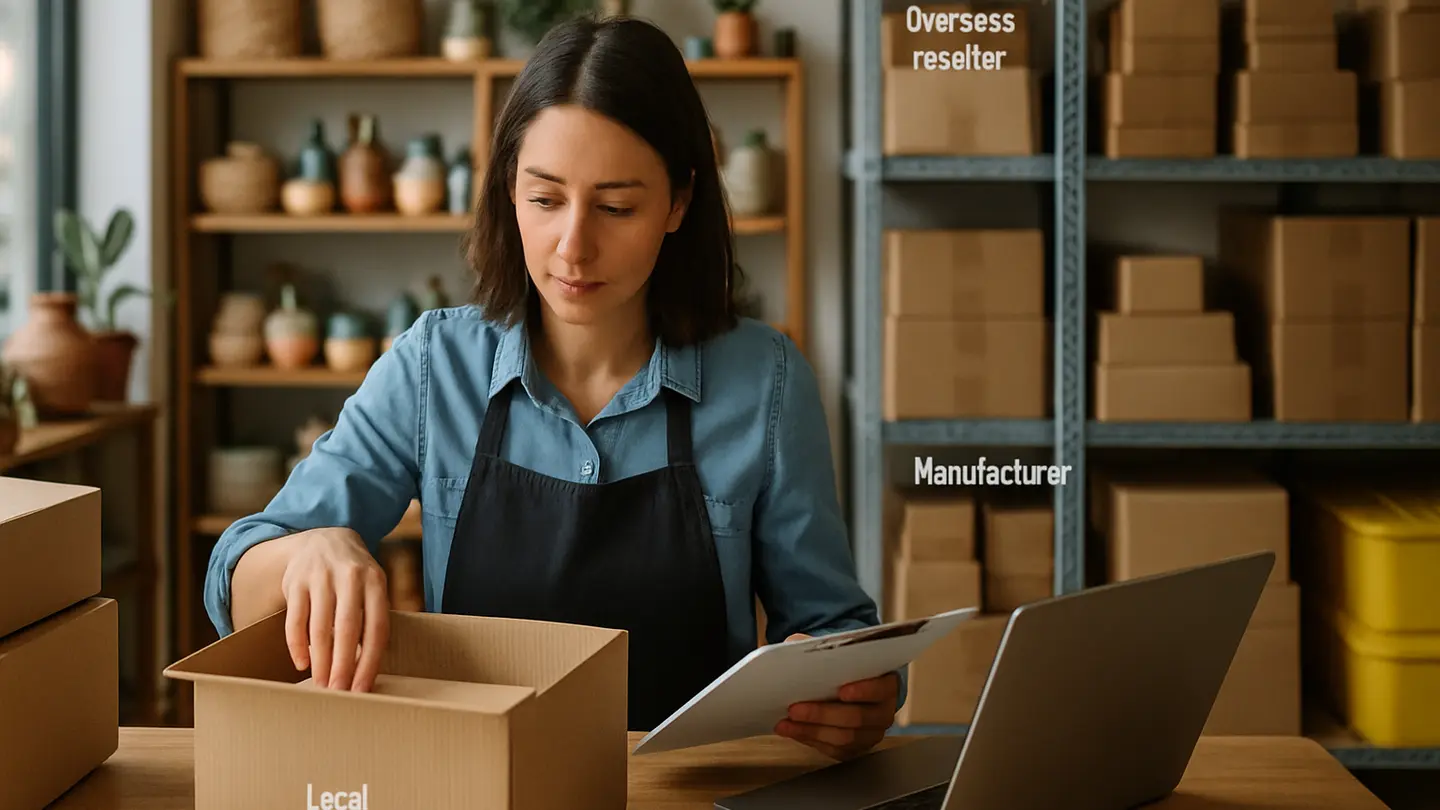
Most buyers choose among three practical routes:
- Buying through a local distributor
- Sourcing from an overseas reseller
- Buying directly from the manufacturer
Each route changes the economics and workload. A local distributor may ship quickly and accept smaller orders, but the unit price includes a distributor margin. An overseas reseller may offer broader access and better pricing, but requires more comparison and reliability checks. A manufacturer may offer the best control over cost, materials, packaging, and specifications, but usually requires higher order quantities, longer planning, and more management.
Online marketplaces are access channels, not sourcing routes. Through one marketplace, a buyer may find a local wholesaler, overseas trading company, distributor, or factory sales office. The key question is not only “Where did I find the supplier?” but “What role does this supplier play in the supply chain?”
The best route depends on order size, urgency, margin target, product certainty, and internal capacity.
Route 1: Buying Through a Local Distributor
Buying through a local distributor is often the fastest and lowest-commitment wholesale route. The distributor has already imported, warehoused, and organized the goods for resale. For the buyer, this can mean shorter lead times, simpler communication, easier payment, and fewer operational tasks.
This route is useful when a small business needs stock quickly. If a product is selling faster than expected, a domestic distributor can often replenish inventory faster than an overseas supplier. The buyer may avoid international freight, customs clearance, currency exchange, and import documentation.
Local distributors also tend to support smaller order sizes than manufacturers. A buyer may be able to order by the carton, case, pallet, or mixed assortment rather than committing to a production run. That matters for businesses still validating demand or managing limited cash flow.
The trade-off is price. A distributor adds value by holding inventory, managing import risk, and offering local availability. Those services are built into the unit cost. Buying through a distributor usually costs more per unit than buying from a factory or a supplier closer to the source.
That does not make the route inefficient. A higher unit cost can be rational when it reduces risk. A small retailer testing a product line may prefer to buy 50 or 100 units locally rather than commit to a larger factory order.
Local distributors are often the right choice when:
- The product is untested and demand is uncertain.
- The order is too small for direct factory sourcing.
- Speed matters more than the lowest unit cost.
- The buyer wants simple replenishment.
- The business lacks import experience.
- The product must be available immediately for a selling season, project deadline, or retail launch.
The main risk is staying dependent on distributor pricing after demand has grown. If a product becomes a steady seller, the distributor route may begin to compress margins. At that point, the business should evaluate whether moving upstream makes sense.
Route 2: Sourcing from an Overseas Reseller
Overseas resellers sit between local distributors and manufacturers. They may be trading companies, export wholesalers, regional distributors, or sales organizations that coordinate goods from multiple factories. They are commonly found through B2B marketplaces, where different supplier types appear side by side.
This route expands the product search. A buyer can compare many styles, specifications, price ranges, and packaging options without immediately committing to direct factory production. Overseas resellers may also be more flexible than factories on product variety and mixed orders, especially when they hold stock or source from several partner factories.
Buyers should not assume every marketplace listing represents the same supplier type. A listing may come from:
- A factory selling directly
- A trading company representing several factories
- A wholesaler with stock inventory
- A reseller using supplier photos from another source
- A sales office connected to a manufacturing group
The buyer’s task is to understand who is fulfilling the order and whether that supplier can deliver consistently.
Placeholder listing prices are common. The price shown online may reflect a large quantity, basic specification, old quotation, or simplified product version. Serious buying decisions should be based on written quotations that match the buyer’s actual requirements.
A good request for quotation should include:
- Target order quantity
- Product dimensions, materials, finishes, colors, and performance requirements
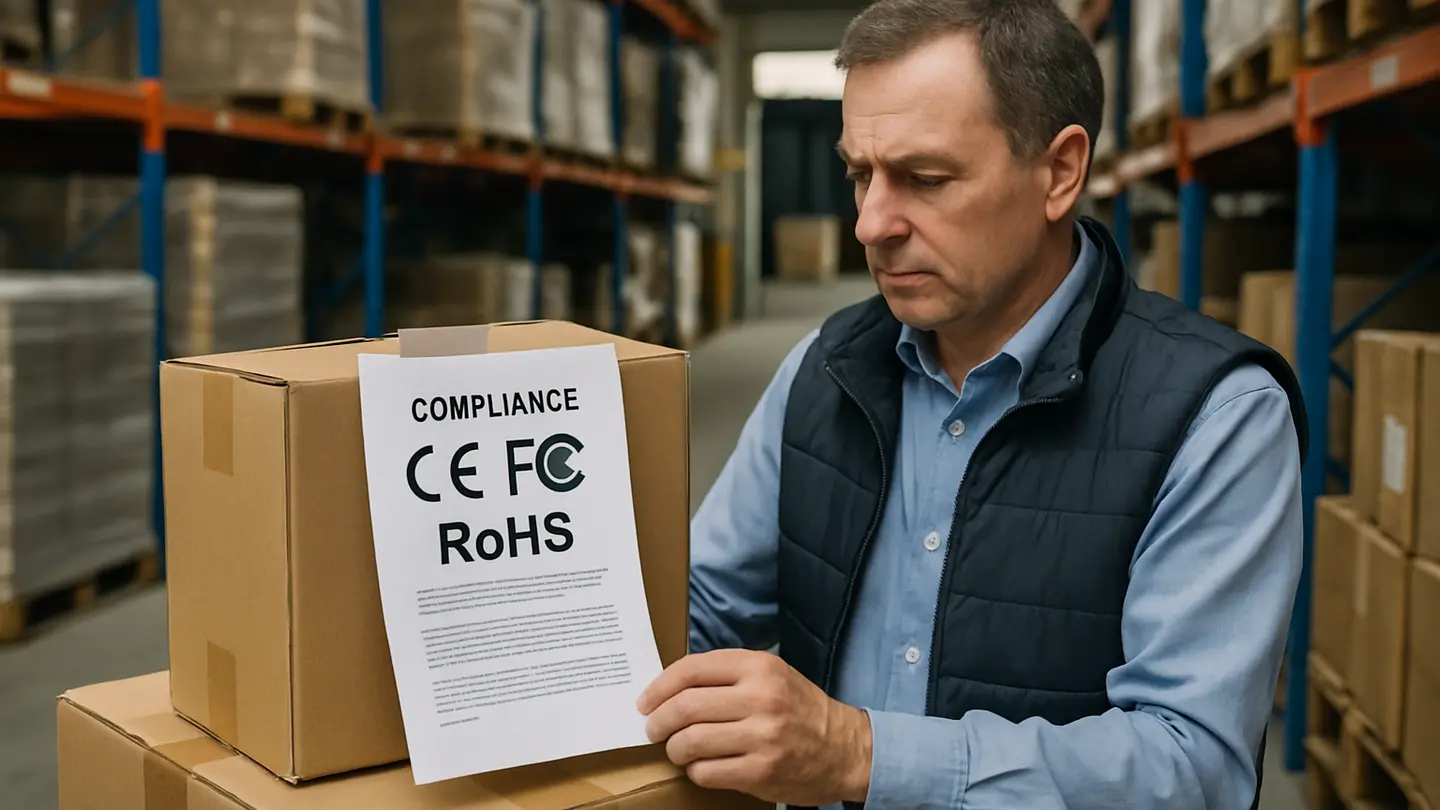
- Any applicable compliance or market requirements
- Packaging type, carton configuration, and labeling needs
- Branding or private-label requirements
- Destination country or port
- Preferred shipping terms, if known
- Required delivery date
- Sample requirements
- Expected reorder volume, if realistic
The more complete the request, the easier it is to compare suppliers. If one quote includes custom packaging, inspection, and export cartons while another only includes the product, the lower number may not be the better offer.
Small businesses should shortlist several credible suppliers rather than relying on one response. Comparing three to five written quotations can reveal differences in communication quality, product understanding, lead time, payment terms, and willingness to clarify details.
When evaluating overseas resellers, buyers should look beyond price. Useful signals include:
- Clear answers to technical questions
- Consistent product information across messages, documents, and samples
- Willingness to provide photos, videos, samples, or references where appropriate
- Transparent explanation of lead times and stock availability
- Realistic communication about limitations
- Professional export documentation and packaging awareness
- Ability to support repeat orders
The main benefit of this route is reach. Overseas resellers can help small businesses discover more options and potentially obtain better prices than domestic distributors. The limitation is that reliability still depends on verification, communication, and order control.
Route 3: Buying Directly from the Manufacturer
Buying directly from the manufacturer is usually the strongest route for businesses that need better unit economics, product control, and customization. When the buyer works with the factory, there may be more room to influence materials, dimensions, finishes, branding, packaging, and production details.
Direct manufacturer sourcing is especially relevant when a product has steady demand or when the buyer wants a differentiated offer. A business may need a specific finish, customized installation kit, branded retail packaging, or modified accessory set. A distributor or reseller may only offer existing stock, while a manufacturer may be able to produce to specification.
The potential advantage is lower unit cost. By removing intermediary margins, the buyer may improve gross margin or create room for more competitive pricing. But direct buying is not automatically cheaper in the full landed-cost sense. The buyer takes on more responsibility, and those responsibilities have real costs.
Direct sourcing usually requires the buyer to manage or coordinate:
- Supplier identification and vetting
- Product specification documents
- Sample review and approval
- Negotiation of minimum order quantity
- Payment terms and deposit timing
- Production follow-up
- Pre-shipment inspection
- Export packing and labeling
- International freight
- Customs clearance
- Duties, taxes, and destination handling
- Warehousing and inventory planning
Manufacturers may require higher minimum order quantities than resellers. A factory needs production efficiency and may not interrupt production for a very small run, especially if tooling, color matching, material procurement, or custom packaging is involved.
Lead times are another consideration. A distributor may ship stock immediately. A manufacturer may need weeks for materials, production, packing, inspection, and export. If timing is miscalculated, a lower unit cost can be offset by missed sales.
Factories can still be found through marketplaces. The channel does not determine the route; the commercial relationship does. If the buyer is communicating directly with the factory, approving specifications, placing a production order, and managing factory output, that is direct manufacturer sourcing.
A serious factory quotation requires clear specifications. Vague requests such as “send best price for shower set” usually produce vague quotations. Buyers should define material grade, finish, dimensions, accessories, packaging, testing requirements, branding, and target market.
Supplier verification should happen before deposits, production commitments, or final payment. Depending on order value and risk, this may include business license checks, video calls, factory audits, sample testing, reference checks, third-party inspections, or staged payment controls.
Direct manufacturer sourcing is best suited to businesses with enough volume, product certainty, and operational capacity to manage the process properly.
How to Match the Sourcing Route to Your Business Stage
The right sourcing route depends on the business moment. A startup validating a product should optimize for flexibility and risk control. A growing seller with repeat demand may need better pricing. A mature brand may prioritize specification control, consistency, and margin discipline.
A practical comparison looks like this:
| Business situation | Best-fit route | Main reason |
|---|---|---|
| Testing a new product | Local distributor or overseas reseller | Lower upfront commitment |
| Urgent restocking | Local distributor | Faster availability |
| Searching for wider product options | Overseas reseller | Broader supplier and catalog access |
| Small mixed order | Local distributor or overseas reseller | More flexibility than factory production |
| Proven repeat seller | Manufacturer or upstream reseller | Better margin potential |
| Custom product or packaging | Manufacturer | Greater control over specifications |
| Tight margin pressure | Manufacturer | Fewer intermediary costs |
| Limited sourcing capacity | Local distributor or supported reseller | Lower buyer workload |
Small, urgent, or uncertain orders often fit local wholesalers best. The buyer may pay more per unit, but avoids overcommitting cash and inventory.
Overseas resellers are useful when the business wants broader product access or better pricing but is not ready for full factory management. They can bridge the gap between domestic wholesale and production.
Direct factory sourcing fits steady demand, customization, and tight margin requirements. It becomes more attractive when the buyer can forecast demand, meet minimum order quantities, and manage longer lead times.
Many small businesses use more than one route at the same time. A company might buy core inventory directly from a manufacturer, source experimental items through overseas resellers, and use local distributors for urgent replenishment.
When Growing Businesses Should Move Upstream
Margin pressure is one of the clearest signals that a business may need to buy closer to the source. If a product sells reliably but the current wholesale price leaves too little room for marketing, freight, returns, platform fees, or retailer margin, the sourcing route may be limiting growth.
Moving upstream does not mean shifting the entire catalog at once. A better approach is to test with one proven product. The strongest candidate usually has:
- Repeat sales over several cycles
- Clear specifications
- Low return or complaint rates
- Predictable demand
- Enough volume to meet minimum order quantities
- Room for margin improvement
- Limited risk of rapid trend decline
This method reduces disruption. The business learns how to manage samples, production timing, inspection, freight, and landed cost on one product before expanding the model.
Lower unit cost must be weighed against the total operational impact. Direct sourcing may require larger deposits, longer cash conversion cycles, more storage space, and more planning. A product that costs less per unit can still strain working capital if the buyer must purchase several months of inventory at once.
Buying agents or sourcing partners can help when the workload exceeds internal capacity. Their role may include supplier search, quotation comparison, negotiation, sample coordination, production follow-up, inspection, and shipping support. They do not remove all risk, but they can reduce the burden on small teams.
Seasonal Products: Start with the Selling Window
Seasonal sourcing should start with the date the product must be available for sale, not with the supplier’s quoted price.
Work backward from the required selling window. Include time for sample approval, production, packaging, inland transport, export processing, freight, customs clearance, receiving, inspection, and distribution to stores or warehouses. Then add a practical buffer for delays.
A lower factory price may not help if the goods arrive after the selling season has started. For seasonal products, speed and timing can outweigh unit cost. If the schedule is tight, a local distributor or an overseas reseller with ready stock may be safer than a new factory production run.
Business Registration and Wholesaler Account Requirements
Many local wholesalers require buyers to open a registered business account before receiving wholesale terms. Depending on the country and product category, they may request a resale certificate, tax identification number, business license, company registration, or proof that the buyer is purchasing for commercial resale.
These requirements help wholesalers separate business buyers from retail customers. They may also affect whether sales tax is charged at the time of purchase.
Some overseas resellers and factories may have fewer formal registration requirements, but they still evaluate whether an inquiry is serious. A buyer who provides clear product requirements, quantities, destination details, and realistic timelines is more likely to receive a useful response than one sending vague price requests.
Negotiation Room with Local Wholesalers
Local wholesaler pricing may have limited flexibility for very small orders. If the buyer purchases only a few cases or cartons, the wholesaler may apply the standard price list. Discounts are more likely with larger volume, regular reorders, or a narrower product range.
Factories often price more directly according to quantity, specification, packaging, and production complexity. A higher order quantity can reduce per-unit production cost, while custom requirements may increase it.
If a business needs stronger volume discounts than local wholesalers can provide, that may signal a need to explore upstream sourcing. The question is whether the expected savings justify the larger order size, longer lead time, and added workload.
Budgeting for a First Direct Factory Order
Direct factory buying requires budgeting beyond the quoted unit price. A first-time buyer should calculate full landed cost before comparing it with distributor or reseller pricing.
Possible costs include:
- Samples and sample shipping
- Minimum production quantity
- Custom molds, tooling, or setup, if applicable
- Packaging design and production
- Labels, inserts, barcodes, or retail cartons
- Pre-shipment inspection
- Inland transport to port or warehouse
- International freight
- Insurance
- Duties and import taxes
- Customs brokerage
- Destination handling
- Warehousing
- Domestic delivery to the final sales channel
For many consumer-goods projects, the first direct factory order requires low-thousands of dollars rather than a few hundred. The exact amount depends on product category, order quantity, customization, shipping method, and destination market.
For unproven products, resellers or local distributors may be better even at a higher unit cost. Reducing upfront risk can matter more than maximizing theoretical margin on the first order.
Conclusion: Choose the Route That Fits the Moment
Wholesale sourcing is not about finding one universally best supplier type. It is about matching the route to the current business need.
Local distributors provide speed, smaller commitments, and easier replenishment. Overseas resellers provide wider product access and potentially better pricing options. Manufacturers provide cost control, specification control, and stronger customization potential.
Each route carries costs. The cost may appear as a higher unit price, longer lead time, larger minimum order, greater working-capital requirement, supplier risk, or increased buyer workload.
Small businesses should choose the route that fits the product’s maturity, the company’s capacity, and the timing of the opportunity. As volume grows and demand becomes clearer, moving upstream can improve margins and control, but only when the business is ready to manage the added complexity.